
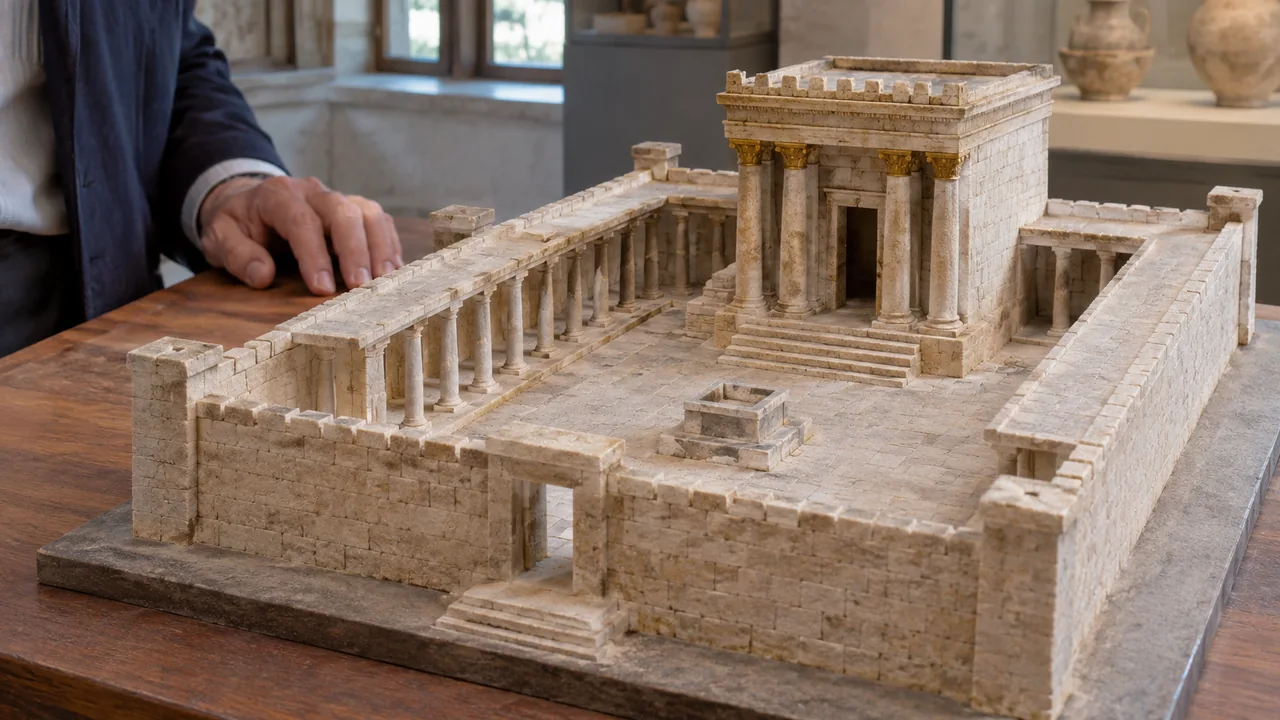
A photograph of ceremonial objects appears online with a dramatic caption: the Third Temple is about to be rebuilt, so the final crisis must be close. The picture may be genuine, but the conclusion can contain several steps that the image does not prove.
The link between a Third Temple and tribulation is important to some Christian understandings of future events. Certain readers connect passages about a temple, desecration and a lawless figure with a future physical sanctuary in Jerusalem. Others read those passages through different historical or theological frameworks.
This article explains why the connection is made and why it remains an interpretation. It does not announce that a temple has been rebuilt, identify a current person as the lawless figure or provide a countdown. The subject concerns living faiths and a deeply significant place, so accuracy and respect for real people are essential.
What people mean by a Third Temple
The expression usually refers to a future temple following the earlier Jerusalem temples. It is a modern way of organising an expectation, not a phrase that automatically resolves every biblical passage mentioning a temple.
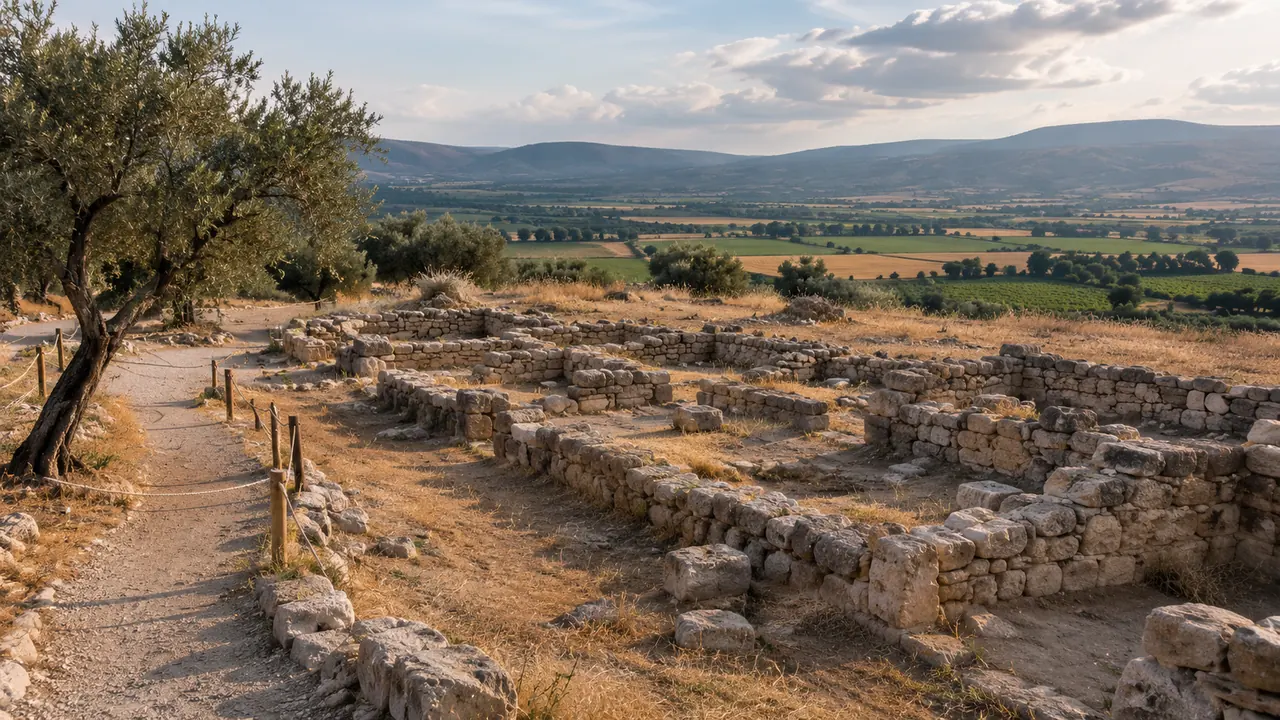
The St Andrews Encyclopaedia of Theology's discussion explains the historical phases and the wider symbolic meanings of the temple within the Christian Bible. The destruction of the Second Temple in AD 70 is part of that historical background.
History and expectation should be kept distinct. Evidence about an earlier building does not establish when another will be constructed. A model, ritual object or proposal can show that people hold an aspiration without demonstrating that the physical or political conditions for its realisation have been achieved.
Why some future-oriented readings expect a physical temple
Some interpreters understand passages about future desecration or a figure appearing in a temple as requiring an actual sanctuary. If they place those events after the destruction of the Second Temple, a rebuilt structure becomes part of their proposed sequence.
That reasoning has several assumptions: the timing of the passage, the meaning of temple and the relationship between different texts. Readers who share those assumptions may find the conclusion persuasive. Readers who do not may reach a different understanding.
The responsible explanation is to make the chain visible. It is not enough to point to the word temple and declare that every Christian must expect the same construction project. A conclusion can be sincerely held while still depending on an interpretive framework that should be named.
What 2 Thessalonians contributes
Second Thessalonians 2 describes a lawless figure who exalts himself in relation to the temple of God. It also warns readers against being quickly unsettled by messages claiming that the relevant day has already arrived.
Both parts matter. A commentary that uses the dramatic figure while ignoring the caution about alarming claims gives an incomplete account. The passage itself encourages attention to deception and the basis on which people become troubled.
Christians differ over the temple's referent and the passage's timing. This article does not settle that debate. It identifies why the text is central to a future-temple argument while keeping the argument separate from an assertion that a particular contemporary event has already fulfilled it.

Why temple language is not always architectural
Biblical language can use temple imagery in more than one way. First Corinthians 3 applies temple language to the believing community. That demonstrates why context matters before deciding that every occurrence must describe a future building.
It does not automatically prove that every other passage is symbolic. The appropriate meaning needs to be argued from the particular text and its relationships. A general rule imposed in either direction can miss what the passage is doing.
For a non-specialist, the useful question is simple: why does this interpreter think temple means this specific thing here? A careful answer should explain the context and acknowledge alternatives, rather than rely on the audience assuming that one familiar meaning is the only possible one.
Revelation also complicates a one-building answer
Revelation 21 describes the final city without a temple building in the ordinary sense, identifying God and the Lamb as its temple. The passage is part of a theological vision, not an architectural planning document.
This does not erase other Christian expectations about events before that vision. It shows why a full account of temple imagery is broader than a single proposed structure. Different passages may serve different roles within a reader's interpretation.
The subject therefore deserves more than a photograph with a countdown. Readers should ask how the interpretation relates the texts to one another, which sequence it assumes and where it distinguishes literal description from symbolic meaning. Those are theological questions requiring explanation, not details an image can settle.
Tribulation is a theological theme, not a live alert level
The word refers to severe suffering or distress and has particular roles in Christian discussions of the end times. Traditions differ over its sequence, duration and relationship with other events. A shared word does not guarantee a shared timetable.
Matthew 24 includes temple-related language, severe distress and warnings about deception. Its interpretation involves historical and theological questions that should not be replaced by a claim that any current crisis has an obvious single meaning.
The website's hypothetical DEFCON scenarios are separate editorial devices. They are not biblical stages, official military assessments or a method for calculating the date of tribulation. Keeping those categories distinct prevents a severe fictional illustration from acquiring an authority it does not possess.
A sacred place is also a place where people live
Jerusalem has profound significance to Jews, Christians and Muslims. The UNESCO description of the Old City reflects its importance to these faiths. Discussions should recognise that living communities, places of worship and human relationships are involved.
An end-time diagram can make the location look like an empty board on which events are moved into position. That picture removes the people whose lives and beliefs would be affected by any real change. Their dignity does not depend on whether they fit another person's interpretation.
This article does not advocate altering or damaging any holy site. A theological expectation is not permission to provoke violence, target worshippers or treat an entire religious community as an obstacle. Respect for the place must include respect for the people connected to it.
Ritual preparations do not prove construction is imminent
An organisation may display objects, teach a ritual or build a model. Those activities can be reported accurately as activities. They do not independently establish that a temple has been built or that a specific future date is known.
The gap matters because images often circulate without their original explanation. A museum model can become a purported construction photograph. An older event can be presented as a new development. A proposal can be described as an approved or completed project without evidence.
| What is shown | What it can demonstrate | What it does not prove alone |
|---|---|---|
| A model | An interpretation of a possible structure | A completed building |
| Ceremonial objects | Preparation or religious interest | A construction timetable |
| A public proposal | What a group advocates | Agreement by every relevant authority or community |
| A prophecy chart | An interpretive sequence | Verified fulfilment or a known date |
How to check a claimed development
Find the original source and date. Identify whether the claim concerns an object, ceremony, proposal, decision or completed structure. Those are different stages and should not be exchanged simply because the caption is dramatic.
If a report makes a factual claim about permissions or official action, look for the responsible primary statement. A commentator's certainty is not a substitute for that evidence. Do not infer a legal or political outcome from a photograph alone.
Then separate the factual development from its proposed prophetic meaning. Even a genuine event does not automatically prove a theological sequence. Readers can recognise that something happened while continuing to examine the interpretation attached to it. That distinction allows discussion without either denying facts or accepting every conclusion built around them.
Why competing certainties can deepen tension
A claim that one group must fulfil a role in a final crisis can encourage others to treat its members as symbols rather than people. Accusations can become detached from individual conduct and spread into collective suspicion.
That is a dangerous step. Jewish, Muslim and Christian communities contain varied beliefs and do not act as single characters in a commentator's story. A person's identity is not evidence of participation in a hidden plan.
The moral responsibility remains in the present. Do not share personal accusations, encourage harassment or celebrate the prospect of another community's suffering. A serious religious discussion should be able to acknowledge disagreement and uncertainty without turning them into permission for hostility.
A feared sequence is not an inevitable political outcome
Theological interpretation and political analysis use different kinds of evidence. A prophecy framework cannot by itself establish how governments, institutions or communities will act in a specific real-world dispute. Those choices require their own assessment.
This matters when a commentator says that violence cannot be prevented because the sequence is fixed. That claim can remove attention from decisions that still affect human safety. An expectation about ultimate history does not eliminate responsibility for avoiding harm now.
Our article on Armageddon interpretations examines the same danger of turning a serious concern into a guaranteed military forecast. The connection should support careful thinking, not provide another apparent confirmation of a countdown assembled from several uncertain claims.
What a worried believer can do
Read the relevant passages in context and ask which assumptions connect them. Seek counsel from a trusted, accountable person who can explain the interpretation and meaningful alternatives. Questions should be welcomed rather than treated as evidence of disloyalty.
Avoid irreversible decisions based only on a purported construction deadline. A claim about a future temple does not automatically justify abandoning work, care responsibilities or ordinary support for dependants. Consider the actual consequences and obtain independent information.
If the concern is a real local security incident, use the applicable current instructions for that incident. A theological debate should not delay practical protection. Conversely, an online prediction with no verified local event should not be allowed to manufacture a personal emergency simply through repeated viewing.

How to discuss the topic respectfully at home
Begin by separating belief from news. A family member may be asking what Christians think, whether a photograph is genuine or whether they should be afraid today. Those are different questions, and answering one does not automatically answer the others.
Use clear language about uncertainty. Some Christians expect a future physical temple; others understand the texts differently. A real historical site exists; that does not establish an immediate future event. An illustration can help explain an idea; it is not a photograph of fulfilment.
Children should not be given a speculative deadline as a certainty. Adults can explain that faith involves interpretation and that real reports can be checked. The aim is a thoughtful conversation that preserves both respect and the ability to assess a claim independently.
What the severe scenarios below are for
The scenarios describe hypothetical consequences if conflict around a sacred place escalated and essential services failed. They do not claim that temple construction is happening, that a particular community caused a crisis or that the biblical tribulation has begun.
Their usefulness depends on keeping those assumptions visible. They can illustrate displacement, interrupted care and the danger of coercive rhetoric. They cannot establish a theological conclusion by making the imagined suffering severe enough.
The related article on false-prophet warnings discusses claims that discourage testing and independent judgement. It should not be used to label everyone with a different temple interpretation as a deceiver. Disagreement and manipulative conduct are separate issues that require different evidence.
Your next step
When you encounter a Third Temple report, identify exactly what is claimed and locate its original evidence. Distinguish a model, preparation, proposal and completed event. Check that the date and source support the caption.
Then examine the interpretation. Which passages are linked, what does temple mean in that reading and where do other Christians disagree? Keep a factual development separate from the claim that it establishes a fixed sequence or deadline.
The topic is emotionally powerful because it connects sacred history with fears about future suffering. It deserves serious reading and respect for living communities. Those aims are better served by clear assumptions and compassion than by declaring a countdown from a photograph or treating another faith's members as expendable parts of a prophetic chart.
Frequently asked questions
Why do some Christians expect a rebuilt Third Temple?
They interpret certain temple and desecration passages as referring to future physical events after the Second Temple's destruction. The conclusion depends on assumptions about timing, meaning and how different texts relate.
Do all Christians share that interpretation?
No. Other readings emphasise historical context, symbolic meanings or the believing community. Biblical temple language has several uses, so the meaning of a particular passage needs explanation rather than a universal rule.
Does a model or ritual object prove that construction is imminent?
No. It can show religious interest, preparation or a proposed design. It does not independently prove a completed structure, a permission or a timetable. Check the original source and what stage is actually documented.
Does this article announce that tribulation has begun?
No. It explains an interpretation and its limits. The hypothetical DEFCON scenarios are not biblical stages, official military levels or evidence that a current event fulfils a prophecy.
How should different religious communities be discussed?
With respect for their members' dignity and diversity. A theological expectation does not justify collective blame, harassment or damage to holy sites. Claims about individual actions require evidence rather than assumptions based on identity.