
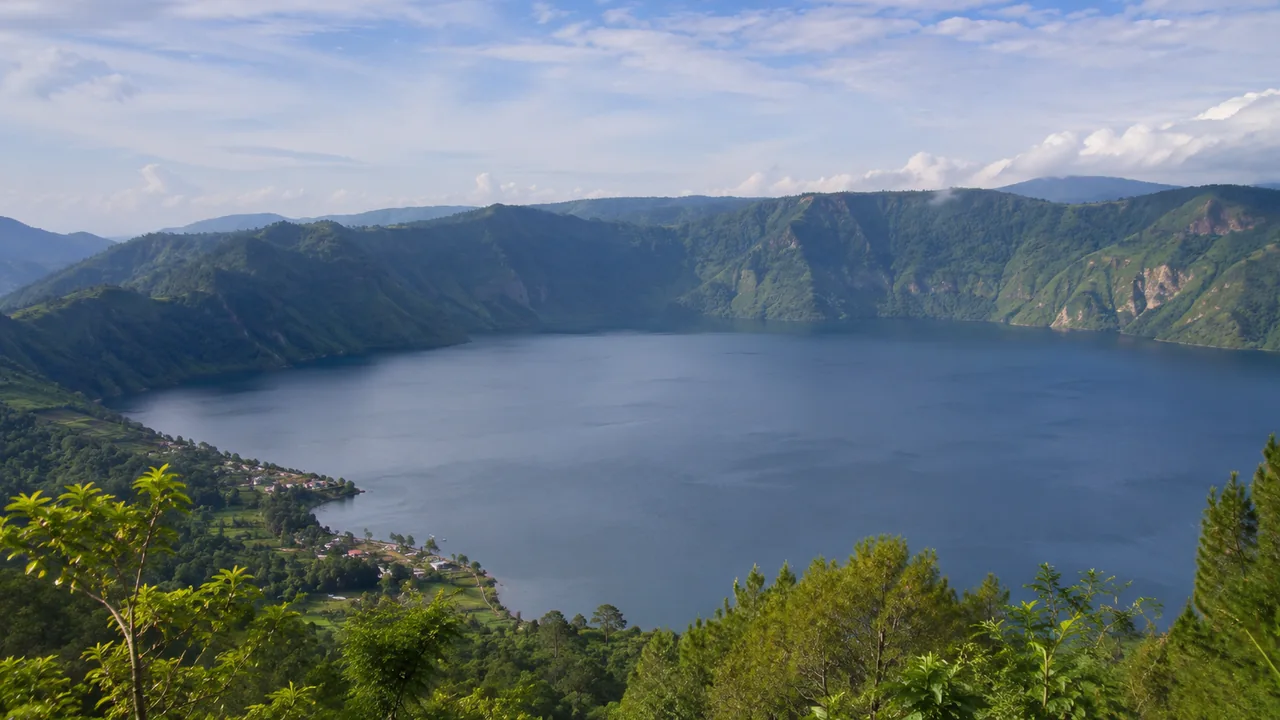
A huge eruption could end locally while its atmospheric effects continued elsewhere. That is the disturbing possibility behind discussions of a Toba-sized event: volcanic material reaching high into the atmosphere could alter sunlight, temperature and rainfall far beyond the volcano itself.
The climate effects of the Toba eruption are also a subject of genuine scientific disagreement. The eruption roughly 74,000 years ago provides an important case, but its global consequences cannot be reduced to a single settled story about years of darkness or humanity almost disappearing. Different evidence and model assumptions produce different estimates.
The answer to the title is therefore conditional. A very large eruption could disrupt climate over a period of years, but the size, distribution and severity of that disruption remain uncertain. Understanding why the estimates differ is more useful than choosing the most frightening number and presenting it as a forecast.
What does Toba-sized actually describe?
Toba is a volcanic caldera system in Indonesia with evidence of an exceptionally large prehistoric eruption. Referring to a Toba-sized event usually concerns the enormous scale of eruptive material, not a promise that every future eruption would have identical chemistry or atmospheric effects.
Two eruptions can be compared in one respect while differing in others that matter for climate. The amount and form of sulphur, injection height, atmospheric conditions and particle behaviour can change the response. A volume label alone does not specify all of those properties.
The phrase should therefore be a starting point for questions, not an answer. When a report claims to model a Toba-sized eruption, look for what it actually assumes. Otherwise the same label can conceal scenarios that are not physically equivalent.
Ash and sulphate aerosols are not the same thing
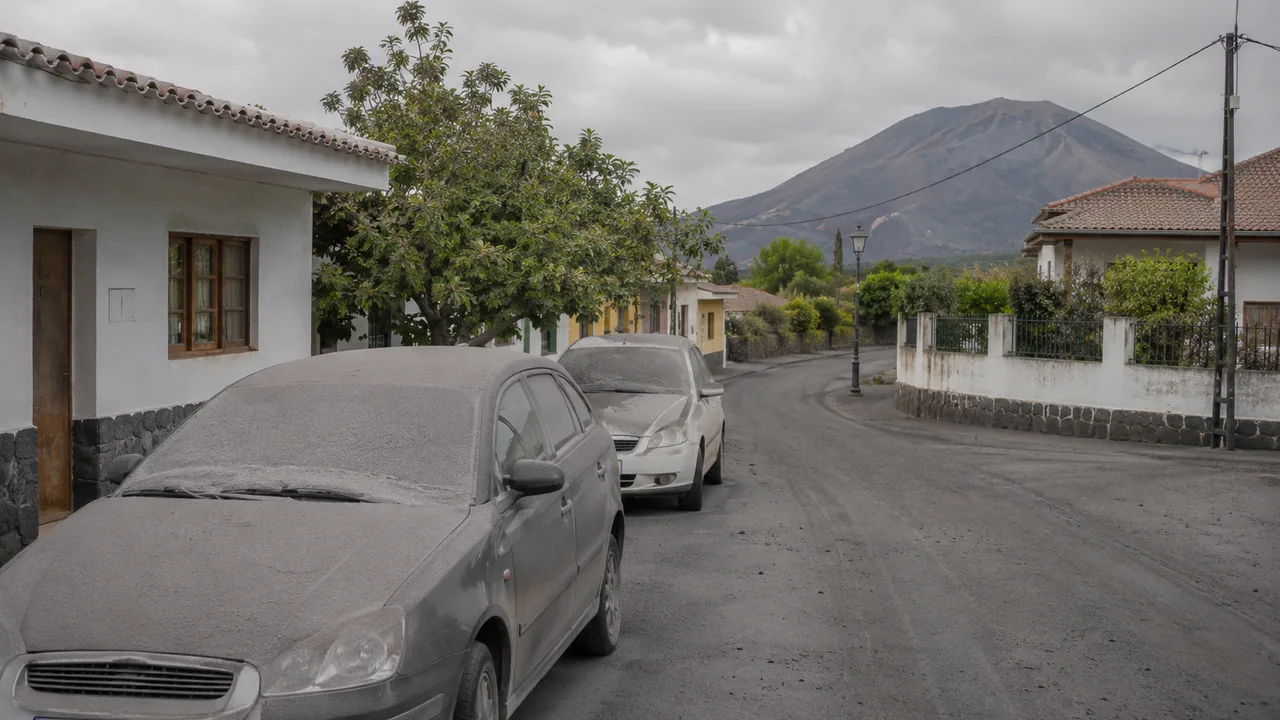
Volcanic ash consists of fragmented material. It can create serious local and regional problems through deposition and disruption. Atmospheric sulphate aerosols involve a different process, associated with volcanic sulphur and the formation of small particles that interact with radiation.
The distinction matters because visible ash near the ground is not a direct measure of the longer-lived climate effect. Nor does a large ash cloud automatically establish a particular global temperature change. The atmosphere's vertical structure and the properties of the material matter.
For a reader, the useful question is which mechanism a study is examining. A claim about aircraft encountering ash, a community's water system or changes in sunlight may concern related events but different pathways. Mixing them together makes the consequences sound simpler and more certain than they are.
Why particle size can change the answer
Aerosols do not influence climate solely through their total mass. Their size affects how they interact with radiation and how long they remain in relevant parts of the atmosphere. That creates an important uncertainty when reconstructing an ancient event.
McGraw and colleagues' 2024 study identifies poorly constrained aerosol size as a major reason estimates of supereruption cooling differ. Their analysis challenges the assumption that increasing volcanic sulphur must always produce proportionately greater global cooling.
That finding is not a claim that large eruptions are harmless. It concerns a particular climate mechanism and the confidence attached to modelled temperature outcomes. Local devastation, ash impacts and disruption to services remain separate questions. A result that limits one extreme estimate should not be stretched into a universal declaration of safety.
Global averages can hide very different regional experiences
A global average describes a broad result. It does not tell every farmer, city or ecosystem what conditions would be like locally. Temperature and rainfall changes can vary across regions and seasons, with different consequences for crops and water.
Black and colleagues' Toba modelling research examines uneven patterns and the possibility of regional climate refuges. The work helps explain why evidence from one region need not match a simple picture of uniform worldwide cooling.
This is an important limit on dramatic maps. A shaded world may imply that everyone experiences the same intensity and duration, even when the study does not show that. A serious explanation should ask where the effect occurs, during which season and with what uncertainty, rather than relying only on the global headline.
A climate model is a controlled question, not a recording
Researchers use models to explore how a system could respond under specified conditions. Inputs and representations determine which questions the experiment can answer. A modelled scenario is not a direct observation of every condition following an ancient eruption.
That does not make modelling arbitrary. It means the result must be read with its assumptions. Comparisons with physical records, sensitivity tests and other research help identify which conclusions are robust and which remain dependent on uncertain inputs.
For a non-specialist, the most useful habit is to ask what changes between scenarios. Does the study vary sulphur release, aerosol properties or background climate? If the answer changes greatly when an uncertain input changes, that uncertainty belongs in the public explanation, not in a footnote omitted from the headline.
The human near-extinction story is not a settled conclusion
Toba is often linked in popular accounts with a dramatic human population bottleneck. The attraction is obvious: one enormous event becomes a simple explanation for a major turning point. But the scientific record does not justify treating that account as an uncontested fact.
The climate research cited here discusses disagreement between modelled effects and archaeological or environmental evidence, including evidence from Africa. The relationship between an eruption, regional conditions and human populations requires more than noticing that events occurred within a broad historical period.
Readers should distinguish a hypothesis from a demonstrated causal chain. A proposed explanation can motivate useful research without becoming the only acceptable account. Claims that a future eruption must nearly eliminate humanity are especially weak if they rely on presenting the ancient debate as already resolved.
Why food systems would deserve close attention
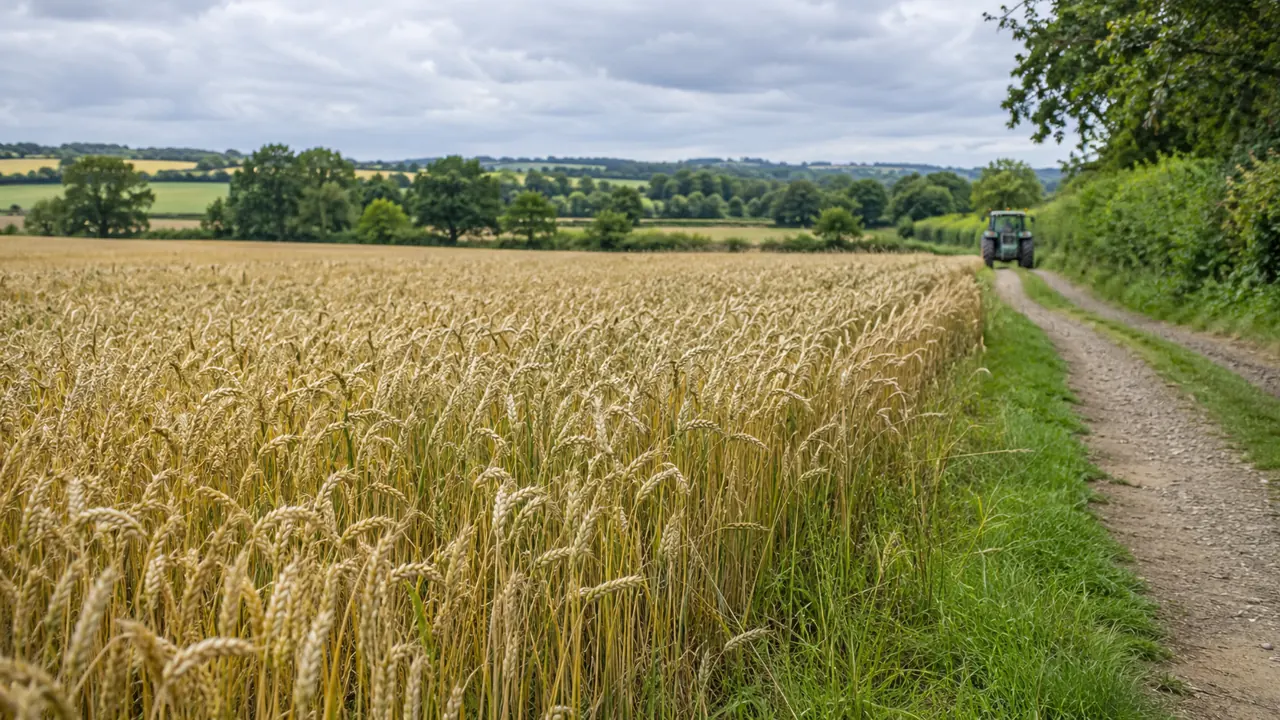
If an eruption changed growing conditions across important agricultural regions, food production could be affected. The outcome would depend on timing, crop sensitivity, water availability and the duration of the change. A temperature average cannot be converted directly into a number of meals lost.
Modern food security also depends on storage, trade, transport and purchasing power. A harvest problem in one region could be buffered by alternatives or amplified by other failures. Families might experience the consequences through availability and price even when their own local fields were not directly affected.
This is a conditional chain, not a prediction of global famine. Its value lies in identifying the links that would need monitoring. A careful assessment asks which harvests are affected and what alternatives remain, rather than assuming that every crop everywhere fails together.
Consider an illustrative comparison, without assigning invented figures. A seasonal change during a crop's vulnerable growth stage could matter differently from the same annual average produced mainly outside that stage. Two regions with similar temperature changes might also have different rainfall and access to replacement supplies. The climate measurement is therefore one input to a food assessment, not the finished answer. Keeping that distinction visible prevents a credible physical result from being used to support an unsupported casualty estimate.
Climate disruption would not be the only burden
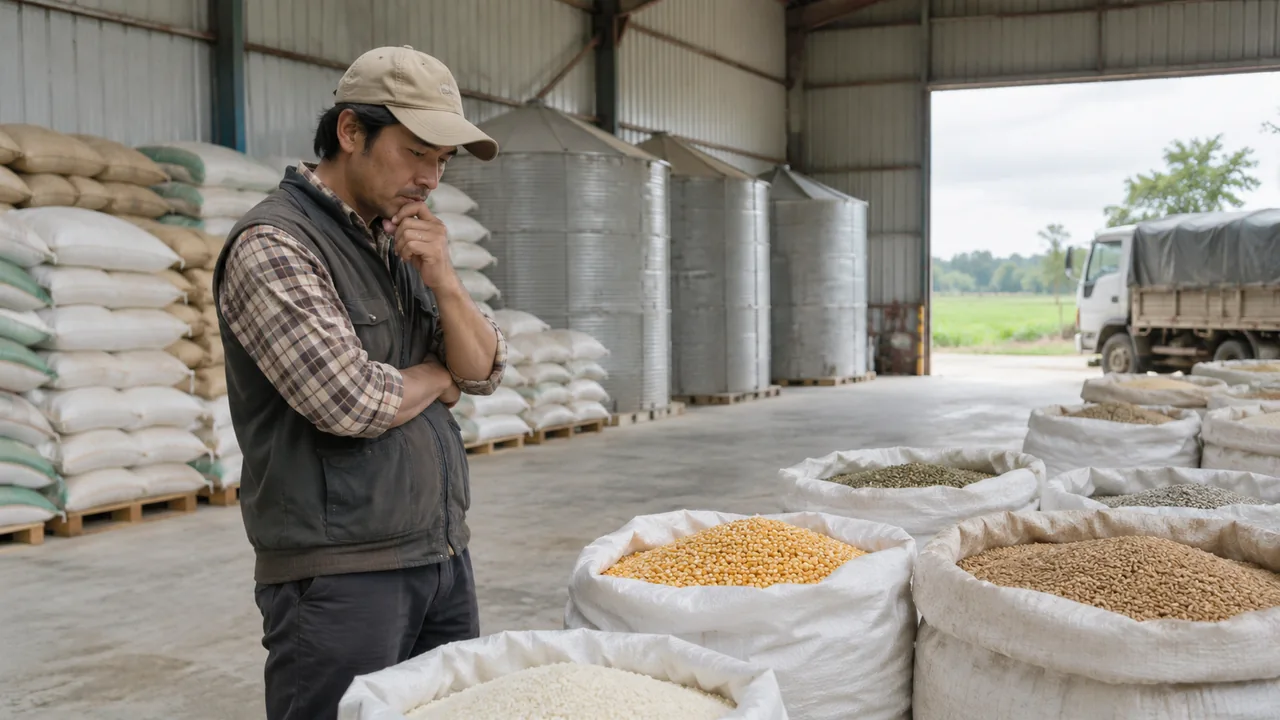
Near the eruption, direct volcanic hazards could dominate. Farther away, ash-related disruption to transport or infrastructure might matter before any longer-term climate signal became clear. Different communities could therefore experience different stages of the same wider emergency.
Our article on volcanic ash and drinking-water reliability examines one important service dependency. The discussion of Yellowstone's pyroclastic currents explains why a directly destructive current is different from a distant atmospheric effect.
Keeping those mechanisms separate helps explain why an uncertain cooling estimate does not erase other dangers. It also prevents a local problem being inflated into a claim that the entire world is experiencing identical conditions. Seriousness comes from accurate relationships, not from merging every consequence into one image.

What would matter to a UK household?
Britain's experience of a hypothetical distant supereruption would depend on verified pathways, not simply distance from the volcano. Travel, imported goods, energy use and weather-sensitive activities could become relevant if actual conditions supported those concerns.
A family should not infer a personal food forecast from an ancient eruption paper. Nor should it assume that living far away guarantees no consequences. The useful approach is to follow the particular disruption being reported and the organisations responsible for assessing it.
For example, a cancelled flight is a travel problem requiring information from the relevant operators and authorities. A claim about future harvests is an agricultural and economic assessment. Treating both as evidence of inevitable civilisational collapse would skip the intermediate facts that households need to make sensible decisions.
Read dramatic numbers with their units and boundaries
A claim of several degrees of cooling needs context. Is it a local seasonal result, an annual regional value or a global average? Is it a short-lived peak or an average across several years? Are the numbers observations, model outputs or a range of possibilities?
| Question | Why it changes the meaning |
|---|---|
| Which region is described? | A regional extreme is not a worldwide uniform condition |
| Which period is averaged? | A peak and a multi-year average are different quantities |
| Which inputs were assumed? | Uncertain emissions or particles can alter the result |
| Which effects were actually modelled? | Temperature alone does not calculate food access or deaths |
| What evidence was used for comparison? | Physical records can constrain or challenge the scenario |
A number without those boundaries may be memorable while remaining unsuitable for the conclusion attached to it.
The baseline matters too. A temperature anomaly describes a difference from a reference condition, not the final temperature experienced everywhere. A modelled change from its own starting climate cannot simply be pasted onto a different world without considering that difference. Likewise, a result for ancient ecosystems does not directly calculate the response of modern crops, infrastructure or trade. When comparing studies, check whether they are asking the same question before treating different answers as a simple contradiction. The disagreement may concern assumptions, measurements or scale rather than whether volcanic material can affect the atmosphere at all.
Why uncertainty should improve planning rather than stop it
It would be a mistake to wait for perfect knowledge before considering a severe low-frequency hazard. It would also be a mistake to plan around one extreme scenario as though all alternatives had been ruled out. The useful task is to identify actions that remain sensible across a range of outcomes.
For institutions, that might involve examining dependencies and response capacity. For readers, it means understanding where a claim is strong and where it remains conditional. Neither requires pretending that every unknown has a numerical answer.
Uncertainty should be specific. Saying that everything is uncertain can obscure well-established mechanisms. Saying that nothing is uncertain can conceal the assumptions controlling the result. A good explanation tells the reader which part of the chain is being discussed and what evidence would narrow it.
Avoid a false countdown to the next Toba
The age of a large prehistoric eruption does not establish when another event will occur. A climate paper exploring consequences is not a monitoring bulletin announcing that the volcano is about to erupt. Those are different kinds of information.
Before sharing a video, check whether the original source discusses the past, a modelled future scenario or current observations. A title such as what if can disappear when a clip is reposted, leaving viewers with the impression of a live warning.
The same care applies to reassuring content. A study challenging extreme global cooling does not guarantee that a particular active volcano is safe to visit. Current local restrictions and monitoring assessments remain necessary for real-world decisions near a volcanic system.
Your next step
Choose one report about a supereruption and identify its central mechanism. Is it discussing ash, aerosols, regional rainfall, global temperature or food systems? Then check the original study's assumptions and whether the report preserves them.
Pay particular attention to claims that turn a modelled possibility into a precise forecast for your family. Ask what connects the climate result to the practical consequence being asserted. If several links are missing, the conclusion is not ready to be treated as established.
A Toba-sized eruption could raise severe questions for the modern world. The strongest response is not to insist on either guaranteed catastrophe or guaranteed safety. It is to understand the mechanisms, respect the scientific disagreement and recognise why protecting connected systems matters before an extraordinary event tests them.
Frequently asked questions
Could a very large eruption affect climate for years?
Yes, long-lived atmospheric effects are a scientifically studied possibility. Their magnitude and regional pattern depend on eruption properties and atmospheric processes. A large eruption does not automatically establish a particular duration or severity of global cooling.
Do all scientists agree that Toba nearly wiped out humanity?
No. The relationship between the eruption, climate and human populations remains debated. Archaeological records, environmental evidence and models do not support presenting a simple near-extinction story as an uncontested conclusion.
Why does aerosol size matter?
Particle size affects interactions with radiation and atmospheric behaviour. A 2024 study identifies uncertainty in volcanic sulphate aerosol size as an important reason supereruption cooling estimates differ. Total sulphur alone does not settle the climate outcome.
Would the whole world experience the same change?
No. Regional and seasonal responses can differ substantially. A global average cannot describe every location's weather, harvest or water supply. Claims about local consequences need evidence at the appropriate scale.
Does this research mean another Toba-sized eruption is imminent?
No. Research on past eruptions and hypothetical climate effects is not a current eruption warning. Current monitoring and local protective instructions must be checked through the organisations responsible for the actual volcanic system.