
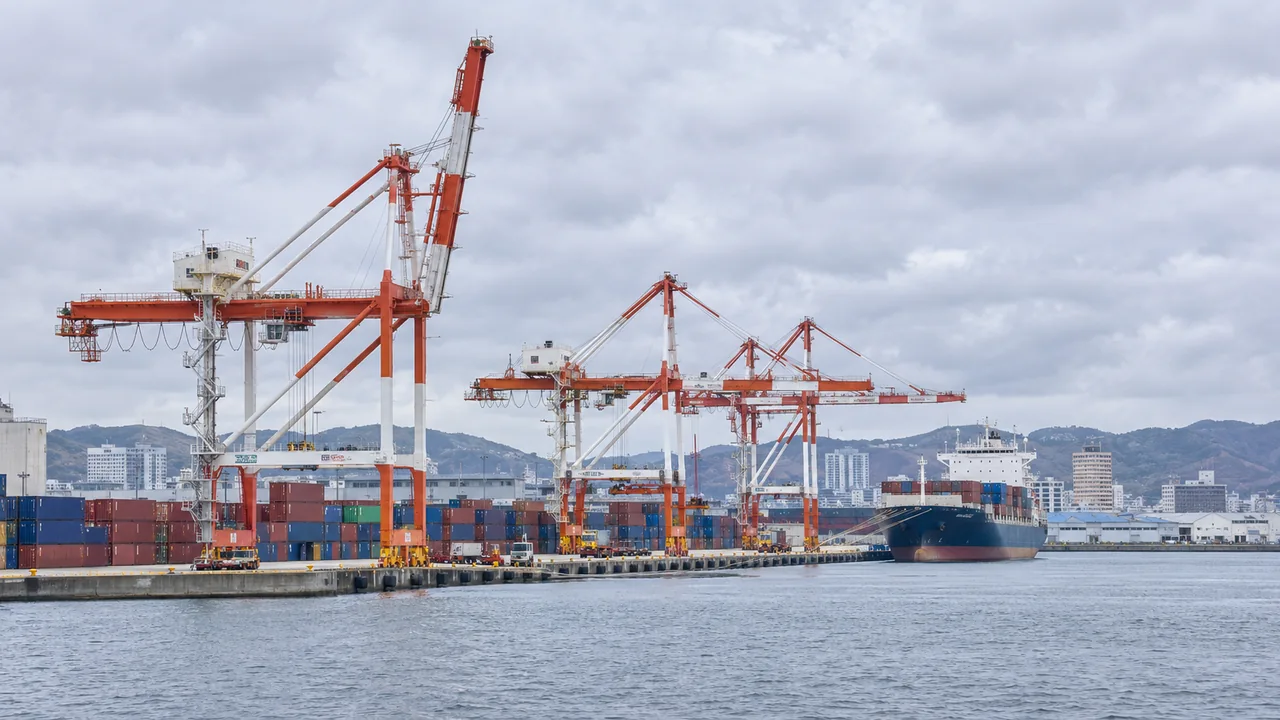
A factory thousands of miles away stops because one essential component does not arrive. The component's own factory is intact, but its supplier has lost electricity and the port handling its shipments is closed. That is how a major earthquake can reach places that never feel the shaking.
The risk of a Nankai Trough earthquake deserves attention because severe shaking along this active region of Japan could affect people, industry and transport at the same time. The consequences would begin with a humanitarian disaster in the affected communities, while some disruptions could travel through international production networks.
This is a risk explanation, not a prediction that a megaquake will occur on a particular date or that every global supply chain would collapse. The scale would depend on the actual earthquake, tsunami, damage and alternatives available. Understanding those links is more useful than treating a large economic estimate as a personal forecast.
What the Nankai Trough is
The Nankai Trough is a tectonically active region off Japan where one plate descends beneath another. Large earthquakes have occurred along it, with varying rupture areas and intervals. The possibility of a major event is part of Japan's long-term disaster planning.
The Japan Meteorological Agency's explanation makes clear that precise timing, location and scale are difficult to predict. Information indicating elevated potential does not mean an earthquake must occur, and an event can happen without a useful advance advisory.
Those distinctions matter because a long-term hazard statement is easily turned into a false countdown. A percentage over a period, an assessment following an event and a warning about current shaking are different kinds of information. They should not be presented as though they all mean an earthquake is certain tonight.

Why the first priority is people, not production
A severe event could injure and displace people while disrupting water, medical care and transport. Workers are members of those affected communities. A factory's ability to reopen cannot be separated from whether its staff and their families are safe.
That human reality should remain visible in an article about supply chains. A delayed export matters economically, but it is not the whole meaning of a disaster for the people living through it. Recovery decisions need to protect life and essential services as well as commercial activity.
For readers abroad, this perspective also improves judgement. A business interruption is not simply a machine waiting for a replacement part. It can reflect damaged homes, unavailable care, unsafe routes and a workforce dealing with urgent personal needs. Those conditions influence recovery in ways a production chart may not show.

A factory can stop without collapsing
An intact building still depends on electricity, water, communications, staff access and deliveries. Equipment may need inspection or adjustment after shaking. A company may also pause operations because another part of the network is unavailable.
These dependencies create several possible routes from earthquake to production interruption. The affected component might be manufactured elsewhere, but a damaged sub-supplier could prevent its completion. A finished product might be ready while a transport connection remains unusable.
The point is conditional, not a statement about a particular Japanese factory's present readiness. It explains why visible structural damage is an incomplete measure of economic disruption. Aerial photographs can show major destruction while missing the less visible reasons an otherwise standing facility cannot operate normally.
Ports connect local damage with international consequences
A port is more than a quay beside the sea. Cargo movement depends on access, equipment, power, workers and connections to inland transport. Damage or restrictions affecting one part can limit the usefulness of the others.
Japan's 2025 disaster-management white paper explicitly considers how damage to factories and ports in a Nankai Trough scenario could affect supply chains inside and outside Japan. Those are planning consequences, not observations of a disaster occurring now.
Alternative ports may help, but diversion is not costless or instantaneous. Cargo must reach them, capacity must be available and the wider logistics arrangement must work. A map showing another port nearby does not establish that it can immediately absorb every interrupted shipment.
The hidden supplier can be the important one
A company may know its direct supplier while having less visibility over the firms supplying that supplier. An apparently diversified purchasing arrangement can therefore share an underlying dependence. Several final products might rely on one specialised process or material.
Consider a fictional example. Three firms buy different finished assemblies, but all three assemblies require a coating from the same disrupted source. Counting three direct suppliers would make the network look more varied than its critical dependency actually is.
This is why supply-chain analysis follows relationships rather than company names alone. It asks what must be available for the next stage to function. The most important interruption may occur at a small, specialised point that receives little attention in general news about the earthquake.
Inventory changes the timing, not necessarily the outcome
Stocks can provide time for a business to respond. Their value depends on which items are held, how quickly they are used and whether replacements can arrive before they run out. A total inventory value does not reveal whether the essential component is included.
The same disruption can therefore appear at different times in different places. One company may stop quickly; another may continue until existing supplies are exhausted. A quiet first week abroad does not necessarily establish that no later effect will appear.
Equally, a delay does not prove that a severe shortage is inevitable. Alternative supply, prioritisation and restored production may reduce the effect. The useful assessment follows actual stocks, demand and recovery rather than assuming that either the first interruption or the first reassurance settles the whole story.
Substitutes are not always interchangeable
An alternative part or supplier may need to meet specifications, pass checks or fit an existing process. A superficially similar item is not automatically suitable. The difficulty depends on the product and the requirements involved.
This explains why a company cannot always solve an interruption by ordering from the first available seller. Changing supply can be a technical and operational task as well as a purchasing decision. It may require coordination across several stages.
For ordinary readers, the lesson is to avoid judging the response only by the existence of something similar on a website. The relevant question is whether a usable, approved alternative can reach the right place in time. That is more specific than saying that the world has plenty of factories.

How disruption could reach a UK household
Possible pathways include delayed goods, interrupted repairs, changes in availability and pressure on prices. The effect would depend on which products and services were connected to the affected network. Not every household would experience the same consequence.
A delayed appliance component is different from an interruption affecting essential medical equipment. A serious assessment should distinguish inconvenience from a problem that threatens health or a livelihood. The label supply-chain disruption can cover both, but it should not erase the difference.
Do not infer a universal shopping list from this scenario. Buying more than you need on the basis of an unverified prediction can worsen availability for others. Follow actual information from providers about a specific disruption rather than turning a distant hazard discussion into an instruction to panic buy.

Several failures can amplify one another
An earthquake might affect production and transport while emergency demand rises. Repair teams may need the same routes and materials that commercial activity normally uses. Damaged communications can make coordination harder precisely when accurate information is most valuable.
The severity depends partly on how many alternatives remain. A temporary interruption with usable substitutes is different from simultaneous failures across the routes, suppliers and services meant to provide backup. That is the core of a cascading risk.
| Link in the chain | Potential interruption | Question that determines severity |
|---|---|---|
| Production | A facility cannot operate | Which inputs or services are missing? |
| Inland transport | Goods cannot reach a port | Is an assessed alternative usable? |
| Port operations | Cargo movement is restricted | What capacity exists elsewhere? |
| Downstream assembly | A required item runs short | Are stocks and qualified substitutes available? |
| Household service | A repair or delivery is delayed | Is the need essential and what support exists? |
Planning estimates are not guaranteed losses
Disaster scenarios often combine assumptions about shaking, tsunami, exposure and response. A severe planning case can help identify weaknesses even when it is not a forecast of what the next event will produce.
Before repeating an economic figure, check its date, currency, geographic scope and scenario. Does it describe direct damage, interrupted activity or a wider modelled effect? Are the assumptions clearly stated? Combining different figures can count the same consequences more than once.
This article avoids a single headline loss figure because the mechanisms matter more to the reader than unsupported precision. A family or business needs to know which dependence could affect it. A very large total does not answer that question by itself.
An advisory is not an exact prediction
JMA's Nankai Trough information is intended to support understanding and protective action under particular conditions. It does not remove the fundamental limits of earthquake prediction. The absence of an advisory also does not establish that a major earthquake cannot happen.
That matters for both residents and readers abroad. A changing assessment should be read through its actual wording and applicable instructions. Do not translate increased potential into certainty, or an expired special advisory into a permanent declaration of safety.
The related article on earthquake early-warning limits explains another distinction. Warning after an earthquake has begun is different from predicting it in advance. Neither system can guarantee that every person or facility will receive enough time to complete a complicated response.
What businesses should explain clearly to customers
During an actual interruption, useful communication identifies the affected service or product, what is known about availability and what alternatives are being considered. It should distinguish a confirmed delay from a possibility still being assessed.
A promised recovery date should be treated carefully when it depends on damaged infrastructure or other suppliers. Customers can plan better when uncertainty is stated plainly than when a precise date is repeatedly announced without a reliable basis.
Reopening and normal output are also different milestones. A facility may resume limited work while waiting for staff, inputs or transport capacity to recover. Goods already delayed in the network may take additional time to reach customers. A photograph of restarted machinery is encouraging, but it does not establish that every downstream order is available immediately. Reporting the actual milestone helps customers understand progress without mistaking one restored function for the whole recovery.
For a household with an essential need, ask the provider about that need directly. Explain any medical, accessibility or care implications. A general statement about stock may not reveal whether assistance or an alternative arrangement is available for the particular situation.
Do not let the global story obscure local isolation
Mountainous areas, peninsulas and other locations can face access problems after a major earthquake. People in those communities may need immediate assistance while international reporting concentrates on industrial output and markets.
Our article on earthquake-triggered landslides explains how damaged routes can isolate survivors. That local mechanism can exist alongside international supply effects, but the two should not compete for recognition. The same event can create urgent human needs and broader economic consequences.
The most responsible public discussion keeps both in view. It asks how supplies can continue reaching affected people, not only when exports will return to normal. Protecting the communities at the centre of the disaster is part of any credible account of recovery.
Your next step
When reading a Nankai Trough headline, identify whether it concerns long-term hazard, a current official assessment or a modelled consequence. Then follow the particular pathway connecting the scenario with the effect being claimed.
For a household, focus on genuine essential dependencies rather than buying against every imaginable shortage. For a business, examine the less visible links behind direct suppliers and the assumptions behind alternatives. In either case, use actual provider information when a disruption occurs.
A severe Nankai Trough earthquake could affect supply chains well beyond the shaking zone. That possibility deserves attention because modern systems connect distant lives. Understanding those connections supports more useful decisions than either assuming distance guarantees safety or declaring that one earthquake must stop the entire world.
Frequently asked questions
Could a Nankai Trough earthquake affect countries outside Japan?
Yes. Damage affecting production, ports and transport could propagate through international supply networks. The extent would depend on the actual event, affected dependencies, stocks and usable alternatives. It would not be identical for every product or country.
Can scientists give a precise date for a Nankai Trough megaquake?
No precise date is supplied by this article. JMA explains the limits of predicting timing, location and scale. Elevated-potential information is not certainty, and a major event can occur without a useful advance advisory.
Could an undamaged factory still stop working?
Yes. Electricity, water, staff access, inputs and transport can all affect operations. A building remaining standing does not establish that the complete production and delivery system is functioning.
Would using another supplier immediately solve the problem?
Not always. Alternatives may share hidden dependencies or require technical checks and suitable capacity. A substitute must be usable and able to reach the right place in time, not simply appear similar in a catalogue.
Should UK families panic buy because of this scenario?
No. This is a risk explanation, not a current shortage instruction. Follow actual information about essential products or services and ask providers about specific needs. Unnecessary buying can worsen availability without addressing the real dependency.