
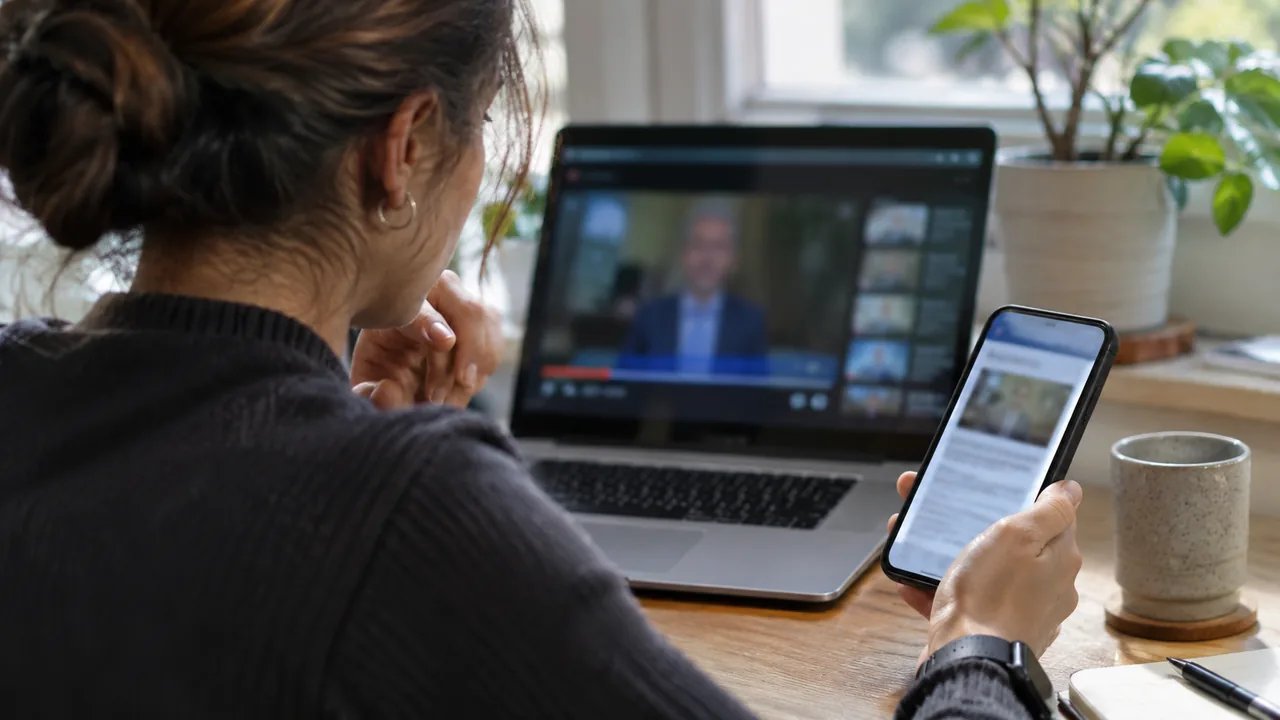
A short video appears in your family group. A familiar public figure seems to announce an attack, a bank closure or a threat to a community. People begin forwarding it before anyone finds the original broadcast. Within minutes, a piece of invented media can influence real journeys, payments and decisions about safety.
Deepfake misinformation matters because a convincing image can borrow the authority of someone who never said or did what it shows. The danger grows when the subject is already frightening and people feel that checking will waste precious time. The answer is not to distrust every recording. It is to stop treating appearance, familiarity and popularity as independent proof.
What a deepfake is, and what it is not
A deepfake is synthetic or manipulated media made using AI methods to imitate a person or event. It may involve a voice, face, entire video or only one part of a genuine recording. Some uses are openly labelled entertainment. Others are designed to make an audience believe that something happened when it did not.
Not every misleading clip requires sophisticated technology. An old recording with a false date, a selective edit or an invented caption can be just as effective. If the image is real but the claimed location is false, a detector looking only for synthetic pixels may miss the actual deception.
This is why the useful question is broader than whether a clip looks artificial. What claim is being made? Where did the material originate? Does independent evidence support that claim? A genuine-looking scene and a truthful account are related questions, but they are not the same question.
Why a rumour can become a crisis
False information can affect behaviour before it is corrected. A fabricated warning about a particular place may cause a crowd to flee, divert people towards a dangerous route or draw them into a confrontation. A false financial announcement may push people towards fraudulent payment instructions.
The harm depends on the setting. A joke among friends is different from a convincing fake circulating during unrest. Existing fear, poor communication and distrust can give a rumour more power. A video may not create those conditions, but it can exploit them.
Imagine an unverified clip claiming that a local water supply has been poisoned. Parents call schools, shops face a rush and genuine service information becomes harder to find. If a scam link is added, frightened people may also hand over personal information. This imagined example shows how an information failure can create several practical problems without the original claim being true.
What criminals gain from synthetic media
The FBI's guidance on generative-AI fraud describes impersonation using text, images, audio and video. The common purpose is to make a request seem more credible. A familiar face or voice can supply the emotional pressure that an ordinary written message lacks.
The important warning is about verification, rather than the idea that every synthetic image is criminal. An openly created illustration is different from a recording presented as evidence of a real event. A responsible publisher explains that distinction. A fraudster benefits when the audience does not notice it.
For readers, the practical issue is the action being requested. Does the clip ask you to send money, reveal a security code, leave a location or target another person? The higher the consequence, the more important an independent check becomes. A moving story should not be allowed to replace that check.

The first minute: slow the decision, not emergency help
If the message describes an immediate danger that you can directly observe, act on the danger and contact emergency services as appropriate. Verification advice is not a reason to remain beside a fire or ignore someone who needs urgent assistance. The issue is how to handle an unverified remote claim.
For that claim, pause before forwarding, paying or changing plans. Open a trusted source independently. Look for the same announcement on the relevant organisation's own channel, and compare the date and location. A screenshot of an official-looking account is weaker evidence than finding the announcement yourself.
If someone you know sent the clip, ask where they obtained it. Their honesty does not establish the source's reliability. People often share alarming material because they want to help. A calm request for the original source gives them a useful next step without turning the discussion into an accusation.
Check the source before inspecting the pixels
The original upload can reveal context that disappears when a clip is copied. It may be labelled satire, an exercise or an illustration. Its date may show that it has nothing to do with the event now being discussed. A quoted speaker may have corrected the claim elsewhere.
Follow the evidence back as far as possible. A post that cites another post, which cites an unnamed account, has not gained three independent confirmations. It may simply be the same unsupported claim travelling through several people. Multiple reports are useful only when their evidence is genuinely separate.
Pay attention to location too. A familiar language, vehicle or building style can be misread. Avoid treating a guess about a skyline as proof. If the location matters to a safety decision, seek confirmation from reliable local reporting or the responsible authority rather than relying on a crowd of confident comments.
Why visual clues are useful but insufficient
Unnatural lip movement, inconsistent light or odd details can justify suspicion. Their absence does not establish authenticity. Quality varies, clips are compressed and a real recording can also contain strange shadows or motion. A single visual test is not a dependable verdict.
Detection tools have limits as well. They may perform differently on different material, and the result may change after editing or compression. A confidence score should not become an accusation against a person without supporting evidence. Uploading a private family recording to an unknown detector can also create a separate privacy problem.
Use visual examination as one part of a wider check. Combine origin, context, independent reporting and the requested action. If those remain uncertain, say so. You do not need to prove exactly how a false clip was produced before deciding not to spread a harmful claim.
The opposite danger: dismissing real evidence as fake
Deepfakes can weaken trust in two directions. A fabricated recording can be believed, while a genuine recording can be dismissed simply because synthetic media exists. That gives a person accused of wrongdoing an easy rhetorical escape if the audience assumes that nothing can be known.
The answer is a consistent evidential standard. Ask how the recording was obtained, whether the sequence is complete and what other information supports it. Apply those questions regardless of whether you like the person involved or agree with the claim. Convenient disbelief is no more reliable than convenient belief.
For serious allegations, avoid conducting a public trial in a comment thread. Share relevant evidence with appropriate professionals or authorities through a suitable route. Protect private information and vulnerable people. Verification should improve the quality of a decision, rather than become an excuse for harassment or endless speculation about someone's identity.
A simple decision table for alarming clips
| Situation | Better next step | Action to avoid |
|---|---|---|
| Claimed official warning | Open the authority's own website or channel | Trusting a copied badge or screenshot |
| Request for urgent money | Verify through a separate known contact | Paying because a voice sounds familiar |
| Claim about a local incident | Compare current local reporting and official updates | Forwarding without date or location |
| Uncertain accusation | Preserve evidence and use an appropriate reporting route | Naming or threatening an unverified suspect |
| Clearly labelled illustration | Treat it as explanation, not event evidence | Reposting it as documentary footage |
This approach works even when you cannot identify the exact technology used. It concentrates on the part that affects people's lives: whether the claim is supported and whether the response is justified.
Family groups need a way to correct mistakes
A group can agree that urgent claims should include a source, date and place. One person can check the original announcement while another verifies a travel or service consequence. The goal is a workable habit, not a rule that every casual message needs a research report.
When a false claim has already been shared, correct it in the same group. State what was wrong and link to the better information. Avoid repeating the most inflammatory detail more than necessary. A correction is easier to use when it tells people what they should now do differently.
Make it safe for someone to admit uncertainty. Ridicule can encourage people to defend a bad claim or hide the next mistake. Children should also know that they can ask an adult about a frightening clip. They should not have to decide alone whether a voice, face or apparent warning is real.

Schools, workplaces and local organisations
An organisation needs a known route for important announcements. If staff, parents or residents do not know where to check, a convincing fake can fill the gap. Publish clear contact details and explain how sensitive changes, such as payment instructions, will be verified.
Prepare a short response for impersonation. Identify who can confirm an announcement, who contacts the platform and who gives updates to the affected audience. A prompt, factual statement can help even while the full origin of the fake is being investigated.
Do not overload the audience with technical claims. People first need to know whether a message is genuine, whether a service is affected and what action to take. If the answer is still uncertain, say what is being checked and when the next update is expected. Reliable communication makes a rumour less useful to the person spreading it.
Why the threat matters during conflict and disasters
An audience facing a real emergency may have little time, poor connectivity and limited access to trusted contacts. A fabricated evacuation instruction or atrocity claim can exploit those pressures. The consequences can extend beyond the people who see the original clip if others repeat it as established fact.
The related article on regional war escalation explains why misinterpretation can be dangerous when decisions are already tense. The article on AI voice impersonation looks at the same credibility problem inside a family or workplace. The scale differs, but the need for an independent check remains.
Protecting trust is a practical task. Use clear sources, correct errors and resist claims that assign collective guilt to a nationality, religion or community. Concern for children's future should make us more careful with evidence, because the people harmed by a rumour may have no chance to answer it before others act.
Keep evidence intact when reporting a harmful fake
If a clip contains a threat or a serious impersonation, preserve its source details and use the platform's or relevant organisation's reporting route. Avoid editing the only copy in a way that removes context. Record when and where you encountered it, while protecting private information. Publicly reposting the material to expose it can give the false claim a larger audience. A useful report helps someone examine the original evidence without creating another wave of confusion.
A real clip can carry a false emergency story
Imagine a genuine recording of people leaving a railway station. A new caption claims that the scene shows an evacuation after an attack today. The recording may be unaltered, but the emergency claim can still be false. A viewer searching only for unnatural faces or computer-generated details may miss the deception entirely.
Begin by separating the visible event from the explanation attached to it. What does the image actually show? What information supplies the date, location and cause? Are those details visible in a reliable original source, or have they been added by the account now sharing it? The distinction often reveals where verification is needed.
A reverse-image or source search may help locate earlier appearances, but a result still needs context. An older upload is useful evidence about timing; a similar-looking scene is not automatically the same recording. If you cannot establish the origin, do not convert uncertainty into a confident declaration of authenticity or fraud.
The action requested remains important. A clip that encourages people to avoid a place, send money or blame a community can cause harm even if it contains no sophisticated AI. Check those consequences before forwarding it. The person who receives your message may assume you have already verified the story.
When correcting the claim, explain the essential distinction plainly: the recording may be real, while the date or explanation is unsupported. A correction should travel through the same route as the original claim. Link to the better evidence where available. That gives readers a usable reason to change their judgement, rather than merely ask them to trust a competing assertion. It also teaches a habit that remains valuable as synthetic media becomes harder to recognise by appearance alone.
What to do with one doubtful clip today
Take a recent example from a group you use and trace its source without reposting it publicly. Check the date, original context and the action it asks people to take. Then discuss one simple verification habit with the group. A small repeatable practice is more valuable than a long list of visual tricks nobody remembers under pressure.
There is no need to become a forensic video analyst to improve your decisions. The aim is to keep a persuasive image from taking control of the next step. When the evidence is uncertain, preserving time, dignity and an independent source of information can prevent an invented scene from creating real harm.
Frequently asked questions
Can I spot a deepfake just by watching the mouth?
Sometimes an unusual detail raises suspicion, but no single visual clue reliably proves or disproves manipulation. Check the original source, date and context, then look for independent confirmation. A convincing appearance should not be the only basis for a serious action.
Are all misleading videos made with AI?
No. Real recordings can be given a false caption, date or location, or edited to remove context. Checking the claim around the recording is therefore as important as examining whether the recording itself has been synthetically produced.
Should I forward a warning just in case it is true?
An unverified warning can cause confusion or unsafe behaviour. Check a relevant official source first where possible, and share that source with its current instructions. If you directly observe immediate danger, act on it and contact the appropriate emergency service.
What if I have already shared a false clip?
Correct it in the same place, explain the essential error and provide reliable information. Ask others to avoid passing on the original claim. A clear correction helps people change their decisions and encourages a healthier habit of checking before sharing.
Can a deepfake detector settle every argument?
No. Tools have limits and may produce incorrect results, particularly after editing or compression. Use their output cautiously alongside origin and context. Do not upload private recordings to an unknown service or accuse a person solely because of a detector's score.