
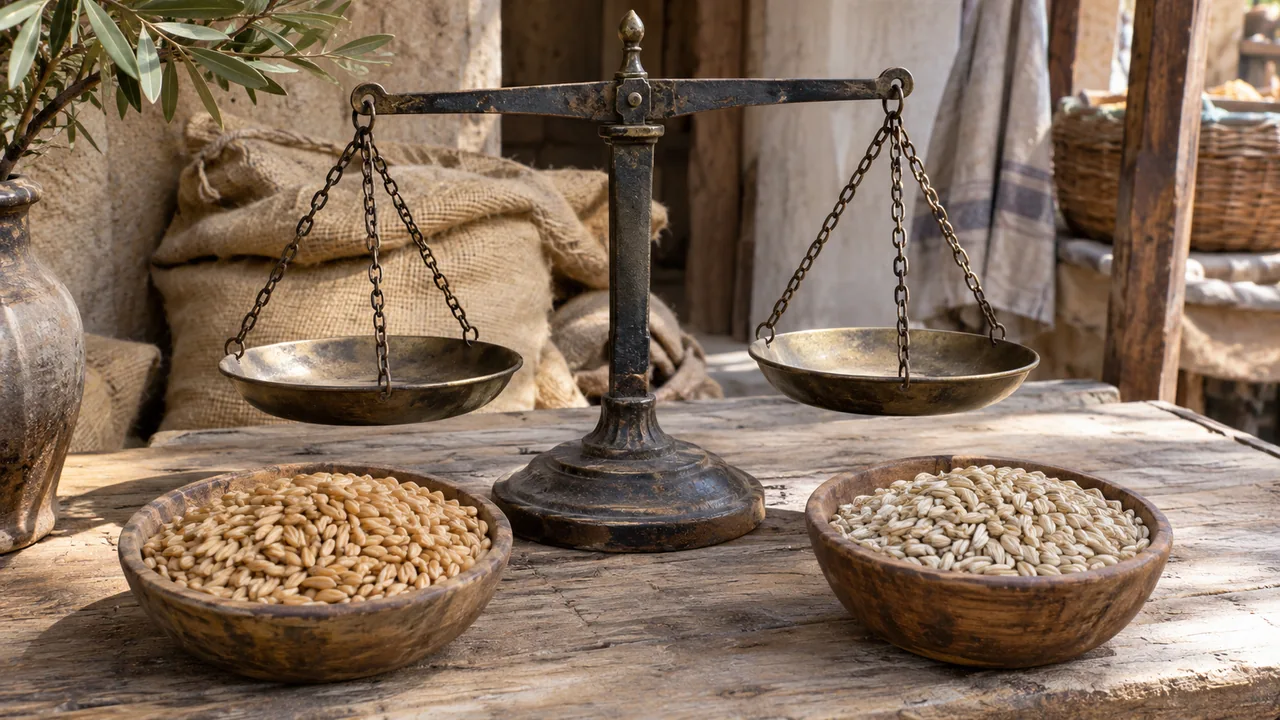
Food can be visible and still be beyond a family's reach. A market may have grain, yet the price can force a parent to choose between enough to eat and another essential need. That is the disturbing human reality readers often recognise in Revelation's Black Horse imagery.
Revelation's Black Horse famine warning is commonly associated with scarcity, costly grain and the vulnerability of ordinary people. The passage is part of a religious vision, and Christians differ over its historical, symbolic and future significance. It is not a live food-price forecast for a particular year.
This article explains the imagery and the concern behind it. It also separates biblical interpretation from the evidence used to assess real hunger. The warning is serious enough without declaring every increase in a shopping bill to be proven fulfilment of prophecy.
What appears when the third seal is opened
In Revelation 6, the opening of the third seal introduces a black horse and a rider holding a balance. A voice names quantities of wheat and barley in exchange for a denarius and gives an instruction concerning oil and wine.
Those details create an economic image: measured food and a price attached to it. The passage does not simply show an empty field. It invites attention to what people can obtain and at what cost within the vision.
The surrounding horsemen also matter. Conquest, violence and death appear in the wider sequence, but their imagery should not be collapsed into one undifferentiated claim. Reading the chapter helps distinguish what is actually described from the modern explanations a commentator may add.
Why a balance is such an unsettling object here
A balance suggests that an essential resource is being measured carefully. In the context of grain and price, readers often understand a picture of constrained access rather than abundance that everyone can enjoy freely.
The emotional force comes from ordinary need. A person does not need to be wealthy or politically influential to be affected by the price of food. A household's ability to obtain enough can become precarious while commerce continues around it.
This is an interpretation of the image, not proof of a particular modern rationing system. A photograph of scales in a shop cannot establish a prophecy. The relevant question is how the biblical details contribute to the passage's meaning, rather than whether an everyday object can be found somewhere in today's world.
What a denarius contributes to the picture
The coin belongs to the world of the text, not a modern sterling price list. Matthew 20 uses a denarius as the agreed daily payment in its vineyard-workers parable. That provides a scriptural point of comparison, not a universal wage table for every ancient occupation.
Readers commonly see the grain prices in Revelation as conveying a painful burden on ordinary purchasing power. The point should not be converted into an exact claim about how many pounds a future loaf will cost. Modern currencies, products and wages cannot be mapped onto the passage through a simple exchange rate.
An explanation is stronger when it preserves that limit. The imagery can communicate distress without pretending to provide a calculator for the next economic crisis. Precision invented by the interpreter should not be attributed to the biblical text.
Wheat and barley show a choice under pressure
The passage names different grain quantities for the same coin. That detail can be read as a household facing constrained choices rather than enjoying ordinary abundance. What can be afforded becomes central to the scene.
It does not follow that the text supplies a complete nutritional account or predicts one modern crop's exact price relative to another. The literary image and a present-day agricultural assessment are different kinds of information.
The useful human question is what happens when people must continually substitute, reduce or sacrifice essentials to obtain food. A choice can remain technically available while becoming deeply damaging to wellbeing. Saying that something can still be bought does not establish that a family can obtain enough without serious hardship.
The oil-and-wine instruction has more than one reading
Readers have proposed different explanations for the instruction concerning oil and wine. Some see an image of uneven hardship, with certain goods spared while staple grain is costly. Others understand different limits or features within the vision.
This article does not present one disputed explanation as the only Christian answer. The passage should be examined within a clearly stated interpretive approach. The uncertainty is part of a responsible account rather than a detail to remove because one version sounds more dramatic.
What can be discussed without settling that debate is the ethical concern about unequal exposure. In real crises, people can experience the same market very differently because their resources differ. That observation does not prove the passage's fulfilment; it explains why its imagery continues to resonate.
Scarcity and access are related but different problems
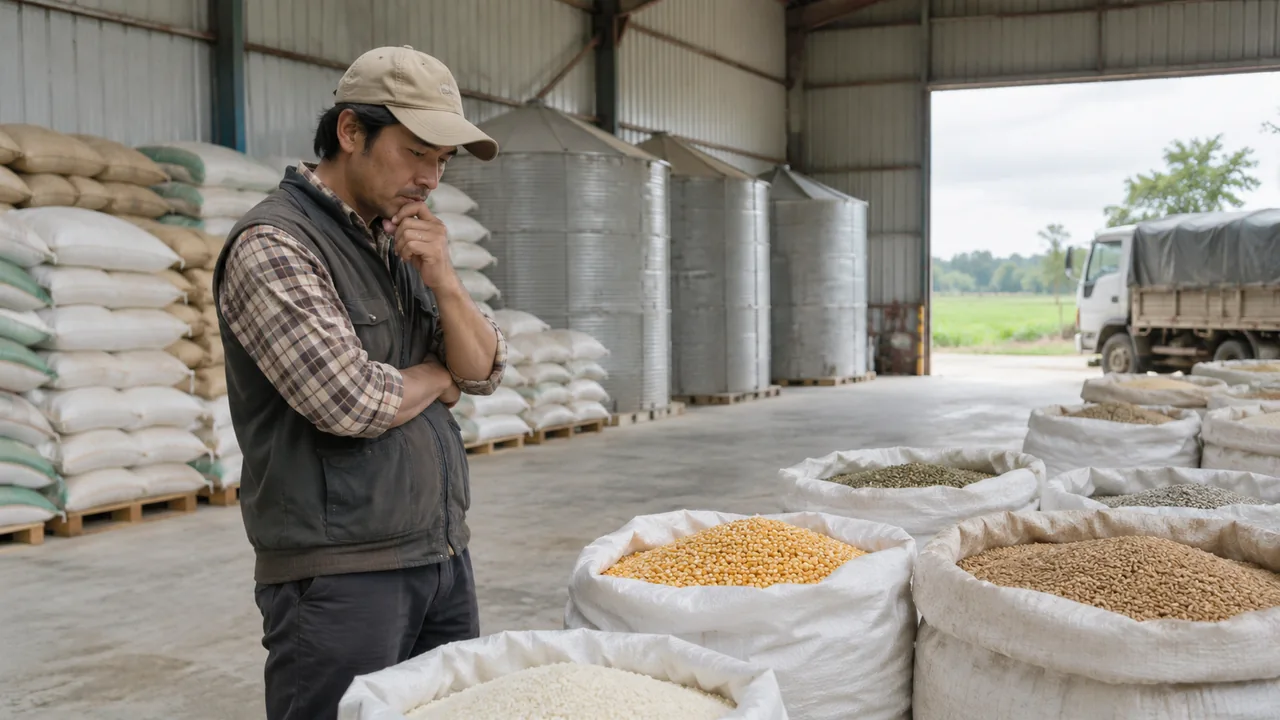
Food can be scarce because production or delivery is interrupted. People can also go hungry when food exists but they lack the means or permission to obtain it. The two problems may occur together, but they are not identical.
Consider an invented example. One town has little food arriving after transport damage. Another has stocked shops but many households have lost income. Both can face serious food insecurity through different pathways. A response suited only to one may not solve the other.
This distinction helps readers connect the image with practical human concerns without overclaiming theology. The question is not merely whether a warehouse contains grain. It is whether people can obtain adequate food reliably and without destroying the other conditions necessary for their lives.
A high food bill is not automatically a famine classification
The word famine has a specific technical use in humanitarian assessment. The Integrated Food Security Phase Classification's explanation distinguishes severe household conditions from an area-level famine classification involving multiple indicators.
A household can need urgent help before an area meets that classification. Equally, an uncomfortable price rise does not establish that the technical conditions are present. Using the word accurately protects the seriousness of both the household's need and the wider assessment.
The site's hypothetical DEFCON scenarios below are not IPC classifications. They should not be used to announce a real famine or replace professional humanitarian analysis. A religious image, a scenario and a technical assessment each have a role, but they should not borrow authority from one another without explanation.
Why war and environmental disruption can compound hardship
Conflict can damage production, movement and access. Environmental hazards can affect harvests and livelihoods. When several pressures occur together, alternatives may become less available precisely when people need them most.
That is a conditional risk pathway, not a statement that every war or poor harvest causes famine. The actual effect depends on the affected population, institutions, trade and support. A serious claim should identify those links rather than stop at a dramatic cause.
Our article on asteroid impacts and food systems examines an unusual physical scenario. The discussion of Toba's climate effects considers another uncertain mechanism. Neither should be treated as evidence that Revelation's sequence is currently unfolding. Different analyses can illuminate vulnerability without becoming a single prophetic proof.

A family can suffer before a national average looks extreme
Average prices and national supplies do not describe every household's access. A person may lose income, face additional care costs or live where alternatives are limited. Their practical situation can deteriorate while a broad indicator appears less alarming.
That does not make the broad indicator false. It means it answers a different question. A useful account should consider both the larger system and the people whose circumstances place them at particular risk.
The concern is especially clear where children or dependent adults are involved. A caregiver may reduce their own consumption or postpone another need to protect someone else. The ethical response is to recognise the hardship and seek appropriate support, not use the family's struggle as a prop in an argument about who predicted the crisis first.

Read the prophecy without treating a headline as its final key
Some Christians interpret the Black Horse primarily through future events. Others emphasise the first readers' world or recurring patterns of scarcity and injustice. An article should state the approach rather than imply that one modern news item settles every interpretive question.
A price chart can be checked as economic evidence. A claim that the chart fulfils Revelation requires an additional theological argument. The existence of a genuine price change does not automatically prove that argument.
| Material | What it can establish | What requires another step |
|---|---|---|
| Revelation's passage | The words and imagery being interpreted | A specific modern identification |
| A market report | Measured prices in its stated setting | Every household's experience |
| A humanitarian assessment | Conditions under its method and scope | A theological conclusion |
| A commentator's prediction | What the commentator claims | Independent confirmation that it is correct |
Beware of claims that profit from immediate fear
A speaker may connect a real concern with a demand to buy a product, send money or abandon ordinary arrangements immediately. The emotional power of feeding a family can make the demand feel urgent even when its evidence is weak.
Separate the need from the sales claim. A household may genuinely need help with food while an expensive package offers little relevant value. A person may sincerely believe a prophecy while still being mistaken about a seller's product or deadline.
Do not assume that refusing the sales pitch means refusing faith or ignoring hunger. Ask what the product or appeal actually does, who is responsible and how its claims can be checked. Honest assistance should be able to explain its purpose without making independent scrutiny seem morally forbidden.

Compassion is more useful than speculation about blame
People experiencing hunger should not be described as deserving it because a commentator assigns them a place in a prophetic narrative. The existence of a religious interpretation does not establish the moral condition of an affected population.
The same care applies to accusations against groups said to be causing a foretold famine. Real claims about responsibility require evidence. National, religious or ethnic identity cannot supply that evidence on its own.
A serious reading can motivate concern for people rather than reduce them to symbols. Ask who needs assistance, which verified organisations can help and how avoidable suffering can be reduced. The reality of a hungry child deserves attention whether or not readers agree on the passage's future significance.
Discuss the warning without teaching helplessness
If the message becomes that nothing can be done, it can undermine the action the human problem requires. Real food crises need attention to access, institutions and support. A theological expectation does not make those responsibilities disappear.
For a worried household, begin with actual circumstances. Is there a current difficulty obtaining food, or is the fear driven mainly by a prediction? The first calls for relevant practical help; the second calls for careful examination of the claim and thoughtful counsel.
Both can be discussed respectfully. Avoid ridiculing sincere concern, but do not let concern justify an unsupported certainty. A family can read the passage, care about future risks and still make decisions based on verified conditions rather than an invented date for worldwide scarcity.
Your next step
Read the whole horsemen passage and identify the details associated with the Black Horse. Keep its grain, balance and coin imagery separate from the modern explanations a speaker adds. Ask whether those explanations are presented honestly as interpretations.
When reading a real hunger report, check the location, period and method. Distinguish price pressure, household food insecurity and technical famine classification. If your household needs assistance, seek help relevant to the actual need rather than waiting for a debate over labels to be settled.
The image is disturbing because it places everyday survival under economic pressure. That concern remains valuable when expressed accurately. It should lead towards clear understanding and compassion, rather than a claim that every expensive shopping basket proves a prophecy or that people suffering hunger have become characters in someone else's countdown.
Frequently asked questions
What does Revelation's Black Horse carry?
In Revelation 6, the rider carries a balance, and a voice names grain quantities and a price. The imagery is commonly associated with scarcity or painful economic pressure, within the wider religious vision.
Does the passage predict an exact modern food price?
No exact sterling price or contemporary date is established by the text. Converting the coin and grain image into a precise future shopping bill requires assumptions that should not be presented as the passage's explicit statement.
Do all Christians interpret the oil and wine in the same way?
No. Different readings explain the instruction differently. A responsible account identifies its interpretation and acknowledges uncertainty instead of presenting one disputed explanation as universal Christian agreement.
Is every rise in food prices technically a famine?
No. Humanitarian famine classification uses specific evidence and scope. Households can still need urgent support before an area meets that classification. Accurate terminology should not be used to dismiss genuine hardship.
Does a real food crisis prove prophetic fulfilment?
A real crisis establishes a human need and requires factual assessment. Identifying it as a particular prophecy's fulfilment is an additional theological interpretation. The first should not be treated as automatic proof of the second.