
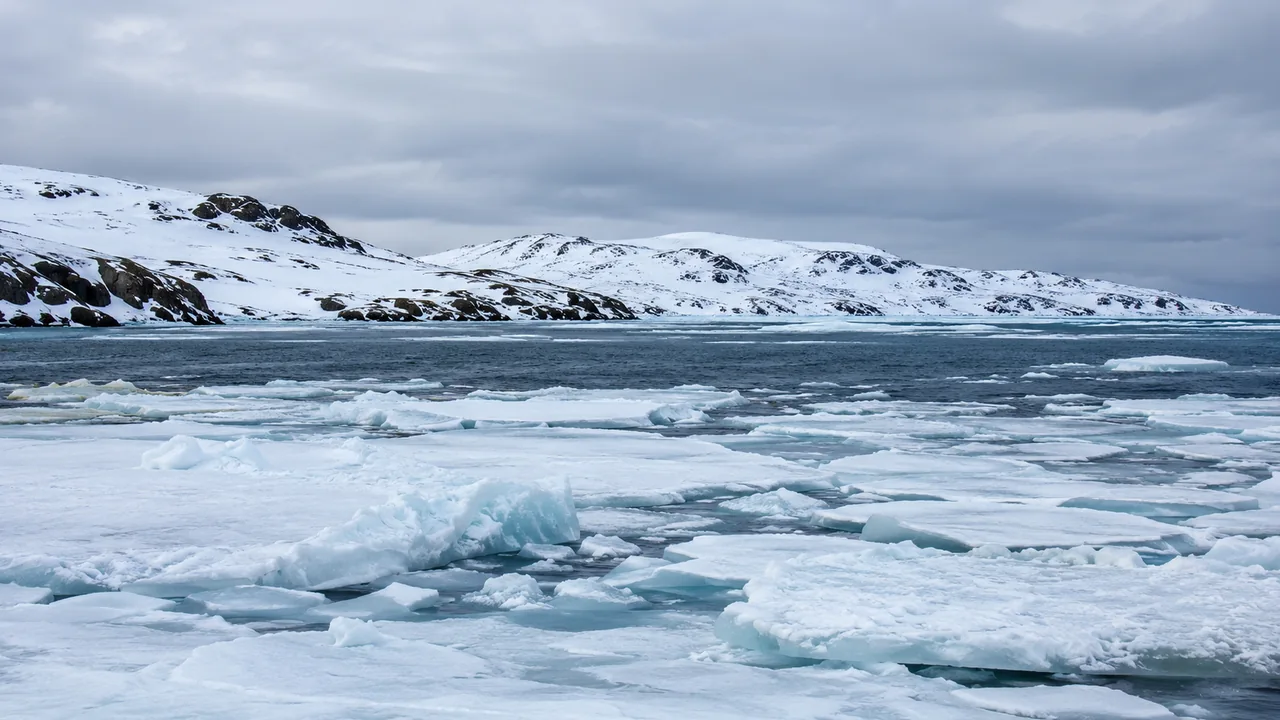
Imagine a world where ice reaches far beyond the poles, ordinary farming has lost most of its usable land and keeping a settlement warm is a permanent engineering problem. Could people survive? Some form of protected human survival might be conceivable under carefully specified conditions, but nobody can responsibly guarantee that modern civilisation would endure a near-global freeze.
Human survival in a Snowball Earth scenario is a thought experiment about an extreme climate state, not a forecast for the coming winter. The ancient glaciations associated with the term occurred long before humans existed. Their exact extent and environmental details remain subjects of scientific study.
The useful question is not which fashionable shelter to buy. It is what systems would have to keep working for people to obtain energy, water, food and care when the surrounding environment no longer supported ordinary life. That reveals both the severity of the hypothetical threat and the limits of confident survival promises.
What Snowball Earth actually means
Snowball Earth refers to ancient episodes of global or near-global glaciation. The debate includes how much of the ocean was ice-covered and whether important areas of open water or other refuges remained. The label does not mean that the planet became a solid block of ice all the way to its centre.
NASA GISS's historical discussion of the hypothesis illustrates how researchers use geological evidence and climate models to investigate those questions. Its older reconstructions should not be treated as the final word on every date or boundary.
For this article, the human scenario assumes an extremely cold world with most ordinary outdoor food production and settlement systems under severe pressure. It does not claim that humans lived through the ancient events or that every possible model produces identical conditions.
Why ice can amplify cooling
Ice and snow reflect a substantial share of incoming sunlight. Under some conditions, expanding ice can contribute to further cooling, allowing still more ice to form. This is an example of a feedback, where a change influences the process that helped produce it.
The strength of that feedback depends on the wider climate system. Ocean heat transport, atmosphere, geography and other conditions matter. A simple picture of a white planet cannot specify all those relationships.
The NASA GISS discussion of slushball possibilities explains why models have explored conditions that remain partly ice-free. The scientific question concerns mechanisms and boundary conditions, rather than a universal rule that any period of cooling must continue until the whole planet freezes.
A recent impact study is not a warning that today's Earth will freeze
A 2024 modelling study explored whether a large asteroid impact could initiate a Snowball state under different starting climates. The starting conditions were central to the result. Cold ancient scenarios behaved differently from warmer ones.
The Yale research team's explanation states that the warmer scenarios examined were unlikely to enter global glaciation through that mechanism. The study should therefore not be presented as proof that a modern impact must freeze Earth completely.
This distinction matters whenever a dramatic result circulates without its assumptions. A possible mechanism under a sufficiently cold starting state is different from a forecast under current conditions. Removing that qualification changes the claim. The severe hypothetical world discussed here should not borrow certainty from a model that did not establish it.
Survival and civilisation are different questions
Keeping a small protected group alive for a period is not the same as maintaining a large population, complex institutions and a functioning industrial system. A scenario should state which outcome it is discussing before offering reassurance.
Modern life depends on networks that produce and distribute essentials. A settlement might have shelter and stored supplies while still depending on outside manufacturing, specialist care or replacement equipment. Its apparent independence could therefore be temporary.
This is why a survival claim needs a timescale and a system boundary. Does it mean a month, a generation or an indefinitely maintained community? Which inputs must still arrive? Which skills and equipment are available? Without those details, the promise may describe a room full of supplies rather than a durable human society.
Energy would become a continuing condition of life
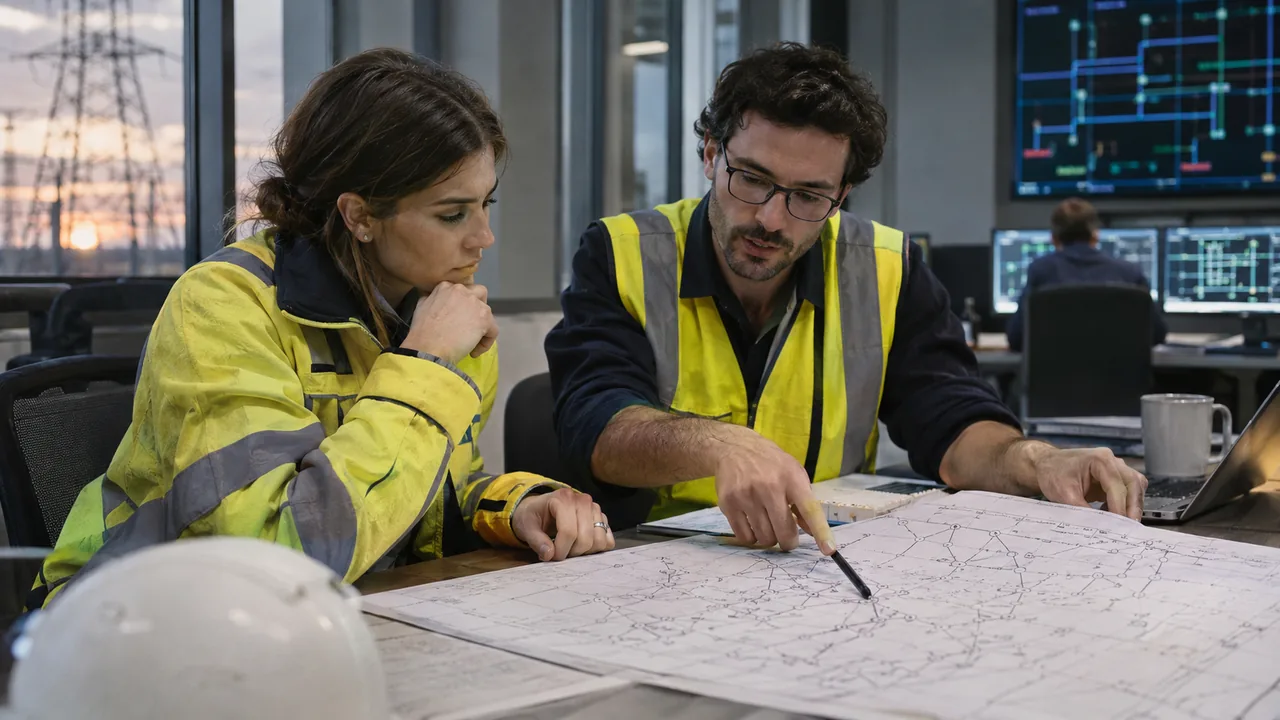
In an extremely cold environment, maintaining habitable spaces would require dependable energy and appropriate engineering. The problem would continue every day rather than end when the first stockpile was opened. Equipment, fuel or generation capacity would need ongoing support.
A simple invented calculation shows the scale of continuity without estimating a shelter's actual requirement. A load of one kilowatt operating continuously uses 24 kilowatt-hours in a day. That arithmetic does not tell us how much heat a real settlement needs; it shows why a continuous demand differs from a short emergency use.
Losses, maintenance and other uses would need to be considered in a genuine design. A sales claim based on one device's maximum output would not establish that the whole system could operate reliably under the assumed conditions.
Shelter is a system, not simply a thick wall
A protected space would need more than insulation. Ventilation, moisture, fire safety, structural performance and human use would all matter. A measure that improves one function could create a problem elsewhere if the system were not designed properly.
This article does not provide instructions for building an extreme-climate bunker. Such a structure would require qualified assessment and appropriate engineering. An improvised enclosed space can create ordinary hazards long before any hypothetical global freeze becomes relevant.
The broader lesson is to examine the complete function. Can people breathe safely, manage heat and moisture, move if something fails and obtain assistance? A photograph of a substantial door does not answer those questions. The quality of a survival promise depends on the details behind the image.
Ice does not make drinking water automatically accessible
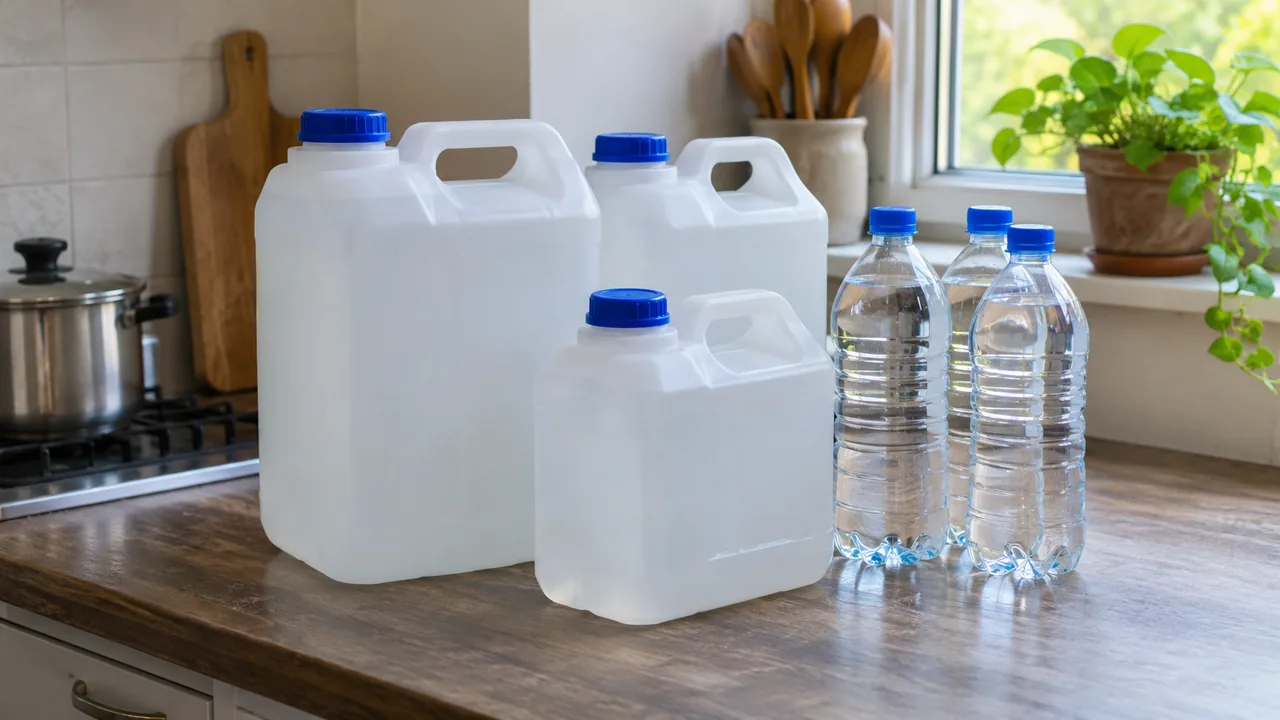
A frozen landscape may contain abundant water in a form that still requires collection, energy and safe handling. The presence of ice is not the same as a dependable drinking-water service. Quality and accessibility remain separate questions.
A hypothetical settlement would also need to manage wastewater and hygiene without contaminating its own supplies. Those processes would depend on equipment, labour and energy. A water container alone does not describe the full cycle.
This is a useful illustration of the difference between a resource existing and people being able to use it safely. The same distinction appears in many less extreme crises. In the Snowball thought experiment, the environmental conditions make it especially difficult to ignore the work normally hidden behind an ordinary tap.
Food production would be harder than storing calories
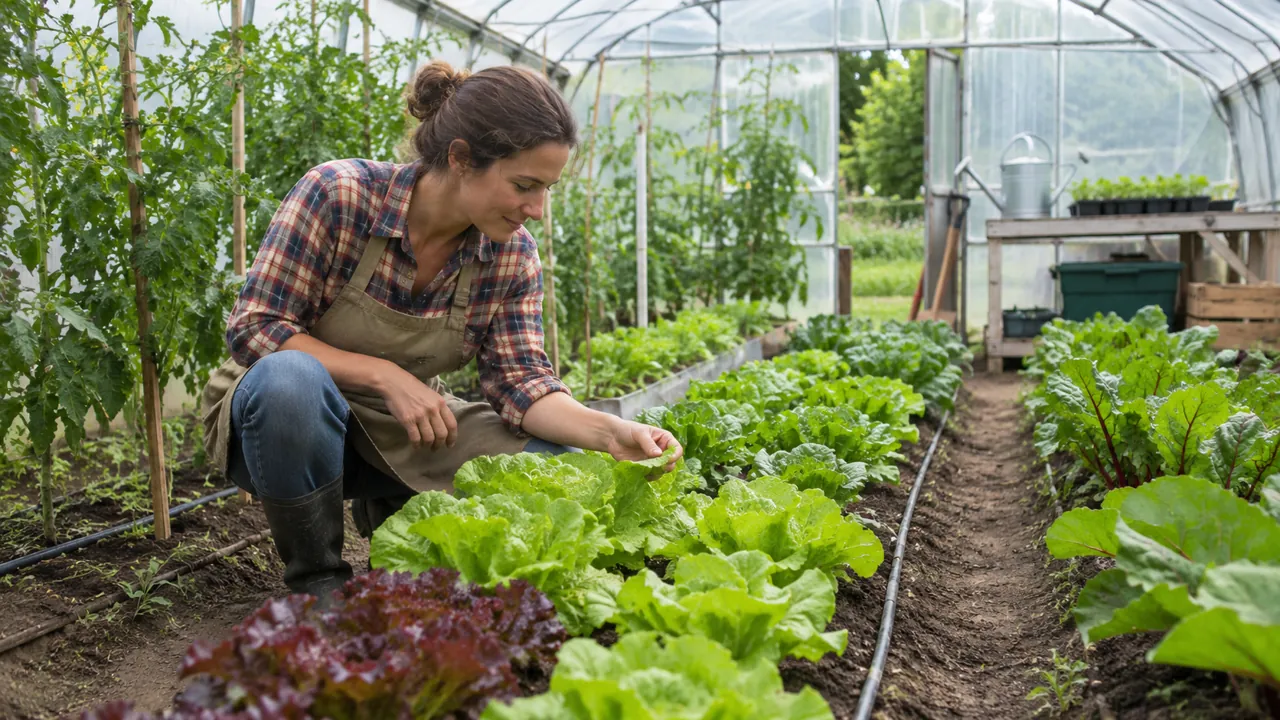
Stored food can provide time, but long-term survival requires a continuing source of nutrition. In a near-global freeze, the availability of suitable land, light, energy and agricultural inputs would need explicit assessment. A familiar modern harvest cannot simply be assumed to continue.
Protected production might be considered in a fictional scenario, but it would bring its own dependencies. Seeds or breeding stock, nutrients, water, equipment and skilled work would all matter. Producing some food would not automatically establish a complete or sustainable diet for the population.
The important question is the balance over time. Can the system replace what people consume while maintaining the inputs it needs? A list of possible technologies is not the same as evidence that they could support a particular number of people indefinitely in the imagined environment.
Small organisms surviving would not prove people could thrive
Ancient life persisted through extraordinary environmental conditions. That fact does not establish that modern humans, crops or livestock would have the same options. Different organisms require different resources and tolerate different conditions.
A microbial refuge and a human settlement are not equivalent systems. People need a combination of food, water, habitable space, care and social organisation. The survival of some life in a geological episode therefore cannot serve as a guarantee for civilisation.
This distinction also protects the meaning of habitability. A planet can be habitable for a particular organism while remaining deeply hostile to another. Asking whether life could survive is a broader and less demanding question than asking whether billions of people could maintain the world they depend on today.
Maintenance could become the overlooked failure point
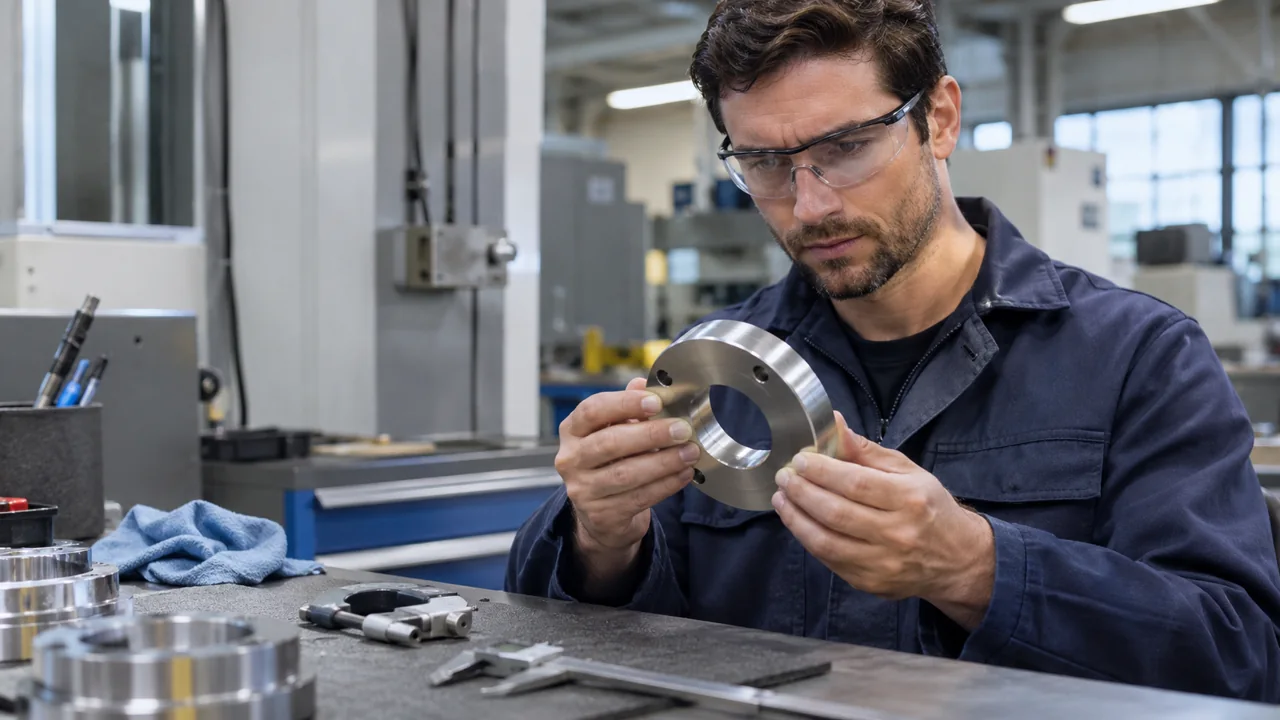
A settlement's equipment would wear, break or require replacement. A stock of spare parts could help for a period, but a long-lived system would need the capacity to repair or reproduce essential components. Specialist materials and skills could become limiting factors.
Consider a fictional facility with working power generation but one critical cooling or control component available only from a distant manufacturer. Its operation might appear secure until that component failed. The important dependence would be hidden behind an otherwise impressive installation.
This is why resilience cannot be measured only through initial stock. The question is what happens after repeated use and unexpected failure. A durable plan must account for renewal, not simply the day the facility is first switched on.
Health and social cooperation would remain essential
An engineered space cannot remove every medical need. Injury, childbirth, chronic conditions and ordinary illness would still require care, supplies and skilled people. The consequences of losing those services could be severe even if temperature control remained effective.
Human relationships would also matter. Work allocation, conflict resolution, fairness and support for vulnerable people are part of maintaining a community. A technically impressive refuge could fail socially if its inhabitants could not make decisions or protect one another.
These are not optional comforts added after survival. They affect whether the group can keep essential tasks functioning over time. A scenario that counts power and food while treating people as interchangeable labour units leaves out an important part of what makes the system viable.
There is no evidence-based universal survival percentage
The outcome of the thought experiment depends on assumptions that are not fixed. Temperature, duration, usable refuges, population and functioning infrastructure would all influence the result. A precise global survival percentage would therefore require a defined and justified model.
| Assumption | Why the answer changes |
|---|---|
| How cold and for how long? | Short interruptions and sustained environmental change require different capacity |
| Which places remain usable? | Refuges and access affect the options |
| How much infrastructure survives? | Production and maintenance depend on wider networks |
| Which population is considered? | A small facility is not equivalent to humanity as a whole |
| What can be replenished? | Finite stocks cannot establish indefinite survival |
Without that context, a confident number may be storytelling rather than a scientific estimate. The same caution applies to a guarantee that a particular commercial refuge would be enough.
How to distinguish an ancient reconstruction from a modern warning
Check the period, model and starting conditions. A study of low-latitude ice hundreds of millions of years ago is not a weather forecast. A simulation testing a possible trigger is not evidence that the trigger has occurred or that the model's cold starting state exists today.
Our article on asteroid impacts and food systems discusses another conditional chain with its own assumptions. The Toba climate article explains why eruption size alone does not settle a global cooling outcome. Neither should be repurposed as proof of an inevitable Snowball transition.
The useful connection is methodological. Severe scenarios need explicit inputs and evidence. A frightening label does not permit the writer to skip the steps connecting a physical event with the claimed future world.
What this tells us about less extreme risks
Most real disruptions do not require imagining a frozen planet. The thought experiment is useful because it makes ordinary dependencies visible: continuous energy, accessible water, food production, maintenance and care. Those systems also matter in much smaller emergencies.
That does not turn this article into a guide to independent off-grid living. The focus is the scale of a hypothetical environmental threat and the limits of claims about surviving it. Practical preparation for actual local hazards should follow the relevant evidence and guidance for those hazards.
There is no need to buy against every imaginable future. A more useful response is to recognise which systems a claim assumes will keep working, and whether the person making the claim has shown how. Understanding dependencies is valuable even when the scenario itself remains highly speculative.
Your next step
When someone promises survival in a Snowball Earth scenario, ask for the assumptions, duration and population. Identify the essential inputs and how they would be replenished. Look for the difference between an initial supply and a functioning long-term system.
When reading the science, distinguish ancient evidence, modelled mechanisms and present conditions. Notice whether the account preserves the important finding that starting climate affects the outcome. Do not turn a conditional ancient scenario into an unsupported warning about the near future.
Human survival in such a world cannot be guaranteed by a slogan or a shelter photograph. The threat would be severe because it challenges the systems supporting life, not merely the temperature outside a front door. That is a useful reason to think carefully, while remaining clear that this is a thought experiment rather than a forecast.
Frequently asked questions
Did humans live through the ancient Snowball Earth events?
No. Those glaciations occurred long before humans existed. The human-survival discussion is a modern thought experiment and should not be presented as a historical account of people enduring the ancient events.
Does Snowball Earth mean the entire planet became solid ice?
No. The term concerns global or near-global surface glaciation. Researchers investigate the extent of ice and possible refuges. It does not mean Earth's interior froze into a single solid block.
Does the 2024 asteroid study predict that modern Earth will freeze completely?
No. The study examined different starting climates, and the warmer scenarios did not show the same Snowball initiation as sufficiently cold ones. A conditional mechanism for ancient conditions is not a current global-freeze forecast.
Could one well-stocked shelter guarantee long-term survival?
No guarantee follows from stocked supplies alone. Continuous energy, food production, safe water, maintenance, healthcare and social cooperation would all matter. The outcome depends on the stated conditions and duration.
Can we give a reliable percentage of humans who would survive?
Not without a defined, justified scenario and model. The environmental conditions, surviving infrastructure, population and replenishment capacity are crucial. A precise number offered without those assumptions would be unsupported.