
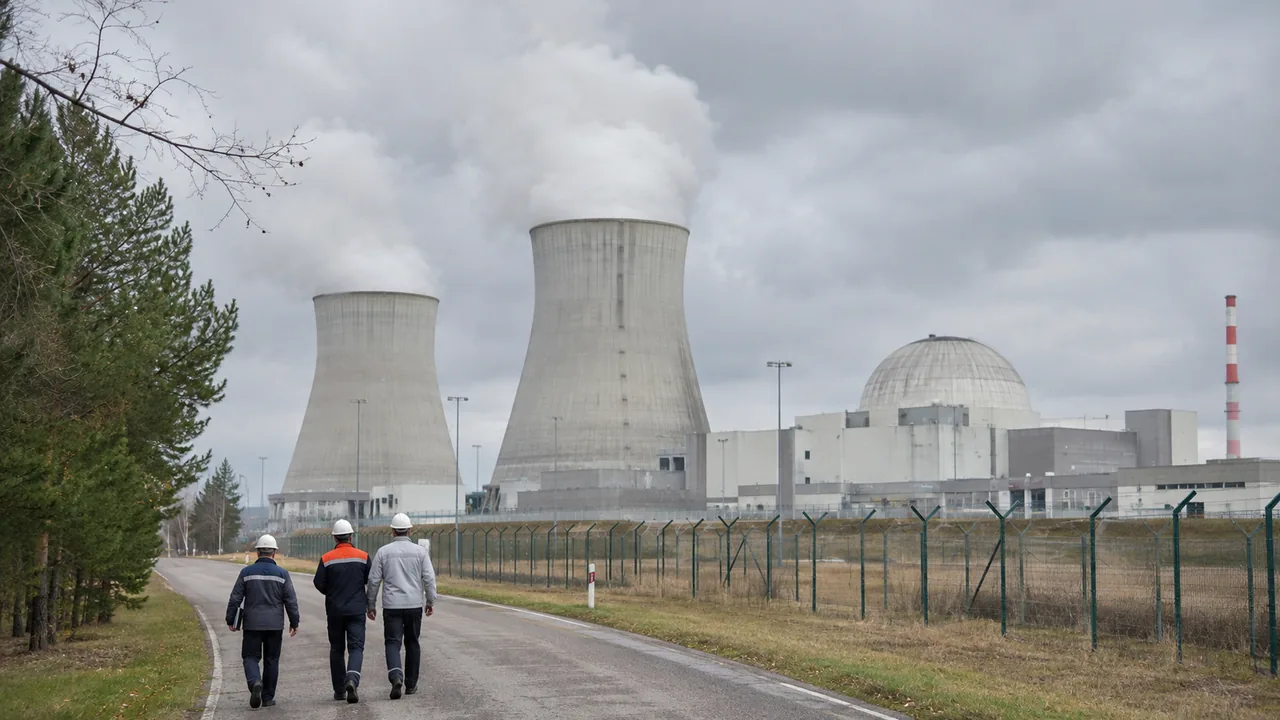
A nuclear power plant, or power station, can become dangerous in a war zone even when nobody intends to cause a radiation emergency. Damage to the electricity network, interrupted supplies, exhausted staff or unreliable communications can weaken the systems that keep the site safe. The threat is a chain of failures around the plant, as well as the possibility of direct damage.
How far the danger could spread depends on what is damaged, whether radioactive material is released, the amount and form of that release, weather and the response. There is no honest fixed distance that applies to every event. A serious explanation should distinguish a loss of safety margin from a confirmed release, and a power station accident from a nuclear weapon.
Why a power station still needs dependable outside support
A nuclear site relies on electricity for important safety functions, along with equipment, trained staff and supplies. Producing electricity does not make every part of the site independent of the wider grid. Outside connections and backup arrangements therefore matter to safety.
War can affect those supports without a strike landing on the reactor building itself. A damaged transmission route or disrupted delivery may reduce resilience. Backup equipment can provide an important barrier, but it also needs appropriate maintenance, fuel and operating conditions.
The IAEA's explanation of its seven safety pillars treats physical integrity, safety systems, staff, power, supplies, monitoring and communication as connected needs. The framework helps explain why repeated pressure on several supports can be serious even before a radiological emergency is confirmed.
A reactor is not a nuclear bomb
A nuclear power station and a nuclear weapon are different technologies with different purposes and failure pathways. Damage at a power station does not turn the reactor into a weapon-style nuclear explosion. Saying so is inaccurate and can make useful public information harder to understand.
A serious accident can still involve severe physical damage and the release of radioactive material. Distinguishing mechanisms does not minimise the potential consequences. It helps explain what monitoring, protective actions and recovery work are actually relevant.
The right question is what has occurred at the specific facility. Has outside power been lost? Is backup power functioning? Has monitoring detected a release? What do the responsible authorities and independent specialists confirm? These questions are more useful than treating every incident involving the word nuclear as the same event.
Shutdown does not mean every safety task disappears
Shutting down a reactor changes its condition, but it does not eliminate every need for cooling, monitoring and control. The details depend on the equipment, fuel and time since operation. A general claim that a stopped plant cannot present a hazard is therefore misleading.
At the same time, the condition of the plant matters to the assessment. An operating reactor and one that has been shut down for a long period are not interchangeable cases. Public discussion should not use a worst-case account without explaining whether its assumptions fit the actual site.
For a reader, the practical lesson is to look for clear descriptions of the plant's condition and the safety functions affected. A statement that a reactor is shut down provides context, not a complete answer. A statement that safety has weakened is also not the same as confirmation that radioactive material has escaped.
What a loss of outside power means
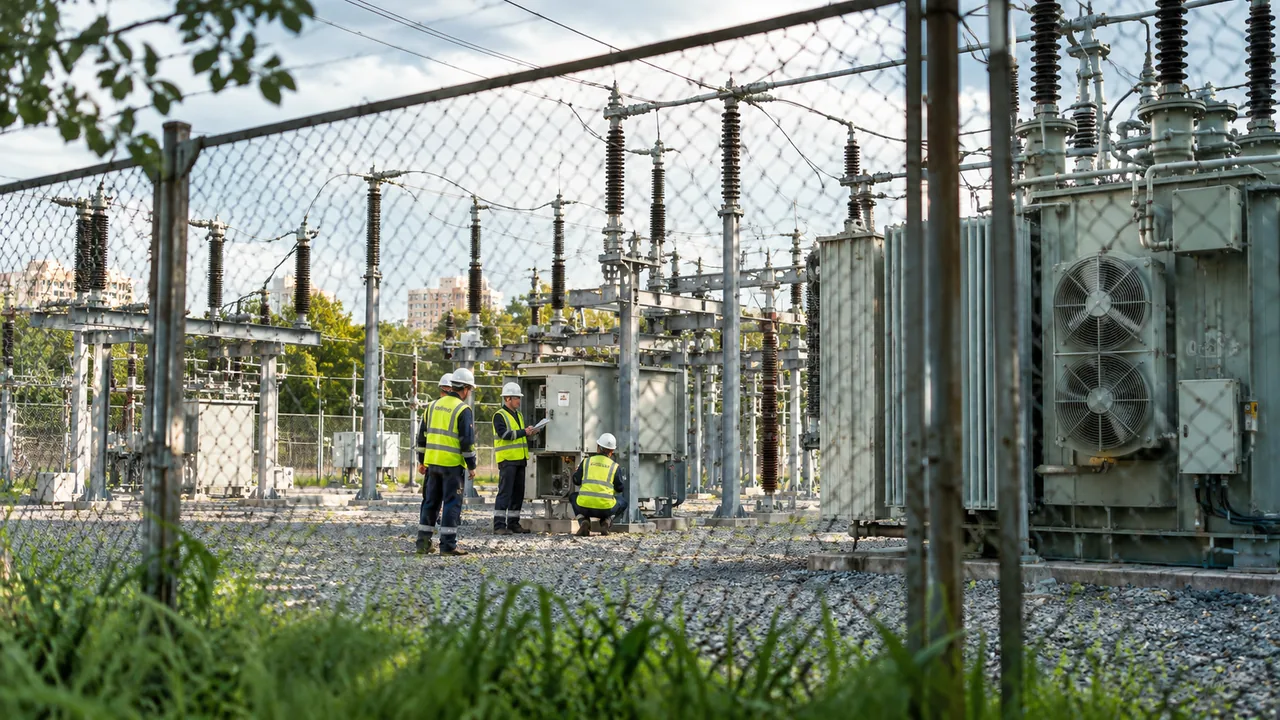
A loss of outside power can reduce a site's safety margin and require backup arrangements. It is serious because the site needs dependable support for essential functions. It does not automatically establish that all cooling has stopped or that a release has occurred.
The UK's November 2026 statement to the IAEA emphasises the importance of reliable off-site power in Ukraine. Its concern is the repeated pressure placed on safety by damage to the wider electricity system. That is a dated official assessment, not a substitute for current incident information.
During a developing event, check what the latest verified update says about backup operation, restoration work and monitoring. Avoid turning an earlier report into a permanent present-tense claim. Conditions can improve or worsen, and the timestamp is part of the safety information.
Why staff conditions belong in the risk assessment
People operate, inspect and maintain safety systems. They need sufficient rest, access to information, safe working conditions and the ability to make decisions without undue pressure. A technically intact system can become harder to manage when the staff around it are exhausted or constrained.
War can separate workers from families, disrupt shift changes and make ordinary maintenance more difficult. These human pressures are not secondary to the engineering. They affect the reliability of the wider safety system.
A useful assessment therefore asks whether trained staff can carry out their duties, whether supplies and specialist support can reach the site and whether communication with the relevant regulator remains reliable. None of those questions requires the public to know sensitive operational details. They require recognition that nuclear safety depends on people as well as equipment.
What determines the area affected by a release?
The nature of the release matters: which material is involved, how much is released and how it moves into the environment. Weather can influence transport and deposition. Protective actions and local conditions also affect exposure.
A plume should not be imagined as a perfectly even circle. Distance is relevant, but it is not the only factor. A generic map drawn without event-specific measurements and weather cannot reliably determine what a household should do.
The UKHSA's radiation-emergency guidance explains that the affected area depends on the scale of the emergency and conditions including wind. Follow actual official advice for your location. An online article or a picture of a distant plant cannot replace that assessment.
Exposure and contamination are different
Exposure means radiation reaches a person. Contamination means radioactive material is present on or in something, such as clothing, skin, food or a surface. The distinction helps explain why different protective and recovery actions may be needed.
An image of a damaged building cannot tell you the dose received by someone elsewhere. Nor can a rumour about contamination establish that every food item or water supply is unsafe. Measurements, the material involved and the actual pathway matter.
Avoid attempting to interpret unfamiliar numbers without their units, context and source. A reading from an unverified device or a screenshot without a location can mislead. Public updates should explain what a measurement means for decisions, including where it applies and what remains uncertain. The aim is usable information rather than a stream of alarming figures.
Why ordinary services can be affected beyond the radiological area
Transport restrictions, displacement, electricity problems and concern about supplies can affect people outside an area requiring radiation protective actions. These are real consequences, but they should be described separately from radiation exposure.
A family may need to contact relatives, change travel plans or clarify a service interruption without being in a radiological danger zone. Combining all effects into one undifferentiated threat can lead to unnecessary action in one place and insufficient attention in another.
The article on regional war escalation discusses those wider connections. For a nuclear site in conflict, the safety problem and the surrounding humanitarian problem can reinforce one another. Protecting the site also means preserving the infrastructure and access that support its safe operation and the communities around it.

What the public should do after an official warning
Follow the current instructions for your location. In a radiation emergency, authorities may advise sheltering, evacuation or restrictions affecting particular supplies. These actions depend on the event and may change as information improves.
UK public guidance uses the instruction to go indoors, remain inside and obtain official information when advised of a nearby radiation emergency. Close external openings as directed and follow updates. Do not leave a protective location solely because an unverified post says everyone must travel immediately.
If there is another immediate danger, such as fire or a medical emergency, communicate that to the appropriate emergency service and follow its instructions. General advice cannot account for every building or individual need. People requiring assistance should be included in local arrangements before an event, with realistic communication and support routes.
Stable iodine is specific protection, not a general remedy
Stable iodine can protect the thyroid against radioactive iodine under particular circumstances when taken at the appropriate time. It does not protect the whole body against every radiation hazard. It should be taken only when the relevant authorities advise and through the arrangements they specify.
Do not substitute iodised salt, supplements or another product for the medicine intended for an emergency. Do not treat a general news report as a prescription. The need, timing and suitability are specific, and inappropriate use can create harm.
This distinction is particularly important when frightening news leads to sales claims. A product marketed as universal radiation protection should be questioned. Follow verified public-health guidance rather than an urgent advertisement, a forwarded dosage or a claim that buying something immediately is the only way to protect your family.
Read a plant incident report in stages
| Reported issue | What it establishes | What still needs checking |
|---|---|---|
| Outside power is lost | A significant support has been interrupted | Backup operation and safety status |
| Equipment is damaged | A physical problem has occurred | Which function and barriers are affected |
| A release is reported | Potential environmental contamination needs assessment | Material, scale, measurements and location-specific advice |
| Monitoring changes | New information is available | Units, context and practical meaning |
| Repairs are completed | A particular task has finished | Testing, remaining vulnerabilities and current instructions |
A clear update should avoid both false reassurance and unsupported catastrophe claims. It should say what has changed, what that means and what people should do. Where there is uncertainty, explain it precisely rather than allowing the audience to assume either complete safety or inevitable disaster.
An imagined sequence that shows why the barriers matter
Imagine a conflict damaging a site's outside electricity supply. Backup systems operate while repairs are arranged. Staff face difficult shifts and supplies become harder to deliver. The immediate task is to preserve safety functions and restore dependable support before additional problems occur.
Now imagine a further failure while those supports remain weakened. The risk can increase because the response has fewer options and people are under greater pressure. A radiological emergency becomes a possibility if necessary functions and barriers are not maintained.
This scenario is deliberately conditional. It does not claim that every loss of power leads to a release. It explains why repeated reductions in safety margin deserve urgent attention even when disaster has so far been avoided. Successful prevention means restoring the barriers before the next challenge, not waiting for the most severe outcome to prove that concern was justified.
Food and water instructions need their own evidence
Restrictions on a particular supply should be followed for the area and period stated by the responsible authority. Do not assume every item is contaminated because a release is reported elsewhere, or that a household treatment removes every radioactive substance. Read the actual instruction and check for updates as monitoring develops.
A change in safety margin needs a clear explanation
A statement that a site remains safe can mean that essential functions are currently being maintained. It should not conceal the loss of alternatives or the pressure required to keep those functions available. A site operating with fewer dependable supports may deserve urgent attention even when monitoring has not identified a significant release.
The reverse is also important. A report that resilience has weakened should not be translated into an assertion that a major radiological accident has already occurred. The two statements describe different stages. Public understanding improves when officials explain the current function, the lost barrier and the action being taken to restore it.
Imagine an incident in which backup arrangements continue to work while an outside connection is repaired. The useful questions concern their reliability, support needs and the progress of restoration. The public does not need sensitive instructions for operating the site. It needs an honest explanation of whether the situation is stable, improving or becoming harder to manage. The public deserves clear updates when any of those conditions change.
For nearby communities, updates should also explain what action, if any, is required now. A discussion of technical risk without practical guidance can leave people to improvise. That can create additional danger through unnecessary travel, inappropriate medicines or reliance on unverified maps.
Keeping these distinctions visible protects both urgency and accuracy. It allows people to understand why preventing further damage matters before the worst outcome occurs. The success of safety work is often that a release never happens. Recognising that achievement should go alongside scrutiny of the conditions that made the situation precarious, rather than allow repeated close management to become accepted as normal.

A responsibility that extends beyond the plant fence
A war-zone nuclear emergency would affect workers, nearby families, responders and potentially communities further away. The danger is a reason to protect civilian facilities and the infrastructure supporting them, preserve independent monitoring and maintain credible communication.
For an ordinary reader, the useful action is to identify reliable sources and understand the distinctions before an alarming claim arrives. If you have relatives near a site, agree a communication route and use local official advice for their actual location. Protect their privacy and do not infer a safe movement plan from distant reporting.
The future should not depend on exhausted people repeatedly managing preventable threats to essential safety systems. Serious concern means asking for the conditions that keep those systems dependable, while refusing to confuse a potential disaster with a confirmed one.
Frequently asked questions
Can a nuclear power station explode like a nuclear bomb?
No. A power station and a nuclear weapon have different designs and mechanisms. A severe accident can still cause major damage and release radioactive material. Understanding the difference helps identify the relevant risks and protective actions rather than minimising the seriousness.
Does losing outside power prove a release has occurred?
No. It is a serious loss of support that may require backup arrangements, but it does not by itself confirm failed cooling or a release. Check verified information about safety functions, backup operation, monitoring and current public instructions.
Is a shut-down reactor free of every hazard?
No. Cooling, monitoring and other safety tasks can remain necessary, depending on the site's condition and time since operation. Shutdown status is important context, but it is not a complete assessment of the facility or every material stored there.
Can a fixed online radius tell me whether I am safe?
Not reliably. The affected area depends on the event, material released, weather, measurements and protective actions. Follow location-specific official advice rather than a generic circle or an unverified map circulating online.
Should I buy or take iodine tablets after a news report?
Do not treat a general report as an instruction to take medicine. Stable iodine has a specific role and does not protect against every radiation hazard. Follow the relevant authorities' advice about whether it is needed, the appropriate product and timing.