
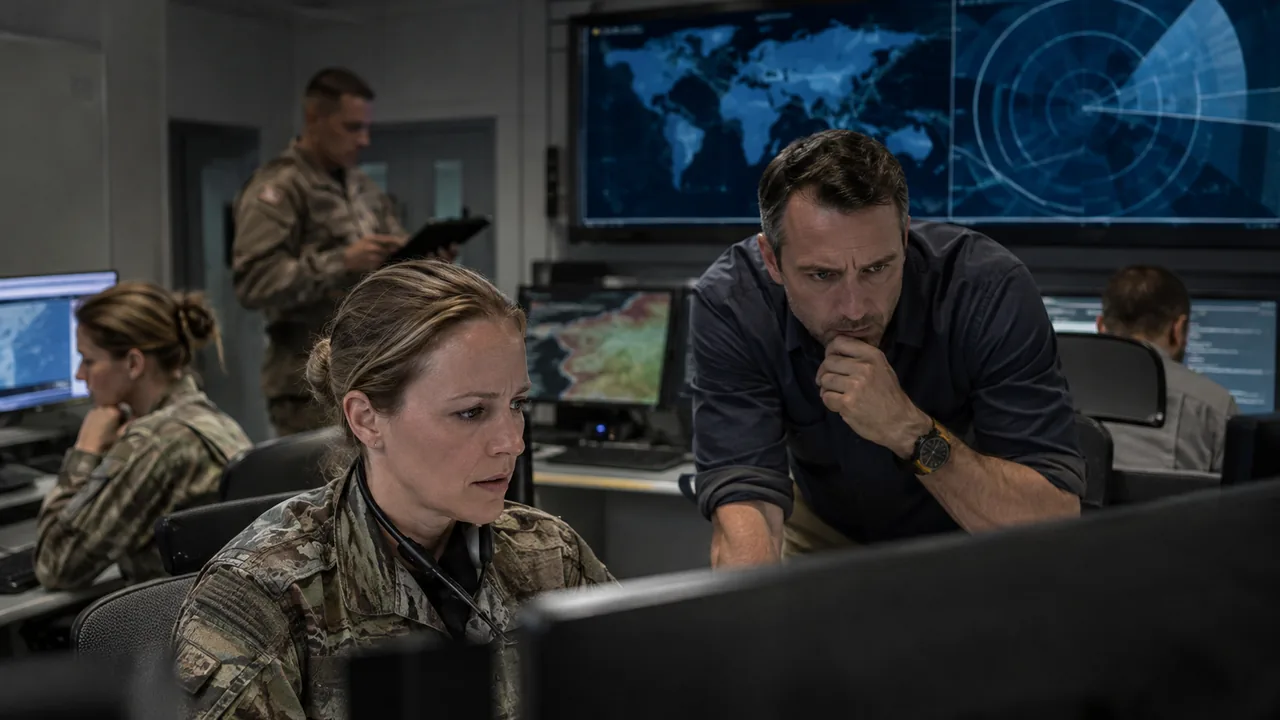
The most dangerous warning is not always the loudest one. It may be the warning that appears credible when leaders already expect an attack and believe they have very little time. A false alarm can become a nuclear crisis if uncertain information is treated as proof and the response gives an opponent a new reason to fear the worst.
A nuclear false alarm does not automatically lead to war. Warning systems, procedures and human judgement exist to check information and prevent mistakes. The serious question is whether those barriers remain dependable during confrontation, technical failure and intense pressure. The consequence of getting that judgement wrong is why this issue belongs in public discussion, even when no current attack is underway.
What counts as a false alarm?
A false alarm is a warning that an attack is occurring when that warning is incorrect. The cause might involve technical error, misinterpretation or incomplete information about an unrelated event. A rumour on social media is different from an alert inside a military warning system, although both can influence behaviour.
The distinction matters because the response is different. A public rumour may require verification and correction. An internal warning may require rapid assessment through specialised procedures. Blending the two into one dramatic story can make it difficult to understand what has actually happened.
A warning later judged false should not be reported as a confirmed attack that was somehow reversed. Equally, the fact that an error was caught does not make it irrelevant. It can reveal where a barrier worked, where pressure accumulated and what needs to be improved before another ambiguous event occurs.
Why uncertainty becomes more dangerous during a crisis
People interpret information partly through what they already expect. During a confrontation, leaders may be especially alert to signs of hostile intent. An ambiguous report can therefore fit an existing fear, even when other explanations remain possible.
That does not mean decision-makers are simply irrational. They may face a genuine responsibility to protect their population and preserve an ability to respond. The danger arises when fear of waiting outweighs the time and evidence needed to assess a warning properly.
Imagine two rivals both believing the other might act first. One side changes its posture after receiving an uncertain report. The other observes that change and interprets it as preparation for attack. The initial uncertainty now produces additional real activity. This imagined sequence shows how a mistaken belief can create the conditions that seem to confirm it.
The role of decision time
Time allows information to be checked, alternative explanations considered and communication attempted. Less time can make those tasks harder. A system that encourages a rapid irreversible decision on uncertain evidence therefore creates a serious management problem.
UNIDIR's work on nuclear risk reduction examines practical ways to reduce pathways towards nuclear use. Its research includes the relationship between errors, human control and decision-making. The value of that work is in identifying measures that can interrupt a dangerous sequence, rather than claiming that one reform removes every risk.
For the public, the useful question is whether policies preserve room for verification and restraint. An assertion that speed demonstrates strength should be examined alongside the possibility of error. A decision can be fast and mistaken; it can also be careful and timely. The design of the surrounding process influences which is more likely.
A sensor reading is not the whole decision
A warning system gathers information, but information still has to be interpreted. Different sources may support or contradict one another. Communications may be incomplete, and the significance of an event may depend on context that a single reading cannot provide.
The relevant safety issue is how uncertainty is handled. Are inconsistencies visible? Can someone challenge an interpretation? Are alternative explanations considered? Does the process distinguish a possible event from a confirmed one? These questions concern the quality of judgement, not only the sophistication of a sensor.
Avoid two easy myths. A computer does not necessarily act alone simply because a warning originates in software. Human involvement also does not guarantee that every error will be caught. The real system includes equipment, procedures, people and organisational pressure. Its reliability depends on how those parts work together under difficult conditions.
Why independent checks need to be genuinely independent
Two reports can appear to confirm each other while depending on the same underlying source. That is a problem in ordinary news verification and can also be a concern in complex warning systems. Repetition is not the same as independent evidence.
A useful check should add information rather than merely reproduce the original assumption. The specific arrangements belong to the relevant professionals, but the principle is understandable: a second display should not create confidence if it is repeating the same uncertain input.
This principle also shapes public reading. Several articles may all rely on one anonymous claim. A video may be copied by many accounts without gaining new evidence. Before treating the number of reports as confirmation, ask where their information came from and whether a responsible organisation has actually verified the event.

Communication can interrupt a dangerous interpretation
Direct contact can help clarify an exercise, incident or misunderstood action. It cannot guarantee honesty or agreement, but it can create an opportunity to test an interpretation before an irreversible response. Keeping a channel usable during tension is therefore a practical safeguard.
Communication also has limits. A message can be delayed, misunderstood or distrusted. The existence of a hotline should not be treated as proof that every future crisis will be resolved. It needs procedures, people and the political willingness to use it.
The article on nuclear safeguards explains why several barriers matter together. Arms control, verification and communication can each reduce some uncertainties. Their value becomes clearer when considered as a set of opportunities to stop an error from moving further along a dangerous chain.
New technology can change the pressure without removing the old problem
Faster information processing may help identify patterns and inconsistencies. It can also encourage people to rely on outputs they do not fully understand or to expect decisions at a pace that leaves less room for challenge. The result depends on how the technology is used and constrained.
A claim that AI will automatically make nuclear decisions safer needs evidence about the specific task. What information does it examine? How are errors identified? What happens when the result conflicts with another source? Who retains responsibility for judgement? A general improvement in computing is not an answer to those questions.
The article on AI weapons and human control explores a related concern: formal human involvement can become weak if people lack sufficient understanding, time or authority to intervene. In a nuclear setting, preserving meaningful judgement is especially important because the possible consequences are so extensive.
An imagined alarm sequence, step by step
Consider a hypothetical warning that appears during a period of military tension. The initial report is incomplete. Some staff regard it as consistent with an attack, while another source does not confirm it. Leaders are told that delay might reduce their options.
At this point, several outcomes remain possible. Further information could resolve the discrepancy. Direct communication could clarify an unrelated activity. A procedure could require a stronger evidential threshold before escalation. Alternatively, a premature response could make the opposing side believe a real attack is being prepared.
This is a way to examine decision points, not a reconstruction of a secret current incident. It shows why the prevention of catastrophe can depend on apparently modest actions: asking a question, allowing time for another check and making uncertainty explicit. The value of a barrier is often that a frightening event never occurs.
Why a false warning could still cause real harm
Even if no nuclear weapon is used, a crisis can affect civilian life. Forces may move, transport may be restricted and public fear may spread. Misinformation can create additional danger, especially when people believe that ordinary checks are too slow for the situation.
If escalation continues, conventional fighting can also cause direct casualties and damage essential services. A nuclear-risk discussion should not make those existing harms disappear behind a hypothetical larger catastrophe. Civilians deserve protection at every stage.
If nuclear weapons were used, the consequences would depend on the event's scale and circumstances. A responsible scenario should state those limits and avoid invented casualty totals. The moral seriousness does not depend on a precise number. It comes from the possibility that a mistaken interpretation could help produce irreversible devastation for people who had no part in the decision.
How to read a claim that nuclear war nearly began
| Claim | What to check |
|---|---|
| A warning was received | Was it an official account, documented research or an anonymous assertion? |
| Leaders had only minutes | What is the source and which circumstances does it describe? |
| One person saved the world | Does the account explain the wider procedures and other checks? |
| AI would prevent the error | Which specific capability and limits are demonstrated? |
| A current attack is confirmed | Is there reliable independent confirmation and official information? |
A dramatic story can simplify a complex event until the lesson becomes misleading. Read for the chain of evidence and decisions. If important details remain uncertain, an honest account should retain that uncertainty rather than turn it into a more memorable but unsupported conclusion.
What ordinary people should do with an alarming public claim
Open recognised news and official information independently. Check the time, location and wording. A video of an exercise, old alert or fictional scenario can circulate as if it describes a new event. Do not let an urgent instruction to share replace verification.
If authorities issue protective advice for your location, follow that advice. A general article cannot determine the correct action for an actual event. Do not take medicines, change travel plans or send money because an anonymous account claims to have inside information about a launch.
Discuss a reliable information route with your household. The aim is to reduce the chance that each person acts on a different rumour. If children have seen frightening material, explain what is confirmed and what is not in age-appropriate language. Reassurance should be truthful rather than a promise that nothing bad can ever happen.
A historical example is a lesson, not a countdown
UNIDIR's 2020 volume on nuclear risk reduction discusses the 1995 incident in which a Norwegian scientific rocket was initially interpreted by Russian military systems as a possible incoming missile. The relevant lesson concerns interpretation, clarification and the time available to assess an unusual event. It is not evidence that an identical incident is taking place now.
Keep a historical account attached to its date and source. Ask which barrier worked and what would make a future case different. That produces a more useful discussion than turning a complex event into a timeless story with a guaranteed outcome.
The lesson of a warning is in the barriers around it
A historical alarm is often remembered through one dramatic moment. That can make a complex sequence seem to depend entirely on a single person's intuition. A more useful account examines the information available, the procedures followed and the additional checks that influenced the outcome.
The distinction matters because a lesson built only around individual heroism is difficult to turn into a dependable system. Future staff may face different information, different pressure and a different technical problem. Institutions need arrangements that support sound judgement across those conditions rather than hope that one exceptional person will compensate for every weakness.
Imagine an exercise in which two sources disagree about a warning. The important result is not simply whether participants eventually reach the correct conclusion. It is whether they recognise the disagreement, make uncertainty visible and know who can request further information. The process should help a careful person challenge an interpretation without treating every question as disloyalty or delay.
Public readers can apply the same standard to a published account. Ask which claims are documented, which details remain disputed and whether the story explains what prevented further escalation. A clear account should also distinguish what participants knew at the time from information established only after the event. Avoid reducing a serious event to a slogan that suggests every future warning will end the same way.
This approach preserves the urgency of nuclear risk. It treats a safely resolved incident as evidence to examine, not an excuse for complacency. It also recognises that the prevention of catastrophe is a continuing institutional responsibility. The people who rely on those safeguards include children and communities far beyond the room in which a warning is interpreted.

What risk reduction should try to achieve
The goal is to reduce the chance that an error becomes use and to limit pathways that make escalation harder to reverse. That includes reliable information, workable communication, clear procedures and policies that preserve room for judgement. No single measure should be presented as a complete cure.
It is also a matter of public priorities. Questions about nuclear weapons often concentrate on strength and credibility. They should include the consequences of mistakes and the human systems expected to prevent them. A policy that sounds decisive may still deserve scrutiny if it increases dependence on uncertain information under pressure.
For future generations, the choice is whether we treat these risks as unavoidable background or as problems that institutions must continually reduce. Read one substantive risk-reduction proposal and ask which failure it addresses. A false alarm could push rivals towards war. Understanding the barriers is how concern becomes a reason to strengthen them.
Frequently asked questions
Does a false alarm automatically start a nuclear war?
No. Procedures, information checks and human judgement can prevent escalation. The concern is whether those barriers remain effective under pressure. An error caught safely can still reveal useful lessons about reliability, communication and the time available for decisions.
Why does decision time matter so much?
Time can allow conflicting information to be examined and alternative explanations considered. Pressure to decide rapidly can make those tasks harder. The relevant question is how policies and procedures preserve informed judgement while addressing a genuine security concern.
Can two reports still represent only one source?
Yes. Separate displays or news accounts can repeat the same underlying information. Independent confirmation should add evidence rather than duplicate an assumption. This is why the origin of a report matters as much as the number of places repeating it.
Would AI remove the chance of a nuclear false alarm?
No technology can be assumed to remove every error. A proposed use needs evidence about its task, limitations and oversight. Faster processing may help in some ways while creating new pressures if people cannot understand or challenge its output.
What should I do if a launch claim appears online?
Check recognised news and official channels independently, including the date and location of the claim. Follow any actual protective advice for your area. Do not rely on anonymous countdowns, forwarded clips or requests for money presented as emergency inside information.