
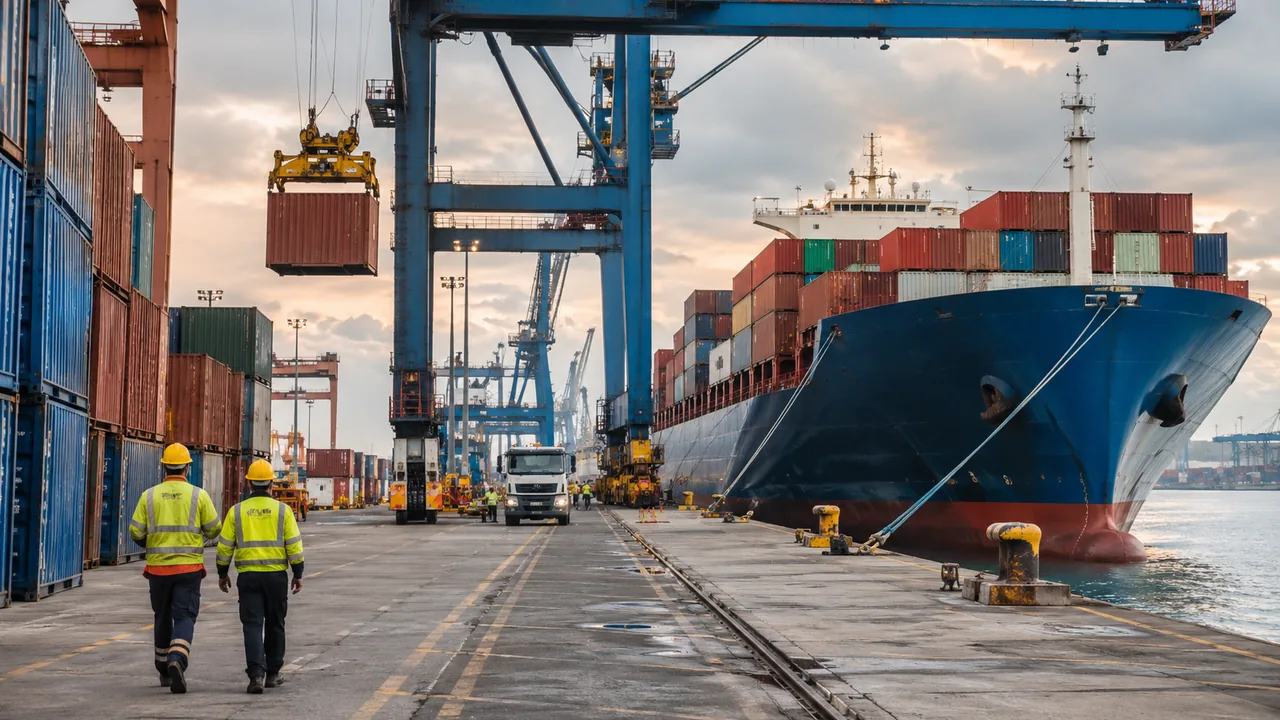
A trade dispute can sound remote until the price of a familiar product changes, a replacement part takes longer to arrive or an employer loses an important customer. Global arguments reach ordinary households through goods, services, jobs and the costs businesses face along the way.
Household costs from a trade war are not limited to a tariff printed in a headline. Retaliation, uncertainty, altered supply chains and reduced competition can all matter. The effect depends on the product, countries and business decisions involved. Understanding those links helps readers question sweeping claims and identify where a global dispute could change a practical decision at home.
What people mean by a trade war
A trade war usually describes an escalating dispute in which governments impose trade restrictions and respond to one another with further measures. Tariffs are one tool, but rules affecting access, exports and other commercial activity can also be involved. The exact measure matters more than the general label.
Governments may describe restrictions as protecting industry, security or bargaining power. Trading partners may respond in ways intended to create pressure in return. A policy can benefit one group while imposing costs on another, so a single national slogan rarely captures every consequence.
For the public, begin with the concrete action. Which goods or services are affected? When does the measure apply? Are there exceptions? Is it announced, implemented or still under negotiation? A statement about a possible future restriction should not be treated as a charge already appearing in every shop.
Who pays a tariff first?
A tariff is a tax on an import under the relevant rules. The legal payment responsibility generally falls within the importing process, rather than a foreign government simply sending a cheque. The eventual economic burden can be shared through prices, margins and other adjustments.
An overseas supplier might reduce its price. An importer or retailer might absorb part of the cost. A customer might pay more, choose a substitute or delay the purchase. The balance depends on competition, demand and the ability to find alternatives.
This is why the phrase the other country pays should be examined carefully. It can hide the route through which domestic businesses and households are affected. Equally, it is too simple to assume that every tariff is passed through fully and immediately to every consumer. A useful explanation follows the actual chain and identifies who has room to adjust.
A simple calculation, with its limits
Imagine an illustrative imported item with a customs value of £100 and a 10% tariff applied to that value. The tariff would be £10, making £110 before considering other costs and the way the final price is set. This is an arithmetic example, not a statement of the current rule for any particular product.
The retail price may also reflect transport, taxes, exchange rates, storage, wages and margins. Some of those may change at the same time. A ten-per-cent tariff therefore does not automatically mean a ten-per-cent increase in the final price already on a shop shelf.
| Illustrative stage | Amount | What it means |
|---|---|---|
| Customs value | £100 | The assumed value used in this example |
| Tariff at 10% | £10 | The calculated import charge |
| Value plus tariff | £110 | An intermediate total, not a predicted checkout price |
Keep the assumption attached to the number. Calculations are useful when they make a mechanism clearer; they become misleading when the example quietly turns into a forecast about a real purchase.
Why prices can change even for goods outside the dispute
Businesses use imported parts, materials and services to make other products. A restriction affecting one input can therefore influence the cost of something produced elsewhere. A locally assembled item may still contain components sourced through several countries.
Companies can also redirect demand. If a restricted product is replaced with another, the alternative's price and availability may change. These effects depend on capacity and competition; they are not identical across all markets.
The WTO's 2026 World Trade Report discusses the costs and complexity of fragmented trade arrangements. For households, the relevant lesson is that a border measure can travel through a network of business relationships. The label on the final product does not reveal every cost or dependency behind it.
Retaliation can reach workers as well as shoppers
A trading partner may respond by restricting goods exported from the country that imposed the first measure. Businesses selling into that market can then face reduced demand, additional costs or uncertainty. The consequences can reach wages, hours, investment and local suppliers.
The effects are uneven. A protected industry may gain some advantage while an exporter or a business using imported inputs faces pressure. People can be consumers and workers at the same time, so a benefit in one role may be offset by a cost in another.
Avoid treating a national average as a complete account of one community. A town dependent on a particular employer may face a much larger effect than a broad statistic suggests. Ask which activity is exposed and what alternatives are realistic, rather than assuming that every worker can easily move to a different industry or location.

Why uncertainty has a cost before a rule changes
A business deciding whether to order equipment, hire staff or enter a new market needs some confidence about future conditions. Repeated changes in proposed restrictions can make those decisions harder, even before a measure is implemented.
Companies may delay investment, hold additional stock or seek alternative suppliers. Those choices can create costs and affect service quality. They may also reduce exposure to a future problem. Whether the adjustment is worthwhile depends on the actual risk and the options available.
The public should therefore distinguish an announced policy, an expected response and a confirmed business effect. A survey of concern is not the same as a measured loss. A future scenario is not a current result. Keeping those categories separate allows serious uncertainty to be discussed without presenting every possible consequence as something that has already happened.
Can businesses simply buy from somewhere else?
Sometimes substitution is possible. In other cases, a product needs specific standards, equipment, approvals or supplier relationships. Changing a source can require testing, investment and time. A supplier able to provide a small quantity may not be able to replace an entire market immediately.
Quality and reliability matter too. Choosing the cheapest apparent alternative can create additional problems if the product is unsuitable or the supplier cannot deliver. A familiar relationship may also include knowledge and support that are not visible in the headline price.
This does not mean supply chains cannot adapt. It means adaptation should be assessed realistically. Ask what can change quickly, what needs time and what risks the new arrangement creates. A resilient chain may combine several sources and better information rather than rely on a promise that one replacement solves everything.
Food costs involve more than the border charge
Food production and delivery depend on energy, fertiliser, machinery, packaging, labour and transport. Trade restrictions can interact with those costs, while weather and conflict can affect supply through other routes. Several influences may therefore appear in the same shopping basket.
The FAO's November 2026 Food Outlook describes generally comfortable global supplies for some major commodities alongside growing risks and tighter conditions in others. That is a more precise picture than a claim that global food has simply run out.
For a household, the practical issue is the actual product and budget. A price rise may justify a suitable substitution, but dietary needs, storage and cooking facilities can limit options. Do not assume every family can respond to higher costs with the same menu change or bulk purchase. Access to food is about affordability as well as total supply.

How energy and trade disputes can reinforce one another
A business may face higher energy costs at the same time as a restriction on an imported input. Shipping disruption can add another pressure. The combined effect can be harder to manage than any single change, particularly for a business with little financial margin.
The article on Hormuz and household fuel costs explains one energy pathway. It is related to trade disputes but should not be confused with them. A transport problem, a tariff and a currency movement are different mechanisms even if they affect the same final price.
Understanding the difference helps identify the right response. A supplier change may address one restriction but not a wider energy shock. A short-term price movement may reverse, while a long-term contractual change may be harder to undo. Decisions should be tied to the actual cause and realistic duration, rather than the most dramatic explanation available.

A household example that keeps the choices realistic
Imagine a family needing to replace a broken appliance. Prices have increased and delivery dates are uncertain. The useful first step is to establish the essential requirement, total cost and reliable availability, rather than buy quickly because a headline says every product will become unaffordable.
A repair may be possible, but it needs a credible assessment and suitable parts. A cheaper substitute may have different running costs or fail to meet the family's needs. A delayed purchase may be manageable for one appliance and impossible for another. These are practical differences, not signs that one household is more responsible than another.
Keep quotations and terms clear, including what happens if delivery changes. Verify an unfamiliar seller before paying. A genuine shortage story can be used to advertise counterfeit goods, non-existent stock or a false priority fee. Urgency should lead to careful checking of the transaction, not the abandonment of it.

What a small business should examine
Identify the products, components and customers most exposed to a proposed measure. Check the actual rule through appropriate official information or qualified advice for the transaction. A broad news article cannot determine customs treatment for every product and route.
Discuss alternatives with suppliers and customers without assuming that a new country of dispatch automatically changes the relevant origin rules. Keep records and commitments clear. If uncertainty affects a delivery or price, explain it promptly rather than make a promise the business cannot support.
Consider concentration as well. A second supplier may depend on the same factory, transport route or input. The same principle appears in the article on undersea cable resilience: a different brand is not always an independent alternative. A useful review looks beneath the label to the actual dependency.
Read a trade headline with these questions
| Headline claim | What to establish |
|---|---|
| A tariff is announced | Which products, dates and exceptions apply? |
| Consumers will pay | What evidence shows the likely price pathway? |
| Domestic industry will benefit | Which firms gain and which users face higher inputs? |
| Another supplier solves the problem | What capacity, standards and shared dependencies remain? |
| A model predicts large losses | Which scenario and assumptions produced the result? |
An economic model can explore a possible outcome under stated conditions. It should not be presented as a guaranteed result of one current announcement. A useful article preserves the assumptions and explains how the model relates, or does not relate, to a household's immediate decision.
The people with the least room to absorb a shock
A small increase in essentials can matter greatly to someone already struggling with rent, food or care costs. A worker with reduced hours may experience a trade dispute through income as well as prices. Broad discussions should keep those combined pressures visible.
Local support, employers and service providers need clear information about the actual problem. If affordability becomes difficult, use legitimate advice and support channels suited to your circumstances. Avoid schemes promising a guaranteed way to profit from a crisis or recover losses through an urgent investment.
The wider policy debate should ask how costs and benefits are distributed. A policy is not fully explained by saying that a country wins or loses. People within the same country can experience very different outcomes. Recognising that difference makes scrutiny more honest and keeps the human consequences from disappearing behind national slogans.
Keep the date attached to the rule
A proposed restriction, an agreed measure and an implemented charge are different stages. A business may begin preparing before a rule takes effect, while a household purchase may reflect stock obtained under earlier conditions. The date is therefore part of the mechanism, not a minor detail at the end of a report.
When checking a claim, record the measure, product and effective date together. Look for any stated exception or transition, and use appropriate official information for a real transaction. Do not assume that a policy applied by one country determines the treatment of every route or product elsewhere.
This habit also helps when a dispute changes. An old warning can continue circulating after negotiations, exemptions or revised arrangements alter the position. Clear dates make corrections easier and reduce pressure to buy or pay unnecessarily. They give a household or business a practical basis for deciding whether the news changes something now or calls for monitoring rather than immediate action.
A useful next step before changing your spending
Choose one purchase or income source you are concerned about. Identify whether the exposure is a confirmed charge, a supplier warning or a general fear based on news. Check the date and practical detail, then compare the options that actually meet your needs.
Trade disputes can make daily life more expensive and less predictable. Their effects deserve attention because families and communities can carry costs they did not choose. Clear thinking begins with the route from policy to price or employment. Follow that route, question unsupported certainty and expect decision-makers to explain who bears the risk when the bargaining leaves the negotiating room.
Frequently asked questions
Does a foreign government directly pay every tariff?
No. Tariffs are applied through the importing process under the relevant rules. The eventual economic burden can be shared through prices, margins and other adjustments. Examine the actual supply chain rather than assume one simple payer determines every consequence.
Does a 10% tariff mean a 10% increase at the checkout?
Not automatically. The tariff may apply to a particular value, while the final retail price includes other costs and business decisions. Some of the charge may be absorbed or offset. A clear calculation should state its assumptions and avoid presenting an example as a prediction.
Can a trade dispute affect a product made locally?
Yes. Local production may use imported parts, materials or services. Demand for substitutes can also change costs. The final product's location does not reveal every dependency, so the effect needs to be traced through the inputs and relationships involved.
Why not change suppliers immediately?
A suitable alternative may need time, testing, capacity and different commercial arrangements. Some suppliers also share the same underlying source or route. Adaptation can help, but it should be checked against the actual product requirements rather than assumed effortless.
What should I check before acting on a trade-war headline?
Check the exact measure, affected products, dates and whether it has been implemented. Distinguish current costs from forecasts and examples. Then identify the connection to your own purchase, business or employment before making a decision under pressure.