
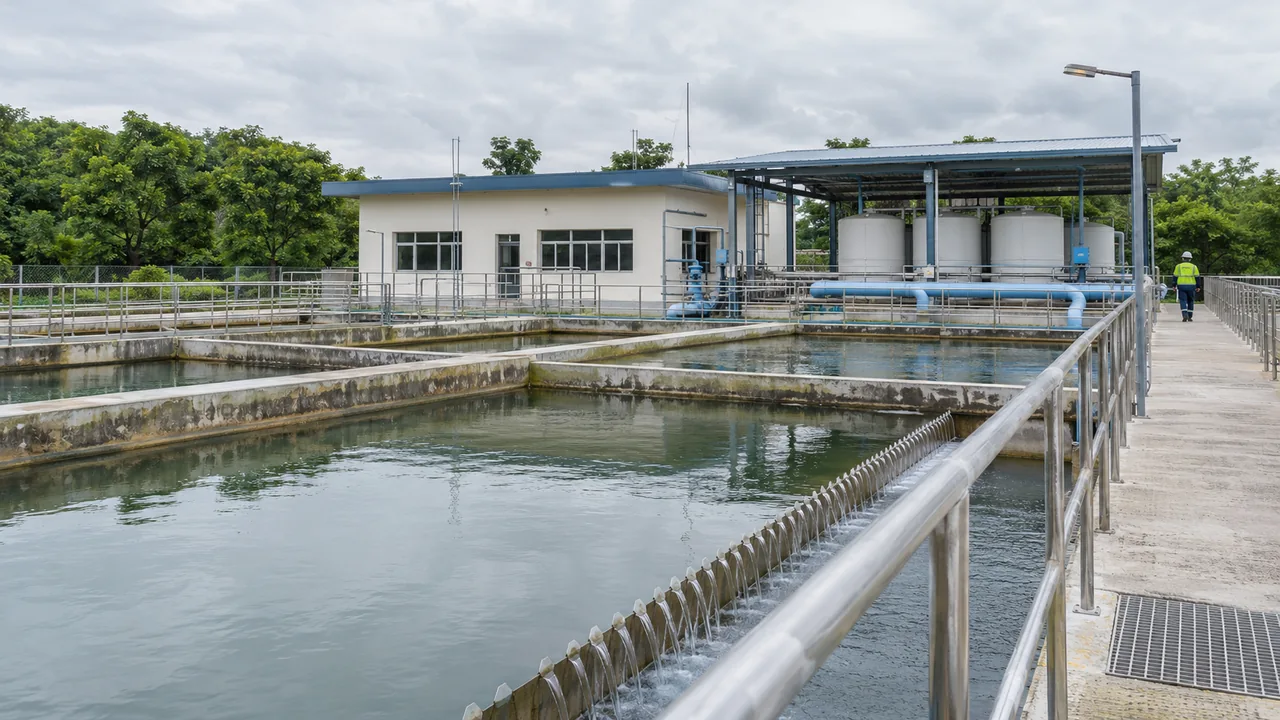
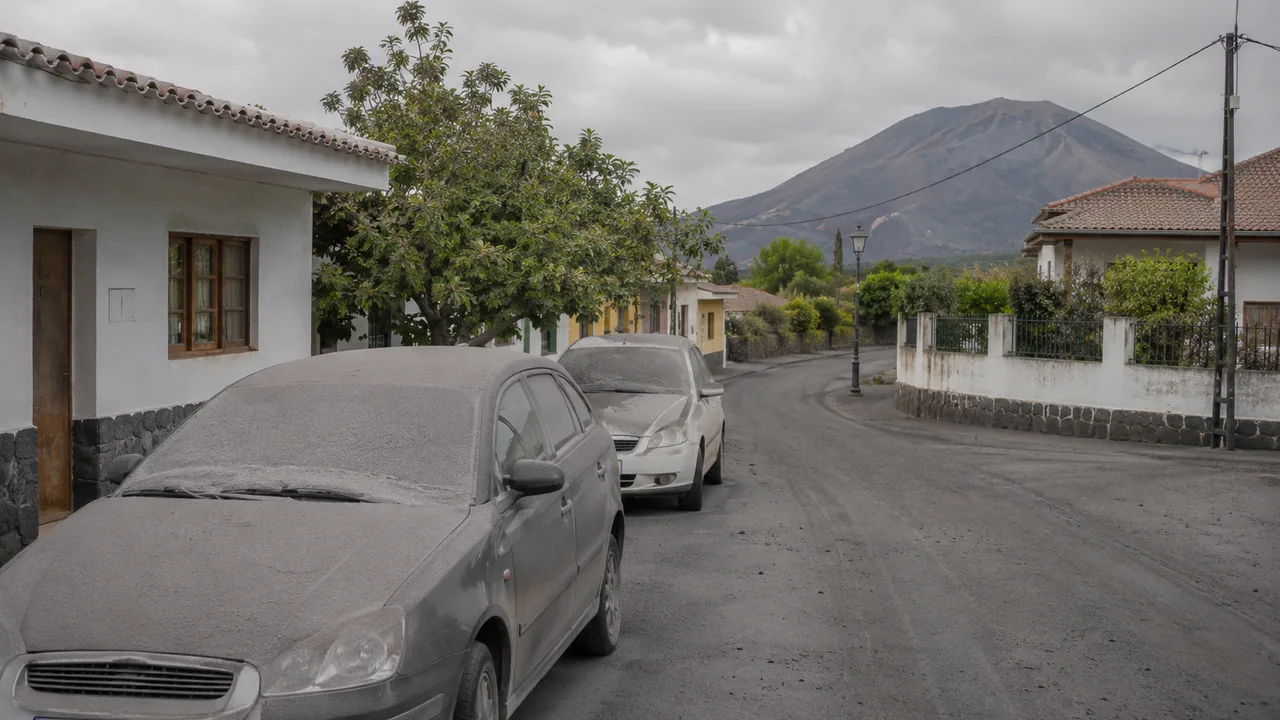
The tap still runs, but the water company says production has slowed and restrictions are coming. Outside, people are washing volcanic ash from cars and pavements. A community that appears to have water everywhere can still be moving towards a serious shortage of reliable drinking water.
Drinking-water problems after ashfall are not limited to a claim that every drop has become poisonous. Ash can affect sources, treatment processes and the amount of usable water a system can deliver. Increased demand during clean-up can add pressure precisely when the supply is least dependable.
The useful response begins by identifying the actual problem. Is water unavailable, potentially contaminated with germs, affected by a chemical concern or restricted while tests are completed? These are different situations. A household needs the correct instruction for its supply, not a universal remedy attached to the word ash.
Why ash is more than ordinary household dust
Volcanic ash is fragmented volcanic material, not the soft residue left after burning wood. Its presence in a water catchment or treatment system can create operational problems. The effect depends on the eruption, amount deposited and the source and equipment involved.
The International Volcanic Health Hazard Network's water briefing explains that plants may need to reduce or stop production while dealing with ash. It emphasises sufficient water and microbiological safety alongside questions about soluble elements.
That distinction is important for public understanding. A provider might interrupt service to protect the system or maintain treatment. The interruption itself can become a health and welfare concern, even if the most alarming chemical claims circulating online are unsupported.
The source affects the problem
Water drawn from an exposed stream or river may encounter ash deposited across its catchment. Other supplies have different configurations and protections. The visible ash outside one home does not establish the condition of every source feeding the wider network.
A household should therefore identify its actual supply and provider. Mains water, a private supply and a roof-fed storage tank are not interchangeable systems. Advice for one should not be copied automatically to another.
The same principle applies to neighbours. Two nearby properties may use different arrangements, while distant homes may share the same network. The relevant connection is the supply system, not simply the distance between front doors. An instruction should specify which customers or locations it covers.
Clear water is not proof of safety
Appearance can reveal some problems, but it cannot establish microbiological or chemical safety. Water may look clear while containing something that requires testing. Conversely, an unusual appearance does not identify the exact cause or health consequence without further assessment.
Do not taste an uncertain supply as a test. Do not assume that a familiar smell or the absence of a smell settles the question. Reliable assessment depends on the relevant measurements and the provider's instructions.
For a family, this means resisting two opposite shortcuts. The first is to declare all water unusable because ash has fallen somewhere nearby. The second is to dismiss an actual notice because a glass looks normal. Both replace the supply-specific evidence with an impression.
Loss of quantity can be as serious as a quality concern
A plant operating below capacity may be unable to meet normal demand. Distribution problems can then affect homes, care settings, schools and businesses. People need water for more than drinking, so a prolonged interruption can quickly complicate hygiene and food preparation.
The consequences vary between households. A person with limited mobility may not be able to collect heavy containers. A family caring for an infant or someone with particular medical needs may require specific guidance and assistance.
These differences should be part of the response from the beginning. Announcing a collection point does not guarantee that everyone can use it. A reliable alternative supply must be accessible in practice, not merely exist on a map. That is a service question as well as an individual preparedness question.
People receiving care should also distinguish ordinary household use from a procedure with specific water requirements. A general notice may not answer a question about an individual treatment or medical device. Contact the relevant care team or provider for that requirement rather than assuming that any replacement container is suitable for every purpose. Explain both the supply interruption and the practical support the person needs.
Why clean-up can put extra pressure on the system
After ashfall, people understandably want to restore normal surroundings. If many households use large amounts of treated water for outdoor cleaning at once, the added demand can conflict with essential uses. The system may be least able to cope when demand rises.
Follow local ash-clean-up and water-use instructions rather than improvising a high-volume washing campaign. Do not sacrifice drinking and hygiene needs to make a driveway look normal sooner. Clean-up also involves inhalation, access and disposal issues that need appropriate advice.
The wider lesson is about coordination. An action that seems minor at one property can matter when repeated across a community. Clear priorities help people understand why a restriction exists and how complying supports neighbours as well as the water provider.
Boil-water, do-not-drink and do-not-use are different notices
A notice should be read in full. Boiling can address certain microbial hazards when it is the instructed response. It does not make every chemically contaminated supply safe. A do-not-use instruction can be broader than a restriction on swallowing the water.
The CDC's overview of drinking-water advisories explains these distinctions. Its key lesson is to match the action to the identified problem and follow the actual notice. Do not convert an instruction into a different one because the alternative sounds easier.
| Message | What to establish before acting |
|---|---|
| Boil-water notice | Which uses require boiling and the specified method |
| Do-not-drink notice | Which uses are prohibited and what alternative supply is provided |
| Do-not-use notice | The full restrictions on contact and use |
| Supply restriction | Which customers, quantities or activities are covered |
| Testing under way | What interim instructions apply while results are awaited |
Why boiling is not a universal answer
Heat can kill or inactivate relevant microbes, but it does not remove many chemical contaminants. An instruction about a chemical concern therefore cannot be replaced by boiling simply because a kettle is available.
For UK readers, the Drinking Water Inspectorate's boil-water explanation describes the purpose of such notices and the possibility of broader restrictions. The guidance applies within its remit; people elsewhere should follow the responsible authority for their location and supply.
This article does not provide a homemade treatment recipe for unknown ash-affected water. Without identifying the hazard, a recipe can create false confidence. The safer question is what the notice requires and how to obtain water that meets those requirements, especially for drinking, food and people with specific care needs.
A household filter has limits too
A filter's performance depends on its design, condition and the contaminants it is intended to address. A device that improves taste or removes some particles is not automatically a complete treatment system for every microbial or chemical hazard.
Read the manufacturer's information and the applicable public instruction. Do not assume that an expensive device cancels a boil-water notice or makes a prohibited supply suitable for use. A claim should identify what the product has actually been tested to do.
The same caution applies to improvised settling or straining. Removing visible material can change appearance without establishing safety. A cleaner-looking glass may still require a different source or a specified treatment. The final decision should not rest on whether the water looks more reassuring after a household process.
Roof-fed tanks need supply-specific advice
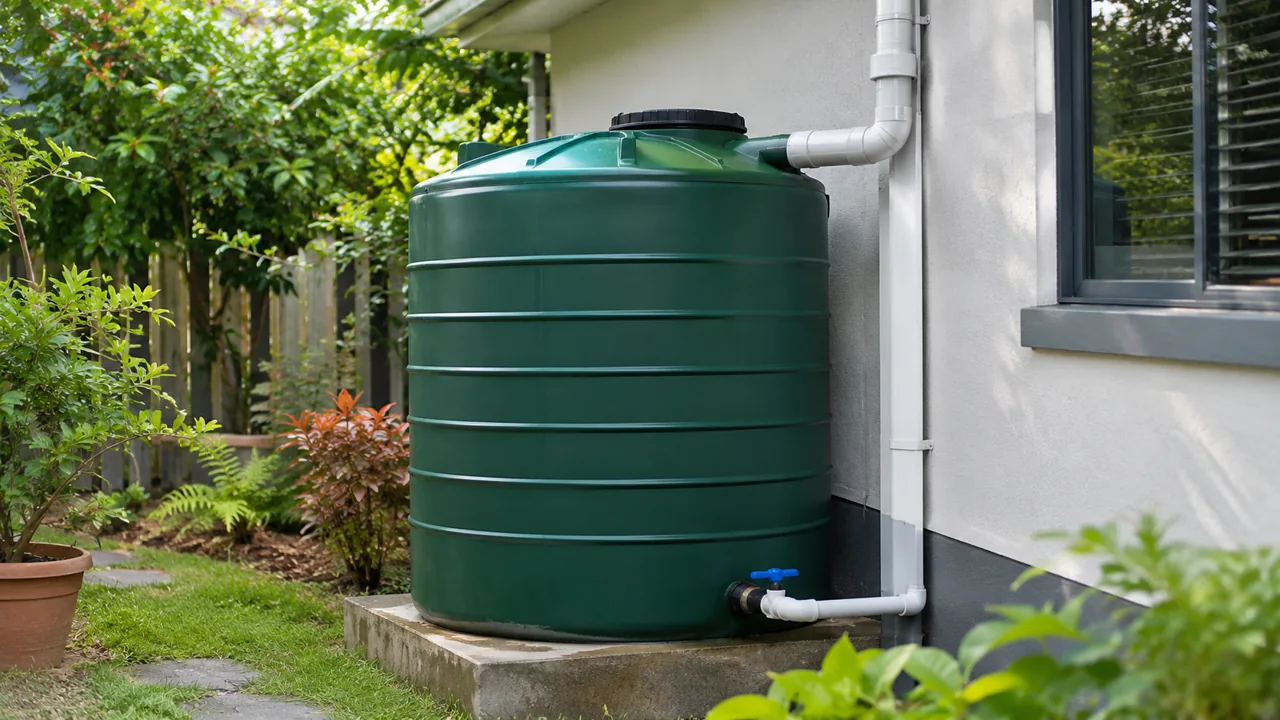
An exposed roof can collect material that is later carried into a rainwater system. The condition of a tank, its connections and the timing of rainfall can affect the situation. Advice therefore needs to match the actual arrangement rather than assume every tank is identical.
Do not climb onto an ash-covered roof to inspect or clean it without appropriate professional advice and safe access. A water concern should not be turned into a fall or structural emergency. Restrictions and practical assistance may be needed before any maintenance is attempted.
For private supplies, contact the relevant local authority or responsible water adviser for location-specific instructions. A mains-water notice found online may not answer the questions about an independent tank. The absence of a notice addressed to that tank is not proof that its water has been assessed.
Protect alternative water from new contamination
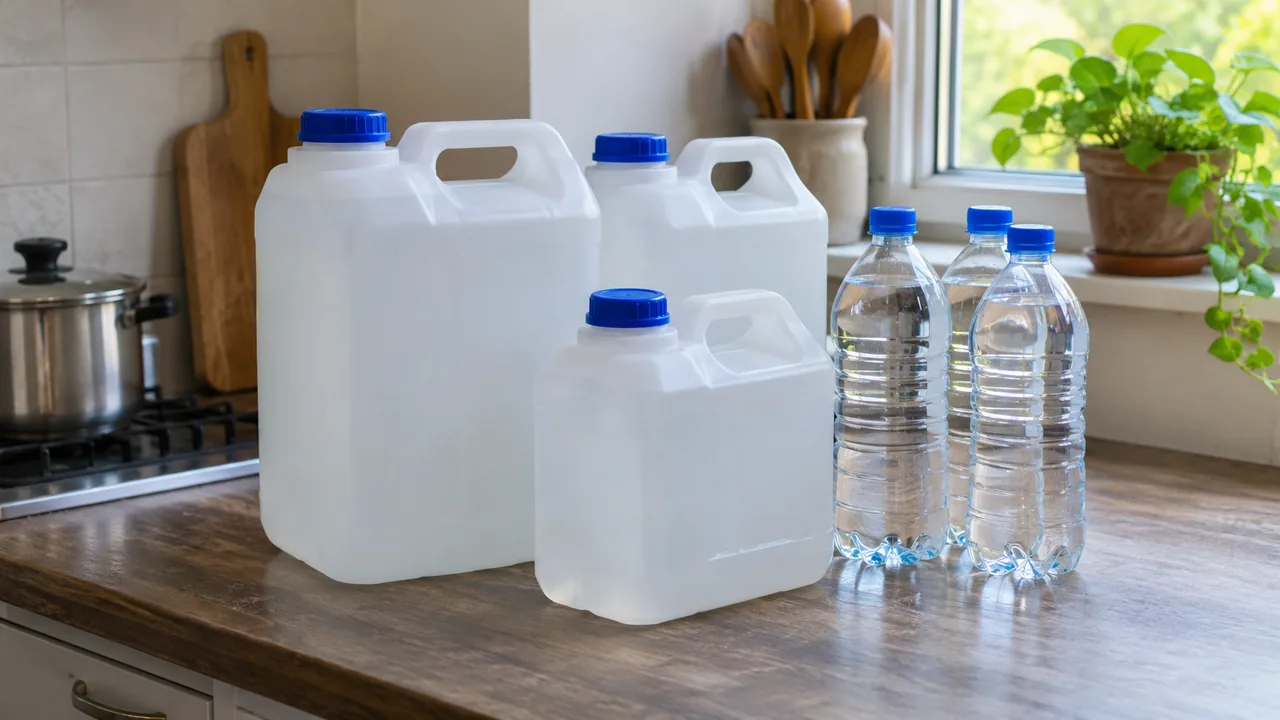
Obtaining a safe alternative is only one part of maintaining a reliable supply. Containers, handling and storage matter too. Keep supplied drinking water in suitable clean containers and follow the provider's instructions about use and storage.
Avoid mixing uncertain water into a safe supply to make it last longer. That can undo the value of the alternative. Keep containers clearly identified so that drinking water is not confused with water reserved for another permitted purpose.
Think about accessibility within the home. A heavy container on the floor may be difficult for someone with limited strength to use. A practical arrangement should allow the person who needs the water to obtain it without lifting, spilling or relying on an unavailable helper for every drink.
Why one reassuring test may not end the assessment
An eruption and its aftermath can change conditions over time. New ashfall, rainfall or operational changes may alter the situation. Testing and instructions may therefore need updating rather than treating one earlier result as permanently valid.
That does not mean every revised message is evidence of a cover-up. It may mean the provider is responding to new information. Good communication should explain what changed, which customers are affected and whether earlier instructions still apply.
For a household, record the date and source of the latest notice. If someone forwards a screenshot, check that it is current and applies to the right supply. A genuine message from a previous phase can become misleading when it circulates without its context.

The wider crisis can make a water problem harder
Damaged roads can delay deliveries. Electricity problems can affect equipment. Displaced households can increase demand in locations that normally serve fewer people. These are possible connections, not automatic consequences of every ashfall.
Our article on Taupō's valley hazards explains how routes and catchments can connect the eruption with later disruption. The discussion of a very large eruption's climate effects concerns a different timescale and mechanism. The two should not be merged into one unsupported forecast.
A serious threat assessment follows the actual chain. Which part of the water system is affected? Which alternatives remain usable? What prevents assistance from reaching people? Those questions reveal the practical severity more clearly than a general declaration that all water has become dangerous.
Do not let rumours replace the provider's actual message
A claim that ash has poisoned every reservoir may spread faster than laboratory results. A reassuring post saying that boiling fixes everything can be equally misleading. Both can push households away from the supply-specific instruction they need.
Check the source independently and read the full notice. If the instruction is unclear about a particular use, seek clarification from the responsible provider rather than choosing an answer from comments under a video. Different uses may have different restrictions.
Be wary of sellers using an incident to promise universal purification. A product should not be credited with removing a hazard it has not been shown to address. Fear about children and drinking water deserves accurate help, not an unsupported sales claim.
Your next step
Identify who is responsible for your water supply and where they publish current notices. If you use a private system, establish the appropriate local contact before an incident makes that information urgent. Keep the supply's actual configuration in mind when reading general advice.
During ashfall or an interruption, separate availability from safety. Follow the precise notice, use the specified alternative and ask for assistance if collection or handling is impractical. Do not substitute appearance, boiling or a household filter for an assessment of an unidentified hazard.
Volcanic ash can threaten an entire community's reliable water service without producing the simple catastrophe shown in a headline. Recognising the operational, health and accessibility questions makes the danger clearer and gives households a better basis for action.
Frequently asked questions
Can volcanic ash interrupt drinking water even without severe chemical contamination?
Yes. Ash can affect sources and treatment operations, reducing the amount of water a system can reliably deliver. Increased demand during clean-up can add pressure. Availability and safety are related but separate questions.
Does clear-looking water prove that it is safe?
No. Appearance cannot establish microbiological or chemical safety. Follow the instruction for the actual supply and the relevant testing information. Do not taste uncertain water as a safety test.
Will boiling make any ash-affected water safe?
No. Boiling can address relevant microbes when it is the instructed response, but it does not remove many chemical contaminants. Follow the actual notice and use an appropriate alternative where required.
Can a household filter replace a water advisory?
Not automatically. Filters differ in what they remove and how they must be maintained. A device that improves taste or removes particles does not necessarily address the identified hazard. Follow the provider's instruction and the device's verified limits.
What if I cannot collect an alternative supply myself?
Contact the responsible provider or local support arrangements and explain the practical difficulty and any care needs. An available collection point is not an accessible solution for everyone. Assistance should be considered before the household's remaining safe water is exhausted.