
An asteroid cannot be diverted years in advance if nobody discovers it until the final approach. Asteroid detection blind spots matter because the time between finding an object and understanding its path can determine which protective options remain. The serious weakness is not that astronomers ignore the sky. It is that observing a dark moving object against a bright, enormous and changing background is a difficult physical task.
That does not mean a hidden asteroid is known to be approaching your town. This article explains a real limitation in planetary defence, not a current impact warning. The useful response is to understand what observations establish, why warning time varies and how to distinguish an official assessment from a frightening graphic.
For an ordinary family, the difference matters. An invented countdown can create panic, while dismissing every asteroid story can hide why detection programmes deserve support. The responsible middle ground is serious attention to a credible hazard and careful attention to the evidence behind a particular claim.
The dangerous difference between unseen and harmless
An object that has not been discovered cannot yet have an orbit assessed in the same way as a well-observed asteroid. Its absence from a public risk list is not a measurement of that particular object's safety. It may simply be unknown to the system.
Equally, unknown does not mean that a large impact is imminent. The sky contains objects with many different paths and properties. Most objects mentioned in routine observing news are not on a collision course with Earth. A discussion of the undiscovered population is different from a warning about a specific body.
This distinction prevents two common mistakes. One is treating an incomplete catalogue as a complete shield. The other is treating every gap in that catalogue as evidence of a disaster already underway. Detection programmes reduce uncertainty through observations; they do not replace uncertainty with either perfect reassurance or a guaranteed catastrophe.
Why sunlight creates a genuine observing problem
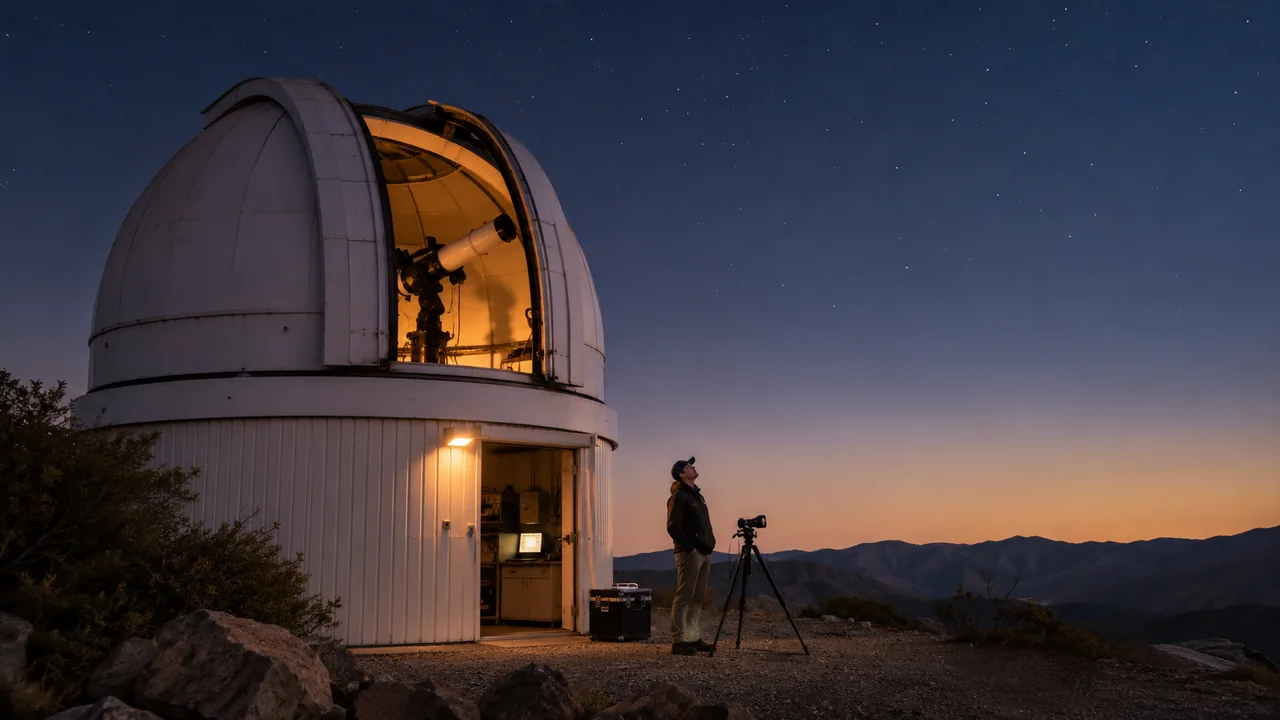
A telescope needs a usable view of an object against the surrounding background. Sunlight can overwhelm a faint target, especially when the viewing geometry places it close to the Sun in the sky. An object can therefore be difficult to observe from a particular location even when it is physically significant.
The NASA NEO Surveyor mission description explains how its planned infrared approach addresses difficult-to-find objects, including some approaching from the Sun's direction. That is a specific observing capability, not a claim that the mission will identify every possible object instantly.
For readers, the important point is geometry. A dramatic animation showing Earth and a bright asteroid from outside the solar system does not show what an actual telescope can see. The observer may be looking through daylight, glare or an unsuitable angle that the animation conveniently removes.
Dark surfaces and small signals complicate the search
A rocky body need not shine brightly merely because it is dangerous. What an optical telescope receives depends on reflected sunlight, distance, viewing angle and the object's surface. A larger dark object and a smaller bright one can produce misleadingly similar impressions if the measurement is interpreted too simply.
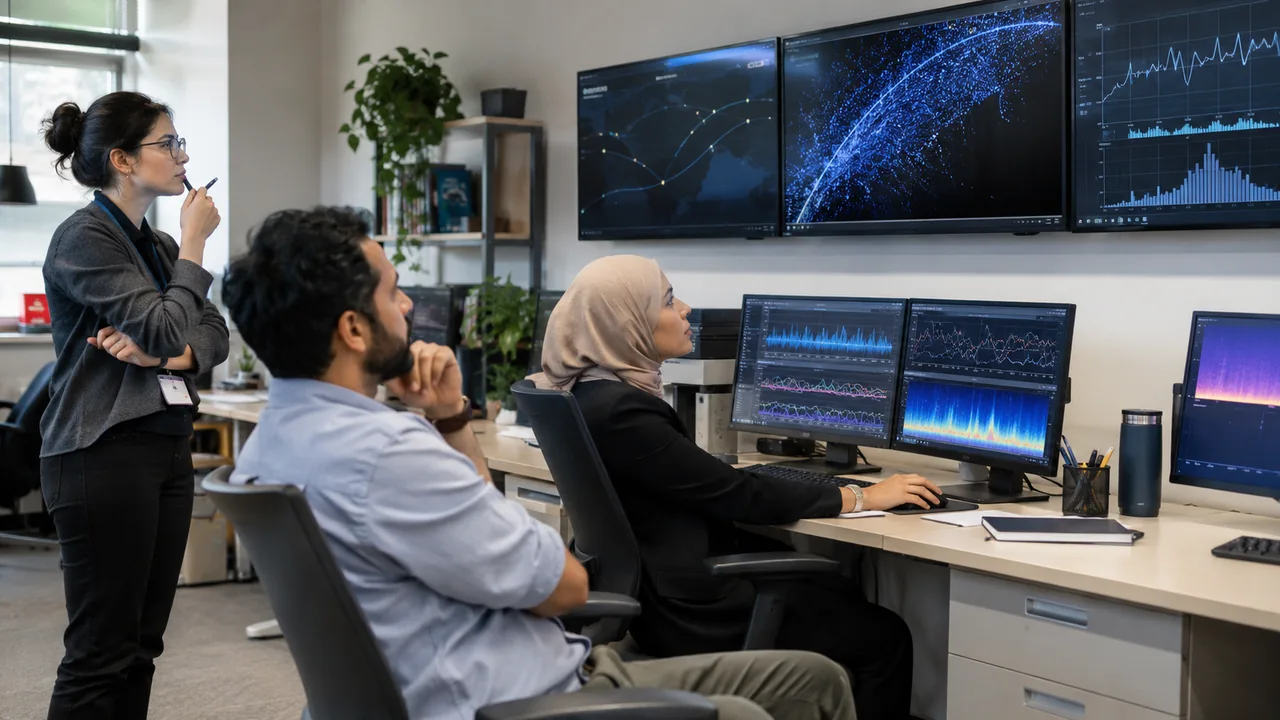
Infrared observations can add a different kind of information because warmed objects emit thermal radiation. They do not abolish all limits: instruments still have sensitivity, viewing and operating constraints. Different observing methods are valuable partly because their strengths and weaknesses differ.
Avoid judging an asteroid's size from the brightness of one image posted online. A bright point in a photograph is not a ruler, and an artist's impression is not a measurement. Reliable estimates come with methods, assumptions and uncertainty that a social-media caption may leave out entirely.
Weather and coverage affect what gets observed
Ground-based observatories cannot watch every direction continuously. Weather, daylight, telescope availability and the part of the sky visible from each site influence observations. A network can improve coverage without turning the entire sky into one uninterrupted live camera.
Space-based observing can address some ground limitations, but it introduces its own engineering and operational requirements. The sensible question is which gap a particular instrument reduces and how its observations connect with the wider system. The word space does not make an instrument unlimited.
A strong planetary-defence approach therefore uses complementary observations and continued follow-up. A single impressive telescope photograph should not be mistaken for the whole capability. Nor should one cloudy night at one observatory be presented as proof that every detection programme has stopped functioning.
Finding an object is only the beginning
An initial observation can show that something is present and moving, but understanding its path requires appropriate measurements over time. Follow-up helps determine which possible trajectories remain consistent with the evidence. The first announcement and the later assessment may therefore contain different levels of confidence.
That change is part of scientific work. A refined assessment can remove a concerning possibility or show that further attention is needed. It is misleading to treat every revision as incompetence, concealment or proof that the earlier number was a forecast of what would happen.
Ask what has been observed, how much follow-up exists and what the responsible scientific organisation actually concludes. A report that quotes only the most alarming early possibility can become outdated quickly, even while its headline continues travelling through family groups and social feeds.
Why the length of warning changes the available response
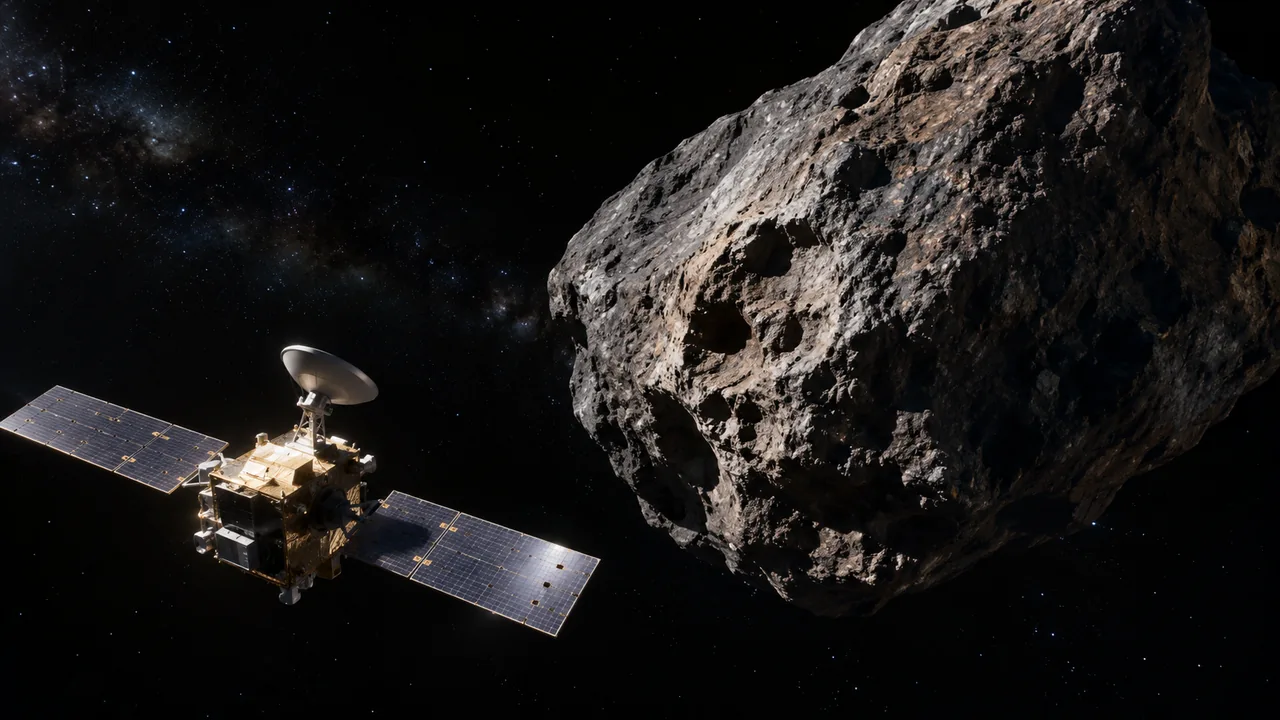
A small orbital change made sufficiently early can develop into a useful difference in position later. A much shorter interval leaves less time to design, launch, navigate and verify an intervention. Detection and response are therefore connected through time, not merely through the size of the spacecraft available.
The NASA technical account of the DART mission explains that a suitably sized kinetic impactor requires adequate warning, typically years to decades, to prevent a threatening encounter through a small orbital change. This is a statement about a particular method's conditions, not a universal timetable for every asteroid.
The related article on asteroid deflection examines what the demonstration established and what a real protective mission would still need. Discovering an object is essential, but a discovery announcement is not the same thing as a completed defence.
Short warning does not make every object equally destructive
Consequences depend on size, speed, composition, entry conditions and location, among other factors. An atmospheric breakup and a major surface impact are different events. The local population, buildings and essential services also influence the resulting harm.
The guide to asteroid airbursts explains why reaching the ground as one intact body is not necessary for serious damage. That does not mean every shooting star is dangerous. Familiar small meteors and rare damaging events must not be collapsed into one frightening category.
Read an assessment for the event it actually describes. A city-scale hypothetical exercise should not be quoted as a forecast of global extinction. Conversely, calling an event local does not make it minor to the people whose homes, hospitals and water systems lie within the affected area.

A risk list is a scientific tool, not a countdown board
A public list can help researchers and readers understand objects requiring assessment. Its entries belong to a changing body of observations and calculations. The mere presence of an object on such a list does not establish that an impact will happen.
Look for the responsible organisation, the date and the meaning of the particular measure being reported. Do not substitute a numerical ranking, an uncertainty range or a close-approach distance for an actual instruction to the public. Numbers only become useful when their definitions are understood.
If an article omits those definitions, the missing information deserves attention. A headline can be mathematically accurate yet practically misleading when it removes the conditions under which a value was calculated. The family deciding whether to change a journey needs a clear current instruction, not an unexplained score.
Hypothetical exercises are designed to expose weaknesses
Planetary-defence exercises can deliberately use difficult invented conditions so that organisations can test decisions. A fictional discovery, impact corridor or response failure can help reveal gaps in communication and capability. Its value depends on participants knowing that it is an exercise.
A copied slide can lose that context. A date and a detailed map may then appear to describe a real incoming object. Before forwarding it, find the original source and check whether the material is labelled hypothetical, a simulation or a planning scenario.
A precise-looking image does not turn a constructed event into a prediction. The same applies to the DEFCON scenarios attached to this article: they illustrate escalating consequences under specified conditions. They are not an official asteroid alert, a change in military readiness or evidence of an impact currently expected.

Why a UK reader should care about a distant hazard
A confirmed event elsewhere could affect travel, relatives, suppliers or services with international dependencies. The route to a British household would depend on the actual scale and location, not simply on the fact that an asteroid was mentioned in the news.
An event affecting a port, a production centre or a region's infrastructure may have consequences beyond its immediate damage zone. A much larger impact could introduce different environmental and food-system problems. These mechanisms require separate evidence and should not be assumed to follow from every close approach.
The article on an asteroid-related food crisis explores a severe impact scenario without treating a model as a present forecast. Identifying the real dependency is more useful than assuming either complete isolation from distant events or inevitable worldwide collapse from any impact.
A simple way to assess an alarming asteroid claim
| What the claim shows | What to check next |
|---|---|
| A named asteroid | The current assessment from the responsible scientific source |
| A frightening date | Whether it describes an observation, exercise or possible encounter |
| A dramatic image | Whether it is a photograph, model or artist's concept |
| A changed probability | What new observations changed the assessment |
| A local safety instruction | The issuing authority, affected area and current action |
Keep these questions together. An authentic organisation's logo can appear on an old slide, and a real asteroid name can be attached to an invented instruction. Verification concerns the complete claim, including its context and requested action.
Where an immediate physical danger is directly apparent, respond to that danger and seek appropriate help. Source checking is not a reason to stand beside damaged glass or remain in a location authorities have instructed people to leave.
Do not let uncertainty become a market for fear
A claim that governments are hiding an imminent strike may be used to sell equipment, solicit money or direct people towards unsafe travel. The emotional force often comes from the suggestion that only the seller understands the danger and that checking elsewhere would waste time.
Ask what evidence would distinguish the claim from an invented story. A demand for secrecy, an unexplained deadline and refusal to identify an original source are reasons to slow a consequential purchase or decision. They do not prove an asteroid exists or establish the seller's technical competence.
Children and anxious relatives may need a calmer explanation of what a headline means. State what is known, what remains uncertain and where a genuine update would appear. Repeating the most frightening image is less useful than helping someone understand why a detection limitation is different from a warning about their home.
What detection programmes can reasonably be expected to deliver
The purpose is to find and characterise relevant objects earlier and improve the information available for decisions. Progress can be substantial without making the system perfect. A programme should be assessed against its stated observing and follow-up goals rather than a promise that nothing unexpected will ever appear.
The NASA update on NEO Surveyor's integration and testing describes a real development stage. A mission being built, a mission launched and an operational survey producing validated observations are different milestones. Keep those distinctions when reading progress reports.
This is a useful accountability question for the public: which capability is operating, which remains in development and how will success be demonstrated? Serious concern for future generations supports that scrutiny. It does not require pretending that every planned improvement is already protecting the entire sky.
Your next step
Choose one credible planetary-defence information source and learn the difference between its scientific assessments and instructions from your own emergency authorities. When a new claim appears, check the original date, source and status before sharing or making a major decision.
The hidden-asteroid problem is serious because lost observing time can become lost response time. The strongest protection begins with better detection, sustained follow-up and coordinated decisions. Understanding that chain gives readers a reason to care without turning the unknown sky into an invented countdown.
Frequently asked questions
Does a blind spot mean an asteroid is currently heading towards Earth?
No. A limitation in observing capability is not a warning about a specific object. A genuine assessment needs observations, an identified object and an appropriate analysis. Check the responsible scientific source rather than inferring an imminent impact from the existence of a gap.
Why can an asteroid be difficult to see near the Sun?
Sunlight and viewing geometry can overwhelm a faint target in the sky. Different instruments address different observing conditions. Infrared space surveys can reduce important gaps, but no instrument should be described as seeing every object instantly.
Is discovering an asteroid enough to stop it?
No. An intervention requires suitable technology, planning, navigation, decision-making and time. Detection provides information; it does not itself change an orbit. A short warning interval can restrict options even when a method has been demonstrated successfully elsewhere.
Should I treat a changed impact assessment as proof of a cover-up?
No. Additional observations can refine the paths consistent with the evidence and change an assessment. Check what changed and why. A revised estimate is not, by itself, proof of concealment or a prediction that the worst early possibility will occur.
What should I do with an alarming asteroid map in a family group?
Find the original source, date and explanation. Check whether it is an exercise, model or current assessment, and verify any local instruction independently. Avoid forwarding a copied image as a live warning when its status is unclear.