
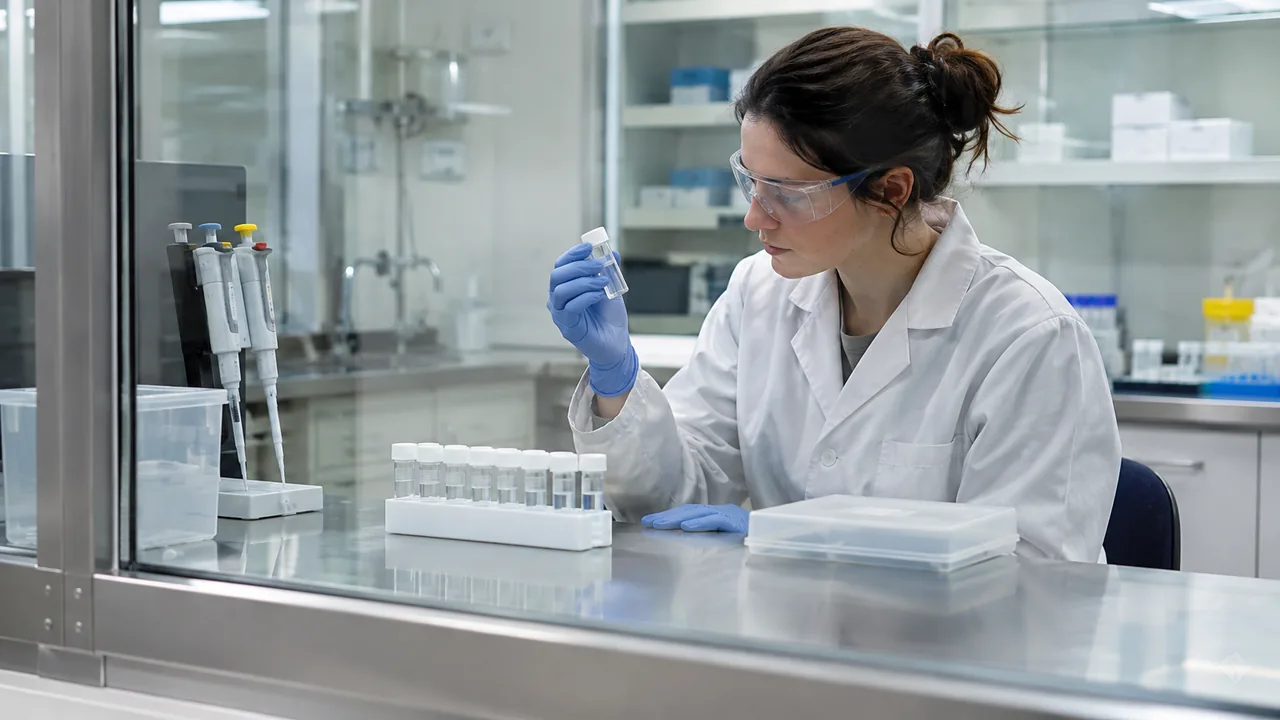
First contact would not have to begin with a weapon to raise a difficult question: what happens when something biological reaches an environment that has never encountered it? Alien biological contamination is a serious subject for precautionary thinking, but it is not an established threat from a known organism. No confirmed alien pathogen is being identified in this article.
The distinction matters. A radio signal cannot give a family an infection. A sealed sample returned from another world, a hypothetical visiting organism and an unverified video of a strange object are different situations. Combining them into one frightening story makes the science harder to understand and the public easier to mislead.
The useful question is therefore conditional: if material with unknown biological properties came to Earth, how could we investigate it without assuming either complete safety or certain catastrophe? Planetary protection provides a real scientific framework for examining contamination risks without treating alien disease as established. That question connects curiosity with responsibility for the people and ecosystems that might be exposed.
Start by asking what first contact means
The phrase can describe several very different discoveries. Astronomers might identify a signal that merits investigation. A mission might find evidence suggesting past life. Researchers might eventually obtain a sample whose biological significance is uncertain. Fiction usually jumps straight to a spacecraft arriving with living passengers.
Those situations do not create the same route of exposure. Information received by a telescope is not physical biological material entering a household. Evidence of ancient life would not automatically establish that a viable organism had survived a journey to Earth.
When a headline uses the words first contact, ask what was actually observed. Was it a measurement, a chemical signature, an object or a living system? Has an independent team confirmed the result? Clear definitions prevent an exciting scientific possibility from being converted into a disease claim without the necessary evidence.
Why precaution is reasonable without a proven alien disease
NASA's planetary protection programme addresses contamination in both directions: taking Earth life to other worlds and bringing potentially relevant material back to Earth. The existence of these precautions does not demonstrate that extraterrestrial pathogens exist.
Think of the decision as a problem of responsibility. If exposure could be difficult to reverse, investigating uncertainty before allowing uncontrolled contact can be more sensible than learning through an avoidable release. The precaution concerns what is not yet established, rather than announcing a measured danger.
That logic also has limits. It does not justify treating every meteorite, astronomical announcement or unfamiliar illness as alien contamination. A protective system needs a defined route by which relevant material could reach people or an environment. Without that connection, the story has skipped the part that makes a risk assessment meaningful.
Unknown biology does not automatically mean human infection
An infection is not simply a meeting between something strange and a person. On Earth, an organism's ability to enter a host, survive, reproduce and spread depends on particular biological relationships. The fact that a hypothetical organism evolved elsewhere would not tell us that those relationships exist.
There are several unknowns. Would the material be alive? Could it remain active in Earth's conditions? Would it interact with human biology at all? Could it reproduce here? Would contact cause harm through infection, a chemical effect or some other mechanism? Each is a separate question.
It would be equally unjustified to declare complete incompatibility and automatic safety. We do not have confirmed alien organisms to test against either sweeping claim. The honest position is uncertainty, followed by careful investigation. That is less dramatic than a movie plot, but far more useful for protecting real people.
Exposure is the missing link in many frightening stories
A convincing account of biological risk should explain how contact could occur. Material inside an appropriately controlled research system presents a different situation from material dispersed through an environment. A claim about a sealed object does not establish that anyone has been exposed.
The amount of material, its condition and the route of contact would all need examination. A photograph cannot answer those questions. Neither can a social media post that jumps from an unidentified object to a list of symptoms reported across unrelated places.
For the public, the useful response is to look for a documented chain of evidence. Which material is being investigated? Who has responsibility for it? What observations suggest biological activity? What exposure, if any, has actually occurred? A story that cannot answer these questions should not be promoted as a confirmed outbreak.
The risk could involve ecosystems as well as people
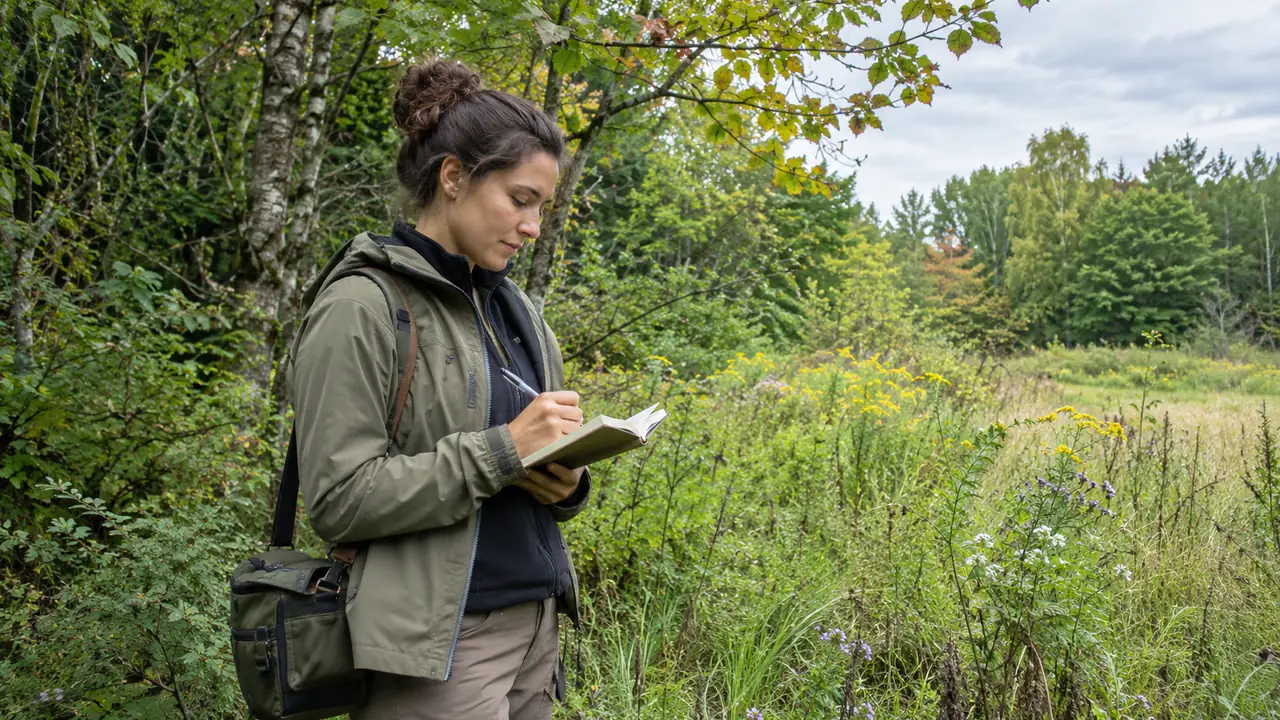
Human illness is the familiar fear, but an environmental assessment would ask wider questions. Hypothetical biological material might interact with soil, water or other organisms in ways that are not captured by looking only for symptoms in humans.
This is a thought experiment about possible assessment needs, not a prediction that alien life would invade Earth's ecosystems. An unfamiliar organism might fail to survive altogether. It might have no meaningful interaction with local life. Its effects could also depend on conditions that exist only in a controlled setting.
The serious lesson is to avoid a narrow test of safety. The absence of immediate human illness would not answer every environmental question, just as an unusual environmental measurement would not establish human infection. Decisions would need relevant expertise and observations, rather than one dramatic result being stretched to cover everything.
Why ordinary contamination would complicate discovery
Finding a biological-looking signal would not immediately prove an extraterrestrial origin. Material from Earth can travel with spacecraft, equipment, researchers or the surrounding environment. A discovery claim therefore needs to consider whether a familiar source could explain the observation.
This is one reason contamination control protects the quality of science as well as the wider environment. If a sample is mixed with material whose origin cannot be traced, the opportunity to learn from it can be damaged. An exciting result becomes harder to interpret precisely when careful evidence matters most.
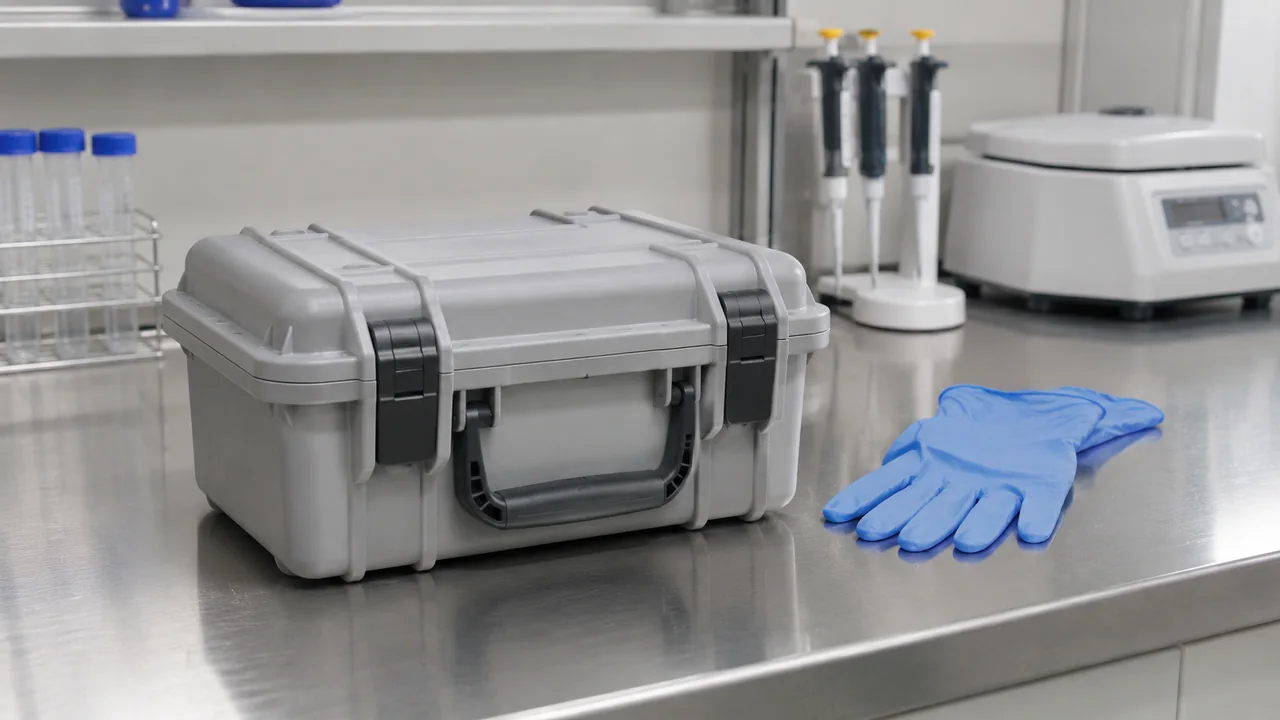
The same principle applies to public discussion. A laboratory photograph showing gloves, sealed containers or controlled access is not evidence that scientists have found a dangerous organism. Those features can be part of ordinary responsible research. Images should explain a process, rather than serve as props for a claim they cannot establish.
A staged assessment is safer than a yes-or-no headline
Imagine a hypothetical sample with an unusual measurement. The first task would be to check the measurement and its context. Only then could researchers ask what might explain it and whether additional restrictions or tests were warranted.
Several conclusions could remain open at the same time. An instrument might need calibration. A chemical process might account for the signal. Earth contamination might be involved. A genuinely unfamiliar process might merit further investigation. The point of a staged approach is to avoid deciding the ending before evaluating these possibilities.
| Question | What an answer could clarify | What it would not prove alone |
|---|---|---|
| Is the observation repeatable? | Whether the signal is reliable | That the cause is biological |
| Is Earth contamination excluded? | Whether a familiar source remains plausible | That the material can harm people |
| Is there a credible exposure route? | Who or what might require protection | That infection has occurred |
| Is harm directly observed? | Which effects need investigation | That every unexplained illness has the same cause |

Who should explain the evidence to the public?
Different questions call for different expertise. Astronomers can assess an observation of a distant object. Biological researchers can investigate relevant material. Public-health and environmental authorities would need to assess any real exposure affecting their responsibilities.
An impressive title in one field does not supply authority in every other field. A person discussing the possibility of life elsewhere is not automatically issuing clinical advice. A speculative interview should not be presented as a public-health instruction.
Good communication should identify what is known, what is being investigated and what would change the assessment. It should also explain why a precaution is being taken. Without that explanation, the public may interpret a controlled process as proof of a hidden disaster, or interpret uncertainty as a reason to ignore legitimate restrictions.
Do not confuse unidentified phenomena with biological evidence
NASA's information on unidentified anomalous phenomena distinguishes unexplained observations from evidence of extraterrestrial origin. An observation that has not been explained does not establish an alien visitor, much less a biological exposure.
This matters when several alarming stories circulate together. A strange light, a local illness and a laboratory image can be placed in the same video without any evidence connecting them. The sequence feels persuasive because the viewer supplies the missing links.
Before accepting such a connection, ask whether the events share a verified time, location and mechanism. Ask whether the relevant investigators have made that link themselves. If the answer is no, keep the claims separate. Fear should not be allowed to perform the work that evidence has not done.
The human danger can arrive before any alien biology does
A rumour can encourage people to avoid necessary medical care, buy ineffective treatments or blame a local community for an imagined exposure. Those are real-world consequences that do not require extraterrestrial life to exist.
Someone with worrying symptoms needs an appropriate medical assessment based on their actual circumstances. They do not need an online diagnosis built around a space story. A person selling an unverified alien-contamination cure is not filling a scientific gap merely because genuine research contains uncertainties.
There is also a risk to researchers and ordinary workers. A rumour naming a laboratory can lead to harassment of people whose work has been misrepresented. Serious concern should produce careful questions and accountable investigation, not accusations against individuals or communities without evidence.
What would a meaningful protective instruction look like?
A useful instruction would connect a specific event to a defined action. It would identify the responsible organisation, affected location, relevant material or exposure and the next source of updates. It would not rely solely on a frightening label such as alien pathogen.
The action would depend on what had actually happened. Restrictions around a research site, advice for identified contacts and a broad public message would serve different purposes. Their scope should not be guessed from a distant photograph.
For a UK reader, the practical rule is to use the applicable local emergency and health information for an actual incident. Do not travel towards a claimed landing site or attempt to collect unknown material. Curiosity does not make an uncontrolled encounter a useful contribution to scientific investigation.
What a family can say without promising too much
A child may ask whether aliens could make everyone ill. A truthful answer can be simple: scientists have not confirmed an alien disease, and researchers take care with unfamiliar samples because careful work protects people and helps us understand what they find.
Avoid promising that unknown life must be harmless. Avoid saying that a catastrophic infection is inevitable. Both statements replace uncertainty with a story the evidence cannot support. The reassuring part is the method: questions can be investigated, claims checked and precautions explained.
Adults need the same discipline. If a discussion leaves the family more frightened but unable to name any actual observation, it may be time to stop replaying the clip and find the original source. Repetition can make a claim feel familiar without making it more reliable.
Keep biological risk separate from other first-contact questions
A confirmed signal would raise questions about interpretation and communication. A hypothetical physical arrival would raise additional questions about intentions and capabilities. Neither should automatically be turned into a biological threat story.
Our discussion of Earth's response to a hypothetical advanced civilisation examines the limits of what can be assumed about an encounter. The article on false alien-invasion reports considers how misinformation could cause harm even when the underlying claim is untrue.
Keeping these questions distinct makes each one clearer. It also prevents one uncertainty from being used as evidence for another. Not knowing a civilisation's intentions would not establish an infectious organism. Not knowing a sample's chemistry would not establish that a civilisation sent it deliberately.
Your next step
When you encounter a first-contact story, write down the actual claim in one sentence. Then identify whether it concerns information, physical material, a biological observation or a hypothetical scenario. Check that the evidence belongs to the same category as the claim.
If the story moves from a distant signal to human illness without explaining an exposure route, notice the missing step. If it uses the existence of precautions as proof of a disaster, notice that leap as well. These checks take less time than absorbing an hour of frightening speculation.
The responsible concern is not that an alien disease has been shown to be approaching. It is that unfamiliar discoveries would require careful investigation and clear public communication. Protecting people and preserving scientific curiosity are compatible aims when neither is built on invented certainty.
Frequently asked questions
Have scientists confirmed an alien pathogen that infects humans?
No confirmed alien pathogen is identified by the sources used for this article. Precautions around extraterrestrial material address uncertainty; they do not establish that an extraterrestrial disease exists or is spreading on Earth.
Could receiving a radio signal cause a biological infection?
Receiving information through a telescope does not provide a biological exposure route. A signal-detection question is different from handling physical material that might have biological properties. The two situations should not be combined into one risk claim.
Would unfamiliar alien biology automatically be dangerous to people?
No. We cannot infer human infection merely from an extraterrestrial origin. Survival, interaction with human biology, exposure and harmful effects would need investigation. Declaring automatic safety would also go beyond the available evidence.
Why use planetary protection if alien life has not been confirmed?
Precaution can protect environments and preserve the scientific value of a sample while important questions remain unresolved. It is a way of managing uncertainty before uncontrolled contact, rather than evidence that a known catastrophe is being concealed.
What should I do if a frightening story claims local alien contamination?
Check the original source and applicable local emergency information. Do not collect unknown material or use unverified treatments. Obtain ordinary medical help for actual symptoms, and keep an unconfirmed space story separate from a clinical diagnosis.