
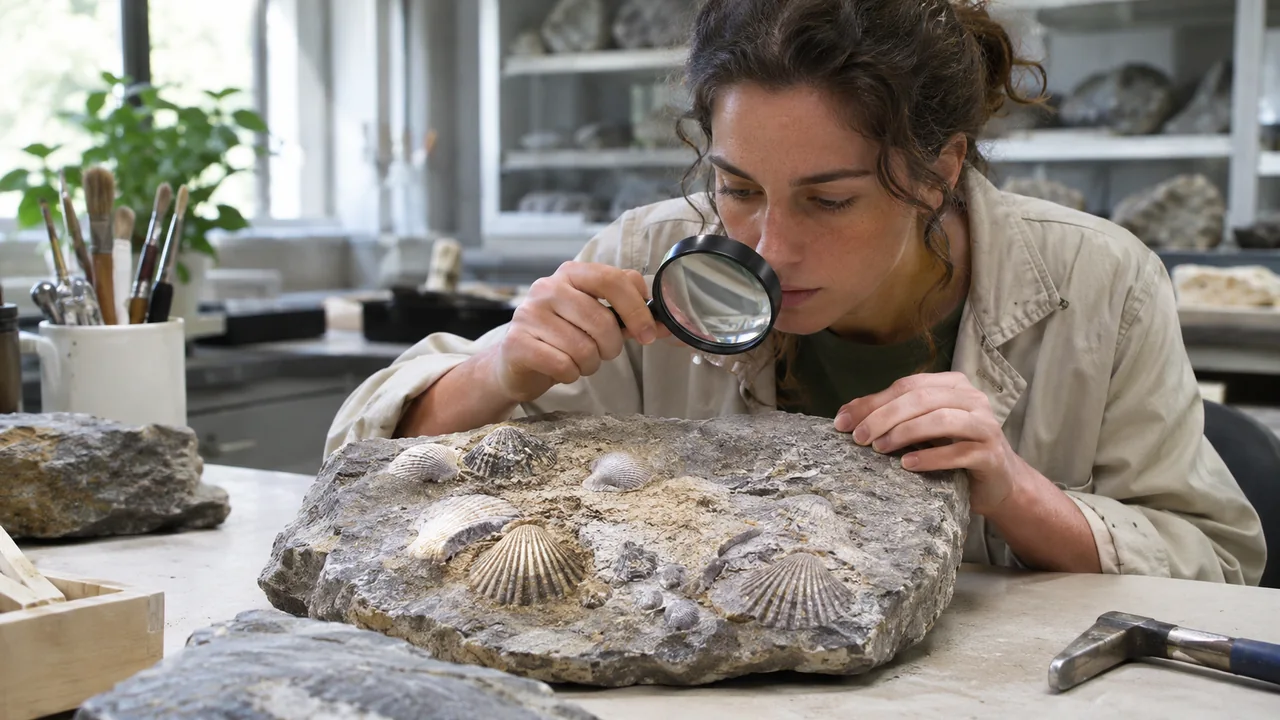
The oceans were still there. Sunlight still reached the planet. Yet conditions that had supported thriving marine communities were changing until many animals could no longer survive where they lived. The Great Dying is frightening precisely because Earth did not have to disappear for much of its life to be lost.
The Great Dying mass extinction occurred around 252 million years ago, at the end of the Permian Period. It affected life in the sea and on land and is recognised as an extraordinary biological crisis. Its causes and detailed sequence remain subjects of research, but warming, oxygen stress and major environmental change are central to the evidence.
This is a historical explanation, not a forecast that the same event is happening now. Understanding how a living world became hostile to so many inhabitants can improve the questions we ask about environmental change, without treating the ancient Earth as a direct timetable for our own future.
What the name Great Dying describes
The name refers to an exceptionally severe loss of biodiversity across the end-Permian crisis. It does not mean that every organism died or that life had to begin again from nothing. Survivors remained, and the later history of life developed from a profoundly altered world.
That distinction matters because extinction can be devastating without being total. The disappearance of many species can change food webs, habitats and opportunities for the species that remain. Survival of some life is not the same as preservation of the earlier ecosystem.
For an ordinary reader, this is the first useful idea: a planet can remain physically recognisable while the relationships supporting its living communities are disrupted. A coastline, ocean or forest is more than its outline on a map. What can live there depends on conditions within it.
The world was different before the crisis began
The late Permian Earth had a different arrangement of continents, oceans and ecosystems from the modern world. Humans did not exist. Its climate response therefore cannot simply be copied onto today's geography and population.
Those differences are part of the scientific question. Researchers reconstruct ancient conditions and test whether proposed mechanisms match the evidence. They do not merely apply a modern weather map to a prehistoric landscape.
This also limits familiar comparisons. Calling the event a warning can be useful when it refers to a mechanism, such as warming changing the conditions organisms can tolerate. It becomes misleading if it suggests that the modern world must follow the same sequence at the same speed or experience an identical outcome.
Why enormous volcanism matters to the explanation
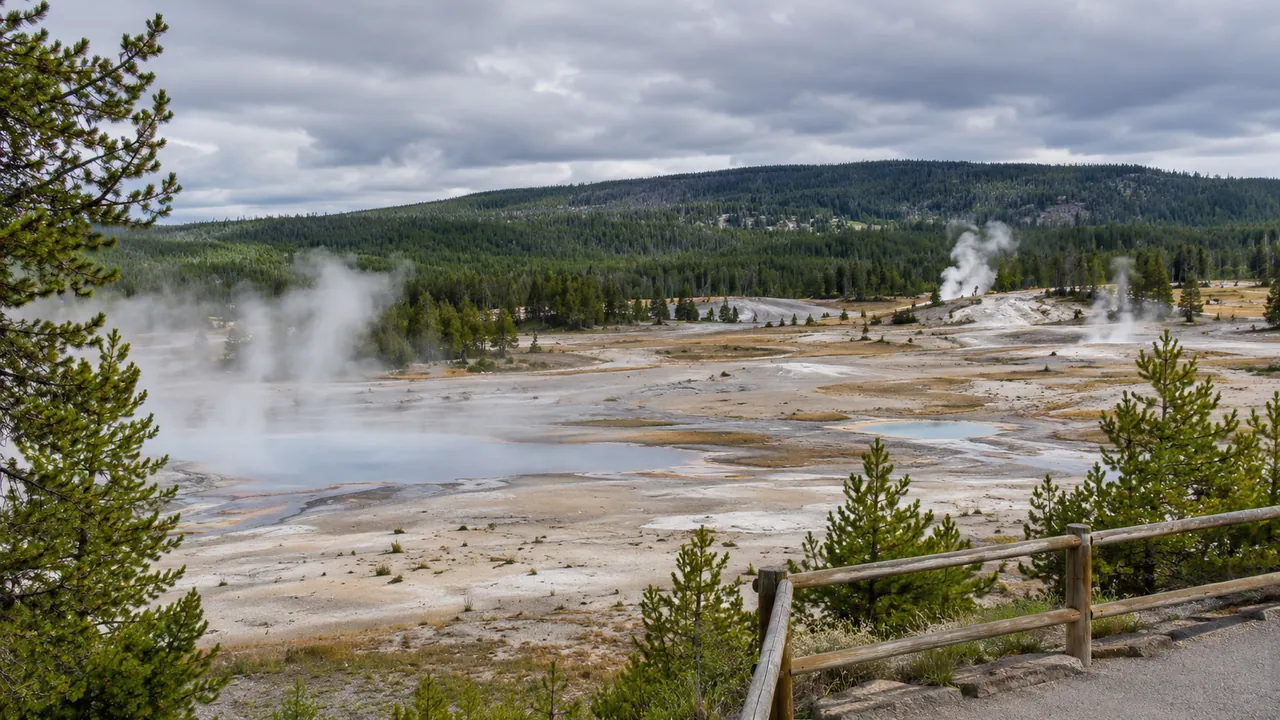
The crisis is associated with major volcanism in the region now known as Siberia. The relevant problem is not simply lava travelling across every habitat. Volcanic activity can alter the atmosphere and wider environmental conditions, connecting a geological process with distant biological effects.
The University of Washington's account of end-Permian research explains the link investigated between greenhouse-driven warming and marine oxygen stress. The research concerns a mechanism supported by models and geological evidence, not a single visible moment when all life failed.
Thinking through the connection is important. A distant source can change the conditions in which organisms live without physically reaching them as a lava flow. The chain of effects is what makes a large environmental disturbance relevant beyond its immediate geological footprint.
Warmer water can create a double pressure on animals
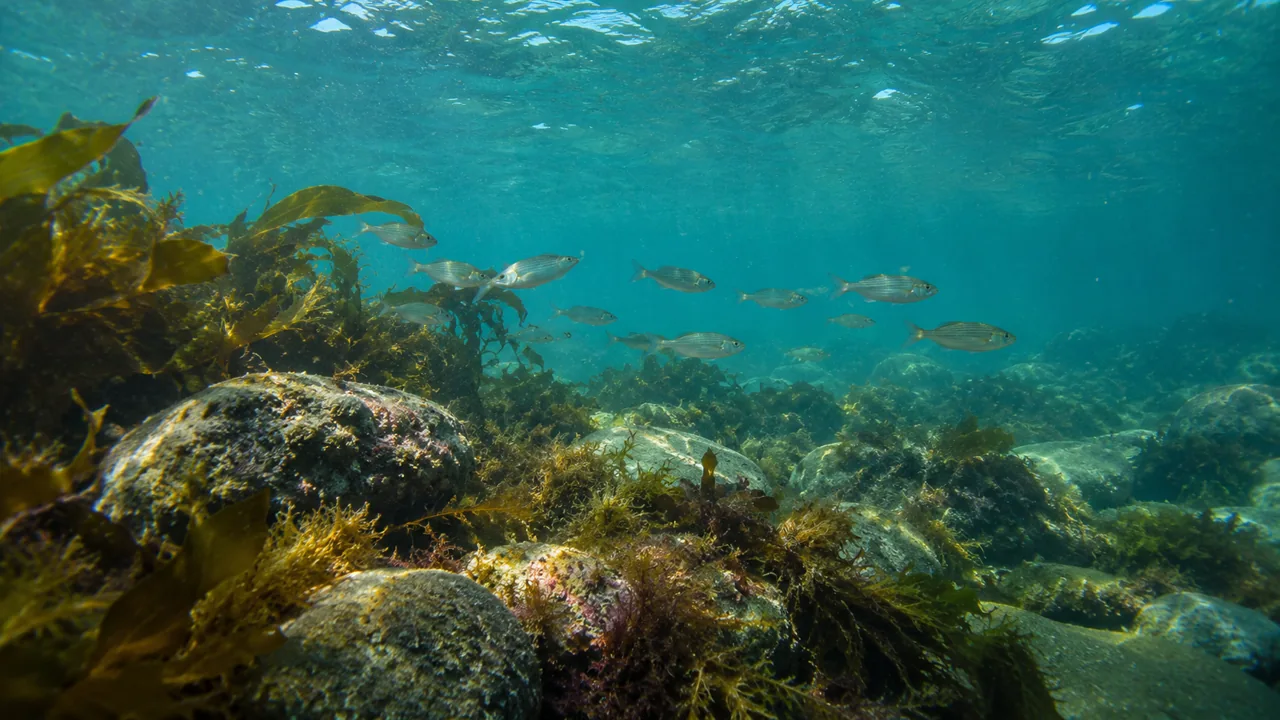
An animal's oxygen needs and the oxygen available in its surroundings must remain compatible. Warming can change that relationship. In the research examined here, the combination of increased biological demand and reduced oxygen availability helps explain loss of habitable marine space.
Penn and colleagues' 2018 study connects temperature, oxygen and species' physiological limits with patterns in the fossil record. Different organisms do not share one identical tolerance, so the consequences can vary between groups and regions.
This is more precise than saying that the entire ocean suddenly contained no oxygen. An organism can lose suitable habitat before a whole water body becomes completely oxygen-free. A condition need not reach the most extreme imaginable value before it becomes incompatible with survival for a particular species.
A place can become uninhabitable without changing its name
An animal may remain in the same geographic location while the conditions it depends on disappear. Food availability, temperature and oxygen can change even though the coastline remains familiar. Geography alone does not define usable habitat.
Moving is not always a solution. A suitable destination must exist and be reachable, and other conditions must also permit survival there. An organism cannot choose a refuge merely because a map shows more water elsewhere.
This is a useful way to understand habitat loss beyond obvious physical destruction. The space can remain while its biological function changes. A dramatic photograph may therefore be less informative than measurements showing whether the conditions necessary for a community have crossed important limits.
Land ecosystems faced their own difficulties
Marine oxygen stress does not explain every part of a terrestrial crisis. Life on land faced changes in heat, water and vegetation, with effects that need their own evidence. Treating one ocean mechanism as the complete explanation would be too simple.
Research associated with the University of Bristol in 2024 investigates how intensified climate variability and mean warming could have contributed to the crisis. The study examines severe ancient El Niño-like behaviour and connected ecosystem effects.
This is a proposed explanation supported by a particular research approach, not proof that a modern El Niño will repeat the Great Dying. The ancient background conditions differed. The useful lesson is that variability and sustained change can interact, rather than every biological consequence depending only on one average temperature.
The food web can spread the consequences
An organism does not depend solely on the temperature around its body. It also depends on food and the wider relationships that sustain its habitat. Losses in one part of a community can therefore affect others that did not initially face the same direct pressure.
Consider an illustrative food web. If a key food source declines, consumers may face shortages even where their own temperature tolerance has not been exceeded. If habitat-forming organisms disappear, other species may lose shelter or breeding conditions.
This example explains why an ecosystem response can be more complicated than counting independently affected species. The links matter. It also shows why survival of one familiar species would not establish that the wider system remained healthy or unchanged.
Feedback can make a disturbance harder to reverse
A feedback occurs when an effect influences the process that helped produce it. In environmental systems, some feedbacks can amplify change while others can moderate it. Their importance depends on the actual mechanism and conditions.
The Bristol research group's account of its simulations describes interactions between climate variability, vegetation loss and further warming in its end-Permian analysis. The scenario is tied to reconstructed ancient conditions.
For a reader, the broader point is that a system may not respond as a collection of isolated parts. A change can weaken a stabilising relationship or create another source of pressure. Understanding that possibility is more useful than imagining a single switch that turns an entire planet from safe to deadly at one moment.
How can scientists investigate an event so old?
Researchers compare different kinds of evidence, including fossils, the chemistry of rocks and modelled physical processes. Each source has limits. A fossil record is not a complete census, and a model is not a recording of the ancient world.
The strength of an explanation increases when independent lines of evidence fit together and when a proposed mechanism predicts a pattern that can be checked. A claim should also remain open to revision if new observations or better methods challenge it.
| Evidence or tool | What it can contribute | Important limit |
|---|---|---|
| Fossil distributions | Patterns of survival and loss | Preservation and sampling are incomplete |
| Geochemical records | Clues to environmental conditions | Interpretation depends on context |
| Climate models | Tests of proposed mechanisms | Results depend on assumptions and representation |
| Physiological comparisons | Insight into biological limits | Modern examples are not exact copies of ancient species |
Why precise percentages need context
Popular accounts often present one striking extinction percentage. Estimates can differ with the organisms counted, the record examined and the method used. Marine species, terrestrial groups and higher taxonomic categories are not interchangeable denominators.
This does not make the crisis insignificant. It means a number should describe the evidence it actually represents. A reader should ask what was counted and over which interval before repeating it as a measurement of all life on Earth.
The same discipline applies to timing. Geological intervals that are short in Earth history can still span many human generations. Describing an event as rapid does not necessarily mean that the entire transition happened during one afternoon. Scale should be explained rather than left to the reader's most frightening interpretation.
Nor should several biological groups be combined without checking overlap. A study of marine animals and another of particular land organisms may use different records and dates. Adding their percentages does not create a valid global total. The reader needs a clear account of the population represented by each measure, not a larger number assembled from incompatible quantities.
Recovery did not restore the lost species
Later ecosystems developed, but extinction is not undone by the eventual appearance of other life. A new community can be diverse while differing fundamentally from the one that disappeared. Recovery in geological terms is not equivalent to restoring an earlier world for its inhabitants.
This is why reassurance that life always finds a way can be incomplete. It may be true that some organisms persist and diversify, while offering no protection to the species that vanish. Persistence of life and preservation of particular lives are different questions.
For people thinking about future generations, that distinction has moral weight. A planet remaining capable of supporting some life would not answer whether human communities, familiar ecosystems or the species they depend on had been protected. The scale of the word life should not erase those particulars.
What the Great Dying can teach us about modern threats
It demonstrates that environmental conditions can change biological possibilities on a huge scale. It also encourages attention to interacting pressures rather than searching for one simple cause behind every loss. Those are useful lessons without requiring an identical modern replay.
Our article on ocean deoxygenation examines a present-day mechanism with its own measurements and uncertainties. The discussion of sixth mass-extinction claims distinguishes current losses, rates and projections from completed ancient events.
These connections should be read carefully. Similar mechanisms do not establish equal magnitudes or deadlines. The ancient record can inform concern while modern claims still require modern evidence. Using the past responsibly means learning from it, not borrowing its catastrophe to make every current headline sound inevitable.
Avoid the leap from explanation to helplessness
A severe historical event can make readers feel that environmental outcomes are beyond all influence. That conclusion does not follow from understanding the past. Different causes, timescales and human choices create different possibilities in the modern world.
The useful response is to identify the specific pressure and the evidence for reducing it. A concern about habitat, pollution or climate should be connected to the organisations and decisions relevant to that issue. A general sense of doom is not a substitute for that work.
It is also worth resisting exaggerated certainty. A person claiming that every species will soon disappear is not being more serious than a careful scientist. Seriousness means explaining what is known, what remains uncertain and why the consequences deserve attention before they become harder to prevent.
Your next step
When reading about an extinction event, identify the organisms, period and mechanism being discussed. Ask whether a number concerns species, populations or another category. Check whether the source is describing ancient evidence, a model or a modern projection.
Then look for the connections. How did physical conditions affect biological limits? How could food webs or feedbacks spread the consequences? Which parts of the explanation are strongly supported, and which remain debated?
The Great Dying is a powerful warning about a living planet's vulnerability. Its lesson does not need a false claim that history is repeating on schedule. It is enough to recognise that familiar oceans and landscapes can become hostile to their inhabitants when the conditions supporting life change beyond what those inhabitants can endure.
Frequently asked questions
When did the Great Dying happen?
It occurred around 252 million years ago at the end of the Permian Period. Humans did not exist. The event is studied through geological evidence and models, rather than eyewitness records or modern monitoring.
Did every living thing become extinct?
No. The crisis caused extraordinary losses, but some organisms survived. Later ecosystems developed from a profoundly altered world. Survival of some life does not mean the earlier communities or lost species were restored.
How could warming make marine habitat less usable?
Temperature and oxygen availability affect whether organisms can meet their biological needs. Research links warming and oxygen stress with patterns of end-Permian marine losses. Different species have different tolerances, so the effects were not uniform.
Does the ancient event prove that the same catastrophe is happening now?
No. Similar mechanisms can inform research, but modern conditions, causes and timescales need their own evidence. The ancient record is not a timetable or a direct forecast for today's species and societies.
Do the DEFCON scenarios describe humans living in the Permian?
No. The scenarios below are hypothetical future analogues used to discuss severe consequences of interacting environmental failures. They do not place humans in the Permian or claim that a comparable modern catastrophe is inevitable.