
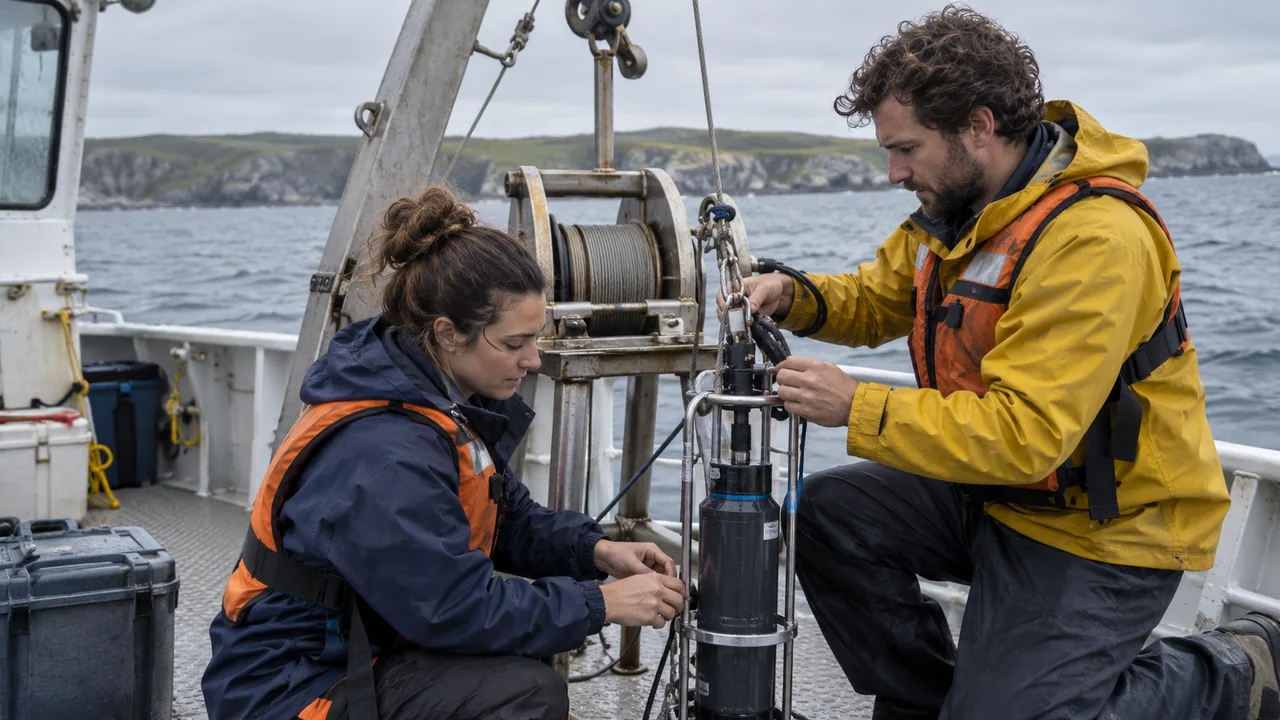
A stretch of sea can look ordinary from a beach while conditions below are becoming harder for animals to tolerate. The danger may be invisible to a visitor: too little dissolved oxygen for the organisms that normally live there. If enough of the habitat changes, the effects can spread through the food web and the communities that depend on it.
Ocean deoxygenation means a decline in dissolved oxygen in seawater. It is not the same as the atmosphere suddenly running out of oxygen for people to breathe. Its biological consequences are nevertheless serious, especially where warming, restricted mixing and nutrient pollution create overlapping pressures.
The title describes a possible local or regional ecological collapse, not a claim that every marine food chain is already failing. Understanding the scale and mechanism helps readers recognise a real threat without turning an important scientific measurement into an unsupported global countdown.
Fish need oxygen in the water, not just water around them
Marine animals that depend on oxygen need an environment that can supply enough for their biological activity. Being surrounded by seawater does not guarantee that the supply is adequate. Temperature, species traits and the local conditions all influence the relationship.
An animal may respond by moving, reducing activity or experiencing harmful stress, depending on its capabilities and the severity of the condition. Organisms attached to the seabed do not have the same options as a mobile fish. Even a mobile animal needs somewhere suitable to go.
The useful idea is that habitat is defined by conditions, not merely by the presence of an ocean on a map. A place can remain wet while becoming less usable for the species that previously occupied it. That loss can be ecologically important before a visitor sees dead animals at the surface.
What hypoxia and anoxia mean
Hypoxia refers to low oxygen conditions; anoxia refers to the absence of oxygen. The biological significance depends on the organisms and context. A single convenient threshold should not be treated as a universal survival boundary for every species.
NOAA's explanation of dead zones describes how reduced oxygen can cause animals to leave or die. The common label dead zone should not be interpreted as proof that absolutely no biological activity remains.
That distinction matters because different organisms tolerate different conditions. A community can change rather than simply disappear in one uniform way. The loss of familiar fish or seabed animals can still disrupt relationships even if microbes or more tolerant organisms remain. The word dead is shorthand, not a complete census.
Warming changes the oxygen balance
Temperature affects how much oxygen water can hold, while biological processes also influence how much is used. Changes in circulation and mixing can affect how oxygen reaches different depths. The result is a balance between supply, transport and consumption.
The Global Ocean Oxygen Network, coordinated through IOC-UNESCO, explains the roles of warming, stratification and nutrient inputs. These mechanisms do not imply that every sea changes at the same rate or through the same combination of causes.
For the reader, that means asking more than whether a year was warm. Which water layer is being measured? How is oxygen normally replenished? Are there local pollution pressures? A useful explanation follows those relationships rather than treating one surface temperature image as a complete account of the oxygen conditions below.
Why layers in the ocean can restrict replenishment
Water masses with different properties do not always mix readily. When exchange between layers is limited, oxygen consumed below may not be replaced as quickly. The effect depends on the local physical system and its changes over time.
This helps explain why oxygen measurements at the surface do not necessarily describe the seabed. A location can have several different conditions vertically, just as neighbouring locations can differ horizontally. A map without depth information may therefore hide an important part of the story.
It also explains why a simple photograph is weak evidence. A smooth sea surface tells us little about the oxygen available to organisms living deeper down. Scientific observations need to identify where and when the measurement was made before it can support a conclusion about habitat.
Nutrient pollution can create another route to oxygen loss
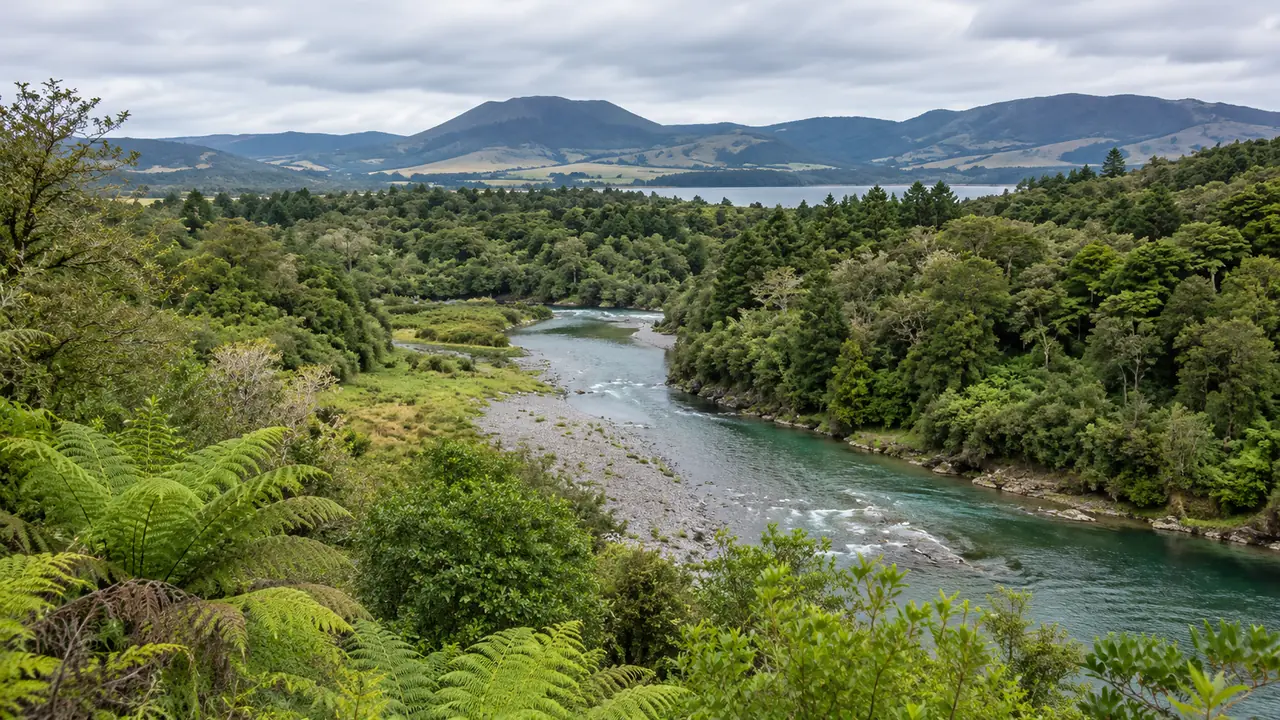
Nutrients entering coastal waters can stimulate excessive growth. When organic material is broken down, the process can consume oxygen. Under conditions where replacement is limited, this can contribute to low-oxygen water.
NOAA's eutrophication explanation describes the connection between nutrient enrichment, biological growth and harmful consequences. It does not mean that all algae are harmful or that every bloom produces the same result.
The practical distinction is between a normal ecological role and an excessive input or response that changes conditions. A responsible assessment considers the actual catchment, sources and water system. Calling all growth bad would be as inaccurate as assuming more nutrients must always mean a healthier marine environment.
Coastal low oxygen and open-ocean change are related but different
A coastal event driven strongly by local nutrient inputs is not identical to a long-term change across an ocean basin. The measurements, drivers and possible responses can differ. Combining them into one undifferentiated global statistic can obscure useful information.
The 2026 Global Oceans assessment archived by NOAA reports on dissolved-oxygen change alongside other ocean observations, using evidence through 2025. That is a dated scientific assessment, not a statement that every coastline is currently experiencing the same condition.
Readers should ask whether a report concerns a local episode, a seasonal pattern or a longer trend. Those categories can all matter, but they answer different questions. A place recovering from a seasonal low-oxygen event would not, by itself, disprove a broader trend, just as a broader trend does not establish today's conditions at one beach.
How a food web can lose more than one link
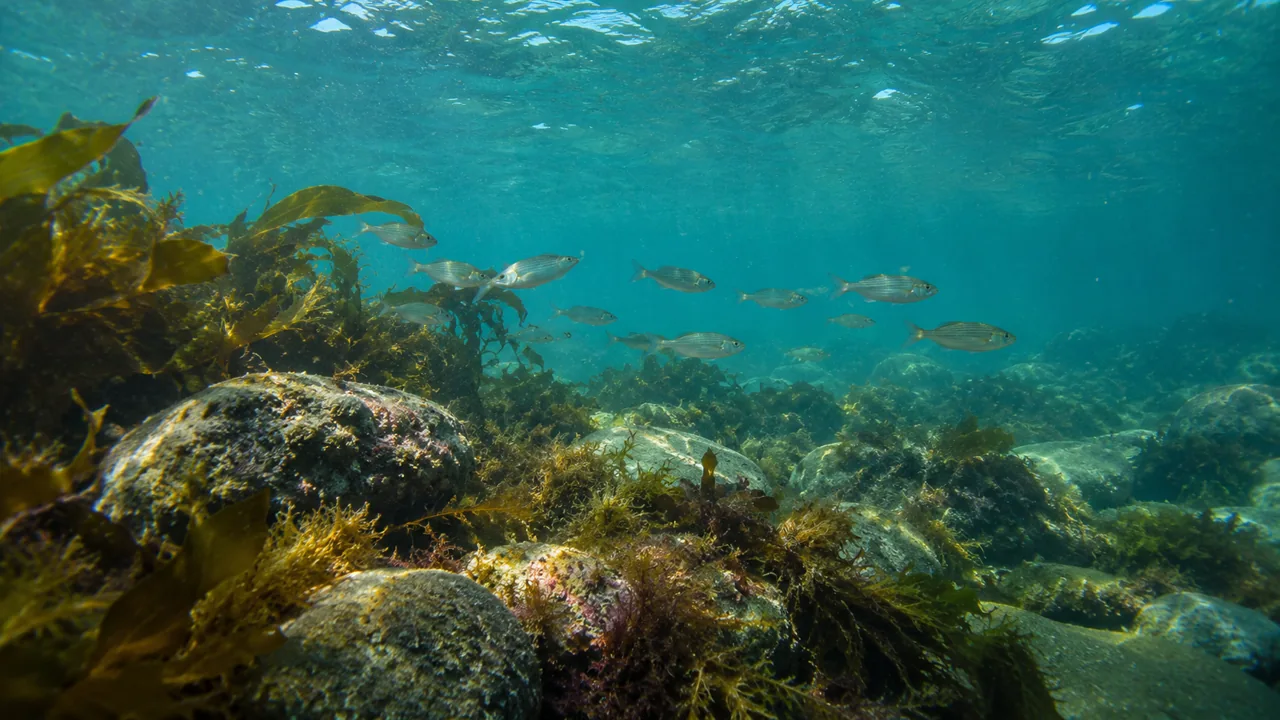
The direct effect on an organism can become an indirect effect on another. If prey declines or moves, predators may face a changed food supply. If habitat-forming organisms are lost, other animals may lose shelter or breeding conditions.
Consider a fictional local system in which low oxygen reduces bottom-dwelling animals. Fish that feed on them may have less food, while people relying on those fish may face a smaller or less dependable catch. Each step needs evidence in a real case, but the chain explains why the concern extends beyond one species.
The outcome is not always a simple collapse. Communities may reorganise, with tolerant organisms becoming more common. That can still represent a profound loss of function or value for the earlier ecosystem and the people who depended on it. Replacement is not necessarily equivalent recovery.
Moving away can concentrate pressure elsewhere
An animal able to leave a low-oxygen area may find another suitable location, but space and resources there are not unlimited. Movement can change the distribution of predators, prey and competitors. The ecological consequences depend on the receiving habitat as well as the place abandoned.
This is why migration should not be treated as a universal solution. The destination must provide the right temperature, oxygen, food and other conditions. Routes and life stages can also limit movement.
For people monitoring a fishery, a changed catch location may therefore be more than a minor inconvenience. It may reflect a shift in usable habitat. The explanation still needs observations; a disappointing day at sea cannot establish the mechanism by itself. Systematic records help distinguish a pattern from an isolated experience.

What this could mean for livelihoods and food
A coastal community can depend on marine life through work, food, trade and cultural relationships. Changes in abundance or distribution can affect those relationships unevenly. People with fewer alternatives may experience a loss more sharply than those able to buy substitutes elsewhere.
That does not mean every oxygen decline creates an immediate global food shortage. The pathway and scale must be established. Which species and fishery are affected? What proportion of local income or food depends on them? Are other pressures also involved?
Specific answers make the threat understandable. They also help distinguish an ecological assessment from a food-safety warning. Reduced oxygen in a habitat does not, by itself, tell a household whether a particular seafood product is safe to eat. Follow relevant food and harvesting advice for that separate question.
Measurement needs depth, time and uncertainty
A useful oxygen observation includes its location, depth, timing and method. Seasonal changes and differences between water masses matter. A single sample should not be promoted as a complete account of an entire ocean.
| Information | Why it matters |
|---|---|
| Depth | Surface conditions may differ from bottom habitat |
| Season and date | Natural variability can affect a local result |
| Repeated observations | Trends need more than an isolated measurement |
| Method and coverage | Instruments and sampling influence what can be concluded |
| Biological context | Species differ in what conditions they can tolerate |
Models can extend understanding, but their estimates should be distinguished from direct measurements. A careful account can use both without pretending that every grid cell was sampled in person or that a model removes all uncertainty.
Check the unit as well as the colour on a map. A concentration, a percentage change and the area below a chosen threshold describe different quantities. A larger affected area does not automatically mean the same proportional oxygen loss everywhere within it. Comparing like with like helps prevent a legitimate observation from acquiring a much broader meaning as it moves through headlines and social media.
This is not a prediction that people will soon be unable to breathe
Dissolved oxygen in seawater and oxygen in the atmosphere are different measurements. A report about one should not be turned into a countdown for the other. The marine threat is serious on its own terms.
An image of fish dying also does not automatically identify the cause. Temperature, pollution, disease and other factors may require investigation. Oxygen can be part of the explanation, but the event needs appropriate assessment rather than a diagnosis made from a photograph.
Our article on the Great Dying examines an ancient interaction between warming, oxygen stress and biological loss. It does not establish that the same magnitude or sequence is occurring now. Historical mechanisms can inform questions while present-day claims still need present-day evidence.

Different causes require different responses
Reducing a local nutrient input addresses a different part of the problem from reducing the warming pressure on the ocean. Monitoring helps identify whether those responses are affecting the relevant conditions. One action should not be advertised as solving every pathway.
The IPCC assessment of oceans and coastal ecosystems discusses interacting pressures and consequences. Its assessment framework supports considering multiple drivers rather than assuming one measurement describes the whole system.
For a household, the useful role is to support evidence-based decisions and credible monitoring rather than an unverified quick fix. An environmental project should explain which pressure it addresses, what success would look like and how results will be checked. A moving image and an alarming slogan are not enough.
Why recovery should be measured through living relationships
An improved oxygen reading is encouraging, but the biological community may need additional assessment. Species, habitats and food relationships do not necessarily return immediately or in the same form. A physical measurement and ecological recovery are connected but distinct outcomes.
Likewise, one unusually bad season does not establish permanent collapse. The period and evidence matter. Responsible communication should neither declare recovery too soon nor deny it when sustained observations support improvement.
This is a useful standard for readers: ask what has actually recovered. Oxygen conditions? A particular population? A fishery's reliability? The wider habitat? Clear answers help people understand progress and remaining risks without using the same word to describe very different achievements.
Your next step
When you see an ocean-oxygen story, identify the place, depth, period and proposed cause. Check whether the report concerns local hypoxia, a seasonal event or a long-term trend. Notice any unsupported jump from seawater measurements to a claim about the atmosphere.
Then follow the biological and human pathway. Which organisms are affected, what depends on them and what alternatives remain? This turns a hidden measurement into an understandable threat without overstating its reach.
The danger deserves attention because oxygen helps define where marine life can function. Losing it can reshape food webs and livelihoods while the sea still looks familiar from shore. Accurate explanation makes that warning more useful than a claim that every ocean is already dead or that one improvement has solved the whole problem.
Frequently asked questions
What is ocean deoxygenation?
It is a decline in dissolved oxygen in seawater. The causes and consequences vary by location and depth. It is different from a claim that atmospheric oxygen is disappearing or that every part of the ocean has identical conditions.
Does a dead zone contain absolutely no life?
The term usually refers to low-oxygen conditions that many familiar marine organisms cannot tolerate. Some organisms may remain or become more common. The label does not replace a biological assessment of the actual location.
How can nutrient pollution reduce oxygen?
Excess nutrients can stimulate growth, and the breakdown of organic material consumes oxygen. Where replenishment is limited, low-oxygen conditions can develop. Not every bloom or location follows the same pattern.
Can fish always escape to another area?
No. Movement depends on the species and available routes and habitat. A destination must provide suitable conditions and resources. Organisms attached to the seabed have different options from mobile fish.
Does low oxygen prove that a seafood product is unsafe to eat?
No. Habitat oxygen and the safety of a particular product are separate questions. Follow relevant food-safety and harvesting advice rather than using an oxygen story or a photograph to diagnose a product's safety.