
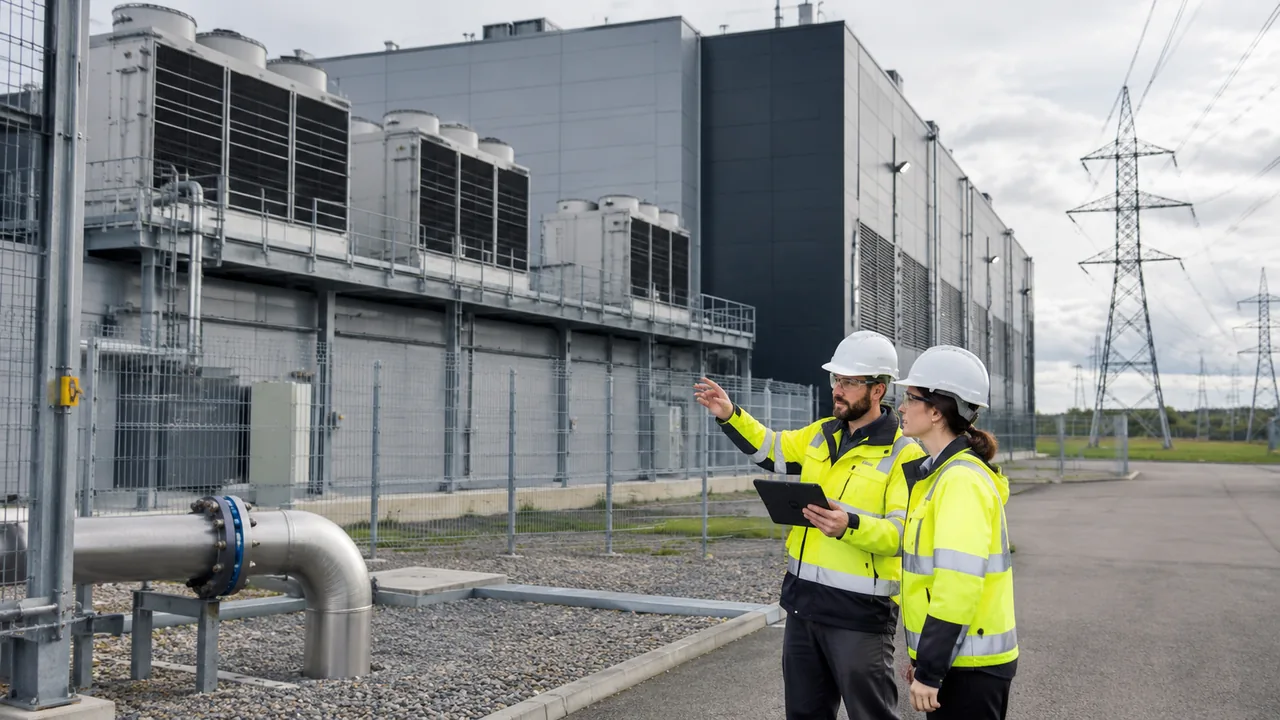
An AI answer appears on a screen in seconds. Behind it are servers, cooling equipment, network connections and a supply of electricity that must be dependable. As data centres grow, their demand can become a local infrastructure question: who provides the capacity, when will it be ready and how are the costs and risks shared?
AI electricity demand can strain a grid where large new loads arrive faster than suitable infrastructure. It does not follow that every data centre will cause blackouts or raise every household bill. The outcome depends on location, timing, contracts and planning. Those details matter because unreliable energy and unfair costs can affect people who have no direct role in deciding where a facility is built.

Why data centres use electricity continuously
A data centre houses computing and associated equipment. Servers process and store information, while cooling and other support systems maintain suitable operating conditions. Different facilities handle different workloads, and not every part of their electricity use is attributable to AI.
The important distinction is between the amount of energy consumed over time and the power required at a particular moment. A network must be able to supply demand when it occurs, not only balance an annual total on paper. A large concentrated load can therefore matter locally even when it is a modest share of national consumption.
For a reader, this explains why a national percentage may not settle a local debate. The relevant connection, network capacity and pattern of demand can be more important for the affected area. Ask what is proposed at the actual site rather than treating every facility as the same size or type.
What the current evidence supports
The IEA's Powering Artificial Intelligence report discusses growing investment, local network constraints and the choices involved in integrating data centres. It also describes opportunities for flexibility and new supply. The report supports serious scrutiny of planning, rather than a universal prediction of household power cuts.
A proposed development is not the same as an operating load. Connection requests may include projects that are delayed, changed or never built. On the other hand, dismissing all announced demand can leave planners unprepared when credible projects proceed. The challenge is to establish what is likely to arrive, where and when.
This is an uncertainty that should be managed openly. A forecast needs assumptions, updates and evidence about project maturity. A dramatic total without those details can mislead both supporters and opponents. Good planning protects the public from underbuilding and from paying for infrastructure that is not ultimately needed.

Why local constraints matter more than a simple national total
Electricity must move through actual equipment and connections. A region may have sufficient generation in broad terms while a particular network area lacks capacity for a large new load. Building or reinforcing the necessary infrastructure can take time and coordination.
Other users may also be seeking connections. Homes, businesses, transport and public services can depend on the same network development. The question becomes how capacity is allocated and how commitments are managed fairly, not simply whether AI is useful or popular.
An existing problem should not automatically be blamed on the newest proposed facility. Equally, a claim of national abundance should not be used to ignore a real local bottleneck. Public explanation should identify the constraint, the work required and who is responsible for providing it. Those specifics make a debate assessable.

Can a data centre make electricity bills rise?
It can contribute to costs in some circumstances, but the relationship is not automatic. New demand may require additional network or supply investment. How those costs are allocated depends on the relevant arrangements. A large user that pays an appropriate share can also spread some fixed costs across more consumption.
This is why the financing and contractual detail matters. Who pays if a project reserves capacity and never connects? What happens if its demand is smaller than forecast or it leaves early? How are existing users protected from costs created for a particular development?
A household should not assume that a change in its bill has one cause. Wholesale energy, network costs, policy and the terms of the household contract can all be relevant. Evaluate a claim about data centres through the evidence for the particular cost pathway rather than a general sense that more demand must produce a specific increase.
Connection queues can overstate or understate the future
A queue of proposed projects shows interest, not certainty. Some requests may compete for the same opportunity or depend on financing and customers not yet secured. Treating every request as inevitable can lead to unnecessary investment.
The opposite mistake is to assume that demand will disappear because some projects are speculative. A smaller number of very large credible developments can still require substantial work. Planners need ways to distinguish firm commitments from early ambitions and update the assessment as projects progress.
For the public, a useful question is how the process releases capacity when a project does not meet agreed milestones. Another is how the information is checked without exposing sensitive commercial details. Transparent principles can improve confidence even when every contract cannot be published. A queue should be a managed planning tool, not a collection of promises nobody revisits.
What flexible demand could contribute
Some computing tasks may be shifted in time or location, while others need a rapid continuous response. A facility's ability to reduce demand therefore depends on its workload and contracts. Flexibility should be demonstrated through a defined arrangement, not assumed because the equipment is digital.
If a large user can reduce demand during a period of system stress, it may help the network. The arrangement must specify what is available, how it is requested and what happens if the user cannot deliver. A theoretical capability is different from a reliable service.
There can also be trade-offs. Moving a task may affect customers, cost or performance. The important policy question is whether those trade-offs are managed in a way that supports dependable electricity for everyone. Claims that computing can always move effortlessly should be examined as carefully as claims that it can never adapt.
Does buying renewable energy solve the whole issue?
A renewable electricity agreement can support energy goals, but its effect depends on the arrangement and the wider system. An annual purchasing claim does not necessarily establish that supply and demand match at every moment or that the local network can deliver the required power.
Likewise, an announced on-site generation project is not the same as equipment already operating. It may require permissions, fuel, connections and maintenance. The public needs to know which parts are firm and which remain proposals.
Ask how the facility will operate during the conditions that create stress, not only during a favourable average day. The answer should address reliability, cost and environmental effects together. A single label such as green or self-powered can conceal choices that deserve separate examination. The goal is evidence about the actual system, rather than reassurance through branding.
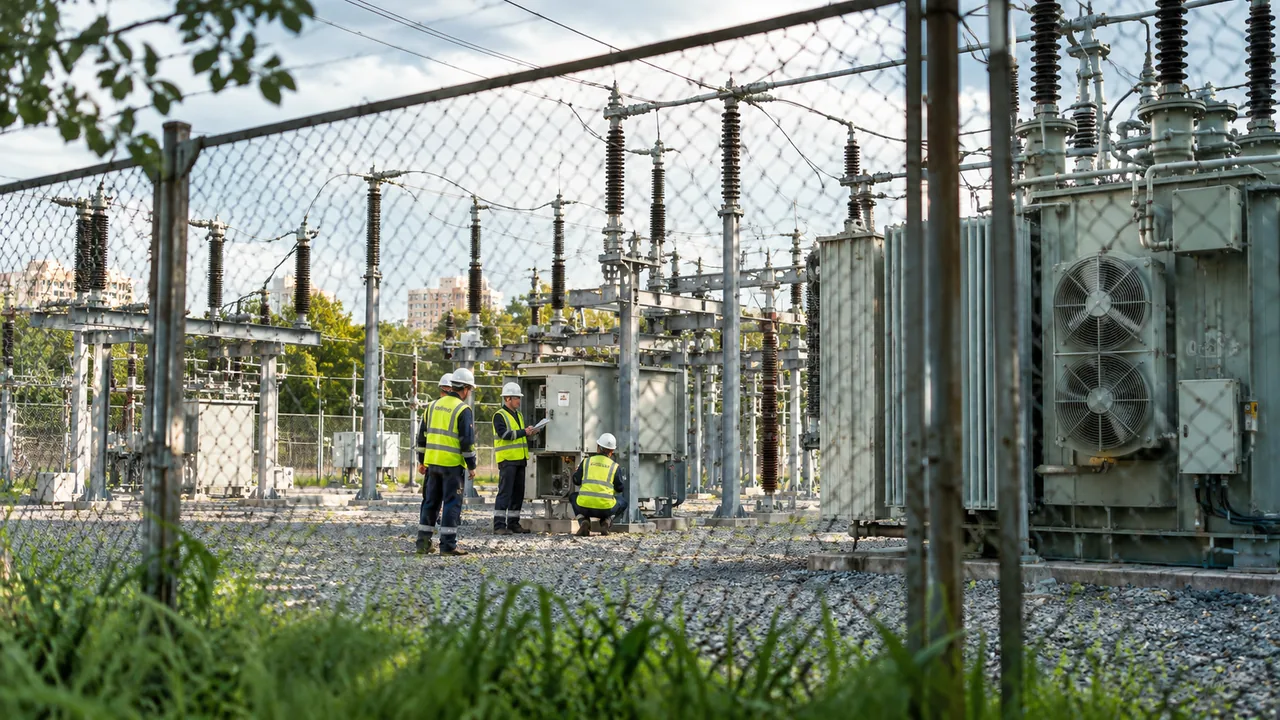
Cooling connects electricity demand with water and weather
Computing produces heat that must be managed. Cooling choices can involve trade-offs between electricity use, water use and local conditions. The best arrangement in one place may not be suitable in another, particularly where water resources or electricity networks are already under pressure.
Hot weather can also affect demand and infrastructure at the same time. Households and services may need more cooling while a facility faces its own operating constraints. This does not mean a crisis is inevitable; it means resilience should consider overlapping conditions rather than a single normal-day estimate.
For a local community, ask about the source of water where relevant, efficiency measures and the assessment of extreme conditions. Do not assume every data centre uses the same cooling method. A meaningful answer connects the chosen design with the actual area's resources and the needs of other users.
A realistic local planning example
Imagine a town where a proposed data centre requests a large connection near an already busy network. Supporters emphasise jobs and investment. Residents worry about bills and reliability. Neither position can be resolved by an attractive building image or a national demand statistic alone.
The useful assessment identifies the credible load, the date it will arrive and the reinforcement required. It explains how costs are allocated, what commitments the developer makes and how flexibility or new supply would work. It also considers homes and businesses already waiting for connections.
If those details are unclear, uncertainty should be stated rather than filled with a promise or a catastrophe story. The decision can then focus on conditions and accountability. This is how concern becomes useful: it asks for a development that can meet its obligations without transferring poorly defined risks to the community.
Questions worth asking about a proposed facility
| Question | Why it matters |
|---|---|
| What demand is credible, and when? | A proposal and an operating load are different |
| Which network work is needed? | National supply does not remove local constraints |
| Who pays if plans change? | Existing users need protection from avoidable costs |
| What flexibility is committed? | A general possibility is not a tested arrangement |
| How are water and heat considered? | Efficiency choices can create local trade-offs |
| What information will be updated publicly? | Assumptions should not remain frozen after approval |
These questions allow benefits and risks to be considered together. A useful technology still needs a dependable physical foundation. Communities are entitled to clear explanations of that foundation and the consequences if an important assumption proves wrong.
Why essential services must remain central
An electricity interruption affects more than entertainment or a delayed online task. Healthcare, water services, communications and people using powered equipment may depend on reliable supply. Their needs should be part of network planning rather than treated as an afterthought in a debate about commercial growth.
The article on city service disruption explains how failures can spread through connected activities. A data centre is one possible source of new demand within a much larger system, not a universal explanation for those failures. The correct response is to understand the actual connection and strengthen the relevant safeguards.
Public concern should therefore ask how reliability is maintained during growth. It should not encourage hostility towards workers or unsupported claims about a facility causing a particular outage. Evidence-based scrutiny is more effective because it can identify the obligation that needs to be met and the institution responsible.
What households can do with this information
Read local proposals and operator updates through official channels. Look for the demand assumptions, connection arrangements and conditions attached to development. If a claim about bills or blackouts circulates, ask for the specific evidence and distinguish a future projection from a current event.
For your own electricity needs, understand the support arrangements relevant to any essential equipment and keep contact details current. Discuss individual requirements with the provider or care team. A general article cannot guarantee the response to a particular interruption.
The practical civic step is to ask one clear question about fairness or reliability and seek an answer that can be checked. The issue is not whether every use of AI is worth the same amount of electricity. It is whether rapidly expanding demand is integrated responsibly, with the costs and consequences made visible to the people who may carry them.
A proposed connection is a commitment to a future load
A data-centre proposal may develop over several stages. Land, buildings, equipment, customers and power arrangements do not necessarily become ready together. A connection request can therefore be a statement of intended demand rather than evidence that the full load will arrive on a fixed date.
For a network planner, both directions of error matter. Building for demand that never arrives can leave costs to recover from fewer users. Failing to prepare for a credible project can create delays and constraints. A useful process needs updated evidence about milestones and a clear response when plans change.
Imagine a proposed facility reserving substantial capacity while another local development waits. If the first project is delayed, the public needs confidence that the capacity will not remain tied up indefinitely without review. If it proceeds, the operator needs confidence that the agreed infrastructure and conditions will be ready. Clear commitments help both sides plan.
This is a reason to examine governance rather than rely only on a demand forecast. Who checks progress? Which commitments are binding? What happens if the expected customer demand changes? How are other users protected? The answers should fit the actual regulatory and commercial setting rather than be copied from a different country as if every system were identical.
The same discipline applies to claimed benefits. Jobs, investment and improved infrastructure should be described with their timing and assumptions, just as risks should be. A community can support useful development while asking for credible obligations. The quality of the decision depends on how uncertainty is managed, not on whether every participant agrees that AI is exciting or alarming.
A power bill is also a question about priorities
AI can provide useful services, and its infrastructure can support economic activity. Those benefits do not remove the need for careful decisions about shared resources. The more important a technology becomes, the more important its reliability and accountability become too.
For children growing up with these systems, the legacy will include both digital capabilities and physical infrastructure. A rushed decision can leave expensive constraints; a well-designed one can support wider needs. Ask for credible demand, fair commitments and transparent review. The future should not be built on an assumption that someone else's electricity supply will absorb every uncertainty.
Frequently asked questions
Will every new data centre cause power cuts?
No. Effects depend on location, available capacity, timing and the arrangements for connection and supply. Large loads can create local constraints, but a universal blackout prediction is unsupported. Examine the actual network and commitments involved.
Is all data-centre electricity used for AI?
No. Data centres support many computing and storage activities. AI-related demand is an important part of the discussion, but reports should define what they include. A facility's total electricity use should not automatically be described as entirely attributable to AI.
Does a renewable energy contract guarantee local capacity?
No. Purchasing arrangements and the ability of a local network to deliver power are related but different questions. Ask how supply, demand and network constraints are managed in practice, including periods when conditions differ from an annual average.
Can computing demand be reduced when the grid is stressed?
Some workloads and facilities may provide flexibility, but the capability varies. A useful arrangement specifies what is committed, how it is activated and how delivery is checked. Do not assume every computing task can be moved or paused without consequences.
What should residents ask first about a proposal?
Ask what demand is credible, when it is expected and who pays for the required infrastructure if plans change. Then examine reliability, flexibility and local resource effects. Specific commitments are more informative than a general promise of innovation or a prediction of inevitable collapse.