
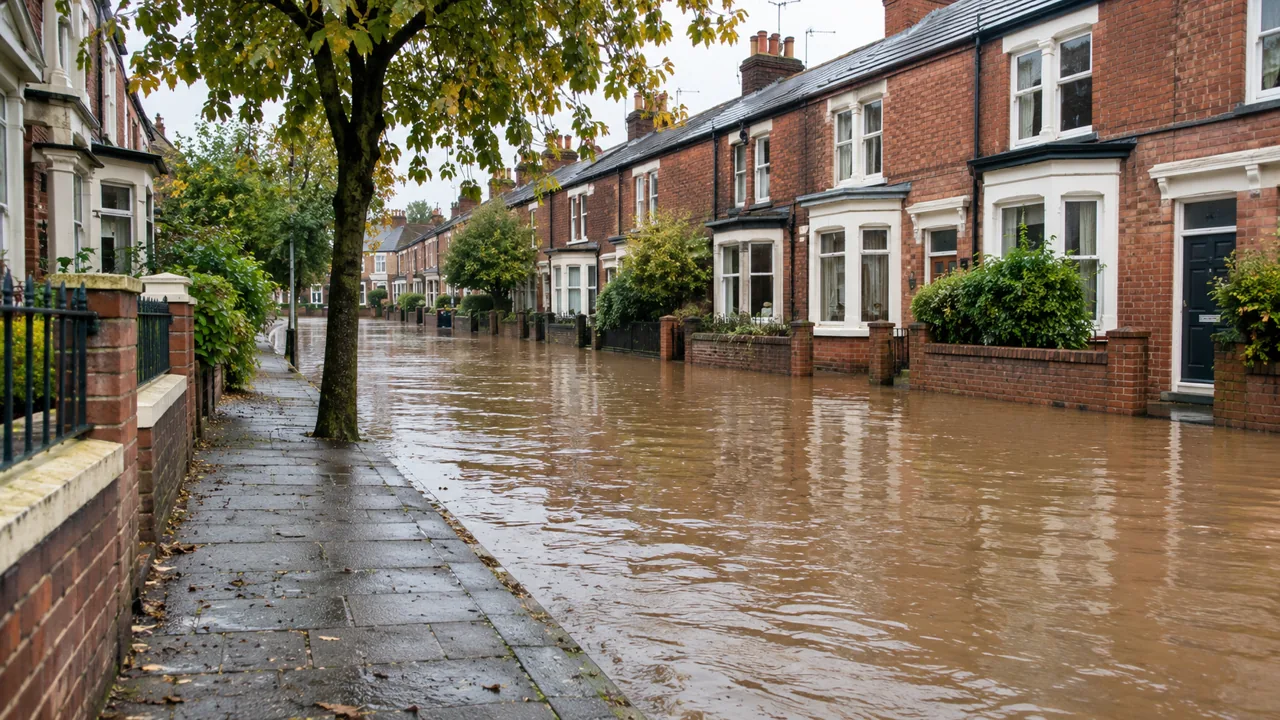
The road looked passable when the first car reached it. Minutes later, muddy water was moving across the whole carriageway and the pavement had disappeared. A driver now had to make a decision without knowing the depth, the current or whether the road surface was still there. The safest decision would have been to turn away before entering.
Flash flooding develops quickly when intense rain overwhelms the ground, drains or a watercourse. It can happen far from a major river. Do not walk, cycle or drive through floodwater. If threatened, move to a safer higher place when you can do so without crossing dangerous water, follow emergency instructions and call 999 if somebody is in immediate danger.
What makes a flood a flash flood?
The defining concern is speed. A short period of heavy rain can produce rapid runoff, a fast-rising stream or surface water spreading across a built-up area. There may be very little time between ordinary conditions and a serious threat.
A street can flood because water cannot enter a drain quickly enough, because a drainage system has reached capacity or because runoff arrives from higher ground. In a steep catchment, rain upstream can reach a lower community rapidly.
The water does not need to resemble a dramatic wave. A widening flow across a junction or a rapidly filling underpass can be just as consequential for the person about to enter it. Look at what the water is doing, not whether it matches a television image.
You do not need to live beside a river
Surface water flooding can affect homes and routes away from rivers or the sea. Hard surfaces channel runoff; local slopes direct it; low points collect it. An address described as “not near water” may still have an important exposure.
Consider the wider route to your home. A dry property can become isolated when its only access road floods. A school, workplace or care provider may sit in a different risk area from the place where the household sleeps.
Use available long-term flood information as well as knowledge of local low points. Treat it as planning information, not a prediction of exactly where every future event will occur. New buildings, blocked drainage or unusual rainfall can change the practical picture.

Why warning services cannot remove all surprise
Forecasting intense local rain is difficult because the location and timing of the heaviest downpour can matter enormously. A warning covering a wider area may identify the possibility of dangerous conditions without naming the exact street.
The Environment Agency's flash-flood advice for England explains that people may need to act before a warning arrives. Other UK nations have their own relevant services. Weather warnings and flood warnings provide related but different information.
Register for the services appropriate to where you live and travel. Then keep observing conditions during a serious downpour. A phone that has not sounded is not proof of safety, especially when water is already rising or emergency services are issuing local instructions.
The danger hidden below the surface
Floodwater can conceal open drains, broken covers, sharp debris, sewage and damage to roads or pavements. Its appearance does not reveal its depth or whether a firm surface remains underneath.
Moving water adds force. A person who loses footing may be unable to recover, while a vehicle can become unstable or immobilised. Water that seems shallow at an edge may be deeper a short distance away.
Avoid using a stick, a familiar kerb or another person's crossing as permission to enter. Those observations cannot establish a safe route. If a road is flooded, turn around and find a confirmed safer alternative. A longer journey is a manageable cost compared with being trapped.
Make the home plan specific to your building
Identify where water could enter and where occupants could move safely. Include the needs of children, older people, visitors and anybody who cannot manage stairs independently. A plan that simply says “go upstairs” may not work for everyone.
Keep essential contacts, prescribed medicines and important documents reasonably accessible. If protective equipment is suitable for the property, understand its instructions before an incident. Installing a barrier must never delay leaving a developing danger.
Find out who can advise on electrical and utility safety. Official flood guidance says to turn supplies off only when safe. Do not touch electrical switches while standing in water, and do not enter an unsafe space to reach a control.
Leaving early and sheltering higher are different decisions
There is no universal instruction to drive away once flooding has started. Leaving through a flooded route can expose a person to greater danger than remaining in a safer part of a substantial building.
Follow instructions from emergency services and the local authority. If safe movement to higher ground is possible, act before routes close. If already trapped, call for help and provide your location and circumstances.
Do not use a tent or caravan as a dependable flash-flood shelter. For holiday accommodation, ask about warning arrangements and safe routes before bad weather arrives. In any building, account for fire safety and other hazards rather than applying one instruction mechanically.
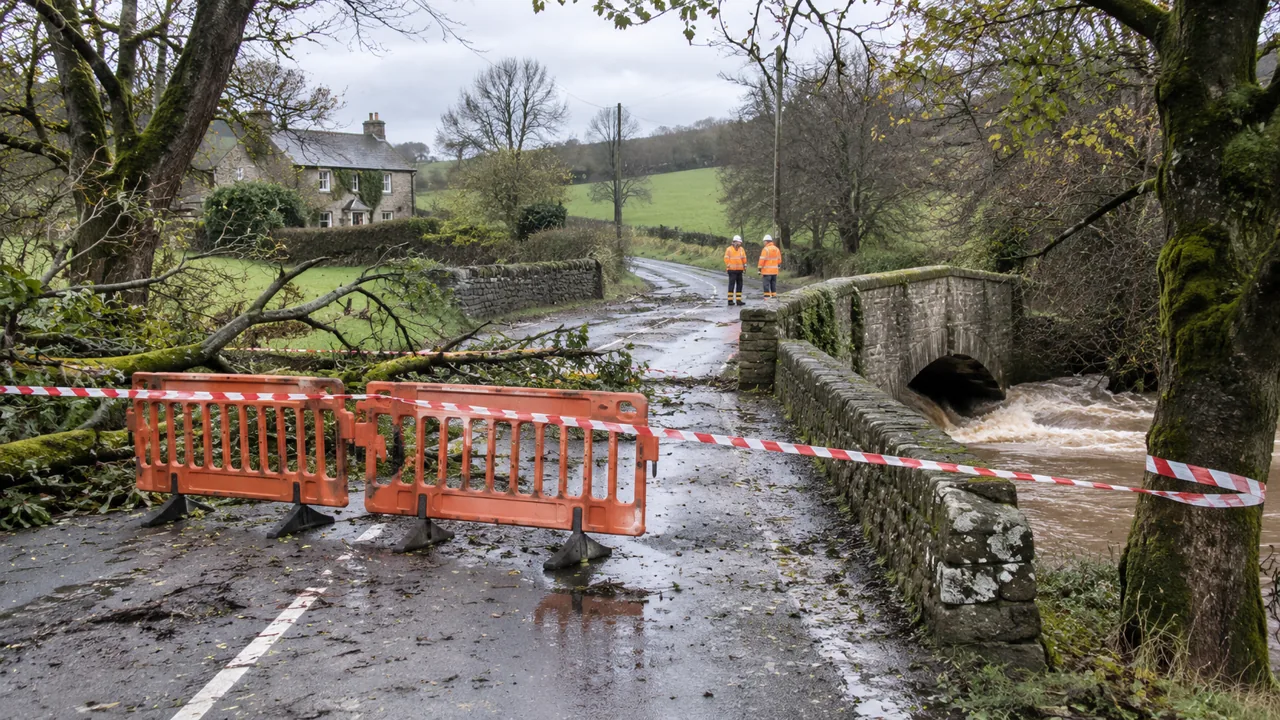
A safer decision at a flooded road
Stop well before the water where it is safe to do so. Avoid blocking emergency access or creating another traffic hazard. Do not follow a large vehicle because it appears to get through: its clearance and stability do not establish yours.
Check official traffic information and route closures. A satnav may offer a route without understanding current flooding. Treat physical barriers and emergency instructions as more relevant than a navigation app's estimated arrival time.
If somebody is in immediate danger, call 999 and explain the situation. Do not attempt an improvised rescue that puts another person into the same water. Emergency operators can guide the response while specialist help is arranged.
School, work and care can create pressure to travel
The hardest decision is often emotional. A child needs collection, a shift is starting or a relative expects a visit. Pressure can make an unsafe journey feel unavoidable even when an alternative arrangement exists.
Discuss contingencies before a downpour. Ask the school or care provider how they manage disruption and who can be contacted. Make sure authorised collection arrangements are understood. Do not assume another adult can collect a child without the necessary permission.
Employers and families also need realistic communication. State that the route is flooded and that you are seeking a safe alternative. A clear message is better than attempting a crossing to avoid being late. Travel decisions should protect both the traveller and potential rescuers.
What to do when water starts entering
Prioritise people and follow the plan that remains safe under actual conditions. Move away from the threatened lower area and contact emergency services if there is immediate danger. Do not waste the available time gathering replaceable possessions.
Keep communication concise. Explain the address, where people are and any mobility or medical needs. A charged phone is useful, but a household should not assume every network or device will remain available.
If instructed to evacuate, follow the specified route and arrangements. If no safe route remains, make that clear to responders. Avoid stepping into water to test whether another exit is possible. A plan needs to change when the conditions that made it safe have changed.
Support neighbours without creating more victims
Checking that a neighbour has received a warning can be valuable when it can be done safely. A short phone call may achieve more than crossing a flooded street. Know whether someone needs help understanding an instruction or arranging accessible assistance.
Do not promise a rescue that you cannot safely provide. Tell the relevant service about unmet needs and accurate locations. If a building has a responsible manager, use the established arrangements while recognising that emergencies can outpace normal staffing.
Community preparation is strongest before water arrives. Agree contact methods, discuss accessible evacuation and identify who maintains local arrangements. Good intentions become more effective when roles are realistic and nobody must improvise them in fast-moving water.

Returning home does not end the risk
Receding water can leave electrical hazards, damaged structures, contamination and unstable surfaces. A familiar building may no longer be safe to enter. Follow instructions from emergency services, utilities and the responsible property professionals.
Contact the insurer or landlord as appropriate and record damage only where safe. Do not begin major repairs or discard everything before understanding the relevant claims process. Practical records can reduce later confusion, but paperwork never takes priority over immediate safety.
Cleaning needs suitable advice for the actual contamination and building. Keep children and pets away from hazardous areas. If a person becomes unwell after contact with floodwater, seek medical advice and describe the exposure rather than guessing its significance.

Build a plan that works without the usual organiser
One family member often holds every contact and remembers every arrangement. If that person is away, the plan can disappear with them. Write a short version that another adult can find and understand.
Include contacts, the safer area of the building, important care information and the source of local advice. Keep a usable copy where it will not be lost immediately to a small leak. Respect privacy when sharing medical details.
A rehearsal can be simple: ask someone to locate the information and explain the next step. If they need several passwords or cannot interpret a label, simplify it. Flood planning should reduce decisions during a crisis rather than create an extra administrative task.
Common assumptions that deserve a second look
| Assumption | Safer interpretation |
|---|---|
| We have never flooded before | Past experience does not cover every rainfall event |
| The car ahead crossed | Another vehicle does not establish a safe depth |
| No warning has arrived | Flash flooding may develop before a warning |
| The house is dry | Access roads and services can still be affected |
| The water has gone | Electrical, structural and contamination risks can remain |
These distinctions are useful because they connect a familiar belief with the decision it could distort. Review the one most relevant to your household rather than memorising a dramatic statistic about water depth.
Prepare for the recovery as well as the escape
Flood damage can interrupt school, work, sleep and care long after the rain stops. Temporary accommodation may be difficult for somebody with mobility needs or a household with pets. Discuss those constraints when seeking support.
Keep a manageable record of contacts, reference numbers and agreed next actions. Separate urgent needs from work that can wait for professional assessment. Ask for explanations when advice appears contradictory; different organisations may be dealing with different parts of the problem.
Recovery also affects neighbours who were not directly flooded. Roads, local shops and care services may remain disrupted. Check current conditions before assuming normal routines have returned. A thoughtful follow-up can identify somebody who needs help after the first rush of attention has passed.
Choose one useful action now
Check the flood information for your address and the route you rely on most. Agree how the household would respond if that route became unsafe. Put the essential contact somewhere another adult can find it.
The accompanying DEFCON descriptions are hypothetical editorial scenarios. They are not the Environment Agency's warning categories or official emergency instructions. Real local warnings and advice take priority. The safest preparation gives you more choices before water removes them.
For a connected risk, read how coastal flooding differs from long-term erosion. Also explore how repeated hazards can interrupt recovery after a flood to compare the mechanisms and the practical choices involved.
Frequently asked questions
Can flash flooding happen away from a river?
Yes. Intense rain can produce surface water flooding when the ground or drainage cannot take it quickly enough. Low points, roads and built-up areas can become dangerous. Include surface water and access routes in planning rather than judging risk only by distance from a river.
Is it safe to drive through shallow-looking water?
Appearance cannot establish safety. Floodwater may conceal deeper sections, strong flow or a damaged road. Do not drive through it. Stop where safe, turn away and seek a confirmed safer route, taking account of road closures and instructions from the emergency services.
Should I wait for a flood warning before acting?
Not if immediate conditions already show danger. Flash flooding can develop before a warning reaches you. Move to a safer higher place when possible without crossing floodwater, follow official instructions and call 999 if somebody is in immediate danger or trapped.
Should I switch off the electricity?
Only if doing so is safe and consistent with official advice. Never touch an electrical switch while standing in water or enter a dangerous area to reach it. Tell responders about electrical hazards and use the relevant utility or emergency advice for the actual situation.
What should I do after the water falls?
Check whether returning is safe and follow advice about utilities, structures and contamination. Contact the relevant insurer, landlord or local authority as appropriate. Record damage only from a safe position. Receding water does not prove that a building, road or electrical installation is safe.
Sources and further reading
Environment Agency: flash flooding UK Government: before and during a flood Environment Agency: flood alerts and warnings Be Ready: flooding