
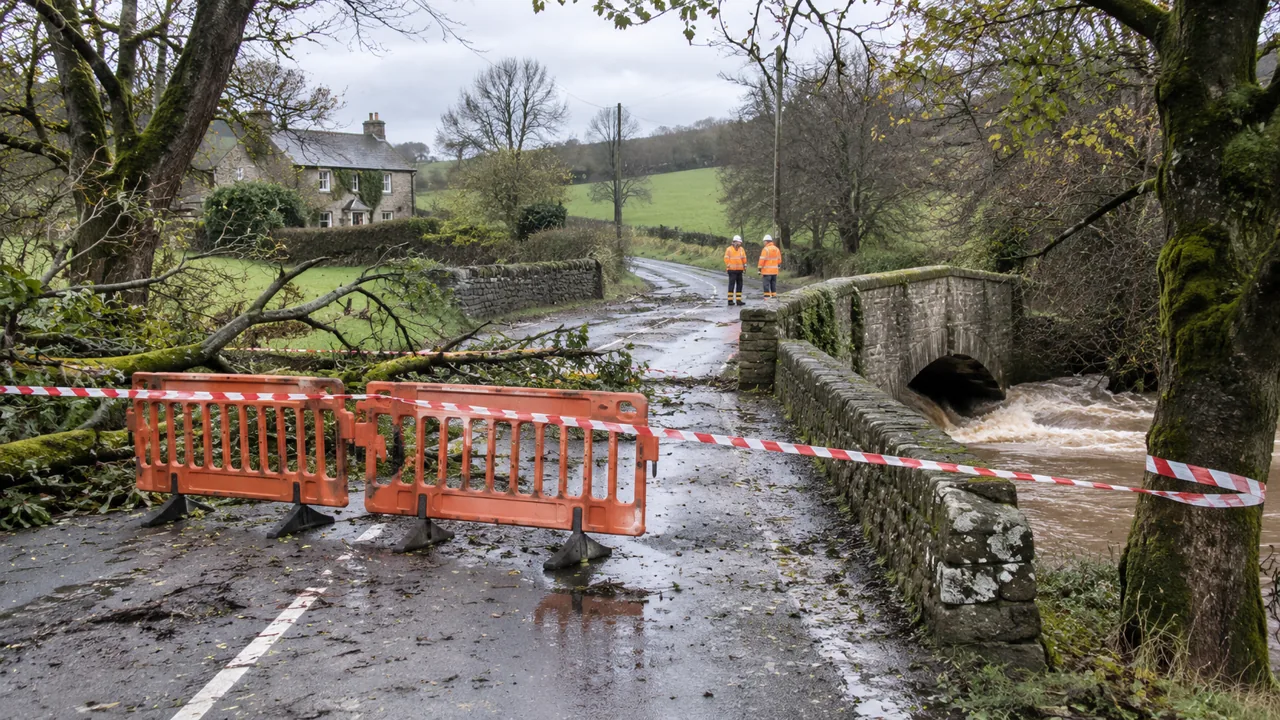
The floodwater has gone, but the family is still living elsewhere. Repairs are unfinished, savings are reduced and the road to the local clinic remains restricted. Then a heatwave arrives. A second emergency now falls on people whose ordinary protections have not been restored.
Disasters can interact through weather, infrastructure and human vulnerability. They do not need to share one cause. A useful plan asks what happens if the next problem arrives before recovery is complete. Identify essential dependencies, check whether backups are genuinely independent and protect the people carrying the greatest burden. The aim is to prevent the first disruption from removing every safe option for the second.
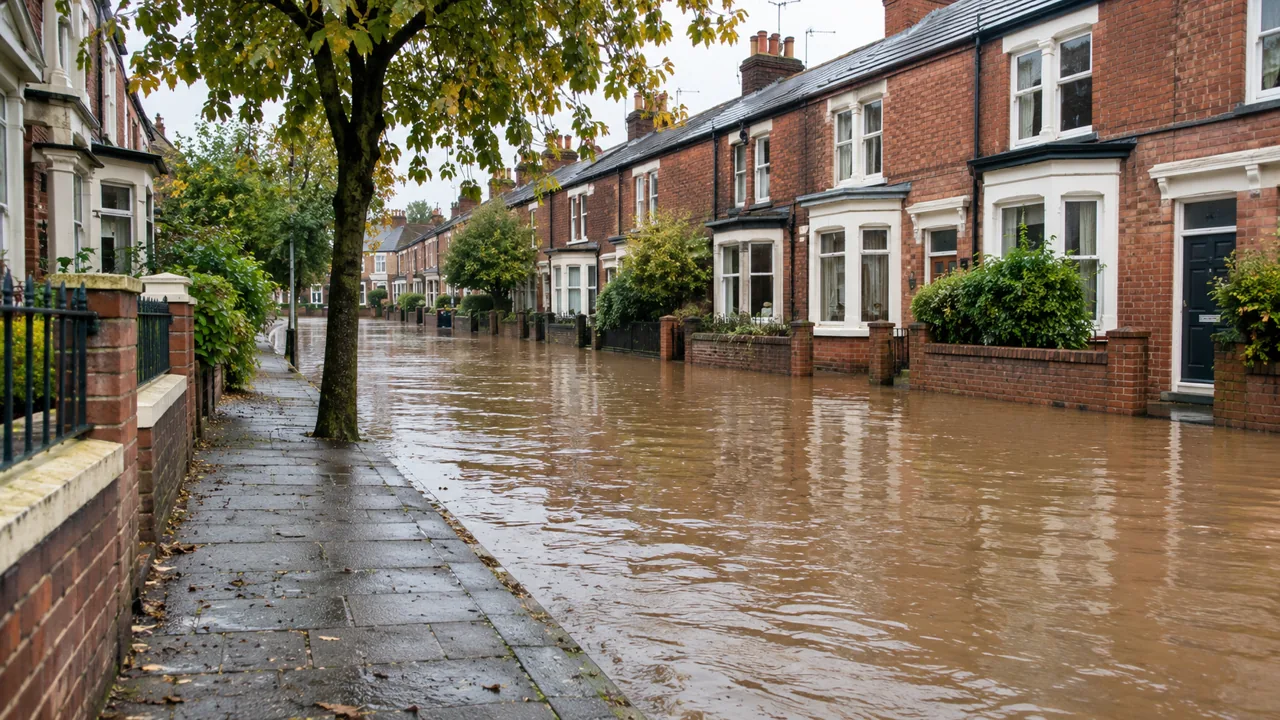
Three ways hazards can combine
Concurrent hazards happen at broadly the same time. Heat and smoke can create difficult choices about ventilation. Heavy rain and high coastal water can complicate drainage. Each situation needs advice that considers the combination.
Successive hazards arrive before the earlier damage is repaired. A second storm may affect a weakened roof or a family still in temporary accommodation. Recovery capacity, rather than the size of the second event alone, can determine the outcome.
Cascading impacts spread through connected systems. A transport failure can interrupt care; a power failure can affect communications. These terms help explain relationships. They do not establish that every service will fail together or that one dramatic chain is inevitable.
Why recovery changes the starting point
A household before an incident may have savings, spare time, reliable transport and a suitable home. Afterwards, some of those protections can be missing. The same warning can therefore require more help the next time.
A parent managing repairs may also be travelling farther to school. A person receiving care may have moved to unfamiliar accommodation. A small business may have used its financial buffer to reopen.
This is why “back to normal” needs examination. Ask which functions have actually returned: safe housing, treatment, income, transport and communication. A repaired front door does not establish that the household's capacity has recovered. Practical support should follow the remaining needs rather than a ceremonial reopening date.

Infrastructure connects different emergencies
Water, electricity, transport, communications and healthcare depend on one another in important ways. The exact links vary. A backup service may still rely on the same power supply, access road or staff.
For example, a household may plan to contact a relative through a different internet application. That is useful for an application failure but may not help if both options require the same unavailable connection.
Draw the dependency in words: “We need this service in order to do that task.” Then ask what changes if the service is unavailable. The exercise should identify a specific weakness, not persuade the family that every modern convenience is about to disappear.
Two backups are not always independent
A second route may cross the same low bridge. Two digital documents may be stored behind the same inaccessible account. Two neighbours offering help may work at the same place and be unavailable together.
Independence depends on the failure being considered. A printed phone number helps when a device is lost. It does not create a working network. An alternative collection contact helps only if they are authorised and can actually reach the child.
Check one important backup rather than multiplying untested options. Ask the person involved, inspect the route and try locating the information. A small practical test often reveals more than a long list that exists only in one organiser's memory.
Heat after flooding creates a different recovery problem
Flooded homes may need professional assessment and controlled drying. Temporary accommodation may also become hot or unsuitable for vulnerable residents. Advice for an undamaged home cannot automatically resolve those circumstances.
Tell the responsible organisation about the combined needs: building condition, indoor heat, mobility, treatment and the expected length of displacement. Ask which arrangements are safe and who is responsible for the next step.
Avoid operating unsuitable fuel-burning equipment indoors or making electrical alterations to improvise comfort. A temporary inconvenience should not become another serious hazard. Follow competent guidance for the actual building and equipment, especially when water damage has affected electrical installations.

Smoke and heat can pull a plan in opposite directions
A household may normally open windows to release heat. Smoke outside can make that unsuitable. The answer requires current official advice and attention to the people inside.
Identify a cooler suitable space and a way to ask for help if neither the home nor the available transport is manageable. An alternative location should be accessible and actually open when needed.
The broader lesson is to attach conditions to instructions. “Use cooler outside air when appropriate” is more useful than “always open every window.” Good plans explain the purpose of an action so that people can recognise when a second hazard changes the decision.

A family care plan needs continuity through change
A plan based on one address can stop working when the person moves. Care visits, deliveries, equipment, appointments and warning services may all need updated details.
With the person's agreement, keep a short current record of the relevant contacts and arrangements. Explain changes to the responsible providers rather than assuming information travels automatically between organisations.
Do not improvise treatment, medicine storage or equipment backups from generic emergency advice. Ask the care team what the specific disruption means. If someone becomes acutely unwell, use the appropriate urgent or emergency route. Continuity planning supports professional care; it does not replace it.
Finances can become part of the cascade
An emergency can remove income while creating extra travel, food or accommodation costs. A second disruption then reaches a household with less room to adapt. This can happen even when the second event causes little direct physical damage.
Separate immediate essentials from longer-term spending. Keep relevant receipts, policy details and reference numbers. Ask the appropriate insurer, employer, local authority or support organisation which process applies to the actual situation.
Avoid borrowing or buying in response to unverified claims of imminent scarcity. Preparation should protect the household's ability to meet real needs. An expensive speculative purchase may reduce resilience by using money required for rent, food or treatment.
Children notice the accumulation
A child may cope with one changed routine but struggle when school, sleep and contact with friends remain disrupted. Adults can also be exhausted and less able to explain what is happening.
Offer a simple, truthful account of the next steps. Name the adult responsible for collection, where the child will stay and when the family will receive another update. Avoid making promises about an exact return date that nobody can verify.
Keep ordinary reassuring routines where possible, while seeking appropriate support if distress persists or care needs change. The purpose is to help children understand that adults are working on the problem, without asking them to carry the burden of planning.
Communities can share both strengths and weaknesses
Neighbours may provide transport, translation, local knowledge and practical support. At the same time, the same street can lose access, power or income together. A community plan needs to recognise both.
Identify people whose support requirements cannot be met by a general notice. An accessible message, a specific lift or help contacting a care provider may be needed. Ask rather than assume.
Coordinate through the appropriate local arrangements. Do not publish private health information in an open group or promise services on behalf of an organisation. Reliable support has a clear contact, a realistic role and a way to report when the arrangement no longer works.
A short dependency review
Choose one essential task and work through the chain. For collecting a prescription, the household may need an open pharmacy, suitable transport, the right information and somebody able to make the journey.
Now remove one link. Can the task still be completed through an approved alternative? Ask the relevant provider what is appropriate rather than inventing a substitute treatment or collection process.
Repeat only for the few tasks whose interruption would cause serious difficulty. The exercise should remain manageable. A household does not need to map every supply chain in the country to discover that one essential phone number is stored only on a broken device.
Plan in stages rather than predicting the next disaster
A staged plan begins with actions that help across several disruptions: accurate contacts, accessible information and clear responsibility. It then adds hazard-specific actions when verified conditions justify them.
| Stage | Practical purpose |
|---|---|
| Ordinary conditions | Check dependencies and discuss support |
| Credible warning | Review the affected route, care or service |
| Active incident | Follow official instructions and protect people |
| Early recovery | Restore essentials and record unresolved needs |
| Another warning | Reassess using the reduced capacity that remains |
The final stage matters. Do not simply reuse the original plan when the first event has changed housing, transport or health. The conditions under which it was designed may no longer exist.
How to assess a claim about a chain reaction
Ask which links are evidenced and which are possibilities. A report may document a substation failure while merely speculating about a hospital closure. Both details should not be presented with the same certainty.
Look for location, timing, operating alternatives and official confirmation. An affected service elsewhere does not establish a local failure. Equally, a provider's specific notice deserves attention even if the national picture remains stable.
A useful explanation identifies the weak link and the factors that could prevent escalation. It should not turn the existence of connected systems into proof that total collapse is unavoidable. Understanding a cascade is valuable precisely because some links can be interrupted.
Recovery records should support action
Keep one current list of unresolved needs, the responsible contact and the next agreed step. Separate a completed inspection from an actual repair, and a promised appointment from one that has taken place.
This reduces confusion when several organisations are involved. It also allows another household member to help without reconstructing every conversation. Record only the information needed and protect personal details.
If advice conflicts, ask what each instruction applies to. One organisation may be considering structural safety while another addresses an insurance claim. Clarifying the scope can resolve an apparent contradiction. When safety is uncertain, obtain competent assessment rather than selecting whichever answer is most convenient.
Do not mistake exhausted people for unprepared people
Someone struggling through repeated disruption may already have made sensible preparations. Their resources may simply have been used up. Blaming them can discourage the honest conversation needed to identify support.
Ask what has changed since the previous plan. The obstacle may be a damaged vehicle, inaccessible accommodation, missed work or a carer who is now ill. A small practical intervention can sometimes restore a useful option.
Long-term resilience also needs functioning public services and infrastructure. Families can prepare, but they cannot individually replace every bridge, hospital or water system. Shared responsibility matters most when several communities are affected at once.
Make the next review worthwhile
After an incident, choose a few questions: what worked, what failed and what remains unfinished? Avoid creating an elaborate exercise that exhausted people cannot complete.
Fix the most consequential weakness first. Replace an unavailable contact, clarify a care arrangement or check an alternative route. Tell the people involved when the plan changes. An accurate small plan is easier to maintain than a perfect-looking document built on assumptions.
The accompanying DEFCON descriptions are hypothetical editorial scenarios, not a forecast that a sequence of disasters is approaching. Real warnings and professional advice guide immediate actions. Preparation is useful when it preserves choices, especially for people who have not yet recovered from the last emergency.
For a connected risk, read how to understand the immediate dangers of flash flooding. Also explore why heat can make an already damaged home harder to use safely to compare the mechanisms and the practical choices involved.
Frequently asked questions
What is a compound disaster?
It involves hazards or impacts combining so that the overall problem is harder to manage. They may occur together, arrive in sequence or spread through connected services. The exact relationship matters because a plan for each hazard separately may miss the way they interact.
Does one disaster always make another inevitable?
No. Hazards and systems interact in different ways, and safeguards can interrupt the chain. Evidence of one problem does not prove every possible consequence. Focus on the specific connection, available alternatives and current official information.
How can I check whether my backup is independent?
Ask what failure it is meant to cover and whether it shares the same vulnerable dependency. Two routes using one bridge or two applications using one failed connection may offer limited protection. Test the important alternative rather than assuming its name makes it different.
Why should the plan change during recovery?
Housing, health, transport, money and care arrangements may have changed. A plan designed for ordinary conditions can therefore become unsuitable. Review what capacity actually remains before responding to another warning.
What is one useful action for an ordinary household?
Choose an essential task and identify the contact, route or service it depends on. Check one realistic alternative with the relevant person or provider. Resolve the biggest practical weakness first, especially where interruption would affect care or a child's safety.
Sources and further reading
IPCC: compound and cascading climate risks IPCC: interacting weather hazards UK Government: flood response UKHSA: wildfire smoke and hot-weather considerations UK Government: interconnected food-system pressures