
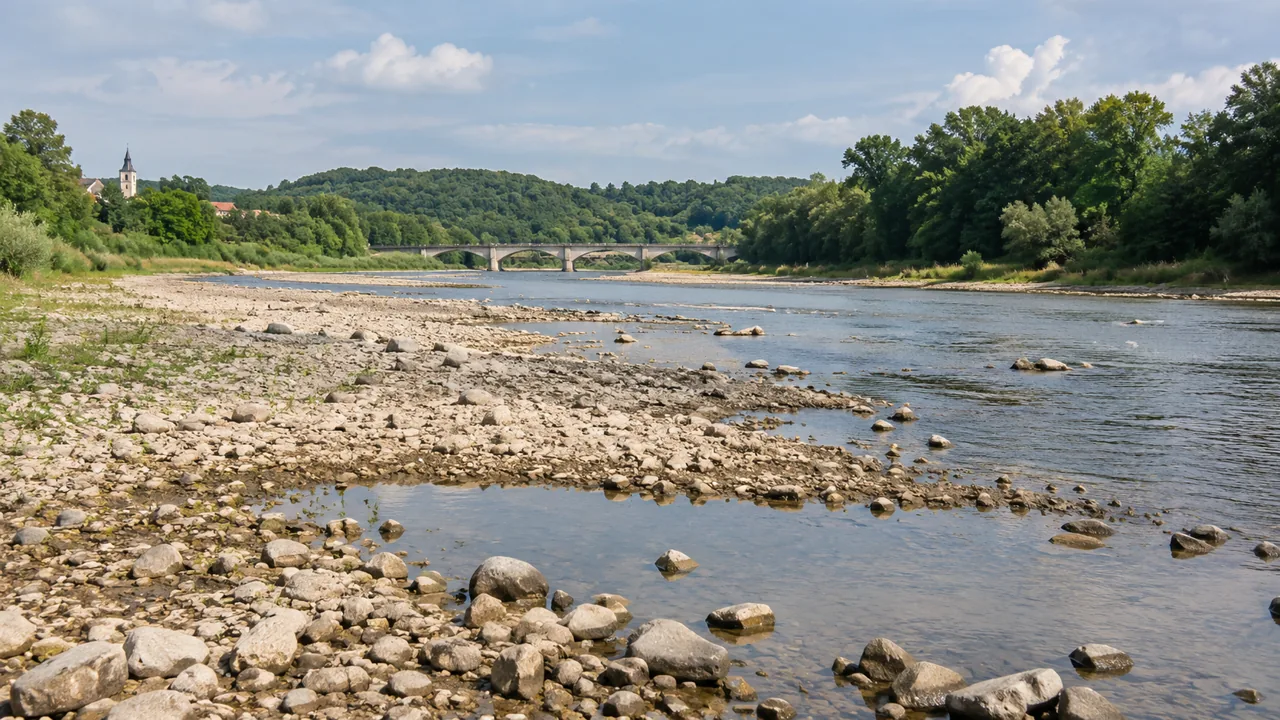
A low river can look quiet rather than dangerous. Boats sit farther from the bank, stones emerge and the water moves through a narrower channel. The problems develop behind that view: competing demands, stressed habitats and decisions about which uses can continue.
Low river flow does not mean every nearby tap will stop. Water suppliers use different sources, storage and connections. Equally, a working tap does not mean drought has no consequences. Farms, ecosystems, navigation and some electricity systems can face pressure before a household notices a supply change. Check the actual local water-provider advice and understand which part of the wider system is affected.
A river connects more than the places on its banks
Water moves through catchments, soils, reservoirs and underground stores. Rainfall timing, temperature, demand and previous conditions influence how much is available. A short shower does not necessarily repair a long deficit.
A river can support habitats, agriculture, industry, recreation and public supply at the same time. Those uses have different requirements and are managed through different arrangements. Competition becomes more visible when the available flow falls.
The important question is therefore not simply “How low does it look?” Ask how the river connects to the relevant activity and what managers are observing. A photograph can reveal change, but it cannot establish the operational condition of an entire water network.
Different kinds of drought produce different consequences
The Environment Agency distinguishes environmental, agricultural and water-supply drought in its management framework for England. The terms describe related pressures, rather than a single moment when everything fails together.
Environmental effects can appear when habitats lose suitable flow. Agricultural pressure concerns crops, soil moisture and farming needs. Public-supply problems depend on the resilience and operation of the water system. Their timing can differ.
This distinction prevents a common misunderstanding. A restriction intended to conserve resources is not automatically a warning that drinking water is contaminated. Nor does a supplier maintaining service prove that farmers or wildlife are unaffected. Read the purpose and scope of each notice before deciding what it means for the household.
Why rainfall can disappoint after a dry spell
Rain has to arrive in useful amounts, places and patterns. Some may evaporate, some run off and some replenish soil or underground stores. Recovery depends on conditions rather than the emotional relief of seeing clouds.
A heavy burst can also create surface flooding while a longer-term deficit remains. That apparent contradiction is understandable once the timescales are separated. Fast runoff and the restoration of water reserves are different processes.
For a household, continue following the provider's current instructions until they change. Do not assume one wet afternoon ends restrictions. For travel or outdoor activity, also recognise that dry-period water stress does not make sudden heavy rainfall harmless.
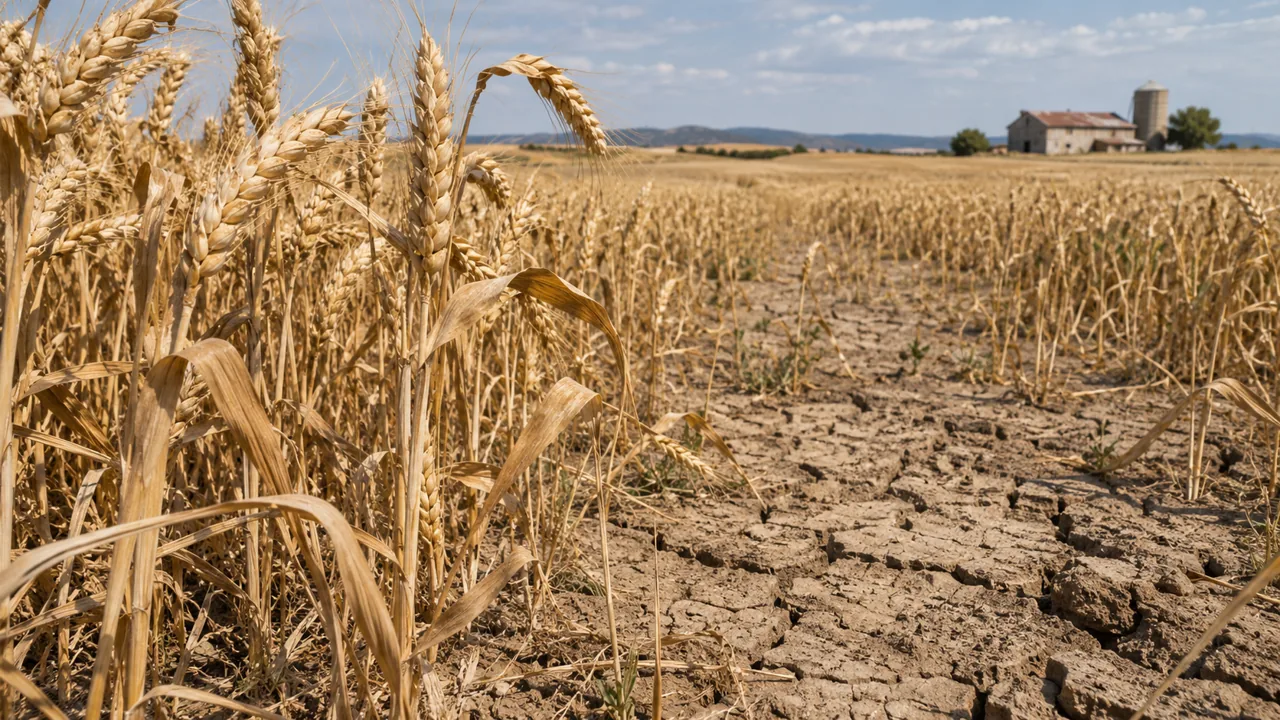
Farms feel the pressure before the shopping basket does
Crops need water at particular stages, and livestock need suitable supplies. Reduced availability can change yields, quality, planting decisions or the cost of production. The outcome varies between crops, places and farming systems.
The route to a shop includes storage, processing, trade and retailers' decisions. A local crop problem can be offset by other sources, while simultaneous problems in several producing regions are harder to manage. Price is not determined by rainfall alone.
Families can respond by keeping meals flexible and reducing waste. That is more useful than predicting a precise price increase from one river photograph. Ask which product, region and stage of production a report actually concerns before making a financial decision.
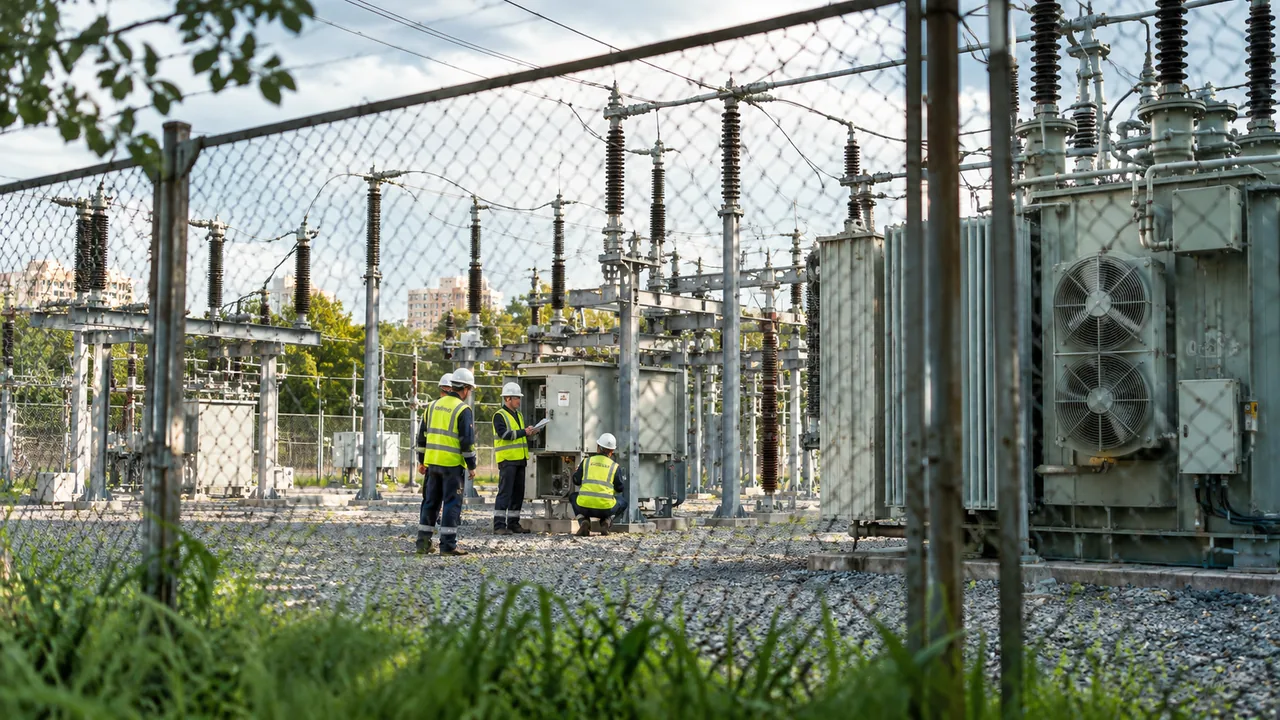
Electricity also has a water connection
Hydropower relies on available water and suitable operating conditions. Some thermal power stations use water for cooling. Low flow or high water temperature can therefore affect generation, depending on the plant and applicable operating limits.
The International Energy Agency describes this water-energy connection. It does not follow that every dry river threatens a local blackout. Electricity systems may use other generators, imports, storage or operational changes to maintain supply.
For households, distinguish a power-system risk from a confirmed service problem. Follow the actual electricity provider's information. If someone relies on powered medical equipment, arrange appropriate continuity with their care and equipment providers rather than choosing a backup from a general drought story.
Water treatment and water quantity are separate questions
A supply interruption, a conservation request and a water-quality notice require different responses. Read the instruction from the responsible supplier carefully, including the affected area, start time and any exceptions.
Do not assume boiling solves every water problem. It cannot be treated as a universal answer to chemical contamination, and a notice may require a different action. Follow the precise official instruction for the incident.
Avoid drawing drinking water from a river because it looks clear. Appearance does not establish microbiological or chemical safety. If normal supply fails, use the arrangements and water sources identified by the responsible authorities. An improvised source can add a health emergency to a supply problem.
Saving water without undermining health
Focus first on avoidable waste and the actions requested locally. Report or repair leaks through the appropriate route, use appliances sensibly and reconsider non-essential high-water activities. Follow the actual restriction rather than a social-media summary.
Do not cut essential hygiene, necessary drinking or medically required care to achieve an arbitrary household target. Needs differ, and a person with a relevant condition may require specific professional advice.
Make changes easy to sustain. A dripping fitting can be a clearer practical task than an elaborate spreadsheet of every sip. Ask everyone in the household to identify one useful adjustment, then check whether it works without making basic routines unsafe or unmanageable.

Prepare for an interruption while service still works
Know your supplier, the account contact and the channel used for incident updates. Keep those details accessible without relying entirely on one connected device. Check whether the household has needs the supplier should understand.
Consider a modest reserve of suitable drinking water in line with relevant official preparedness advice and your storage conditions. Keep containers clean, follow product guidance and rotate supplies appropriately. Avoid buying so much that it becomes difficult to store safely or deprives others during an incident.
If collecting water becomes necessary, think about mobility, lifting and transport. A distribution point several streets away may be inaccessible to somebody who cannot carry a container. Tell the provider about the practical obstacle rather than assuming the published location solves every household's need.
Care needs require a more specific conversation
Some treatments, equipment and personal-care routines depend on reliable water. A general household reserve may not be suitable for a clinical purpose. Ask the responsible healthcare team what an interruption would mean and who should be contacted.
Write down the agreed arrangement, including an alternative contact. A relative should be able to explain the need without guessing technical details. Keep private health information secure while ensuring it is available to the appropriate people.
If supply changes unexpectedly, tell the provider and care team what has happened. Do not substitute bottled, boiled or collected water for a medical use unless the responsible professional confirms suitability. The right answer depends on the treatment.

Businesses and communities can spread the effects
A water-dependent business may reduce activity, change opening hours or face higher operating costs. A school, care facility or food business needs its own appropriate continuity and hygiene arrangements. Household advice cannot replace those responsibilities.
Ask organisations you rely on how they communicate closures or changes. A parent may need an alternative collection arrangement; a patient may need confirmation that an appointment remains suitable. Clear notices reduce unnecessary journeys.
Communities can help by identifying people who cannot easily collect supplies or receive digital updates. Support should follow actual need and official arrangements. A rumour that an entire town will lose water can create avoidable demand even when the underlying notice concerns a limited area.
Wildlife damage is part of the threat
Reduced flow can shrink habitats and alter water conditions. The effects on fish and other species can extend beyond what is visible from the bank. Environmental restrictions may therefore protect a system on which people also depend.
Do not move fish, disturb wildlife or alter a watercourse without appropriate authority and expertise. Well-meant intervention can cause harm or spread problems. Use the responsible environmental body's reporting arrangements for concerns.
For families, this provides an understandable explanation for conservation. Saving water is not simply about keeping a bill lower. It can help reduce pressure on shared resources, alongside the larger responsibilities of water management, infrastructure and land use.
Ask better questions when a drought headline appears
| Claim | Question to ask |
|---|---|
| A river is at a record low | Which gauge, date and comparison period? |
| Water restrictions are coming | Which supplier, area and activities? |
| Food will become scarce | Which crops, producers and alternative supplies? |
| Power generation is affected | Which plants and what replacement capacity? |
| Rain has ended the drought | Which part of the water system has recovered? |
The purpose is not to demand perfect certainty before acting. It is to connect the evidence with the decision. A local supplier instruction may justify immediate action even when a wider economic forecast remains uncertain.
A realistic household example
Imagine a family receiving a conservation notice during hot weather. The first step is to read the actual notice, not to buy a large quantity of bottled water because a neighbour predicts a complete shutdown.
The family checks the provider's contact, fixes an avoidable leak and reviews a relative's care needs. They keep normal drinking and hygiene routines, adapt non-essential use and make sure another adult can find the information.
If a later notice announces an interruption, the plan changes: they check timing, distribution arrangements and any required medical support. The sequence is important. Each action responds to verified conditions, reducing the chance that an understandable concern becomes a costly or unsafe improvisation.
Recovery needs time and honest information
Water restrictions may remain after rain returns because different parts of the system recover at different rates. Follow updated local instructions and ask for clarification if their meaning is unclear.
Replace any household reserve used during an interruption gradually. Check whether temporary arrangements revealed a weakness, such as inaccessible collection points or missing care contacts. Report that practical feedback through the appropriate route.
Longer-term resilience involves infrastructure, leakage management, healthy catchments, farming decisions and energy planning. No household can solve the whole problem alone. It can nevertheless reduce waste, recognise a real notice and protect vulnerable people before a disruption becomes severe.
Shared buildings need a named communication route
If you live in a flat, sheltered housing or another shared building, find out who communicates a supply interruption and how residents receive updates. A notice in an entrance hall may not reach someone who cannot leave their home, while an online message may miss a resident without internet access.
Agree how essential information reaches the people who need it, including tenants who do not manage the water account directly. Keep the supplier's instructions separate from an informal message about the building's plumbing. A local maintenance problem and a wider resource restriction can require different responses.
Ask about practical access if alternative supplies are arranged: where they would be available, who could help carry them and how a resident with medical needs should seek specific support. Confirm the actual arrangements with the responsible provider rather than assuming a neighbour's experience guarantees the same help. A named contact and an accessible message can prevent an ordinary supply change becoming a hidden care emergency.
Your next step
Find the supplier's official incident page and save the contact somewhere another household member can reach. Identify one dependency that would become difficult if supply stopped. Resolve that weakness while ordinary service remains available.
The DEFCON scenarios accompanying this article are hypothetical editorial descriptions. They are not official drought classifications, water-quality notices or a prediction of a nationwide outage. Their purpose is to explain how consequences could escalate while keeping real local instructions central.
For a connected risk, read how El Niño can influence rainfall and drought in different regions. Also explore how harvest pressures can reach a household food bill to compare the mechanisms and the practical choices involved.
Frequently asked questions
Does a low river mean my tap water will stop?
Not necessarily. Suppliers use different sources, storage and network arrangements. Check the provider's actual local information. River conditions can affect the environment or agriculture before household supply changes, so neither a low river nor a working tap tells the whole story.
Does a conservation restriction mean the water is unsafe?
No. A conservation instruction and a water-quality notice address different issues. Read the supplier's exact wording, affected area and required action. Continue normal use as advised unless a specific quality or supply instruction changes what the household should do.
Will boiling make any alternative water safe?
No. Boiling is not a universal solution, particularly for chemical contamination. Follow the responsible authority's precise instruction. Do not assume clear river water, collected water or an improvised treatment is suitable for drinking or medical use.
Can drought affect electricity without causing a blackout?
Yes. Reduced hydropower or cooling-water constraints may change generation while other sources help maintain service. The outcome depends on the particular system. Distinguish a documented operational impact from a claim that every affected country or household must lose electricity.
What should a household prioritise?
Understand local advice, reduce avoidable waste, keep useful supplier contacts and plan for specific care or accessibility needs. Avoid undermining drinking, hygiene or treatment to meet an arbitrary target. A proportionate, usable plan is more valuable than a large speculative purchase.
Sources and further reading
Environment Agency: drought management in England IEA: water and energy security IEA: climate hazards and energy systems UK Government: Food Security Report