
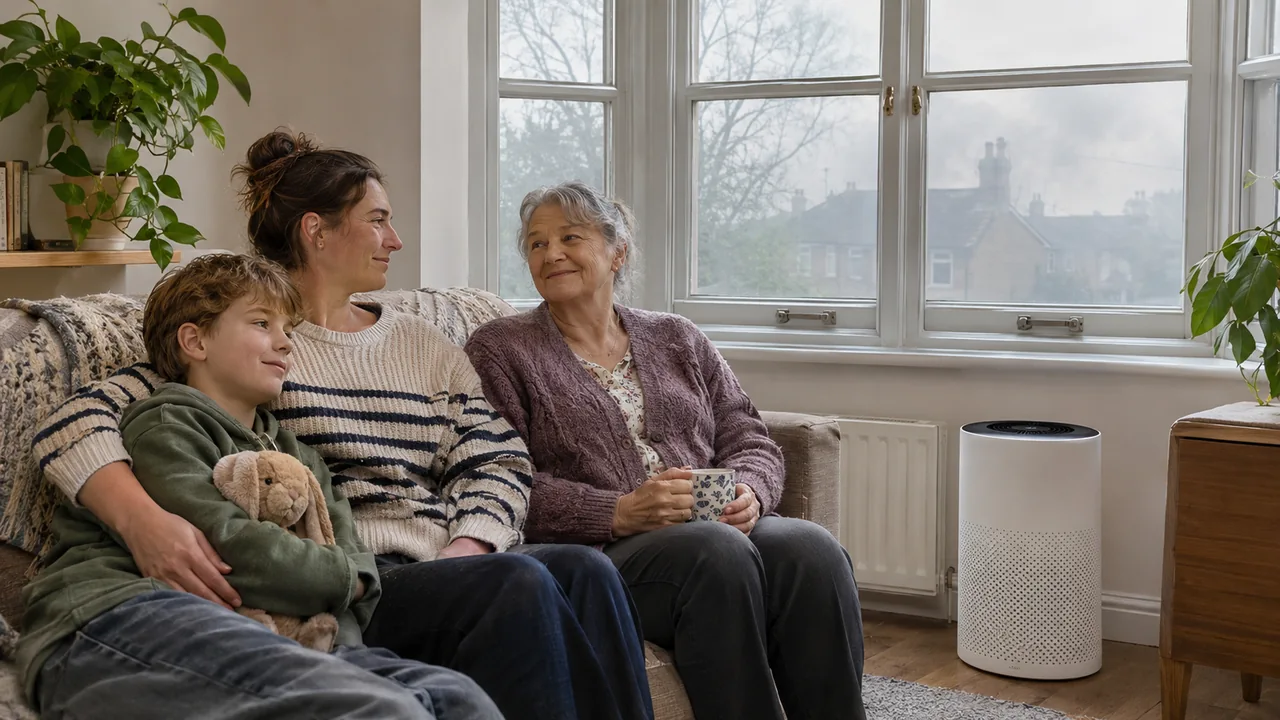
The air-quality app has stopped updating, the sky looks dull and someone in the house has started coughing. Waiting for a red warning symbol is no longer a sensible way to decide what happens next. Your immediate job is to reduce smoke exposure, keep everyone cool enough and recognise when the building itself is no longer a safe place to stay.
Wildfire smoke protection begins with a cleaner indoor space and fewer unnecessary trips outside. It also needs a clear escape decision. A room that keeps particles out cannot protect you from a fire approaching the house, and a particle filter cannot make carbon monoxide harmless. Those differences matter most when familiar public services become unreliable.
This guide assumes smoke is affecting your area during an ongoing wider crisis. It does not assume that every grey sky is a wildfire or that an absent alert proves the air is dangerous. It gives your family a practical routine for acting cautiously while information is incomplete.
Start with the people, then check the building
Bring children, older relatives and anyone with a heart or lung condition into the least smoky usable room. Find their usual medicines, mobility aids, drinking water and contact information. A person who cannot describe worsening symptoms needs closer observation, rather than being left alone while other adults watch the news.
Check for a more immediate threat without walking towards the smoke. Look for nearby flames, falling embers, a burning smell inside the building or a damaged electrical appliance. If there is a house fire, a sounding carbon monoxide alarm or an unsafe escape route developing, leave for a safer location. Do not spend those minutes rearranging an air purifier.
The UK Health Security Agency's wildfire guidance explains that smoke contains particles and gases. Closing windows can reduce exposure, but it is one protective step within a wider safety decision. Tell everyone which room to use and which conditions would make you leave.
Use several clues without pretending they measure pollution
Smoke haze, ash settling on a car and a persistent smoky smell are reasons to take precautions. None gives you a reliable particle concentration. The air can remain unhealthy after it looks clearer, while a strong smell does not tell you exactly how much of each pollutant is present. Avoid declaring the situation safe from a photograph or a brief look out of the window.
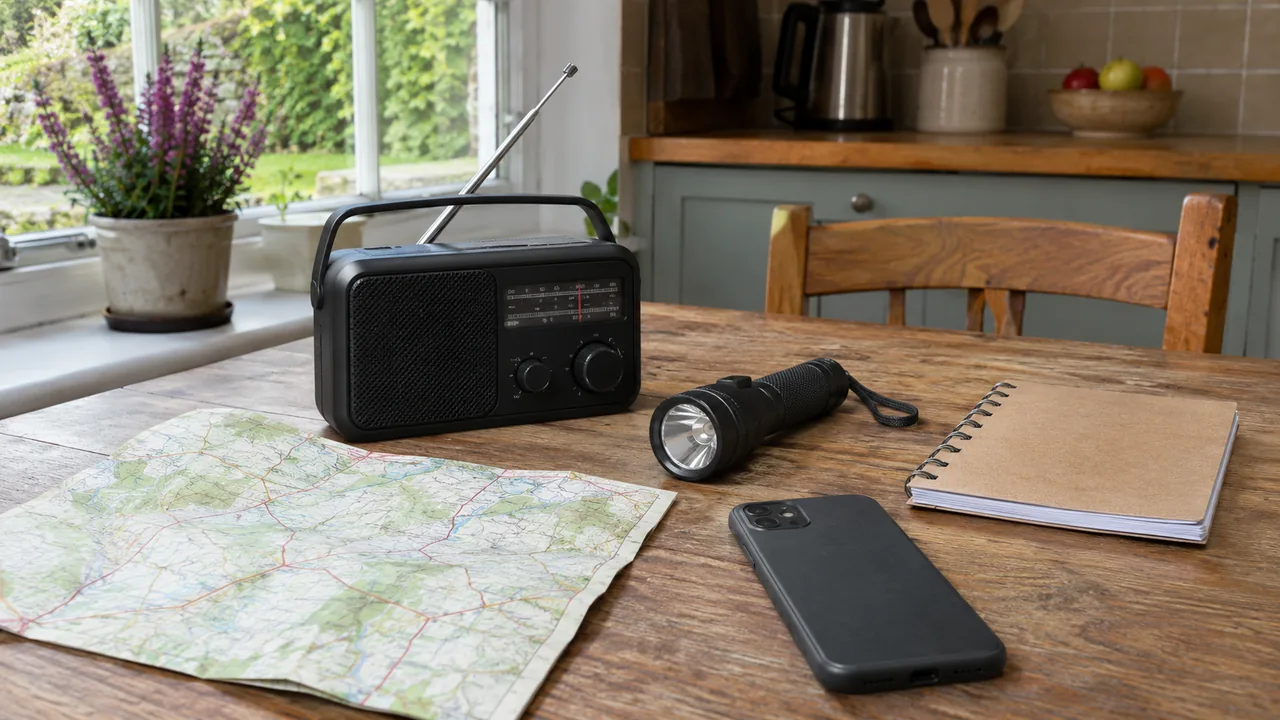
Try a battery radio, a working local authority channel and any remaining official weather or fire information. Record the source, place and time of useful reports. A message about another town, or yesterday's plume, may not describe your street. Ask a trusted neighbour whether they have received new information, without turning an unconfirmed message into a warning for the whole community.
If you already own an indoor particle monitor, use its trend as one piece of information. Cooking, positioning and the device's limitations can affect readings. It does not detect every hazardous gas, certify that a house is safe or replace the need to respond to symptoms.
Make one room easier to protect
Choose a room with enough space for everyone who needs it, ideally with fewer external openings and a door you can close. Keep windows and external doors shut while smoke is passing. Close fireplace dampers when the fireplace is completely cold and unused. Do not obstruct the flue or ventilation of an appliance that is operating.
Bring essentials in once: medicines, water, a torch, phone charger, comfortable seating and activities for children. Repeatedly opening an outside door for forgotten items defeats some of the benefit. Keep the route to the main exit clear, and avoid placing a vulnerable person somewhere that cannot be evacuated safely.
The US Environmental Protection Agency describes a cleaner-air room as a space that limits incoming smoke and indoor particle sources. Its physical principles are useful in a British home too. You do not need a perfect laboratory seal; you need a practical room that is safer than the available alternatives and can still be left quickly.
Use filtration for the job it can actually do
A suitable portable air cleaner can reduce smoke particles indoors if it has power, an appropriate filter and enough capacity for the room. Follow its instructions, keep air inlets clear and run it at a useful setting you can sustain. A very small machine hidden behind a sofa is unlikely to serve a crowded, large room well.
Choose equipment intended to remove particles without generating ozone. Do not select an ozone generator as a substitute for clean air. If your ventilation system has a compatible higher-efficiency filter, use only a specification the manufacturer permits. Forcing an unsuitable filter into a system can obstruct airflow and cause other problems.
Check filter condition according to the instructions and keep used filters away from children. Replacing them may release collected dust, so handle them gently. Filtration does not remove all wildfire gases, and a working particle cleaner does not make indoor barbecues, generators or damaged fuel-burning appliances acceptable. Maintain a separate working carbon monoxide alarm wherever the home's appliance arrangements require one.
If electricity fails, change the plan promptly
An electric purifier that has stopped is simply an object in the room. Close unnecessary openings, avoid generating more particles and shorten avoidable outdoor exposure. Use daylight and a torch rather than candles. Conserve any remaining battery capacity for communication, essential medical equipment and necessary lighting before assigning it to optional devices.
Where a battery power station is already available, compare the purifier's stated consumption with the energy that remains. For example, a 40-watt appliance running for five hours uses 200 watt-hours before conversion losses. This is arithmetic, not a promise that a particular battery will provide that runtime. Read the device limits and leave a reserve for more important loads.
Never run a generator in the house, garage, porch or near openings to preserve the cleaner room. Its exhaust can introduce a different, potentially fatal hazard. If power loss makes smoke control or essential care impossible, identify a genuinely safer place to move to. Check the journey and destination before setting off merely because they sound reassuring.

Balance smoke protection against dangerous heat
A closed room can become too hot, particularly in an upstairs flat or a sun-facing bedroom. Watch the people as carefully as the windows. Heavy sweating, unusual weakness, dizziness or confusion need attention. Heatstroke is a medical emergency. Do not keep someone in a dangerously hot space simply to maintain an apparently tidy smoke-control plan.
Shade windows from direct sun where this can be done safely, reduce unnecessary activity and offer appropriate drinks. Move to a cooler protected room if one is available. Opening a window during heavy smoke may increase particle exposure, so use cooler, cleaner intervals and information about outdoor conditions when deciding whether to ventilate. No universal timetable fits every building or changing wind.
A child, an older adult and an adult doing physical work may cope very differently with the same room. Check anyone taking medicines or following a clinician's fluid plan according to their existing advice. Our guide to cooling without electricity explains the heat problem in more detail, including when moving to a safer location becomes the priority.
Understand what masks can and cannot change
A properly fitting particle respirator may reduce inhaled particles during an unavoidable outdoor task. Fit, condition and the wearer's ability to use it matter. Gaps around the cheeks or nose allow smoky air to bypass the filter. A loose scarf, wet cloth or ordinary face covering is not equivalent protection.
Respirators do not provide oxygen and do not make carbon monoxide safe. They are not permission to approach a fire, enter a smoke-filled building or undertake strenuous work in a hazardous atmosphere. Anyone with breathing problems should follow their existing clinical advice and seek professional guidance where communication remains possible.
Do not improvise a respirator for a baby or assume adult equipment fits a child. Protect younger children mainly by reducing their exposure and choosing safer surroundings. If an adult must make a short essential trip, another responsible person should remain with those who need care. The aim is to avoid the trip where possible, rather than rely on equipment to cancel its risk.
Keep everyday activities from adding more smoke
Inside the cleaner room, stop smoking, vaping, incense and scented candles. Avoid frying or grilling while exposure is high. Choose food that can be prepared with minimal heat and smoke, and keep strong cleaning sprays away from people with irritated airways. A house can accumulate particles from ordinary activities as well as from outside.
Use damp wiping for settled dust where suitable instead of vigorous dry sweeping. Avoid shaking smoky clothing indoors. If a vacuum lacks effective filtration, postponing non-essential vacuuming may be better than stirring up fine dust while the family is sheltering. Keep the cleaning task small enough that it does not leave the main carer exhausted.
Consider pets too. Keep them inside the safer area where practical, provide water and limit unnecessary exercise outdoors. Do not leave an animal in a hot sealed room or vehicle. Ask a neighbour for help with routine tasks if that reduces the number of people repeatedly moving between smoky outdoor air and the household's protected space.

Give children and vulnerable adults a usable routine
Explain the change in simple words: the air outside is smoky, this room is our better place, and an adult will tell us when anything changes. Give children quiet activities, drinks and familiar comfort items. A clear explanation is less frightening than hearing adults repeatedly speculate about an unknown disaster.
Keep prescribed inhalers and other usual medicines accessible, with the person's existing care instructions. Do not share medicines or change doses because a crisis is underway. Note symptoms, medicine use and any advice received. A worsening pattern is easier to describe to a clinician when someone has written it down.
Severe breathlessness, chest pain, collapse, marked confusion or blue or grey lips require urgent help. Try 999 or 112 where a network remains available. If calls fail, use the safest available route to medical assistance without leaving a dependent person unattended. An interrupted alert service changes how you obtain information; it does not make serious symptoms something to wait out.
Decide whether a journey will reduce exposure
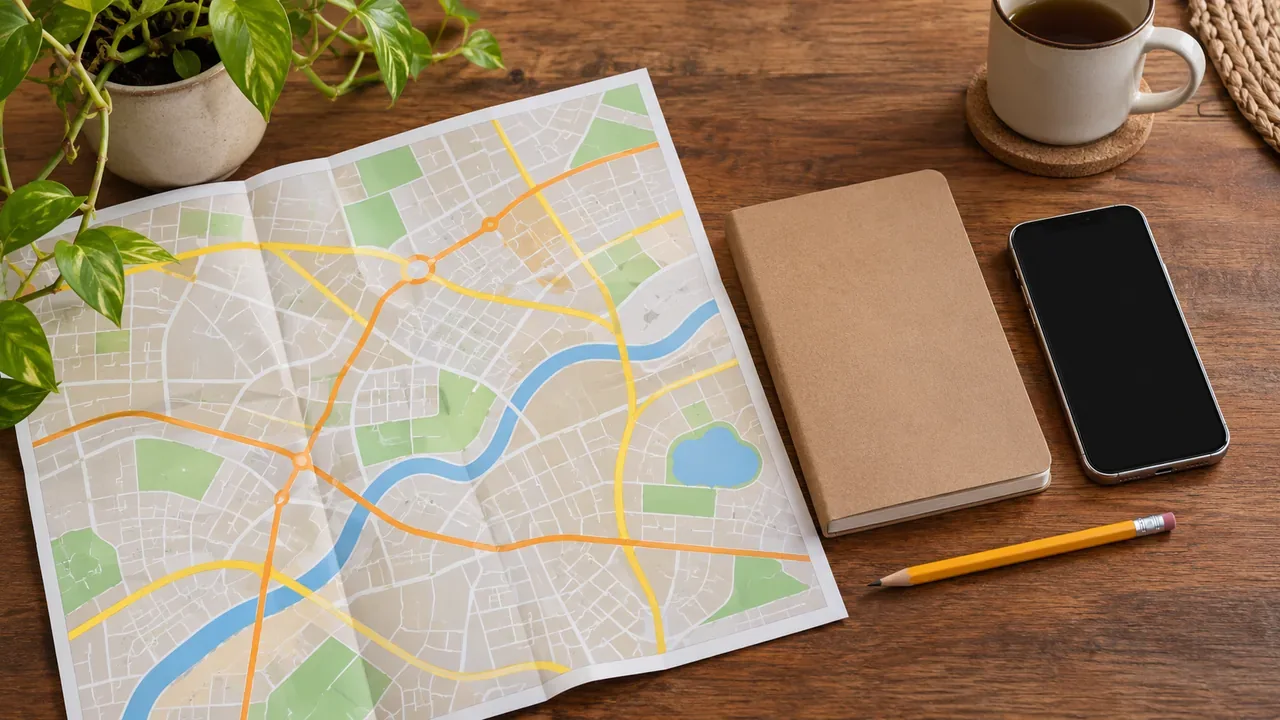
Before travelling, ask three questions. Is the destination actually less affected? Can everyone enter and remain there? Is the route usable without passing the fire, heavy smoke or another hazard? A vague promise of a public building does not answer any of them.
For an essential car journey, keep windows shut and use the vehicle's air settings according to its handbook, usually limiting the intake of smoky outside air. Conditions inside the car can still deteriorate, and recirculation is not indefinite protection. Keep the journey short, avoid running the engine in enclosed spaces and never leave children or vulnerable adults waiting in a parked vehicle.
On foot, reduce time outside and physical exertion where possible. Do not send someone with severe symptoms to walk alone for help. If there is credible local evacuation advice, act on it rather than waiting for your particular app to recover. The wider guide to staying or evacuating helps compare shelter, route and destination when choices are difficult.
Set a realistic night-time watch
Before anyone sleeps, check the cleaner room, escape route, drinking water and essential medicines. Make sure alarms are working and that every adult knows where children or dependent relatives are sleeping. Keep shoes and a torch available without blocking the exit. A supply pile in the doorway can become dangerous when visibility is poor.
Agree who will check for new information and when. A sustainable rota with clear handover is better than everyone staying awake until exhausted. Record meaningful changes in smoke, heat, symptoms or the fire's reported location. Do not wake the whole household for every repeated social-media message.
Reassess the room after a power interruption or a significant wind change. If the home becomes unsafe, the night-time plan must allow a prompt move to a safer place. Staying indoors is a way to reduce exposure while conditions permit. It is not a commitment to remain in a building despite fire, dangerous heat, carbon monoxide or worsening illness.
Make your next hour more controlled
Choose the room, gather essentials and stop avoidable indoor pollution now. Write down the signs that would trigger urgent medical help or departure. Identify one realistic alternative shelter and one person outside the household who can help verify information. These actions are more useful than endlessly refreshing a failed alert page.
When the smoke eases, ventilate only when outside conditions are genuinely better and the immediate fire risk has passed. Clean gradually, check filters and keep watching vulnerable people. Do not treat the return of a blue sky as proof that everyone's symptoms have resolved. The purpose of the plan is to keep your family safer through changing conditions, not to make uncertain air quality look certain.
Frequently asked questions
Can I trust my nose when the air-quality service is offline?
A smoky smell is a reason to reduce exposure, but smell cannot measure the amount of fine particles or detect every dangerous gas. Use several reliable clues, any remaining official information and the condition of people in the household. Do not declare the air safe just because the smell fades.
Will a wet towel over a window make the room safe?
It does not turn a room into a protected breathing space or remove the main hazards from wildfire smoke. Concentrate on reducing smoke entry, avoiding indoor pollution and using appropriate particle filtration when available. Keep escape routes usable and do not block required ventilation for operating fuel-burning equipment.
Should I buy plants to clean smoky indoor air?
Houseplants are not a substitute for effective smoke control or an appropriately sized air cleaner. During an active incident, use your time and remaining resources to protect people, reduce exposure and arrange a safer destination if necessary. Decorative changes cannot resolve a dangerous plume or an approaching fire.
What if my child refuses to stay in the cleaner room?
Explain the reason calmly, offer activities and keep a familiar adult nearby. Move useful toys, books and drinks into the room so there is less reason to leave. Avoid depending on an adult respirator to make outdoor play acceptable; the safer approach is reducing exposure and finding genuinely better air.
When should I reopen the windows?
Do so when outdoor air has improved and ventilation will make the home safer, taking heat into account. Use current local information where available and avoid relying on a fixed number of hours. If conditions remain unclear, reassess the people, room temperature and available alternative shelter rather than following a rigid rule.