
The blue dot on a map can feel more certain than the road signs outside the window. If it starts jumping, a driver may keep following the instructions because the phone usually knows best. Space weather is one possible cause of navigation problems, although it is far from the only one. The immediate safety rule is the same: do not follow a device into an unsafe situation.
Solar activity can affect satellite signals, spacecraft and some ground infrastructure. It does not follow that every flare will destroy satellites or leave every household without electricity. Useful preparation begins with the service you need, the verified warning and the fallback that still works when that particular service is unreliable.
What space weather means
Space weather describes changing conditions in the space environment, influenced by the Sun and solar wind. Solar flares, energetic particles and disturbances carried towards Earth can produce different effects. The phrase solar storm is often used loosely in headlines.
That broad label can conceal the distinction between a radio problem, a geomagnetic disturbance and a radiation event. Read which phenomenon is being discussed and which systems are expected to be affected. A photograph of the Sun is not itself a forecast for the electricity supply or a statement that your flight has been cancelled. The connection needs to be explained.
A flare and a coronal mass ejection are different
A solar flare is a burst of electromagnetic radiation. A coronal mass ejection involves expelled solar material and its magnetic field. Their effects and travel times are not interchangeable, and an event's direction matters when assessing consequences for Earth.
This is why a social-media claim that a dramatic solar image guarantees a particular impact tomorrow should be checked against an official forecast. Forecasters use observations and models, and some properties remain uncertain until later measurements are available. An uncertain arrival estimate is not evidence that the service is useless; it describes a physical limit that good forecasts should communicate honestly.
Why GPS depends on the upper atmosphere
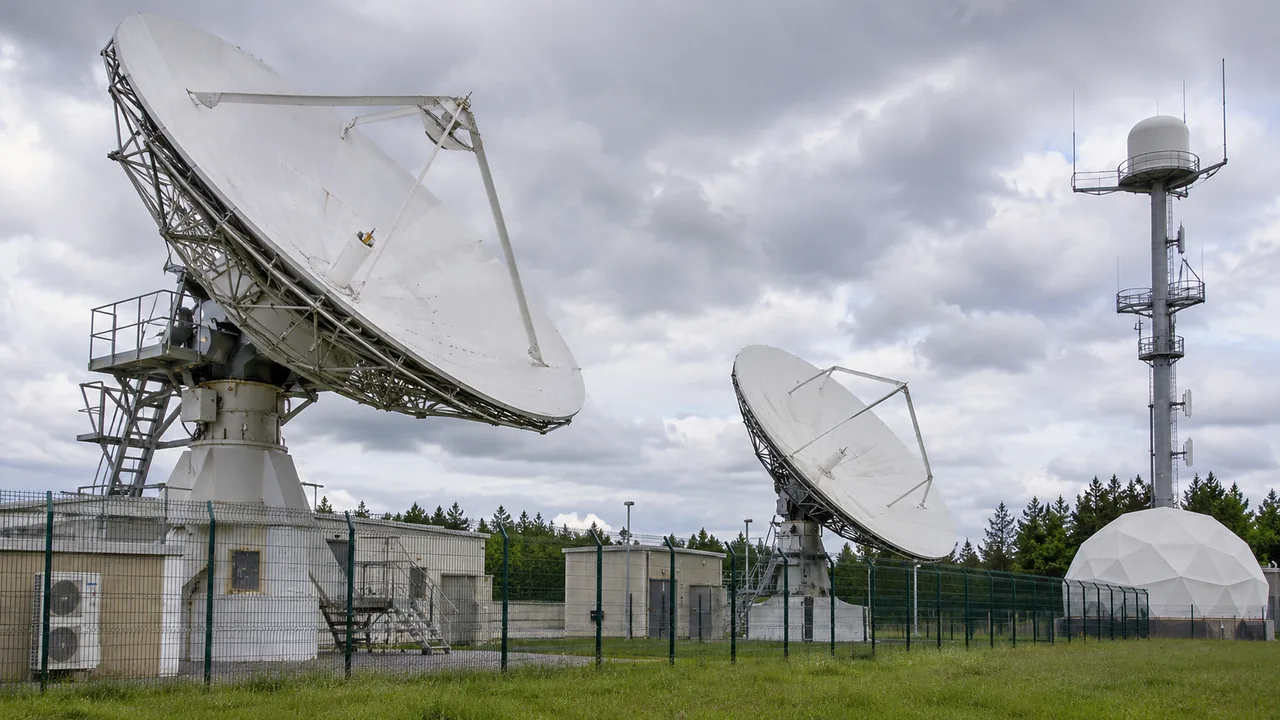
Satellite-navigation signals travel through the ionosphere, an electrically active region of the upper atmosphere, before reaching a receiver. Changes there can alter the signals and make a position less accurate or harder to obtain. NOAA explains this as one route by which space weather affects GPS.
The effect varies with conditions, location, receiver and task. A small error may be inconvenient for one use and unacceptable for precision work. Do not assume that a position displayed on a screen has the same reliability at every moment. Equally, one inaccurate location does not prove a solar event is the cause.
GPS is part of a wider navigation family
Global Navigation Satellite System, or GNSS, is the broader term covering satellite-navigation systems. GPS is one system within that family. People often use GPS as a general name for the location service on a phone or vehicle.
Understanding the distinction helps when reading a notice aimed at professionals. It may concern particular receivers, precision services or regions rather than every map application. Ask which service and function are affected. Switching applications on the same phone may not create an independent fallback if both rely on the same underlying positioning information. A different screen is not necessarily a different source of position.
A downloaded map solves only part of the problem
An offline map can remain available when a data connection fails. It does not make a faulty satellite position accurate. A phone may display a perfectly good map while placing the user in the wrong location.
Before an unfamiliar journey, understand the broad route, destination and useful landmarks. Keep an appropriate independent map or written route information where it would help, and know how to use it. If navigation becomes confusing while driving, stop somewhere safe before reviewing the route. Never make a dangerous manoeuvre merely to satisfy a device, and do not treat a household fallback as a substitute for specialist navigation training where that is required.
Satellites can face more than a signal problem
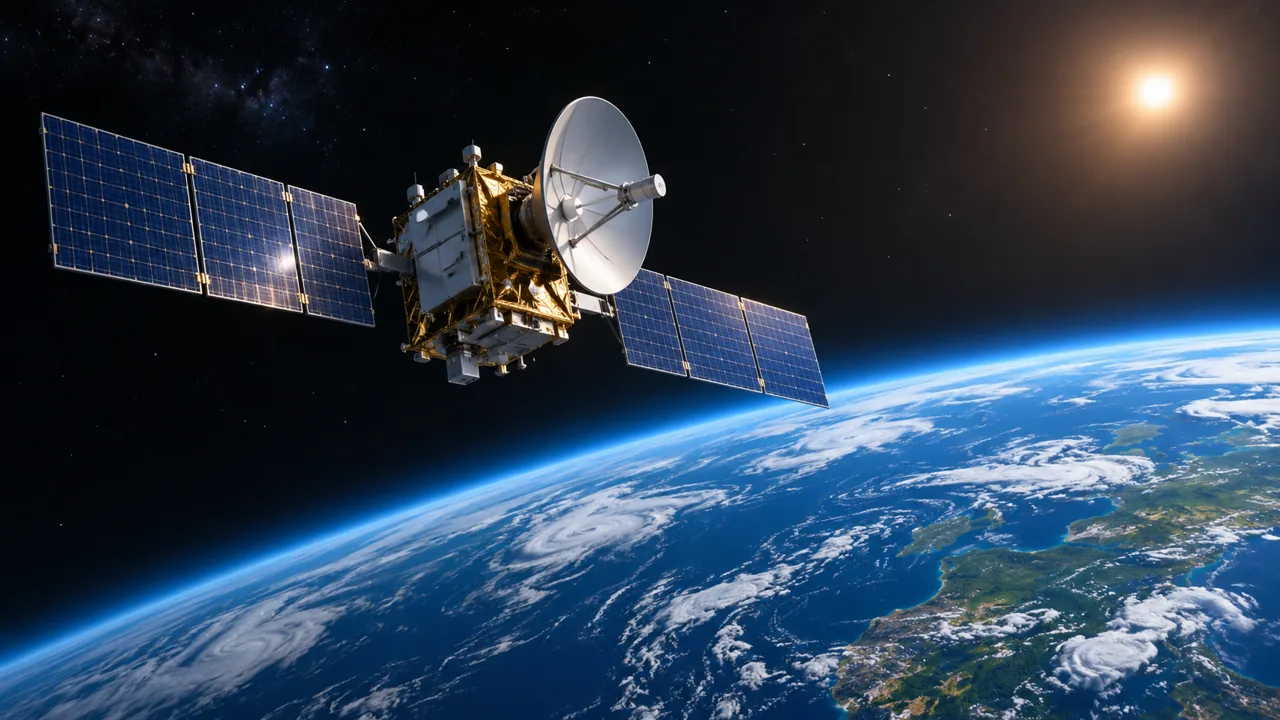
Space weather can affect spacecraft electronics, charging and operations. Operators monitor conditions and use engineering and operational measures to manage risk. The outcome depends on the spacecraft, environment and event rather than one universal vulnerability.
A temporary service problem does not prove that the satellite has been destroyed. A precautionary operating change may also be different from damage. Look for the operator's explanation when a particular service is affected. Ordinary customers usually need to know the service consequence and next update, while engineers need the more detailed technical assessment. Mixing those audiences can produce a frightening story that answers neither group's actual question.
Why the upper atmosphere can alter an orbit
Low-orbit spacecraft still encounter a very thin atmosphere. Increased solar activity can heat and expand the upper atmosphere, increasing drag on some satellites. NOAA describes how this can change orbital conditions and make tracking and maintenance more demanding.
This mechanism differs from a GPS signal being distorted on its way to the ground. It also differs from a spacecraft collision. Keeping the mechanisms separate helps explain why operators may face several tasks during an event. It does not establish that every satellite will fall or that a person looking up can judge the safety of an orbital region.
Aviation decisions belong to the operator
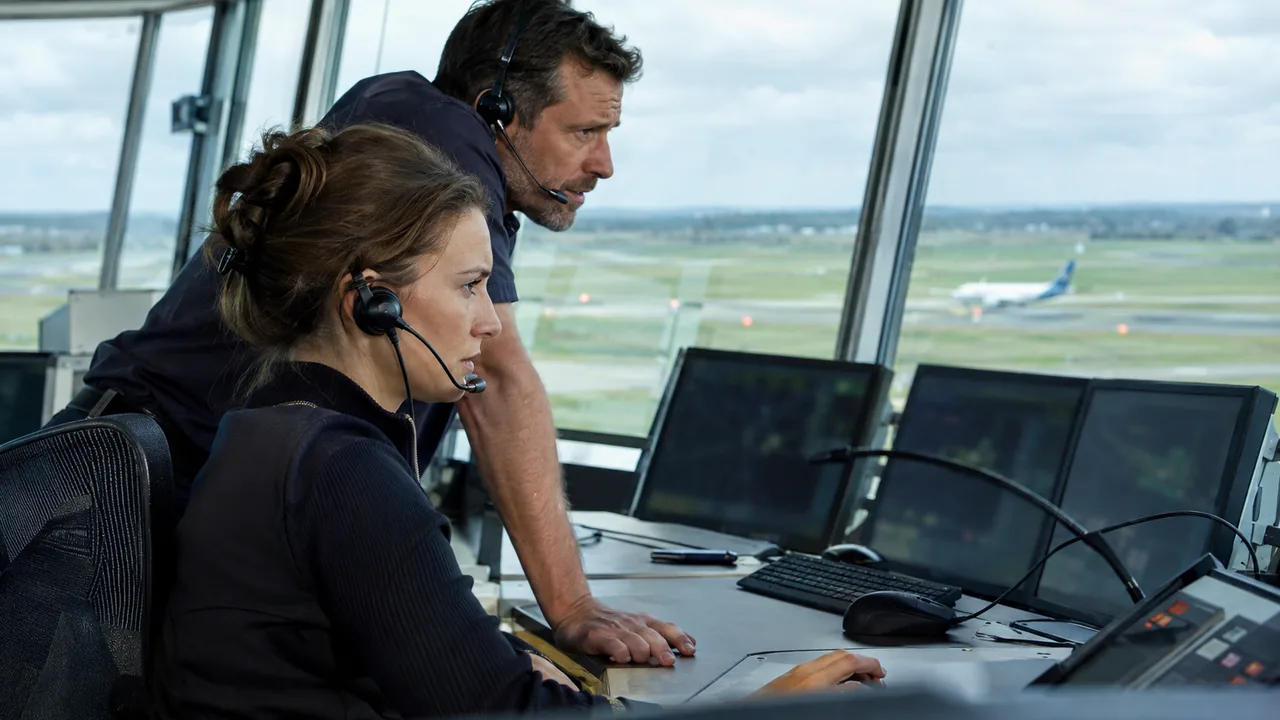
Space weather can affect communications, navigation and some routes, particularly in circumstances involving high latitudes. Airlines and aviation authorities use specialist information and procedures. A passenger should follow the airline's actual notices about their flight.
Do not cancel a journey solely because an unrelated social-media account posts a dramatic space-weather scale. Check the booking, operator and airport through reliable channels. If changes occur, understand the alternatives and any implications for assistance needs or onward travel. A family travelling with children may benefit from a flexible connection plan, but it does not need to become an amateur aviation forecasting team.
Timing is an invisible dependency
Satellite systems can support timing as well as location. Some communication, financial and infrastructure systems depend on accurate time, with engineering arrangements designed around their needs. A position problem and a timing problem are related possibilities, rather than identical outcomes.
For a household, avoid assuming that a technical dependency proves a complete service failure is unavoidable. The practical question is whether the provider has identified an actual disruption and what customers should do. For an organisation, the question is more detailed: which functions depend on the service, how is degradation detected and what has been tested as a fallback? The answers belong in a continuity plan.

Electricity risk needs a local explanation
Geomagnetic disturbances can induce currents in long conducting systems and place pressure on some electricity infrastructure. The effects depend on the network and the event. A severe space-weather scenario is therefore a legitimate planning concern, rather than a guarantee that every grid will fail together.
Use the electricity operator's information for a real interruption. A space-weather headline does not tell you whether a particular local fault has that cause. Keep ordinary power-cut arrangements appropriate to your household, especially if essential equipment depends on electricity. Discuss medical-device continuity with the relevant clinical and support services in advance instead of improvising a power arrangement during a failure.

Read the scale before interpreting the number
NOAA uses separate scales for geomagnetic storms, solar radiation storms and radio blackouts. Its numbered levels describe different event types and possible impacts. They are not the same as the website's hypothetical DEFCON descriptions.
Ask whether a display shows a forecast, a current observation or an earlier maximum. Check the issue time, validity period and geographical relevance. A cropped screenshot can remove all three. Do not treat the strongest colour on a global graphic as a personalised instruction. The useful interpretation connects the event to a named system, a possible effect and any action recommended by the responsible organisation.
A watch is not a record of damage
A forecast describes what may happen under the expected conditions. An observation describes what has been detected. A report from a service provider describes an operational consequence. These pieces of information should support one another without being merged into a single claim.
An expected disturbance may arrive differently from the forecast, or a network may manage an event without visible customer disruption. That is not proof the risk was invented. It may reflect uncertainty or successful protection. Evaluate the original claim on its own terms: what was forecast, what occurred and what the organisation did in response.
What to do when a service becomes unreliable
First, protect immediate safety. Stop relying on suspect navigation for a dangerous decision and follow relevant operator instructions. Next, establish whether the problem is local, specific to one service or part of a wider reported event.
Use a suitable fallback and check when the next reliable update is expected. Do not repeatedly reset critical equipment without understanding the consequences. If another person depends on the affected service, explain the practical change and the agreed alternative. A clear message such as “the collection route has changed; meet at the agreed entrance” is more useful than sending a frightening solar image with no instruction attached.
A household plan should survive one missing service
Choose an ordinary dependency: route finding, contacting family or obtaining updates. Work out what happens if that service is unavailable for the period relevant to your circumstances. The fallback should be accessible to the people who need it.
A written contact list helps only if somebody can find it. An offline file helps only if the device has power and the user knows where the file is stored. A meeting arrangement helps only if the location is safe and agreed. Testing one small action during normal life can reveal a gap without purchasing specialist equipment or assuming a global emergency is approaching.
Businesses need to test the actual dependency
A firm may use satellite location for deliveries, surveying or other work requiring accuracy. The acceptable fallback will differ between those tasks. Continuing with a rough position may be harmless for one administrative record and unsafe for a precision operation.
Ask how staff recognise degraded information and who can pause or change the task. Keep procedures tied to the service and relevant professional standards. “Use another app” is not a complete plan if the second app shares the same dependency. A useful exercise establishes whether the alternative is independent enough for the specific decision, and whether the people on shift can use it.
Common claims and the missing questions
| Claim | Question to ask |
|---|---|
| “A solar flare means every satellite is failing” | Which system has reported an actual problem? |
| “The map is downloaded, so navigation cannot fail” | Is the map available but the position unreliable? |
| “This number means a blackout here” | Which scale, region, time and operator advice apply? |
| “A phone glitch proves a solar storm” | What other causes and evidence have been checked? |
Good questions protect attention for the developments that matter. They also reduce the chance of blaming a genuine local fault on an unrelated global story and missing the correct route to support.
Do not buy protection before defining the problem
An urgent advertisement may promise to protect every device from a solar catastrophe. Before spending, ask which hazard the product addresses, what evidence supports the claim and whether it helps your actual dependency. A purchase cannot substitute for an electricity supplier's or medical-device team's specific advice.
Ordinary preparedness often offers broader value: accessible information, a suitable charging plan and a household communication arrangement. Choose what is safe, affordable and useful for more than one kind of disruption. Avoid turning uncertainty about space into pressure to buy equipment whose limitations you do not understand.
A worked example: an unfamiliar journey
Imagine a family noticing that the navigation position is inconsistent during a journey. The driver stops safely. Another adult checks the route against road signs and an independent map, then reviews any relevant travel or service notice.
If a confirmed space-weather event is affecting navigation, that information explains one possible mechanism and helps them choose a sensible update source. It does not make every road unsafe. If no wider event is reported, they still deal with the unreliable device. Their useful response comes from the actual failure and the available alternative, rather than a need to identify a dramatic cause before acting safely.
The next useful check
Choose one journey or essential service and ask what you would do if its satellite-dependent function became unreliable. Make the alternative understandable to another household member. Use official Met Office and NOAA information for space-weather context, and the responsible operator for an actual service decision.
This article explains an enduring risk; it is not a live space-weather warning. The hypothetical DEFCON scenarios below are editorial illustrations. The reason to prepare is that modern services have real dependencies, and protecting children and future generations requires understanding those dependencies before a missing signal becomes a much larger problem.
For a connected risk, read why orbital debris threatens satellites through a different mechanism. Also explore how shared dependencies can make several disruptions overlap to compare the mechanisms and the practical choices involved.
Frequently asked questions
Can a solar storm affect GPS without destroying a satellite?
Yes. Disturbances in the ionosphere can alter signals on their way to a receiver, affecting accuracy or availability. That differs from physical damage to a spacecraft. An operator's report is needed to establish the cause and consequences of a particular problem.
Will an offline map fix an unreliable GPS position?
No. An offline map can remain available without mobile data, but it does not repair faulty positioning information. Understand the route and use an appropriate independent fallback. Stop safely before reviewing navigation while driving.
Does every solar flare cause a power cut?
No. Different solar phenomena have different effects, and infrastructure outcomes depend on the event and network. Follow official forecasts for context and the electricity operator's information for a real local interruption.
Are NOAA's numbers the same as these DEFCON scenarios?
No. NOAA has separate scales for geomagnetic storms, radiation storms and radio blackouts. The site's DEFCON descriptions are hypothetical editorial scenarios and are not official space-weather levels or current public warnings.
What is the most useful household preparation?
Identify a service you depend on and establish a safe, usable fallback. Keep essential contact and route information accessible, and obtain specific advice for medical equipment. Match preparation to a real dependency rather than an unverified prediction of universal failure.
Sources and further reading
Met Office: space-weather impacts NOAA: space weather and GPS systems NOAA: satellite drag NOAA: official space-weather scales