

The morning care visit does not happen. By lunchtime the agency's number is unanswered, the electricity is intermittent and a family member still needs help with washing, position changes, medicines and meals. For a bedbound person, a break in support can become a health emergency long before the rest of the household runs out of food.
Begin by keeping the person safe, comfortable and involved in decisions. Find their existing care plan, identify tasks that cannot wait and seek a replacement source of qualified help through every safe route still available. Do not assume that determination can replace training for lifting, feeding, oxygen equipment or other clinical care.
This guide helps organise bedbound care during a crisis. It does not turn a relative into a nurse or supply a new treatment plan. The most useful first step is understanding what the person already needs and which failure would place them in danger soonest.
Check the person's condition before reorganising the house
Speak to the person, explain what has happened and ask about pain, breathing, thirst, temperature and anything that feels different. If they communicate non-verbally, use their established method and compare behaviour with what is normal for them. A quieter response may indicate tiredness, distress or illness; it is not automatically reassurance.
Severe breathing difficulty, collapse, new marked confusion, uncontrolled bleeding or another immediate threat requires urgent help. Try 999 or 112 where calls can connect. If the usual service is inaccessible, seek the safest available clinical contact or staffed facility without leaving the person unsupported. Record what you tried and what advice you received.
Then check the immediate environment. Is the bed secure, is the room becoming dangerously hot or cold, and is essential equipment still functioning? Move clutter away from access and exits. A telephone failure must not distract everyone from an immediate breathing or equipment problem beside the bed.

Find the care plan and reduce it to today's essentials
Collect the existing care notes, medicine list, contact details, equipment instructions and any emergency information already prepared. Ask the person where they keep them. Do not search through private belongings indiscriminately or treat the loss of a service as a reason to exclude them from decisions.
Make a short list of essential tasks: prescribed medicines, food and fluids according to the person's plan, toileting, skin care, position changes and equipment checks. Note which need training or more than one person. Divide the next period into manageable care and rest intervals rather than trying to recreate every normal visit immediately.
The government's advice for disabled people and carers emphasises individual arrangements and trusted support. Use those existing arrangements now. A carer's emergency card, agreed key holder or known neighbour may help reconnect support, but none guarantees that specialist care will arrive before the next essential task.
Seek replacement support with a precise request
Contact the agency, the relevant health or social-care team, the person's usual clinician and any established emergency contact. Try different available channels without exhausting the phone battery in endless repeat calls. Local service arrangements differ across the UK, so use the actual contacts in the care plan rather than assuming one national route covers every need.
Describe the problem clearly: a person cannot leave bed, which tasks are overdue, the equipment involved, whether there is power, and whether the person is deteriorating. Give the address and access instructions early. An unanswered request for general help is harder to prioritise than specific information about an immediate care risk.
If community support remains, ask for defined non-clinical assistance such as bringing safe water, contacting a known nurse or helping another adult stay with the person. Do not invite an unknown volunteer to administer medicines or operate unfamiliar equipment simply because they offer confidently. Check identity and role where possible.
Protect skin without inventing a turning schedule
Pressure, moisture and friction can damage skin when someone cannot move easily. Follow the person's existing position-change plan and use the pressure-relieving equipment prescribed or supplied for them. Do not replace an individual plan with an arbitrary timetable from a general article.
The NHS guidance on pressure ulcers advises regular position changes, suitable mattresses and checks for early problems. Look at areas identified in the care plan while respecting privacy and consent. On darker skin, a concerning change may not appear bright red. Persistent discolouration, unusual warmth, swelling, pain or broken skin needs assessment.
Keep bedding dry, smooth and free from objects that press into the skin. Avoid dragging the person across sheets or rubbing discoloured areas. If a powered mattress stops, consult its instructions and seek advice about the approved backup arrangement. Piling random cushions beneath the person may concentrate pressure or create an unsafe posture rather than solve the problem.
Do not turn an equipment failure into a lifting injury
A powered bed, hoist or stairlift may stop during an outage. Do not improvise a manual transfer because several adults are present. Familiar-looking equipment can still require specific training, a compatible sling and a planned technique. A carer with an injured back may be unable to continue providing even basic support.
The NHS moving and handling guidance explains the importance of assessment, training and suitable aids. Follow the person's established method where it remains safe and within your training. Use the manufacturer's emergency procedure only if you have been shown how and can carry it out correctly.
If the transfer cannot be done safely, maintain comfort where the person is and seek appropriate help. Keep limbs supported according to the care plan and avoid unnecessary handling. An immediate fire or comparable danger may force an emergency escape decision, but that is different from treating an unsafe routine lift as acceptable.
Keep medicines accurate when the normal visit is missing
Check the current medicine list against labelled containers and the written administration record. Establish what has already been given before anyone offers the next dose. One responsible person should coordinate recording so that helpful relatives do not accidentally duplicate treatment.
Do not change a dose, crush tablets, open capsules or substitute another person's medicine without appropriate clinical or pharmacy advice. If the person cannot swallow safely or a dose is missed, seek instructions relevant to that medicine. Guessing can create more harm than acknowledging that you need help.
For medicines needing refrigeration, follow their specific storage instructions, minimise unnecessary fridge opening and obtain advice from the pharmacist, manufacturer or clinical team after a temperature problem. Different medicines have different limits. Do not assume every item becomes useless immediately or remains safe indefinitely. Keep refrigerated medicines away from direct contact with ice unless the product's instructions specifically permit that arrangement.

Make food and drink possible without forcing them
Use the person's usual diet, texture requirements, eating position and assistance method. Keep meals manageable and give them time. Reduced mobility does not remove the need for food, fluids and dignity, but a general household ration plan may be unsuitable for someone with a clinical fluid restriction or swallowing difficulty.
The NHS information about swallowing problems identifies coughing or choking with food or drink as warning signs. New difficulty needs medical advice. Do not force food or water into someone who is drowsy, choking or unable to swallow safely. A feeding tube or other specialist system must be managed only as the care team has instructed.
Keep a simple record of what was offered and taken, and note problems rather than trying to diagnose them. Offer help with oral care according to the existing plan. If water supplies fail, prioritise safe water for drinking, feeding-related tasks and hygiene, and seek additional support before the available supply becomes critical.
Provide washing and toileting with less water
Prepare supplies before beginning: clean warm water where appropriate, separate cloths, soap or the person's usual care products, dry towels and a way to contain waste. Wash your hands and preserve the person's privacy. Keep the room comfortably warm and avoid leaving the person uncovered while you look for a missing item.
Follow the established continence and catheter care instructions. Do not insert, replace or alter a catheter or other clinical device without training and authorisation. Note leakage, new pain, concerning urine changes or other problems and seek clinical advice. Reduced support does not make an invasive task a safe experiment.
Separate clean and used items. Keep soiled laundry contained and away from food or drinking-water storage. Gloves can reduce contact with body fluids, but they do not replace handwashing. The wider guide to hygiene without running water explains how to organise limited supplies without contaminating the household's clean-water reserve.
Treat electricity as part of the care plan
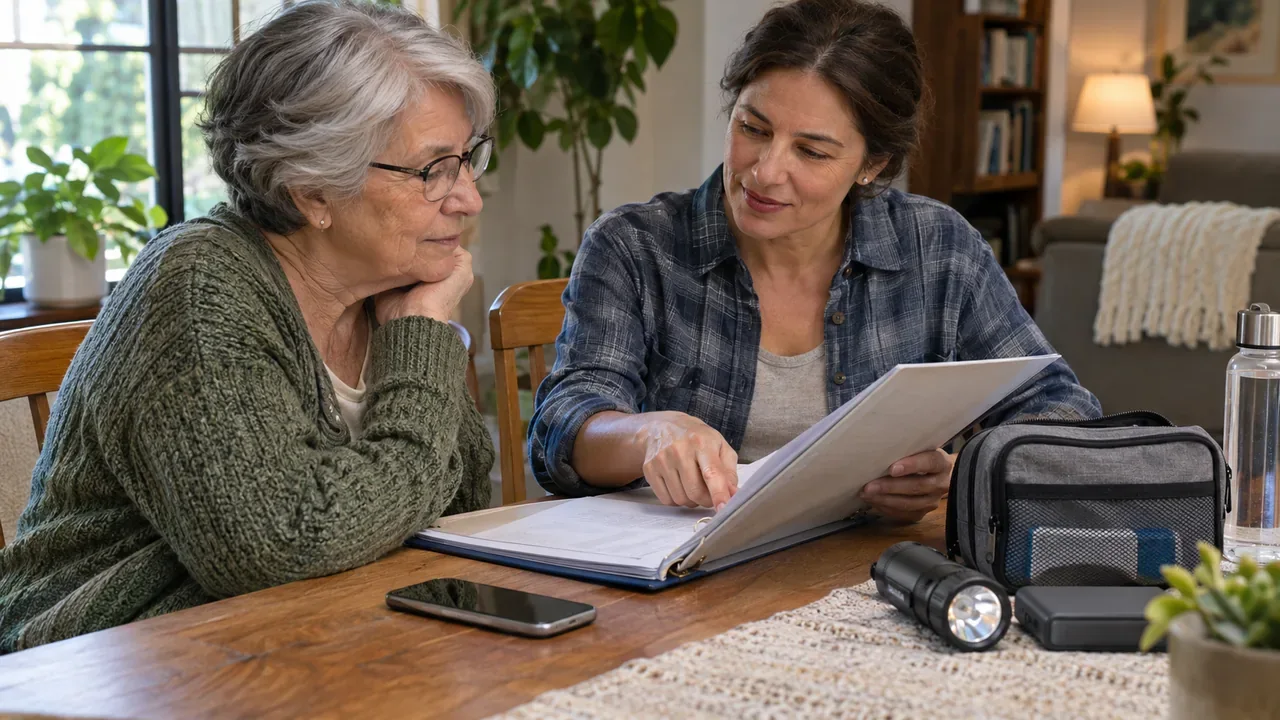
List every device the person depends on and distinguish essential clinical equipment from convenience items. Check battery indicators and manufacturer instructions. A device that appears switched on may still have limited remaining runtime, and a charged phone does not compensate for a failed medical appliance.
The official power-cut guidance advises people using medical equipment to plan with their care team and supplier. During a failure, use the existing backup arrangement and seek help early. Do not change oxygen flow, bypass alarms or connect equipment to an unsuitable improvised supply.
Keep oxygen equipment away from smoking, flames and inappropriate heat sources. Never operate a generator indoors to power a bed or medical device. If no safe electrical solution remains, the priority may become moving the person to a place that can provide care. This needs planning before the backup is exhausted, not after the equipment stops.

Watch temperature and air quality around the bed
A person who cannot get up cannot easily escape a hot room, add a layer or move away from smoke. Check comfort regularly and ask about changes. Use appropriate layers, bedding and shade while keeping the person's face clear. Avoid placing hot-water bottles or heaters where fragile skin could be burned.
During hot conditions, use the person's usual hydration plan and suitable cooling measures, while seeking help for signs of serious illness. During cold weather, keep bedding dry and reduce draughts without blocking required ventilation. Never bring a barbecue or outdoor stove into the room to provide warmth.
When smoke affects the area, use a cleaner suitable room if safe movement is possible, or reduce exposure where the person is. Do not attempt a hazardous transfer simply to achieve an ideal room arrangement. Our guide to wildfire smoke protection helps weigh air cleaning against heat, power loss and the need for a safer destination.
Organise carers so that care can continue
One adult cannot provide attentive care indefinitely without rest, food and support. Assign manageable shifts where trusted help is available. Include time for washing hands, eating, checking supplies and sleeping. A schedule that relies on a person staying awake for days will fail when their concentration does.
At each handover, record medicines, food and fluids, position changes, symptoms, equipment status and the next action. Keep factual notes. Writing that a person seemed less alert after lunch is more useful than labelling them difficult or assuming a diagnosis. The person receiving care should know who is helping next whenever possible.
Use helpers for tasks they can safely perform. Someone may collect water or cook while an experienced family carer remains with the person. Cooperation reduces the load without pretending that all tasks are interchangeable. Agree how to call for assistance inside the home if mobile phones or mains-powered call bells no longer work.
Work through one realistic handover
Imagine two relatives sharing an afternoon. The first records that the person has eaten part of their usual lunch, taken the prescribed lunchtime medicine and had the planned position change. They note that the powered mattress is on backup and give the indicator reading, rather than guessing how many hours remain.
The second relative repeats the priorities back: check comfort, follow the care plan, obtain an equipment update and seek qualified support. A neighbour brings sealed drinking water and takes a message to a known community contact. Nobody alters the medicine schedule or attempts an unfamiliar lift to make the handover appear complete.
This simple arrangement preserves continuity and exposes the unresolved problem: backup power is limited. It also gives a clinician clear information if contact returns. The record does not replace assessment, but it prevents important tasks and warning signs from disappearing between tired carers.
Know when home care is no longer sustainable
A sound home may still be unable to provide essential clinical support. Escalate early when necessary equipment cannot run safely, adequate fluids or medicines cannot be obtained, severe symptoms develop or required handling cannot be done. Do not wait for several failures to combine before describing the situation as urgent.
Identify a suitable alternative and safe transport with whatever qualified services remain available. Explain access needs, equipment, medicines and any communication requirements. A relative's car is not automatically a safe transport solution for a person who cannot sit or transfer safely.
If movement is impossible, keep seeking assistance, preserve essential care within your competence and maintain contact with trusted local support. The guide to staying or evacuating helps structure that wider decision. The immediate goal is continuity of safe care, not proving that a household can manage alone regardless of the person's condition.
Frequently asked questions
Should I turn the person every two hours?
Use their individual care plan and the advice supplied by their clinical team. Needs depend on the person's condition, skin, movement and equipment. A fixed interval in a general article cannot replace that assessment. Seek advice when the plan cannot be followed or the mattress, position or skin condition changes.
Can several relatives lift someone if the hoist stops?
More people do not automatically make a lift safe. Follow the assessed handling plan and the equipment's approved emergency arrangements within your training. If a routine transfer cannot be done safely, maintain comfort and seek trained help. Improvised lifting can injure the person and leave the household without a capable carer.
What should I do about a missed medicine dose?
Check the medicine's supplied instructions and seek advice from a pharmacist or clinical professional. Record the missed dose and do not double the next one unless specifically instructed for that medicine. Make sure every helper knows what has already been given so that a communication failure does not cause duplication.
Can wet wipes replace every part of personal care?
They can help with some limited tasks when used appropriately, but they do not meet every hygiene need or replace the person's established care plan. Keep skin clean and dry, protect privacy and separate clean items from waste. Seek advice about wounds, devices or skin problems rather than treating them with improvised products.
What if the person refuses help from a neighbour?
Respect their preferences, privacy and ability to make decisions. Explain what support is available and offer a trusted alternative where possible. A neighbour can often help indirectly by collecting supplies or making contact while a familiar carer provides personal care. Seek appropriate professional help if there is immediate danger or a concern about decision-making capacity.