
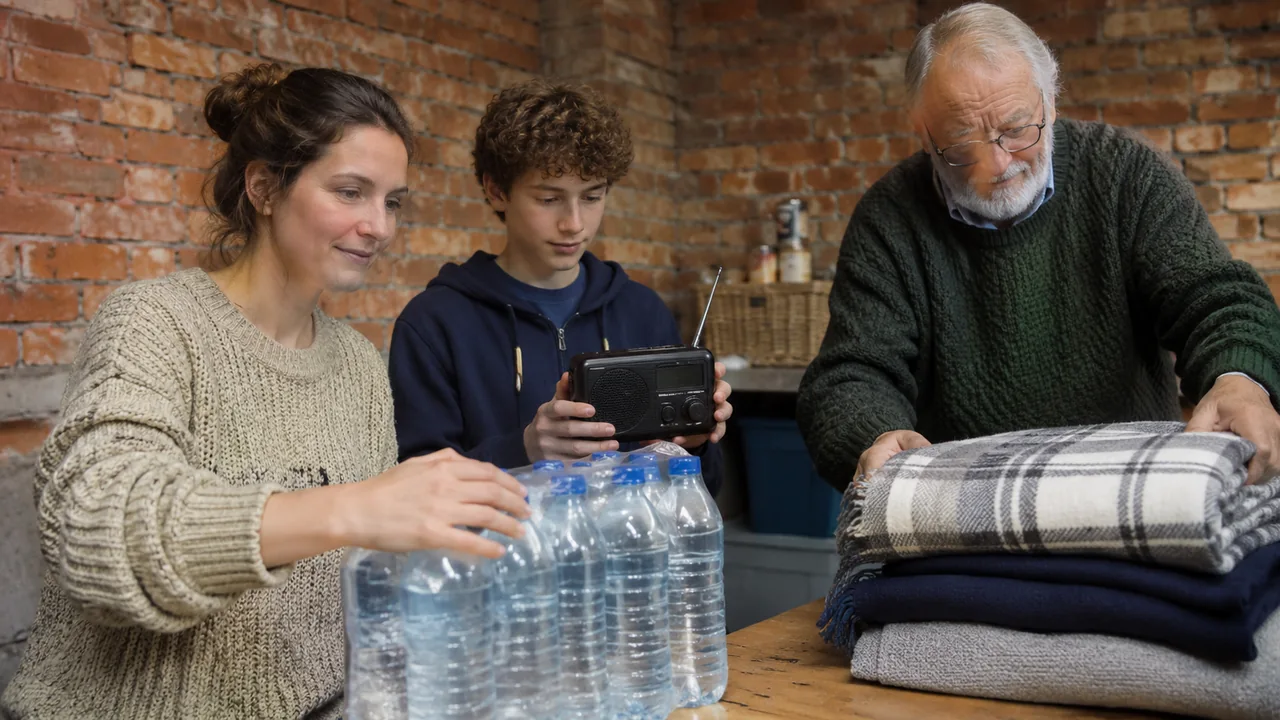
The public shelter cannot be reached, the local information service is unreliable and your family needs protection now. A radiation fallout shelter does not have to begin with a purpose-built bunker. The immediate priority is reaching the nearest sound building, moving away from external surfaces and reducing contact with material that may have settled outside.
Use time, distance and shielding sensibly: minimise unnecessary exposure, put suitable building material between people and the outside, and remain in safer shelter while you seek credible local instructions. Do not travel across an affected area simply because a distant building has been called a public shelter.
This guide addresses a hypothetical release affecting your area during a wider crisis. Fallout from a nuclear explosion and releases from a damaged nuclear facility are not identical, and the right response depends on the actual event. Neither an absent warning nor a clear sky tells you that radiation is present or absent.
Get into the nearest sound building
The UKHSA radiation-emergency guidance advises going indoors promptly, staying inside and seeking official information. Brick, concrete and similar substantial structures generally offer better protection than being outside. Do not spend valuable time trying to reach an ideal location while remaining exposed.
If you are already inside a sound building, assess how to improve that shelter rather than automatically leaving for home. A school, workplace or neighbour's building may be the safer immediate place. Keep children and dependent adults together under an identified person's care.
A burning, collapsing or otherwise immediately unsafe building cannot provide suitable shelter. If it must be left, move towards the nearest safer building without unnecessary delay or outdoor activity. The choice is about reducing the total danger to people, not obeying a rule that any indoor location must remain acceptable regardless of its condition.
Choose a protected area within the building
Move away from windows, external doors, the roof and outside walls where practical. A central part of a substantial building may offer more shielding than a room beside a large window. A basement can be useful in some buildings, but only if it is structurally sound, not flooding and accessible to the people who need it.
Consider the route, available space, toilets and the ability to maintain essential care. A person using a wheelchair or medical equipment should not be moved into a place from which they cannot safely leave. Keep doors and access routes clear of supplies.
Do not stack heavy materials on floors or roofs in an attempt to create a bunker. An improvised load can cause a collapse, particularly in a building already damaged by an incident. Use the protection the sound structure provides and seek better informed help rather than experimenting with structural alterations while the household is sheltering.
Reduce the entry of outside material
Close external doors, windows and openings where appropriate for the incident. Turn off systems that draw outside air into the occupied space according to the building's controls and available instructions. Avoid repeated door opening for non-essential trips, and keep people away from unnecessary contact with outdoor dust.
Required safety systems need special consideration. Do not block safety-critical ventilation or continue using a fuel-burning appliance in a room whose air supply has been closed. Indoor barbecues, camping stoves and generators are never an acceptable way to power or warm a sheltered household.
A building is not made perfectly airtight by tape or towels, and a sealed space cannot remain safely occupied indefinitely without reassessment. Monitor heat, air quality and the people inside. If the shelter develops an immediate threat such as fire or carbon monoxide, move to the nearest safer option. Our guide to carbon monoxide safety explains why combustion hazards remain dangerous during another emergency.
Keep clean and potentially contaminated areas separate
Choose a place near an entrance for people returning from outside to remove outer clothing and footwear before entering the main occupied area. Keep the arrangement simple and avoid spreading dust through the building. Protect privacy and help anyone who cannot manage alone without shaking clothing or brushing material into the room.
The UKHSA self-decontamination guidance explains that removing outer clothing can remove a large proportion of material on the body. Place clothing and used cleaning items in a bag or suitable container, close it and keep it away from people and pets.
This reduces contamination; it does not prove that the person has no radiation injury or that the building is safe. Do not use a vacuum or vigorous dry sweeping to scatter dust. Identify the cleaner route to the shelter area and keep drinking-water and food preparation away from the entry and bagged items.
Wash gently with the resources available
Use soap and suitable water to wash exposed skin and hair where possible, following current incident advice. Be gentle. Do not scrub hard, damage skin or use household chemicals on the body. Avoid hair conditioner during decontamination because it can make material harder to remove from hair.
If a shower is unavailable, use a sink or clean damp cloths as appropriate. Wipe exposed areas carefully and keep used materials separate. Protect eyes, mouth and wounds from contamination without attempting a clinical procedure beyond your competence. Put on clean clothing that has been stored indoors.
Water used for external washing is a different question from water considered safe to drink. Follow specific local instructions where available. A mains-water notice may distinguish uses, and a general radiation article cannot certify the supply at your address. Maintain clean drinking-water handling while you organise washing, especially where ordinary sewerage or running water is also failing.
Protect food and drinking water from outside dust
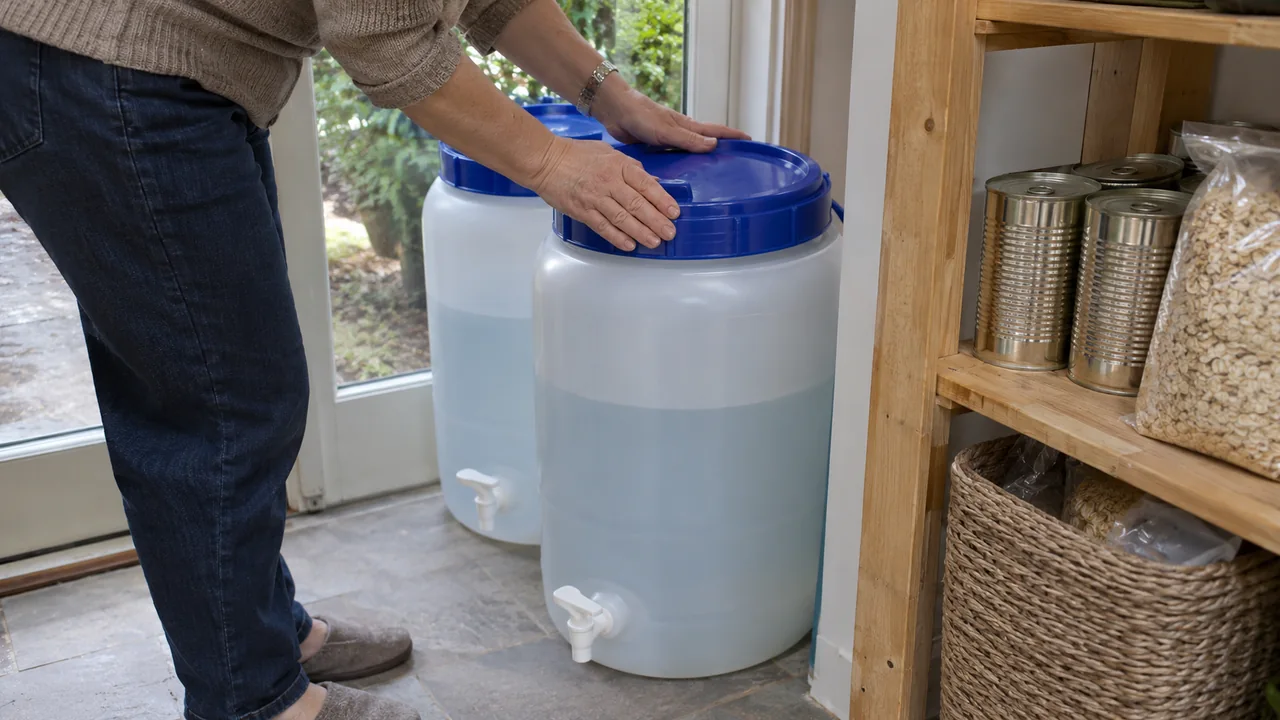
Start with sealed supplies stored indoors. Keep containers covered and handle the outside carefully if they may have been exposed. Avoid transferring material from dusty packaging to food, hands or serving surfaces. Clean the preparation area and use utensils that have remained protected.
Do not collect food, garden produce, rainwater or surface water from an affected outdoor area until its safety has been properly assessed. A crop that looks normal can still be unsuitable, and washing cannot be assumed to resolve every kind of contamination. Keep animals and children away from uncertain outside supplies.
The CDC's emergency water guidance states that boiling or ordinary disinfection cannot make radioactive contamination safe. Do not promise the family that a household filter or a longer boil will solve it. Seek a protected, verified source and follow incident-specific advice. Protect the limited safe water you already have from contamination during storage and serving.
Do not self-prescribe iodine
Stable iodine tablets have a specific role in some radiation emergencies involving radioactive iodine. They do not protect against every radioactive substance, external radiation or all consequences of a nuclear incident. Taking them without the relevant official or clinical instruction can create harm and distract from effective sheltering.
Do not use table salt, iodine antiseptic, supplements or another household product as an improvised substitute. Product, dose and timing matter, and different people may need different advice. Use only the supplied medicine and instructions if the appropriate authorities direct its use for your circumstances.
Keep regular prescribed medicines accessible and do not abandon an existing treatment plan because a radiation event is feared. If clinical help is available by phone or another safe route, explain the situation and the person's needs. The disappearance of routine communication does not make an unverified online dosing suggestion a suitable replacement.

Make the shelter usable for dependants
Bring essential medicines, water, suitable food, mobility aids, a torch, communication aids and necessary care information into the protected area. Provide a workable toileting arrangement that does not contaminate supplies. Keep infants on their usual safe feeding and sleeping arrangements as far as circumstances allow.
People with breathing problems, limited mobility, cognitive needs or dependence on powered equipment may require earlier reassessment. Check their condition and backup equipment rather than assuming everyone can wait in the same space for the same period. Do not move a bedbound person using an unfamiliar lift or handling method simply to reach a theoretically better room.
Keep explanations calm and concrete. Tell children where they will stay, who is looking after them and what they can do now. Quiet activities and a predictable care routine can reduce unnecessary movement and fear. A shelter plan succeeds only if the household can continue using it safely, not merely because it appears well positioned on a floor plan.
Seek information without making exposure the price
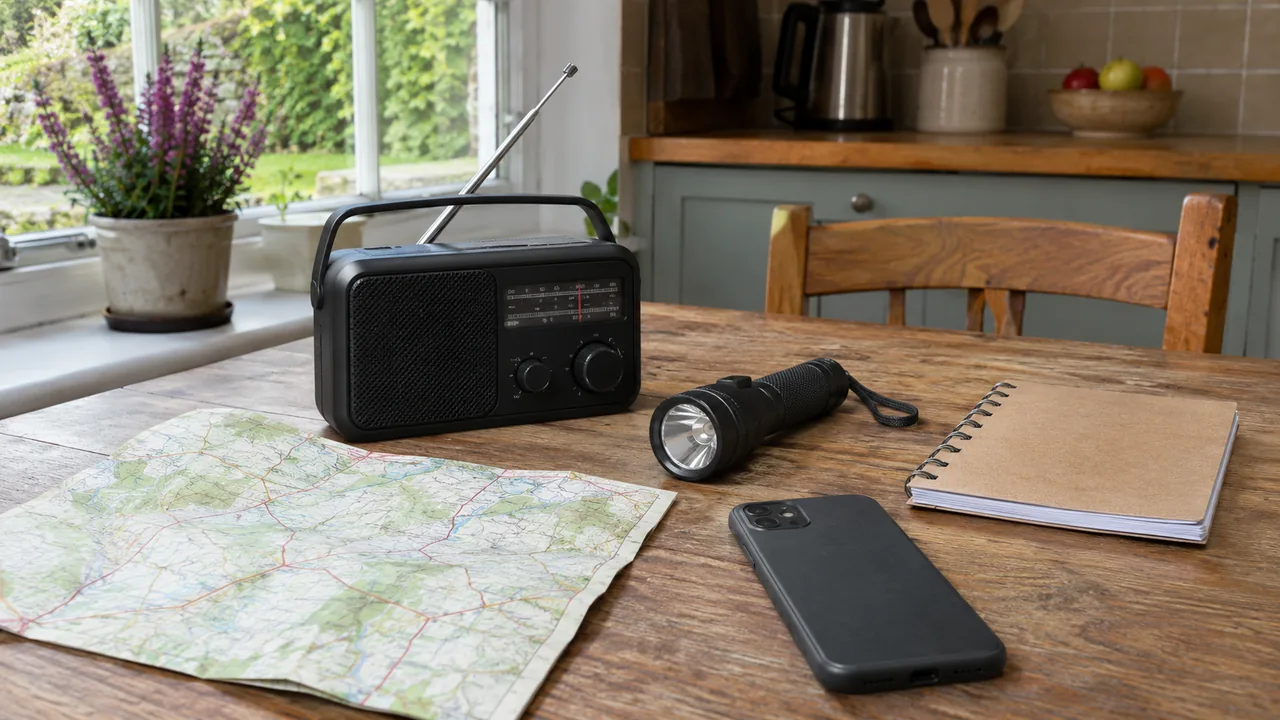
Use a battery radio and any working official channels. Record the location and time of useful instructions. Advice for a different incident or another district may not apply, and a repeated message without a date may be stale. Ask trusted contacts for specific information rather than spreading an unsupported claim.
Do not go outside to look for a plume, inspect a suspected source or test whether you can detect radiation by smell. Ordinary air-quality monitors and phone apps do not establish radiation safety. If you own a suitable instrument, understand its specification, units and limitations; one reading is not a complete assessment of every route or exposure.
Preserve battery power through purposeful checks and concise messages. The guide to living without power or communications explains how to combine radio, paper notes and local contacts. A missing broadcast is a serious information problem, but it does not automatically tell you that travelling through an affected area is safer.
Keep family locations stable where protection already exists
If a child or relative is at school, hospital or another supervised site that has been told to shelter, do not automatically travel to collect them. Moving between buildings can increase exposure for everyone. Seek accurate information about their protection and the site's instructions first.
Identify one household contact and keep messages short: where people are, whether anyone needs urgent help and when the next update is expected. Avoid sending several adults along different routes to search for someone whose location is already known but whose phone is unavailable.
If separation has happened, use the safest available communication and assistance route. Do not enter damaged or contaminated areas without appropriate direction and protection. Protecting a family sometimes means keeping its members in the sound shelters they have already reached until a safer coordinated move can be made.
Reassess time without inventing a universal all-clear
The useful duration of sheltering depends on the release, local deposition, building and official response. A fixed number of hours cannot guarantee safety in every event. Do not use a general decay rule, a social-media countdown or the end of visible smoke as permission to resume normal outdoor activity.
Keep track of essential needs so the shelter remains viable. Water, temperature, sanitation, medicines and care equipment may require action before an uncertain hazard has cleared. Seek incident-specific advice and assistance while those needs are still manageable.
If the building becomes immediately unsafe, leaving for a nearer safer building may be necessary. That decision should consider the route and what protection exists at the other end. The guide to staying or evacuating helps compare these factors without pretending that every radiation emergency follows the same timetable or that all evacuation journeys reduce exposure.
Prepare carefully if a move becomes necessary
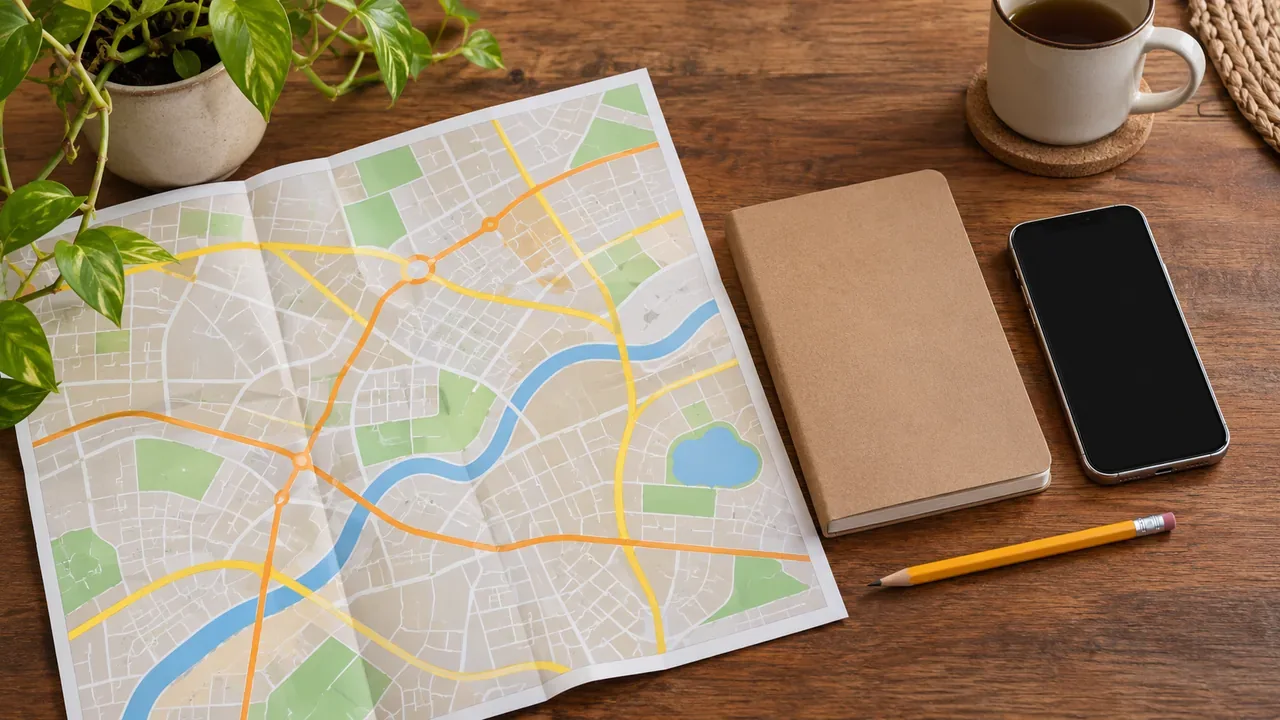
Use confirmed instructions where available, and select the shortest safe route to a suitable destination. Wear ordinary protective clothing that reduces contact with dust where appropriate, keep essential supplies protected and avoid unnecessary contact with outdoor surfaces. Do not delay a necessary escape while assembling an imagined specialist suit.
Keep doors and windows shut during a vehicle journey and follow the vehicle's ventilation instructions for the situation. A vehicle offers limited shielding compared with a substantial building and should not be treated as a long-term fallout shelter. Avoid routes through known damage, fire, floodwater or other immediate hazards.
At the destination, repeat the clean-entry arrangement and explain any care needs promptly. Keep a record of where people travelled and any official advice received. This may help later assessment, but do not turn a household log into a self-calculated radiation dose or assume that feeling well proves no exposure occurred.
Use the next few minutes well
Get into sound shelter, choose the more protected usable area and organise clean supplies. Stop unnecessary outside trips and unsafe indoor combustion. Give one adult responsibility for information and another for checking the people who may need help, where enough adults are available.
Then identify the shelter's weak point: an equipment battery, a limited water reserve, dangerous heat or an inaccessible exit. Seek help before that weakness becomes the next emergency. Public shelters being unavailable makes ordinary buildings and careful household organisation more important. It does not make improvised radiation remedies, structural alterations or uncertain journeys dependable ways to protect the people you love.
Frequently asked questions
Is a basement always the best shelter?
No. It may offer useful shielding in a sound building, but flooding, structural damage, poor access or essential care needs can make it unsuitable. A central protected area of another substantial building may be safer. Consider the complete situation and preserve a usable way to leave if a more immediate hazard develops.
Can a car protect us while we wait for news?
A vehicle generally provides less shielding than a substantial building and can become unsafe through heat, cold or exhaust hazards. Seek suitable indoor shelter rather than treating the car as a long-term solution. For a necessary journey, consider the route, destination and current instructions, while avoiding unnecessary time outside.
Will boiling or filtering rainwater remove radioactive material?
Do not rely on those methods to make radioactive contamination safe. Boiling and ordinary disinfection address some microbial hazards, not this problem, and filters have specific limitations. Use protected or verified supplies and follow incident-specific advice. Clear appearance or a lack of smell does not establish that rainwater is safe.
Should I take iodine tablets just in case?
Use stable iodine only when the relevant official or clinical instructions apply to you. It has a specific role and does not protect against all radiation hazards. Do not substitute salt, supplements or antiseptic products. Continue effective sheltering and obtain appropriate advice instead of relying on an unverified medicine suggestion.
What if sheltering conflicts with a fire or carbon monoxide alarm?
An immediately unsafe building cannot provide suitable protection. Leave the immediate hazard and reach the nearest safer shelter without unnecessary delay or outdoor exposure. Do not stay in a burning or poisoned room because you have been trying to reduce radiation exposure. Seek emergency help and current local instructions where available.