
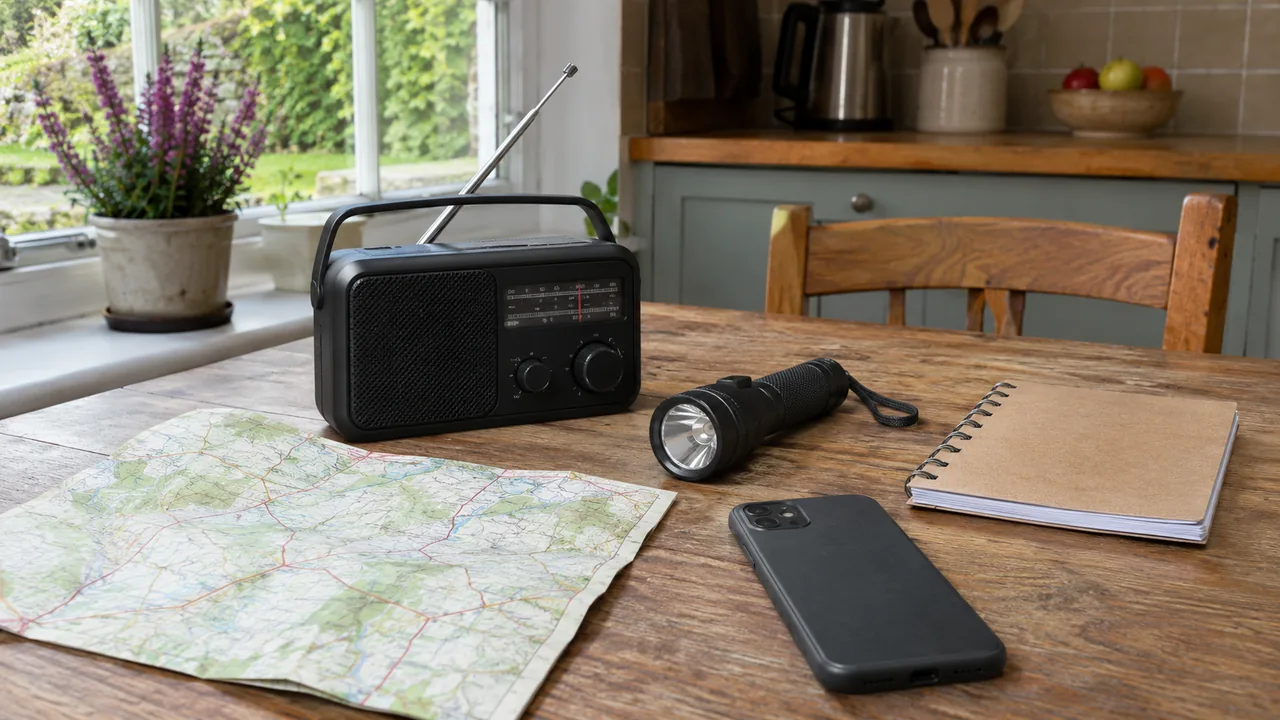
The lights have gone out, the router is silent and the phone cannot connect. Living without power or communications becomes much harder when the household keeps waiting for the same failed device to solve every problem. Start by separating the jobs: essential care, safe lighting, information, contact with other people and the practical tasks that still need doing.
Use the safe backup arrangements you already have, preserve batteries for priority needs and move important information onto paper. A battery radio, a written care record and an agreed local contact can each perform a different function. None should be treated as a guaranteed replacement for an entire network.
An outage does not automatically make the home unsafe, but it can interrupt water, heating, food storage, medical equipment and the ability to ask for help. Check those consequences early. A communications plan is useful only while the people who depend on it remain safe and cared for.
Establish what has actually failed
Check normal user controls and available provider information without opening electrical equipment. Is the problem limited to the house, does the street also lack power, and do different communication routes behave differently? Record what is observed rather than guessing that every system has failed for the same reason.
A router needs power, a mobile service needs functioning network infrastructure and a digital landline may need both local electricity and broadband. A charged phone alone does not establish that calls or internet access are available. An old map on the screen may remain usable while new information cannot load.
The government's power-cut guidance explains how outages can affect several services together. Use that understanding to check essential needs in parallel. Do not spend the first hour restarting a router while a dependent person's medical backup or the household's safe-water supply is nearing failure.

Put essential care at the top of the power list
List medical equipment, communication aids, refrigeration needs and any device that keeps a person safe. Use the backup arrangement approved by the care team or equipment supplier, and check its actual status. Do not assume a general battery station is suitable because the plug fits.
Seek assistance before a critical device stops. Explain what it does, the person affected, the location and the remaining backup information available from the equipment. Avoid guessing a runtime that the manufacturer has not confirmed under those conditions.
Keep paper medicine lists, care instructions and contact details beside the person who needs them. If several adults help, use a written handover so tasks are not missed or duplicated. Our guide to bedbound care during a crisis shows how power, temperature and personal care can become one combined problem when normal support stops.
Give every remaining battery a purpose
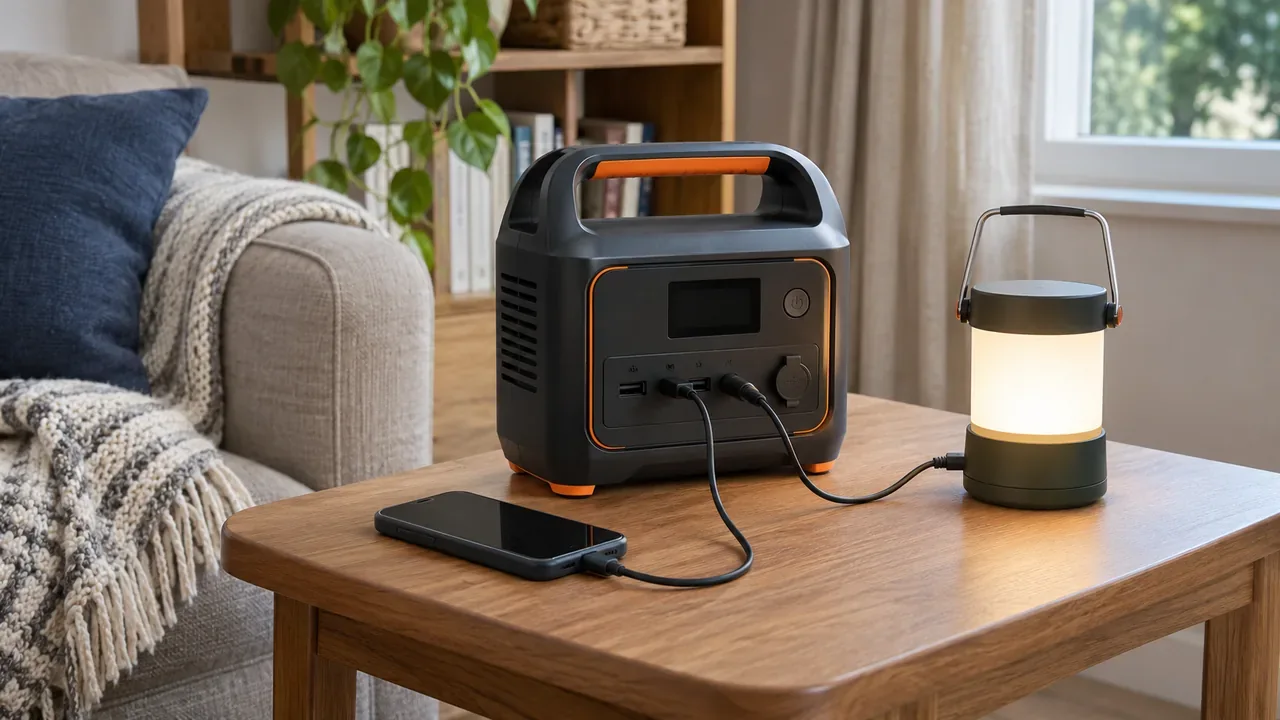
Count usable phones, torches, radios, power banks and appropriate spare batteries. Identify which device serves which task and who is responsible for it. A cupboard full of different battery sizes is not useful if nobody knows which ones fit the radio or whether they are charged.
Use power-saving settings where appropriate, reduce unnecessary screen use and check for messages at agreed times. Keep at least one suitable contact device available for urgent needs where a connection may return. Switching every phone off without a shared plan can make the household unreachable when help becomes available.
For a rough energy calculation, a 10-watt load used for four hours requires 40 watt-hours before losses. This does not predict the runtime of a particular power bank or guarantee compatibility. Read output ratings, usable capacity and charging instructions, and preserve a reserve for essential functions rather than spending it on continuous entertainment or repeated failed searches.
Receive information through a working radio
A battery, wind-up or suitable solar radio can provide broadcasts where transmission remains available. Check the controls, antenna and power source, and try appropriate modes the device supports. Do not assume one silent station means there are no broadcasts or that a radio will receive every local instruction.
Ofcom's severe-weather guidance includes radios as a way to obtain updates when ordinary connections fail. Keep a paper note of stations normally useful in your area and record the time and location covered by important messages.
A radio receives information; it does not confirm that your household has been heard. Keep that distinction clear. Someone must still communicate a specific care need through a functioning channel or trusted local contact where possible. Avoid leaving the radio so loud or continuously monitored that carers cannot rest or notice the person who needs attention beside them.
Try emergency calls with realistic expectations
In the UK, 999 and 112 are emergency numbers. A mobile emergency call may use another available network if your own provider cannot connect, but it still needs suitable functioning coverage. A message saying there is no service does not mean that repeating a particular number can create a network where none exists.
The official emergency-number guidance explains the service. When a call connects, give the location and immediate problem clearly and follow the handler's instructions. Preserve the battery and avoid repeated non-essential calls that do not add information.
If the call fails, keep the person safe within your abilities and seek another appropriate route. A trusted neighbour may have a different working connection or know a staffed local point. Do not send an unaccompanied child or an exhausted carer into an unsafe area simply because the phone cannot provide reassurance.
Understand the limits of landlines and satellite features
Digital landlines generally need local power and may not work without suitable backup. Check any battery unit already supplied and its instructions. Do not assume an ordinary cordless handset or a plugged-in base station will operate during a power cut.
Some devices offer satellite-based features, but availability depends on the device, service, location, activation and operating conditions. Read the actual instructions and do not assume every smartphone can send an emergency satellite message. A feature demonstrated in another country or on another model may not exist on the phone in your hand.
Use clear safe surroundings as required by the service without exposing yourself to another hazard. A technical feature is not a reason to stand outside during dangerous smoke, lightning or a hazardous release. Preserve a fallback based on local contacts and written information rather than building the entire household plan around an untested capability.
Use local two-way radios for an agreed local task
Suitable two-way radios can help nearby people coordinate, but their actual range depends on terrain, buildings, equipment and conditions. An advertised distance is not a promise between your house and a particular collection point. Test only through safe ordinary use and keep messages short.
Ofcom's licence-exempt device guidance describes equipment such as PMR446. Use only permitted equipment and channels for your location and follow applicable rules. An outage does not give a household authority to transmit on any emergency or professional frequency.
Agree who listens, the contact times and what the radio is used for. Open radio conversations can be heard by others, so avoid unnecessary private medical information or detailed descriptions of stores and absences. A radio should reduce unsafe journeys and confusion, while leaving the people using it free to provide care and other essential work.

Put essential information on paper
Write down addresses, important contacts, care information, supply levels and the next agreed check-in. Keep a copy accessible to the person who may need help and protect private information from unnecessary public display. A phone's contact list is of little use when its battery is exhausted or the screen is damaged.
Use clear labels for confirmed facts and unverified reports. Add a time and place to information about a road, clinic or distribution point. Something that was true yesterday may be wrong today, and a message about another district may not apply to your route.
Keep the record brief enough to update. A single page with current priorities is more usable than a pile of contradictory notes. At handover, the next adult should be able to identify the immediate care need, safe-water position and next decision without asking someone who is asleep or away collecting supplies.
Establish safe local contact arrangements
Choose trusted neighbours or nearby relatives who can exchange essential information without unnecessary travel. Agree a sensible check-in pattern and a safe place to leave a simple message if direct contact fails. Include what should happen when someone does not respond, especially if they need regular care.
The government's community-support advice encourages checking on people who may need help. Keep the task within safe limits. A welfare check does not authorise entering a damaged building, performing a clinical procedure or approaching a violent situation.
Protect household security and consent. Do not publish lists of vulnerable residents' needs or reveal when homes will be empty. Share the information necessary to provide agreed assistance and confirm that messages or supplies reached the intended person. A reliable small network can prevent isolation without creating another source of rumours or intrusion.

Maintain everyday safety without electricity
Use battery lighting and keep walkways clear. Avoid candles where safer lighting is available, and keep any necessary flame away from combustible material and unattended spaces. Do not place charging devices, temporary bedding or supply stacks across exits.
Keep fridge and freezer doors closed and assess food using appropriate guidance and its temperature history. Check whether the toilet, water supply and heating still function. A communication problem can hide several practical failures that require attention even when nobody has received a public warning.
Never use an outdoor stove, barbecue or generator indoors. A power station has limits, and a generator needs both safe exhaust placement and appropriate electrical connection. The guide to electrical fire prevention explains why improvised backup arrangements can damage the very shelter the household needs to remain safe.
Include people who cannot use the usual channels
A person with hearing, visual, cognitive or communication needs may depend on equipment or familiar support that has now failed. Ask how they prefer to receive information and use the method already established. Keep suitable batteries, aids and written or visual information accessible where available.
Do not assume that a video-based or internet-dependent emergency service remains usable without a connection. Use its actual operating requirements and seek a trusted alternative when they cannot be met. A helper may need to pass on a concise message or remain with the person while another adult obtains assistance.
Explain changes calmly and avoid repeatedly moving a vulnerable person between rooms or locations merely to test devices. The objective is continuity of support. A communications arrangement has failed if it technically receives messages but leaves the person who needs them unable to understand, respond or obtain essential help.
Reassess movement when contact remains impossible
A short safe visit to a known neighbour may resolve uncertainty, but a journey to an unverified service can create a second problem. Check the hazard, route and destination before leaving, and keep dependants supported. Do not treat walking outside as the automatic next step whenever a screen is blank.
If an essential need cannot be sustained at home, seek a confirmed suitable location and assistance early. The guide to staying or evacuating helps compare the home, journey and destination. A building with a working radio but no safe water or necessary care may not be a meaningful improvement.
Keep the next action specific: one information check, one confirmed collection or one request for qualified help. Record the outcome and update the household. Even when national systems remain uncertain, this reduces the chance of several adults unknowingly duplicating a task while another important need is neglected.
Frequently asked questions
Will 112 connect when 999 cannot?
Both are UK emergency numbers, but neither can create coverage where no suitable network is functioning. A mobile emergency call may use another available network. If contact fails, preserve safety, try appropriate alternatives and seek help through a trusted available route without wasting the entire battery on non-essential repeated attempts.
Can a battery radio send a message to rescuers?
An ordinary broadcast receiver receives information; it does not transmit your location or needs. Use it for available updates and keep separate arrangements for requesting help. Suitable two-way equipment has different functions and legal requirements. Do not assume that owning a radio means the household has been heard.
Does GPS work without mobile internet?
A device may still obtain a position, but maps, route updates and other features can depend on downloaded information, functioning signals and the device itself. Check what is actually available and keep a paper map or address information. A position on a screen does not establish that the route ahead is safe.
Should every phone be switched off to save power?
Use a shared plan that preserves essential contact and battery capacity. Some devices can be checked at agreed times, while one appropriate device may need to remain available for urgent care or assistance. Consider accessibility needs and existing equipment instructions. Saving power is useful only if the necessary functions remain usable.
When should we stop trying to fix the internet?
After safe basic checks and available provider information, redirect attention to essential care, shelter, water and alternative communication. Do not open equipment or spend the whole battery on repeated resets. A recorded fault and a workable local information arrangement can be more useful than continuing the same unsuccessful action indefinitely.