
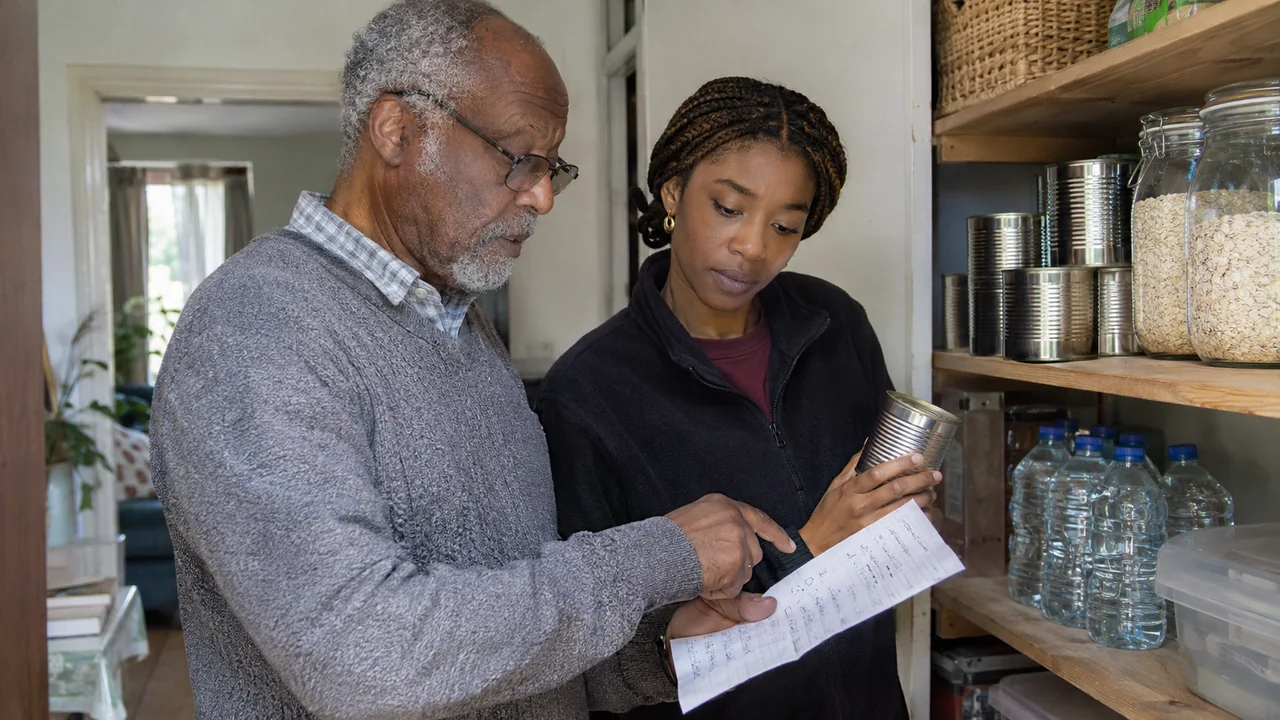
The supermarket shelves are empty and the next delivery has not been confirmed. At home, there is some food, several partly used bottles and a family waiting to hear what happens next. Start with a clear inventory. Food and water shortages become more dangerous when people waste supplies, make speculative journeys or assume that any available water can be made safe.
Identify what can be consumed safely today, what is needed for essential care and where reliable local support might still exist. Keep drinking water protected, use suitable food in manageable portions and seek help before a vulnerable person deteriorates. A shortage does not make unsafe food or contaminated water a sensible bargain.
The immediate objective is a workable next day, followed by a realistic route to resupply or a safer location. Avoid building the plan around a rumoured delivery, an unexplained ration figure or a source whose safety nobody has established.
Count what is actually usable
List sealed drinking water, suitable cupboard food and any chilled products whose safety can still be established. Check labels, container condition, storage requirements and expiry information. Separate items that need cooking from those ready to eat, and keep uncertain products apart from the confirmed usable supply.
Record opened packets and containers. An unopened product may be shelf-stable while its contents become perishable once opened. Several people independently starting new tins or bottles can create unnecessary waste and hygiene problems when refrigeration or washing facilities are unreliable.
Include the resources needed to use the food: a manual can opener, safe water, suitable utensils and a safe cooking method where required. A bag of dry ingredients is not a complete meal system. Add the needs of infants, disabled relatives, people with allergies and anyone following a clinical diet before dividing supplies by the number of people in the house.
Identify whose needs cannot wait
Check babies, young children, older adults and people with health conditions or limited ability to obtain drinks themselves. Ask about thirst, food intake and any changes in condition. Do not assume that a quiet person is coping simply because they are not asking for help.
Use the person's existing care and dietary advice. A generic emergency ration cannot replace clinical fluid restrictions, swallowing requirements or other individual arrangements. Seek advice through any functioning health or care route when the plan cannot be followed.
If someone is seriously unwell, confused, collapsing or unable to drink safely, seek urgent help rather than treating the supply problem as a calculation to finish first. Do not force drinks into a drowsy person or someone who cannot swallow. Preserve the available safe supply for essential use while a suitable source of assistance or relocation is arranged.
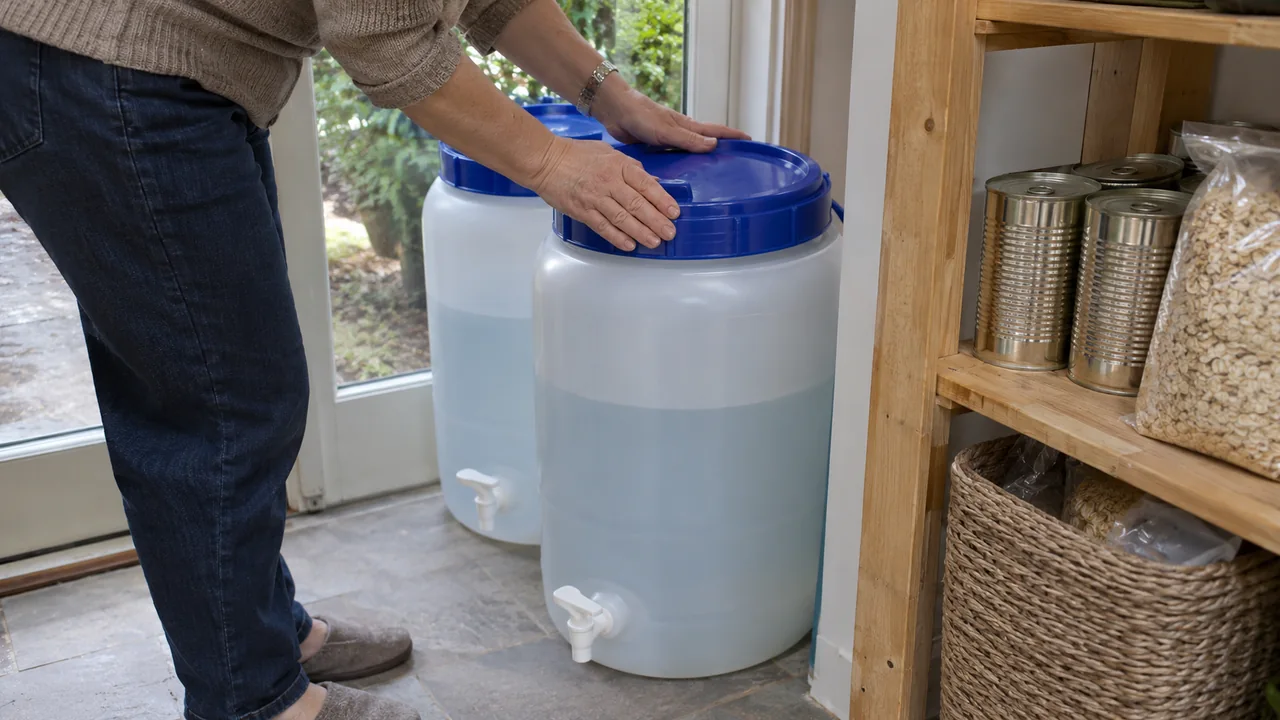
Work out the next day's drinking-water requirement
The official water-outage guidance recommends three litres of drinking water per person per day as part of a three-day household reserve. For four people, that is a starting drinking-water plan of 12 litres for one day. Additional needs and conditions may change the amount required.
Do not confuse drinking water with the household's entire water demand. Food preparation, handwashing, clinical care, infants and animals may require more. Hot weather, illness and physical work can also affect needs. Use the calculation to reveal a shortfall, not to force everyone into a fixed allowance regardless of health.
Write down the confirmed amount remaining and the next realistic resupply opportunity. If only one day's safe water remains, a vague statement that a tanker may arrive is not a completed plan. Seek reliable information and support before the household has no safe option left.
Keep safe water safe after opening
Use clean food-grade containers with secure lids, and dispense through a tap or clean pouring method where possible. Avoid dipping hands, cups or used utensils into the main reserve. Keep containers away from waste, chemicals, pets and floodwater.
Label uncertain water separately so a tired helper cannot mistake it for drinking water. A container that once held fuel or chemicals is not suitable for food use because it has been rinsed. Do not store drinking water in an unlabelled vessel beside cleaning products.
Plan how containers will be cleaned and handled before collecting a large quantity. Carrying home safe water is only the first stage. Dirty lids, contaminated scoops or careless transfer at the kitchen table can undo the benefit. The household needs a consistent routine that every person serving drinks understands.
Do not turn every outside source into drinking water
A clear stream, rain barrel or abandoned tank may look reassuring but can contain microbes or chemical contamination. Identify the source, surrounding hazards and treatment requirements. Water affected by fuel, toxic chemicals or radioactive material cannot be made safe by ordinary boiling or disinfection.
The CDC emergency-water guidance explains those limits. Household filters and purification tablets also have specific capabilities and instructions. Do not assume that a product removes every hazard, or that adding extra chemical makes an uncertain source safer.
For a notice affecting the mains supply, follow the actual instructions. A boil-water notice differs from a do-not-drink or do-not-use instruction. The Drinking Water Inspectorate's explanation of boil-water notices helps distinguish the purpose of boiling. Seek a verified alternative when the contamination cannot be addressed by the method you have.
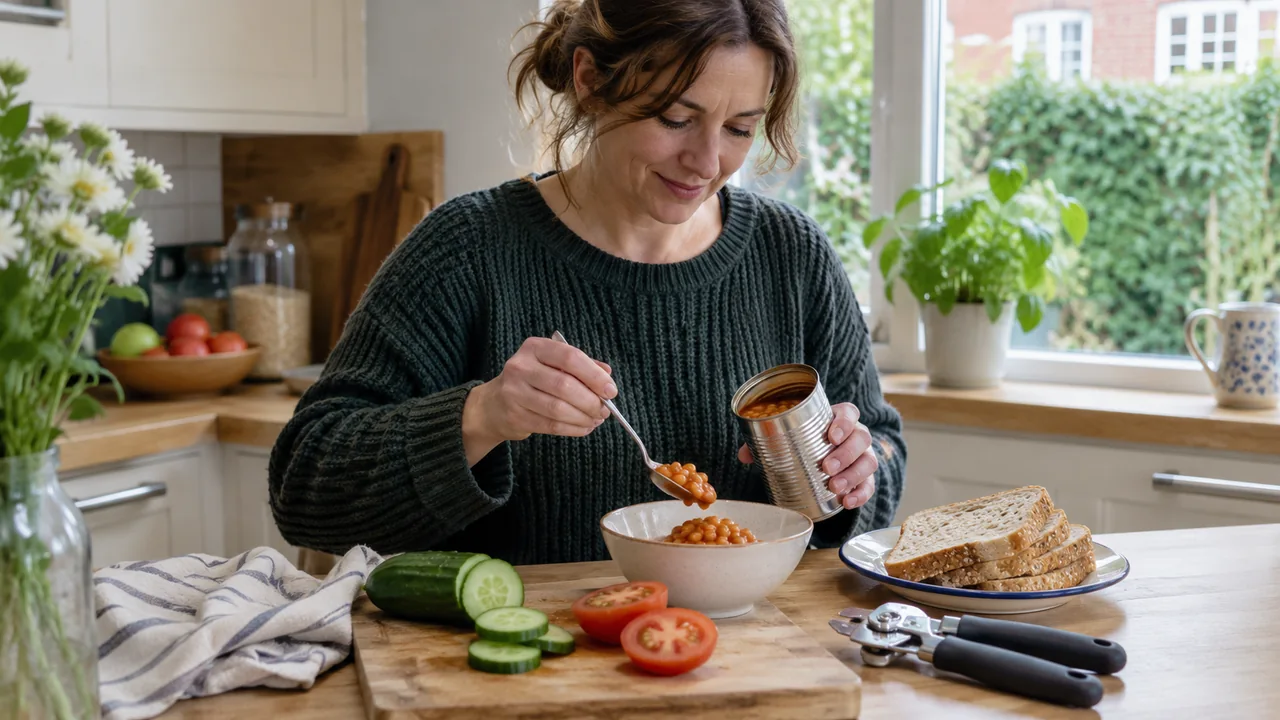
Use food according to safety and practical value
Make a short meal plan using suitable products the household can prepare safely. Keep it realistic about fuel and water. Long-cooking ingredients may be less useful today than ready-to-eat foods, even if they contain more portions on paper.
Read allergen information and account for texture, appetite and familiar foods for children. Avoid opening large amounts of perishable food without a safe way to use or store it. Share through a clean, trusted arrangement where helpful, with clear information about ingredients and condition.
Do not taste uncertain food to decide whether it is safe. The Food Standards Agency's power-cut guidance explains why storage history matters when refrigeration fails. Reheating is not a universal rescue method. Protecting the family from foodborne illness preserves both health and the water that illness can make harder to manage.
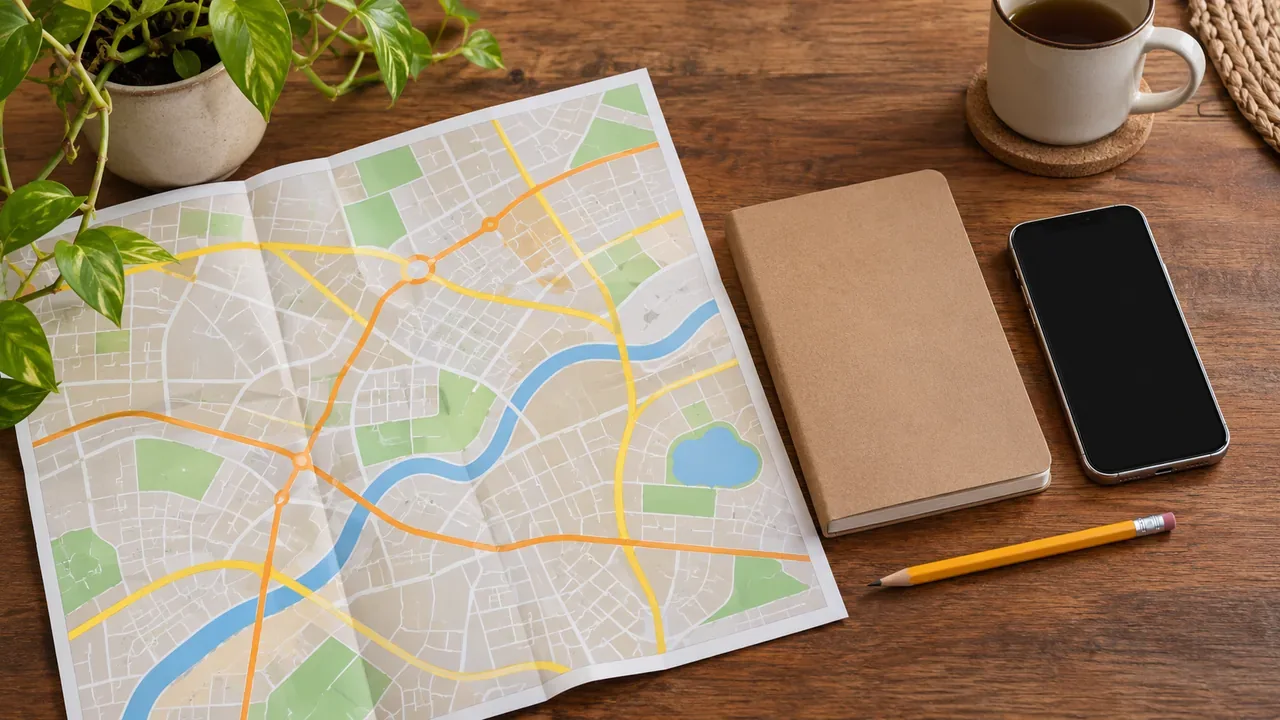
Confirm distribution before making a journey
Use working official channels, trusted community contacts and direct confirmation where possible. Ask where supplies are being distributed, when access is available, whether there are restrictions and how people with mobility or care needs can be supported. Record when the information was obtained.
A photograph of a queue or an old message about bottled water does not prove that supplies remain. Avoid sending several household members to different unverified locations. That can waste fuel, expose people to hazards and leave dependants without care.
Where a distribution point is functioning, plan a manageable collection. Bring suitable containers if required, identification if relevant and enough support for the person travelling. Check the route for floodwater, damage, heat or other hazards. The guide to travel without petrol helps combine confirmed errands and preserve transport for people whose needs cannot be met on foot.
Make queues safer for vulnerable people
Do not assume everyone can stand outside for hours. Consider shade, cold, access to toilets, the return journey and the weight of the collected supply. A frail person may need a trusted representative, a delivery arrangement or another form of assistance rather than a place near the front of the queue.
Keep children under responsible supervision and avoid taking them into uncertain or tense situations unnecessarily. Carry suitable drinking water for the journey without treating it as permission to wait indefinitely in dangerous conditions. Leave if the immediate environment becomes unsafe.
Ask clearly for the assistance required and use established arrangements where available. Being registered for priority support may help providers identify needs, but do not assume that a delivery will arrive before a critical supply runs out. Maintain contact and develop a realistic alternative rather than waiting silently for a service that may also be failing.
Share supplies with a record and consent
Trusted neighbours can combine collections, share suitable food and help people who cannot leave home. Agree what is being collected, who receives it and how delivery will be confirmed. Avoid public lists exposing private health information or the full contents of a household's stores.
Share honestly about allergens, storage and opened products. Do not pass uncertain food to another household because yours has decided against eating it. A shortage does not reduce the importance of consent or turn vulnerable people into a convenient destination for unsafe leftovers.
The government's community-support advice highlights the value of checking on people and using local skills. Keep the arrangement sustainable. One person cannot collect for an entire street indefinitely without rest, transport and a clear view of what the distribution point can actually provide.
Reject dangerous shortcuts
Do not trespass into damaged buildings, confront people over supplies or take food from a source whose safety you cannot assess. Avoid unfamiliar wild plants, mushrooms or improvised animal feeds as substitutes for known food. A crisis is a poor time to test an identification skill the household does not possess.
Do not dilute infant formula, use an unverified substitute or change a medical diet without appropriate advice. Seek targeted help early when essential feeding needs cannot be met. The apparent number of meals available is not useful if a child or dependent adult cannot safely consume them.
Avoid unsafe cooking and water-treatment experiments. An outdoor stove indoors, an uncertain chemical mixture or a badly stored batch of food can cause illness or fire that consumes the household's remaining capacity. The guide to cooking without electricity or gas helps build safer meals from the resources actually available.
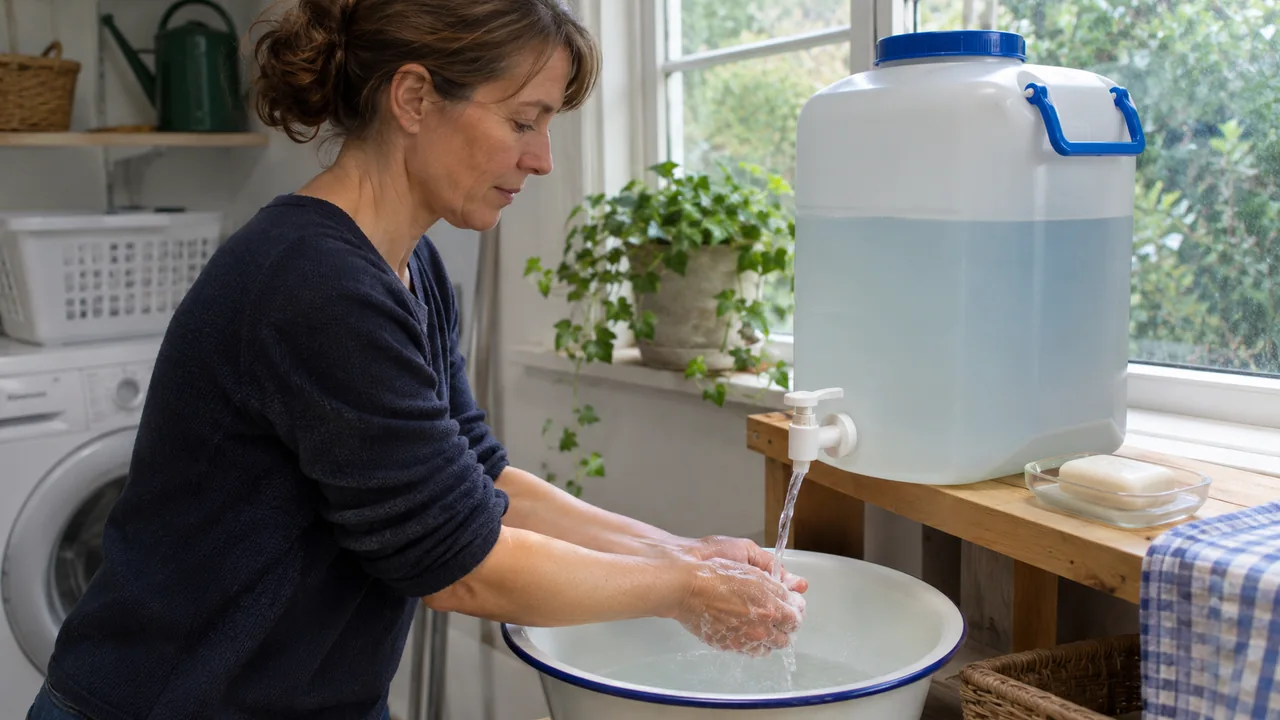
Keep hygiene in the shortage plan
Reserve safe water for essential handwashing and food-related tasks. Reducing hygiene to save every litre can lead to illness that makes the shortage worse. Set up a controlled dispensing arrangement so water is used deliberately without contaminating the main supply.
Keep waste contained and separate from food stores. Clean opened containers and utensils appropriately, and do not let scraps accumulate beside the place where drinks are served. Rodents and insects can become a bigger problem when collection services stop and food is stored in improvised places.
Use the UK Chief Medical Officers' water and sanitation guidance as relevant context for limited services. Follow any specific local contamination notice. Basic cleanliness needs to remain part of the daily supply budget, not something considered only after someone develops vomiting or diarrhoea.
Review the household's ability to stay
A home with no safe water or suitable food may become unusable even if the walls and roof are sound. Review how quickly the shortfall is developing and whether reliable support can reach the household. The presence of some calories does not solve an inability to feed an infant or sustain essential care.
Confirm a genuinely better destination and a safe route before moving. A crowded shelter with no water is not automatically an improvement, and a long unverified journey may consume what remains. Consider whether help can be brought closer through a trusted local network.
The guide to safe water and food after supply collapse looks at the longer-term source and handling system. Today, the key decision is earlier: can the household meet essential needs through the next period, and what action will be taken if the next confirmed supply fails to materialise?
Make tomorrow's position visible tonight
Before resting, update the inventory, identify the next meals and note the water remaining. Record who has responsibility for the next information check or collection. Keep essential care supplies accessible and do not leave a critical request hidden in one exhausted person's memory.
For example, a family may confirm that one neighbour can collect sealed water in the morning while another brings a suitable food item that meets an allergy requirement. They preserve a fallback in case the point closes and avoid opening food that cannot be stored safely overnight.
That small amount of coordination can reduce waste, repeated journeys and conflict. Empty shelves are frightening because they expose how much everyday life depends on systems outside the home. A careful inventory and a credible next step give your household a better chance of coping without turning the shortage into a preventable illness or injury.
Frequently asked questions
Should we stop drinking as much to make water last?
Do not force people below their health needs to extend a calculation. Use the available supply for essential drinking and care, reduce unnecessary waste and seek another verified source or suitable assistance early. Individual medical advice and conditions matter, and heat, illness or physical work can increase the difficulty of maintaining hydration.
Can we use water from the central heating system?
No. Water in radiators or the central-heating circuit is not a drinking-water reserve and may contain substances that make it unsafe. Do not confuse it with a verified potable supply. Use protected or appropriately treated sources according to current incident advice and the capabilities of the treatment method.
Is it better to buy all the remaining food we can find?
Prioritise suitable food the household can store, prepare and eat safely, while leaving resources for water, care and transport. Taking quantities beyond practical need can waste supplies and worsen access for others. A modest usable plan and reliable resupply information are more valuable than a large unmanageable pile.
Can neighbours collect supplies for someone who cannot travel?
Yes, through a trusted agreed arrangement that follows any distribution requirements. Confirm the person's needs, protect private information and record delivery so requests are not duplicated. Do not assume a volunteer can handle clinical tasks or unfamiliar equipment as part of the collection. Keep the help specific and manageable.
When is moving to another place the right response?
Reassess before essential drinking water, suitable food or necessary care becomes impossible to sustain. Confirm that the destination genuinely improves the situation and can be reached safely. A rumoured supply point or an unverified shelter is not enough. Seek assistance early for people who cannot travel independently.