
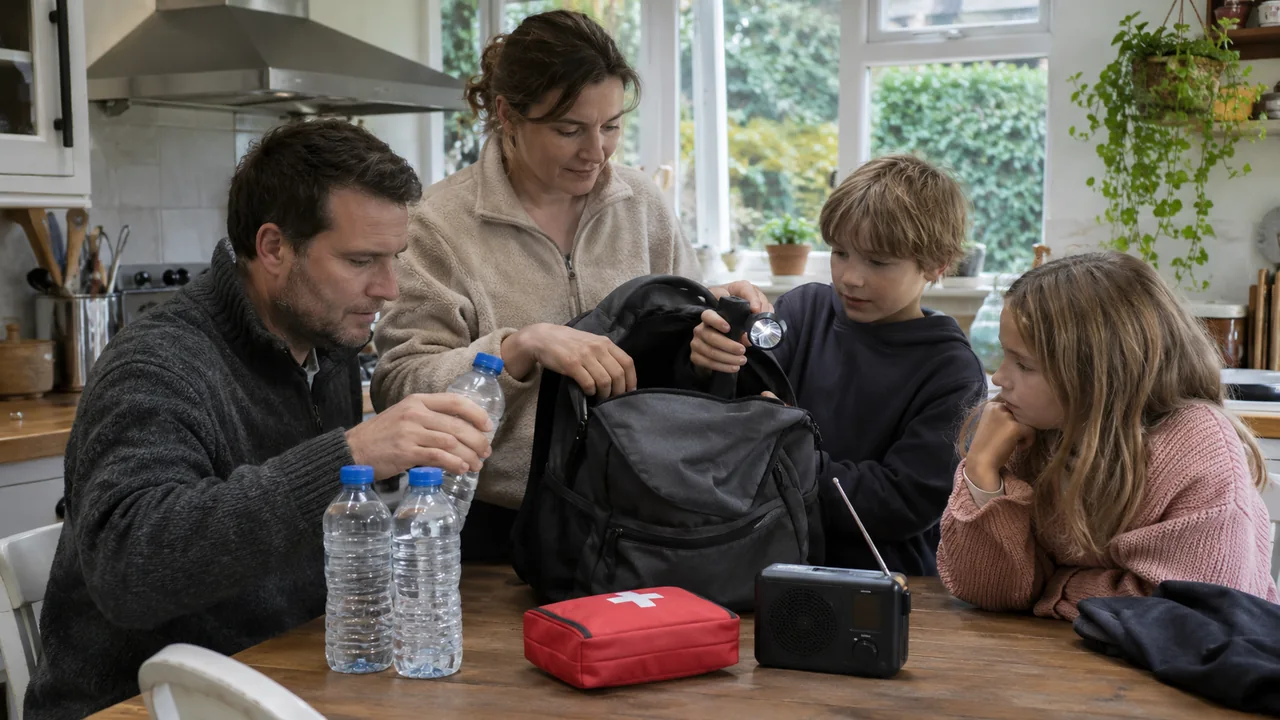
The disaster is no longer a warning. Power, transport and communications are failing, and the household needs to get through the next three days without assuming that familiar services will return on schedule. The first 72 hours of a disaster are about keeping people alive, maintaining essential care and avoiding secondary mistakes that make the original event worse.
Start with immediate danger, injuries and safe shelter. Then organise drinking water, food, sanitation, necessary medicines and reliable information. Divide work into short periods with clear responsibilities. A large supply cupboard cannot compensate for an unsafe building, an unattended dependent person or a decision based on an old rumour.
Seventy-two hours is a planning window, not a promise of rescue or recovery. If your home cannot sustain the people inside, seek a safer arrangement early. If it remains a suitable shelter, use the time to establish a routine that can continue beyond the third day.
The first minutes: stop the next injury
Check for immediate fire, structural damage, flooding, gas smells, electrical hazards or another danger at your location. Move away from an unsafe area without approaching the source to investigate. Help children and dependent adults reach a safer place, and keep the group from scattering into separate searches.
Assess whether anyone needs urgent medical help. Use emergency services where contact is possible and follow current first-aid instructions or your training. The St John Ambulance primary-survey guidance explains the priority of checking danger and a person's immediate condition. Do not turn an emergency into an improvised clinical procedure beyond your competence.
Give one adult responsibility for immediate care and another for checking the surroundings if enough adults are present. If alone, focus on the most urgent threat and ask for specific assistance. An uncoordinated rush to gather supplies can delay the action that matters most during those first minutes.
The first hour: confirm where everyone is
Make a household list and establish the location of anyone who is elsewhere. Use short messages where networks work, and record whether the information is confirmed. Someone being temporarily unreachable does not automatically mean they have been injured or need an unsafe journey to collect them.
If people are at a school, hospital or other supervised site, seek the site's instructions and consider the hazard. During some outdoor-release incidents, staying in the sound shelter already reached may be safer than travelling home. Avoid sending several adults along different routes without a shared plan.
Assign care for children, pets and people who need assistance. Keep medicines, communication aids and mobility equipment with the person who needs them. A person cannot be considered safely accounted for if they are in the right building but have lost access to essential care or a way to communicate distress.
Choose a shelter you can actually use
A suitable shelter must protect against the current hazard and support the people inside. Check the structure, exits, temperature, water access, sanitation and any need for powered equipment. A familiar home may be the best option, but familiarity does not make damaged wiring or rising water safe.
Compare the home with any realistic alternative, including the route and confirmed access at the destination. Do not undertake a long speculative journey because a remote building has been called a refuge. The guide to staying or evacuating helps structure that decision.
If staying, organise one main living area without blocking exits. If moving, prioritise people, essential medicines and care equipment before replaceable possessions. Record where the household is going and how a trusted contact will receive an update. Keep the decision under review as the incident and the needs of the household change.
Count safe water before counting meals
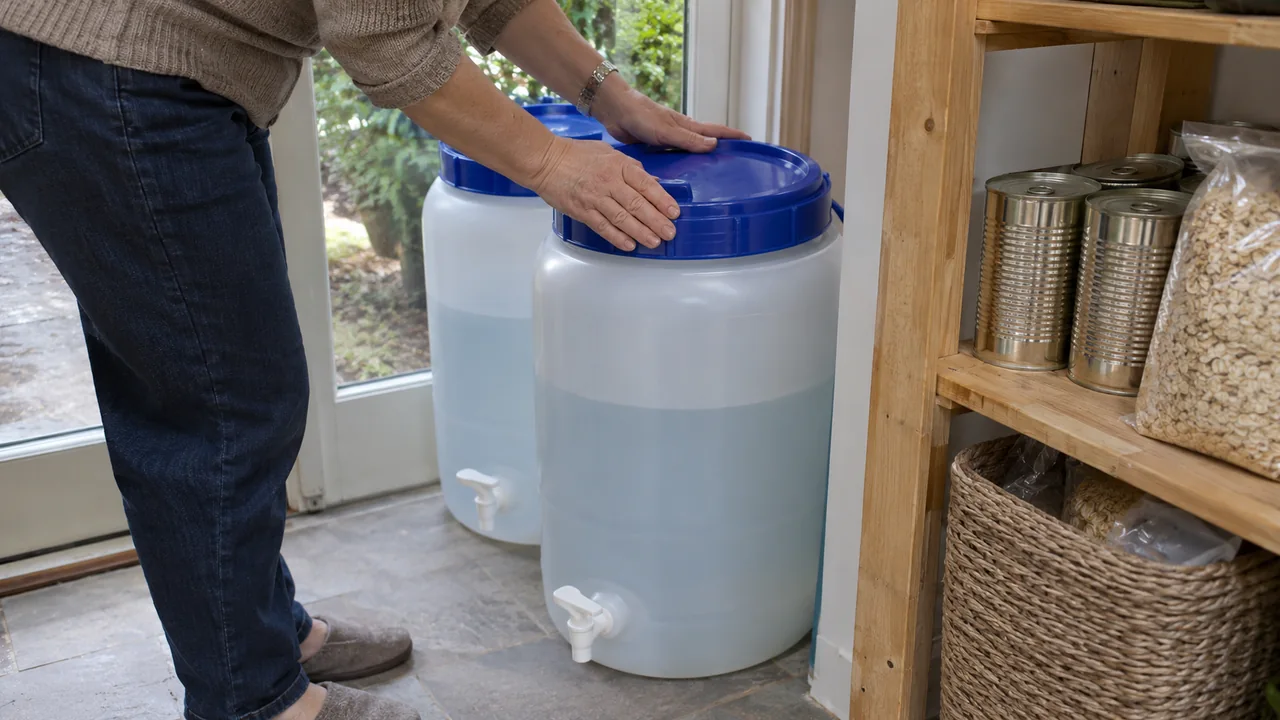
Identify sealed drinking water and any other supply whose safety is established. Keep it separate from water used for cleaning or an uncertain outside source. Label containers and use clean serving methods so hands and cups do not contaminate what remains.
The official water-outage guidance recommends storing three litres of drinking water per person per day for three days, with additional needs for some circumstances. For four people, that drinking-water starting point is 36 litres over three days. It does not include every washing, cooking, medical or animal-care requirement.
Do not ration someone below their health needs simply to make a calculation appear balanced. Plan resupply, suitable community support or relocation before the available supply becomes critical. If contamination is suspected, follow the specific notice and use an appropriate alternative. Boiling cannot solve fuel, toxic chemical or radioactive contamination.
Make a first-day food plan
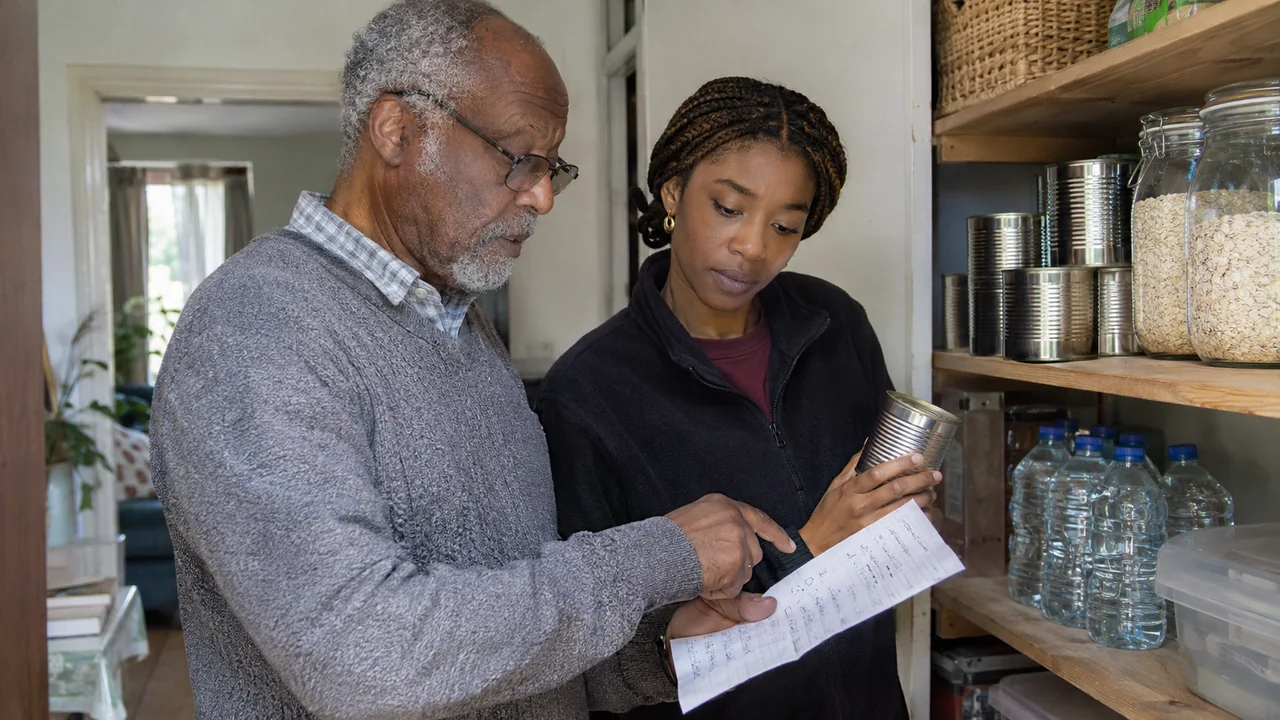
List ready-to-eat food and ingredients that require safe cooking. Check allergies, infant feeding needs and any clinical diet. Keep fridge and freezer doors closed, note the time of power loss and assess chilled food through current safety guidance and its temperature history.
The Food Standards Agency's power-cut advice explains the changing storage problem. Do not eat uncertain high-risk food merely because it may spoil later. Protect shelf-stable supplies and open only manageable quantities when refrigeration is unavailable.
Choose suitable no-cook meals or a safe outdoor cooking method. Never bring a camping stove, barbecue or generator into an enclosed space to produce food or power. The guide to cooking without electricity or gas provides a more detailed meal routine, including water, hygiene and the limits of alternative equipment.
Keep essential care on a visible schedule
Find current medicine lists, care plans and equipment instructions. Establish what has already been done before the next helper takes over. Record medicines, necessary care tasks, food and fluids where relevant, symptoms and remaining equipment capacity.
Do not alter doses, improvise a medical-device connection or attempt unfamiliar lifting because the normal visitor has not arrived. Seek qualified help through any safe functioning route and describe the specific problem. A missed routine task and an immediate life-threatening condition need different urgency, but both should be recorded clearly.
For a dependent person, power, temperature, toileting and food texture may be part of the same care plan. The article on care when home services stop helps organise those needs. Keep the person involved in decisions, preserve privacy and make sure another responsible adult knows the next essential action.
Protect sanitation before it contaminates supplies
Check whether the toilet and drainage still work safely. If sewage is backing up or authorities have advised against use, stop adding to the affected system and arrange an appropriate temporary alternative. Keep waste away from drinking water, food and the main occupied area.
Set up a practical handwashing arrangement with safe water and soap where possible. Separate clean supplies, used cloths and waste containers. Gloves and a quick application of sanitiser do not make every dirty task safe. Restore effective washing whenever possible, particularly before food preparation and after toileting.
Use the UK Chief Medical Officers' water and sanitation advice as relevant public-health context, while following the specific incident instructions for your area. Do not empty waste into street drains or watercourses because the normal system is unavailable.
Keep the home warm or cool safely
Check the condition of people who cannot adjust their surroundings easily. In cold weather, use dry layers and suitable bedding in a usable room. In heat, reduce direct sun, use cooler protected spaces and offer appropriate fluids. Worsening illness needs help, not just another adjustment to curtains.
Suitable alternative heating still needs correct installation, fuel, clearances and ventilation. Outdoor appliances remain outdoors. Do not block required vents to keep smoke or cold air out while continuing to burn fuel inside. A combination of hazards may mean the building cannot safely support the household.
Check smoke and carbon monoxide alarms according to their instructions. Keep torches accessible and avoid filling hallways with supplies or charging equipment. Where essential care depends on electricity, use the approved backup plan and seek help before the remaining capacity is exhausted. Convenience devices should not consume the reserve needed for a critical task.
Create a small information system
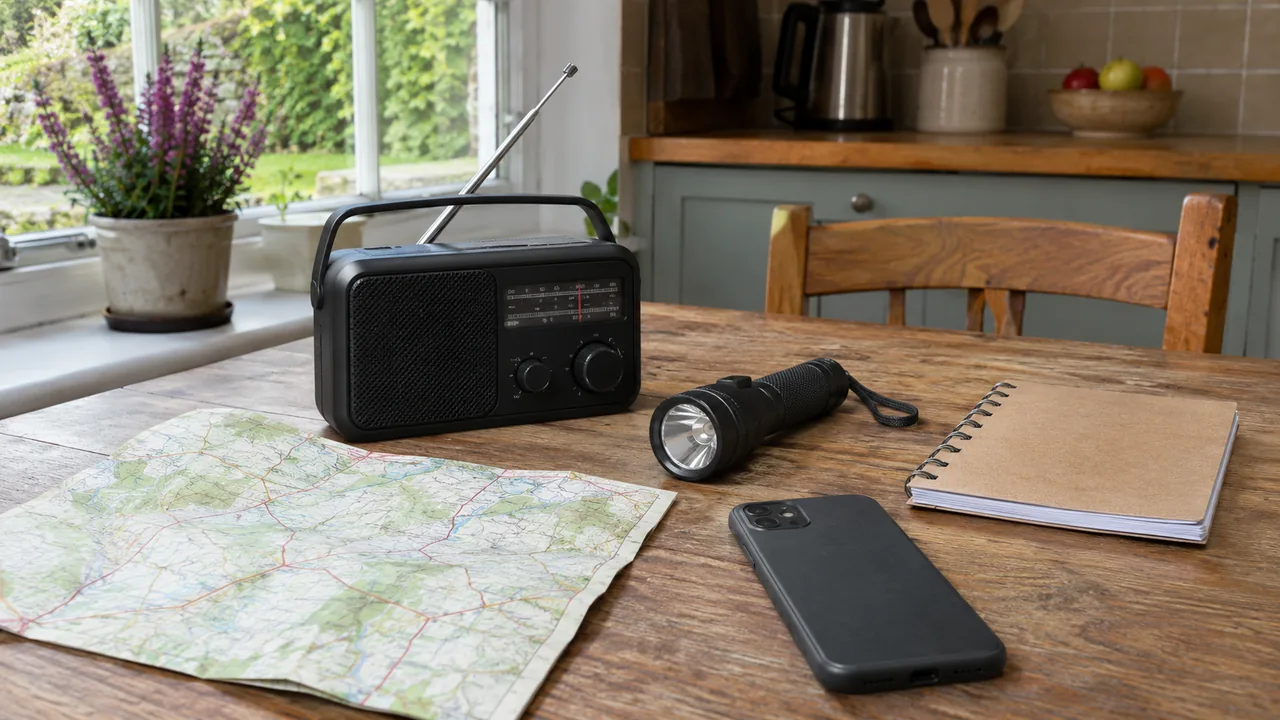
Use a battery radio and functioning official channels where available. Record useful messages with the source, place and time. A rumour that cannot be traced should not determine the household's next journey or be passed on as a confirmed warning.
Keep paper notes for contacts, locations, essential tasks and supplies. If a phone connection returns briefly, send concise information: where you are, immediate needs and the next check-in. Avoid draining batteries through constant refreshes or repeated non-essential calls.
The British Red Cross emergency-kit guidance includes supplies for short disruptions, but information only helps if the equipment can be used. Check that the radio works, batteries are suitable and instructions are understood. A device still in its packaging may not be a functioning communication resource when the household needs it.
Make the first night manageable
Before sleep, confirm where everyone is, clear exits and check that any equipment requiring supervision is safely switched off or managed. Keep essential medicines, a torch and necessary care information accessible. Explain how children or dependent adults can call for help if normal devices fail.
Share checks among trusted adults where possible. Someone caring through the night needs rest later. Avoid an unstructured arrangement in which everyone stays awake until exhaustion makes judgement worse. Record changes so the next person does not begin with a guess.
Do not rely on a promised restoration time as permission to ignore a deteriorating situation. A home that cannot safely maintain temperature, drinking water or clinical care may need another arrangement before morning. Confirm the safer destination and route while movement remains possible, rather than treating a difficult night as something every household must simply endure.
On day two, compare plans with actual use
Review what the household consumed and what tasks took longer than expected. Measure remaining water, count suitable food and check batteries or fuel according to their instructions. Separate confirmed resupply from hoped-for deliveries.
Ask whether anyone is becoming less able to cope. A carer who has not slept, a child refusing unfamiliar food or an older adult struggling with a cold room changes the plan. Practical needs are not failures of attitude. Seek support and adjust tasks before exhaustion, dehydration or injury removes an essential person's capacity.
Combine safe collection trips with trusted neighbours, and check on people who may be isolated. Keep requests specific and manageable. A shared errand can reduce exposure, but it must have a verified purpose and a safe route. Do not send a person into smoke, floodwater or a damaged area simply because the household's first-day plan has become inconvenient.
On day three, plan beyond the original window
Three days passing does not make services available or supplies safe. Review whether the shelter, water source, sanitation and care arrangements can continue. Identify the first essential function likely to fail and act on that weakness while there are still choices.
If remaining at home is viable, establish a longer routine with resupply, waste management, rest and maintenance. If it is not, confirm safe movement and suitable support. A garden or collection of tools cannot immediately replace all the food, water and care the household needs.
Use the article on a 30-day survival plan for the longer transition. Keep the comparison realistic: what can be done today, what needs outside help and what cannot be made safe through improvisation. The purpose of the first 72 hours is to preserve the people and essential functions needed for whatever comes next.
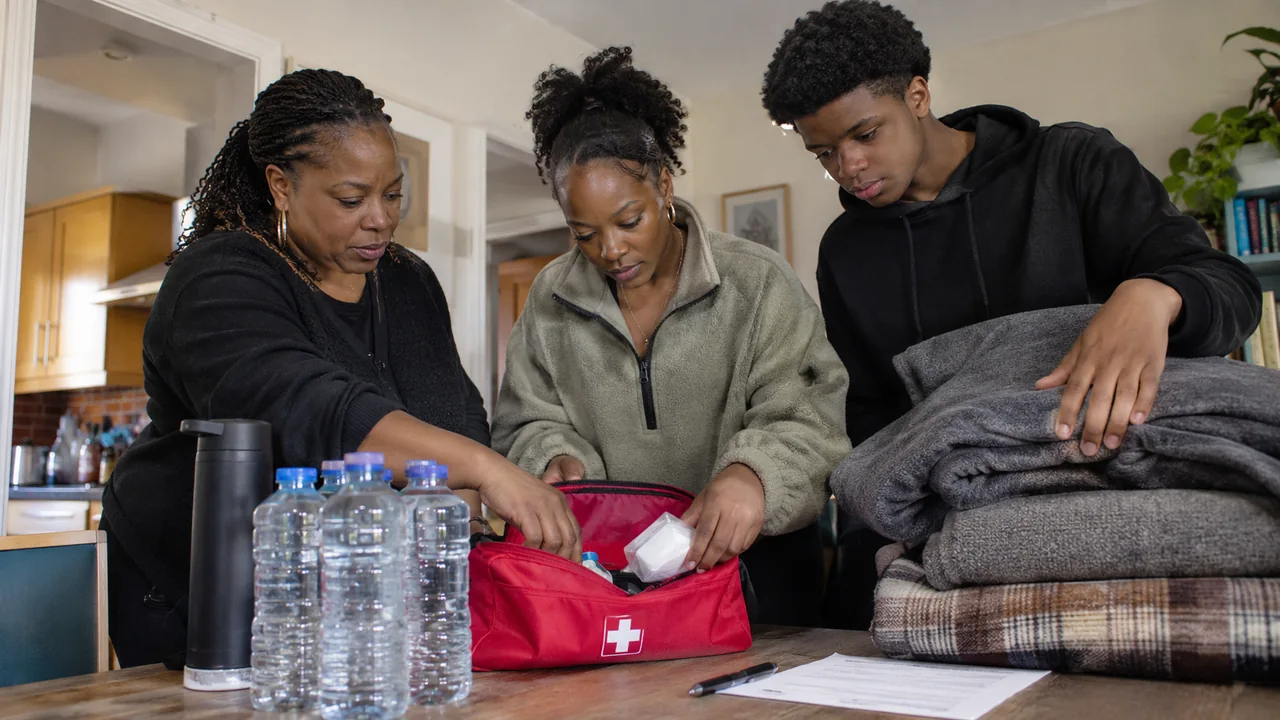
Use a short household handover
A useful handover can fit on one page: people and locations, immediate hazards, medicines or care already given, safe water remaining, suitable meals, equipment status and the next decision. Keep the record factual and protect private medical information from unnecessary sharing.
For example, one adult notes that the household has moved to a safer room, a relative's usual medicines have been recorded and the water reserve needs a confirmed top-up. The next adult repeats the priorities back and takes responsibility for contacting a known local support point. Nobody assumes that another person has silently completed the difficult task.
That small discipline can prevent duplicate medicine doses, wasted trips and a forgotten dependent neighbour. It also makes the household easier to help if a qualified team or trusted volunteer reaches it. The crisis may remain large and uncertain, but the next safe action should be clear to the people responsible for carrying it out.
Frequently asked questions
Does surviving three days mean we should be safe afterwards?
No. Seventy-two hours is a useful short planning period, not a guarantee of restoration, rescue or adequate supplies. Reassess essential needs throughout it and plan beyond day three. If the home cannot safely sustain the household, seek a viable alternative before water, care or access becomes critical.
Should we leave home immediately after a major disaster?
Leave an immediately unsafe building, but do not assume every wider crisis makes travelling safer. Compare the hazard at home, the route and the confirmed destination, including the needs of the least mobile person. Follow verified local instructions where available and keep the decision under review as conditions change.
How much drinking water should four people plan for?
The official three-day starting recommendation of three litres per person per day gives 36 litres for four people. Additional water may be needed for cooking, hygiene, clinical needs, infants and animals. Individual needs and conditions vary, so use the figure for planning rather than forcing everyone into an inadequate ration.
What should we do first if the mobile network fails?
Keep people safe, preserve essential care and use other available information routes such as a battery radio and agreed local contacts. Record locations and priorities on paper. A mobile emergency call may use another available network, but no working coverage means connection is not guaranteed. Do not waste the entire battery on repeated non-essential attempts.
Can neighbours manage the crisis together without a formal group?
Trusted neighbours can share specific safe tasks such as checking welfare, confirming information and collecting supplies. Agree responsibilities, protect privacy and keep work within people's abilities. Informal cooperation does not authorise unsafe rescue, medical procedures or electrical work. A clear small arrangement is more useful than a large promise nobody can sustain.