

Your pet's emergency bag is useful only if you can also move the animal safely and reach somewhere suitable. A packet of food does not solve a missing carrier, and a carrier does not solve a destination that cannot accept pets. Plan the whole journey before a warning leaves you trying to organise it at the door.
Start with the animals in your home, their usual needs and the people who may have to help. Keep suitable carriers or leads accessible, make identification current and prepare manageable supplies. Ask your vet about medicines, transport concerns and any needs that a general pet checklist cannot cover.
The aim is a calmer, more practical departure if evacuation is needed. Follow official instructions for the incident, and never put yourself or others in immediate danger to retrieve an animal or belongings. Early preparation gives you more useful choices before that difficult moment.
Make a plan for each animal
List the pets and their practical requirements. Dogs, cats, rabbits, birds, reptiles and fish do not have interchangeable transport or temperature needs. Even animals of the same species may differ because of age, health, behaviour or prescribed treatment.
Write down who can handle each pet safely and what equipment is required. If one adult may be at home with children and several animals, test whether the plan is physically manageable. A list that assumes unlimited hands or vehicle space will be difficult to use.
Ask a vet or appropriate specialist about needs you do not understand. Do not create a transport arrangement for an unusual or medically vulnerable animal from a generic dog-and-cat guide. Keep the specific advice with the household plan.
Keep carriers, leads and restraints ready
Choose equipment suitable for the animal, in good condition and appropriate to the journey. Check latches, straps and handles before they are needed. Keep it somewhere accessible rather than buried behind stored items in a shed or loft.
Introduce a carrier calmly during ordinary life where appropriate. A cat encountering its carrier only during a hurried departure may be much harder to move. Use suitable positive familiarisation and ask a qualified professional if handling or transport is a concern.
Do not assume a cardboard box, open basket or improvised lead offers the same security as appropriate equipment. The pet should not be able to escape into traffic or an unfamiliar building because the container was chosen at the last minute. Check species-specific welfare and ventilation requirements.
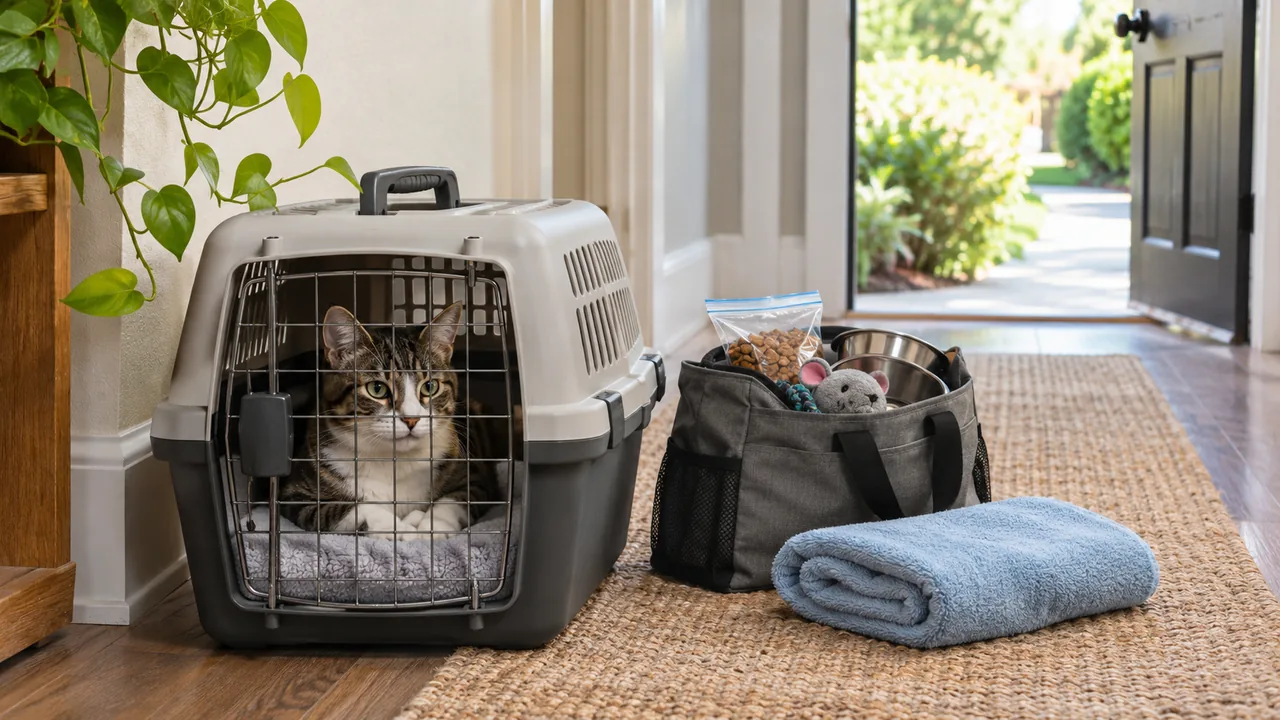
Check identification and contact details
Keep microchip registration and appropriate identification details current, using the relevant registration service. Record the information securely with veterinary contacts and a recent clear photograph. If the animal becomes separated, accurate details make the next steps easier.
Check which telephone number will still be useful if you are away from home or a mobile is lost. An appropriate trusted alternative contact may help, with their consent. Do not publish a full set of personal details simply because you are discussing emergency planning online.
Keep paper copies protected from water and an accessible digital copy where useful. Do not rely on one cloud folder that requires a live connection. The goal is to have enough information to identify the animal and reach the right people without a lengthy search.
Pack familiar food in usable portions
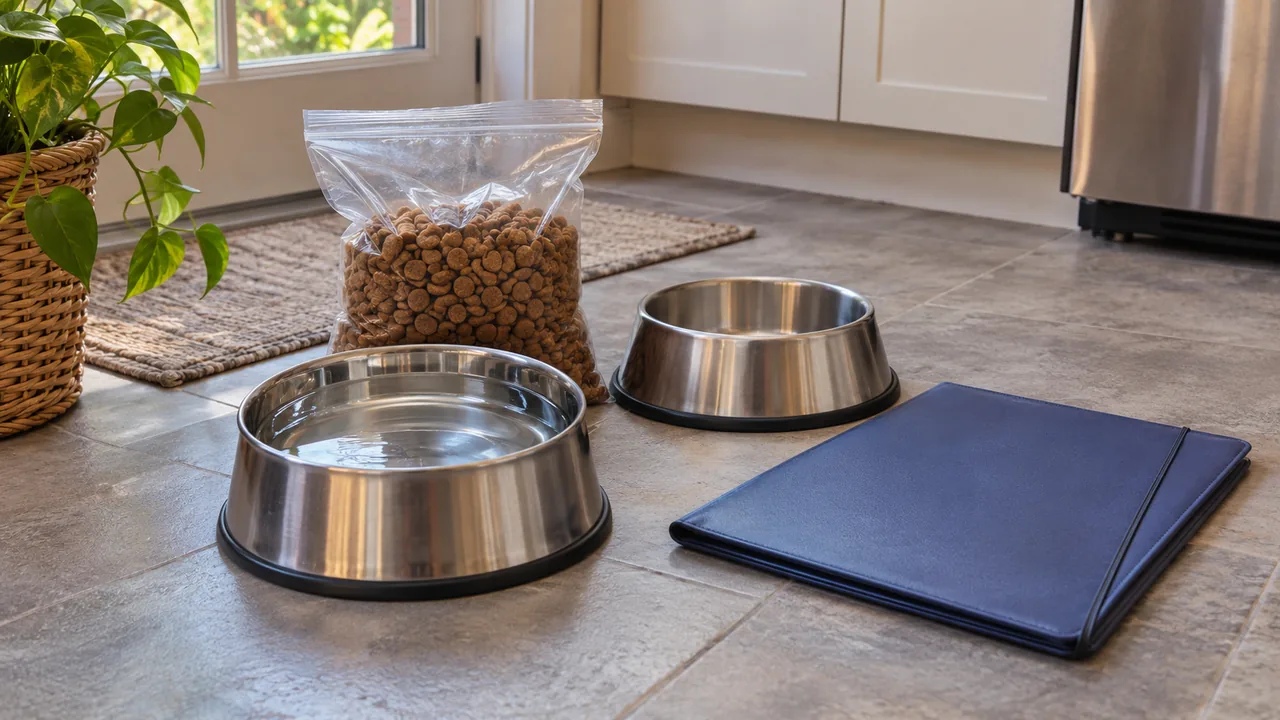
Choose the pet's usual suitable food and pack a manageable amount according to your plan. A sudden dietary change may create avoidable difficulties, so familiar supplies are useful where possible. Keep product information, especially for prescribed diets or allergies.
Include the equipment needed to serve it: a bowl, a suitable opener or portioning item where relevant. Check storage instructions after opening. Large packs may be awkward if the destination has limited space or refrigeration, while individual portions can simplify feeding.
Use and replace supplies through a normal rotation. Check dates and packaging condition during routine reviews. The bag should be ready to use, rather than a forgotten store of food the animal no longer eats.
Add safe water and feeding equipment
Plan a safe water supply for the animal's needs, separate from the human drinking calculation. Needs vary with size, diet, weather, health and activity. Ask a vet about relevant individual circumstances rather than relying on one universal amount.
Use suitable sealed containers and a practical bowl. Consider weight alongside the human evacuation load. A person carrying a pet, child and bag may need help or a different transport arrangement. Work out the full load before an urgent warning.
Do not allow a thirsty animal to drink floodwater or an unknown contaminated source because stored supplies are difficult to reach. Keep safe water accessible and use reliable official information about further supplies. Your plan should reduce pressure to improvise.
Medicines and health needs belong in the veterinary plan
Ask your vet about continuity of prescribed medicines, safe storage and what to take if you leave. Keep relevant instructions and contact details accessible. Do not change doses, share another animal's medicine or make a substitution to stretch supplies without veterinary advice.
If treatment needs refrigeration, power or particular equipment, discuss the backup and destination arrangements specifically. A general emergency bag does not establish that the treatment can continue safely at any address.
Do not sedate an animal for evacuation using an improvised medicine or dose. If travel anxiety or handling presents a problem, raise it with the vet in advance. Record the approved arrangement so that another responsible person knows what has actually been advised.
Bring familiar comfort without overloading the bag
A suitable familiar blanket, bedding item or toy may help an animal settle in an unfamiliar place. Choose something manageable, safe for the pet and easy to keep dry. It should not replace essential transport, water or treatment supplies in a bag that is already difficult to carry.
Think about hygiene as well as comfort. Waste bags, litter supplies or other species-appropriate materials may be needed at the destination. Check the actual facilities rather than assuming a host can provide them immediately.
Keep the bag organised so the first useful items are easy to reach. You may need a lead, water bowl or document before unpacking food. A simple layout reduces the chance of opening a carrier or losing control of an animal while searching through supplies.
Confirm a destination that accepts your animals
Talk to relatives, friends or accommodation providers beforehand where possible. Confirm the species, number and practical needs of the pets. A general offer of help may not include space for multiple animals or a secure area for a cat.
Check whether the destination is outside the likely affected area and how you will confirm it remains available. A nearby friend may share the same flood or outage. Keep an alternative rather than relying on a single address.
If official reception or rest centres are part of the incident response, use current information about their animal arrangements. Do not assume every facility has the same rules or welfare provision. Ask the responsible authority and follow the arrangements actually available.
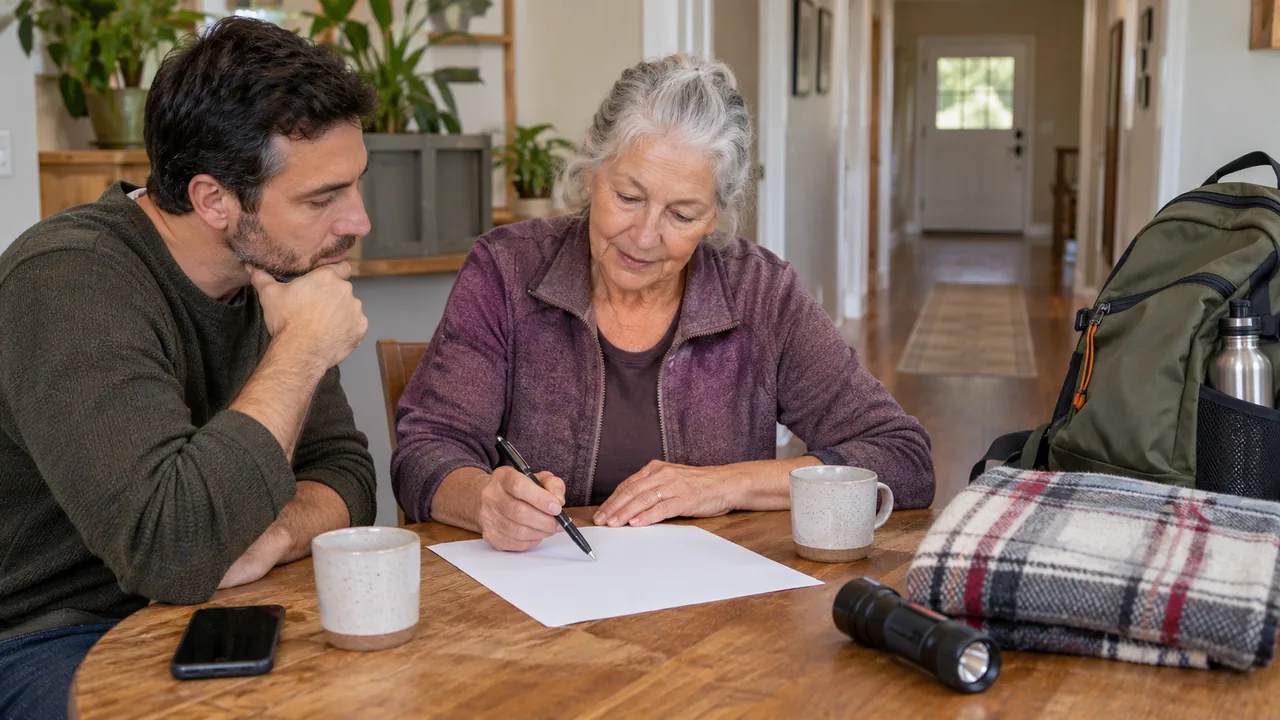
Make vehicle and assistance arrangements realistic
Plan how carriers and the animal's appropriate restraint will fit alongside people, mobility equipment and essential bags. Use suitable vehicle safety arrangements and avoid leaving pets loose where they can distract the driver or escape when a door opens.
If you do not drive, identify suitable transport options in advance and confirm their pet arrangements. Public transport, taxis and volunteer help may have different rules or be unavailable during a wider incident. Keep a backup and relevant contacts.
Ask who can help if you are away when a warning arrives. Obtain consent, agree safe access and make sure the helper knows the animals and equipment. Do not expect a neighbour to enter a dangerous area or handle an animal beyond their ability.
Act early when a developing hazard gives you time
Use official warnings and local advice to prepare before conditions deteriorate. Bring appropriate animals and equipment into a safe, accessible arrangement when it is prudent to do so. Do not wait until a carrier, food store or route is already cut off.
For flooding, the RSPCA and Blue Cross stress preparation and acting before rising water creates a dangerous rescue situation. Keep food, bedding and documents protected from water, while following the advice that applies to your location.
Do not turn an early warning into an unsafe journey. Check the route and destination, and follow emergency-service instructions. The useful response is a planned action based on current conditions, not a rushed departure driven by an unverified message.
Keep animals contained when routines change
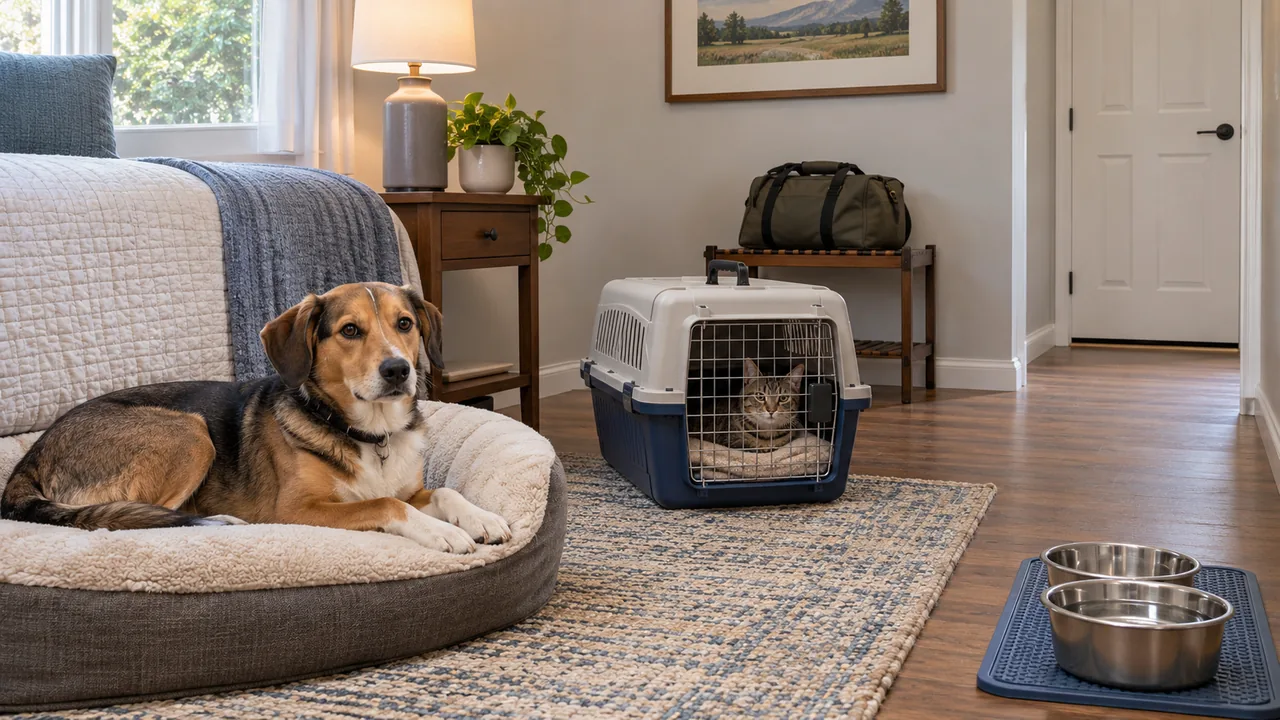
An unfamiliar noise, open door or busy loading period can make escape more likely. Organise movement so that one person knows which pet is secured and which carrier is ready. Avoid opening several doors and carriers while everyone assumes someone else is watching.
Tell helpers about important handling or behaviour information in clear terms. A normally calm animal may react differently under stress. Keep children safe and do not ask them to manage a pet they cannot control confidently.
Once at the destination, establish a suitable secure space and follow species-specific welfare advice. Do not release a cat or other animal into an unfamiliar outdoor area simply because the journey is over. Confirm how feeding, toilet needs and separation from other animals will work.
If you are separated from a pet
Use appropriate local services, veterinary contacts and identification arrangements to report the separation. Provide a clear description, recent photograph and relevant contact route. Keep sensitive personal information limited to what is necessary.
Follow responder instructions if an animal remains in a hazardous area. Do not enter floodwater, fire-affected property or another immediate danger to attempt a rescue. Tell the appropriate service what you know and where the animal may be.
Be cautious about unexpected requests for payment or security information from someone claiming to have found the pet. Verify the situation through a safe appropriate process. Distress can make an urgent claim feel convincing, but it does not establish that the person is genuine.
Plan for more demanding animal-care situations
Several pets, large animals or specialist environmental requirements need more than a standard household bag. Discuss arrangements with relevant welfare or veterinary professionals. Transport, temporary accommodation and essential power or temperature control may need advance coordination.
Keep the distinction clear between a manageable home interruption and a situation where animal welfare cannot be maintained. Know which professional contact can advise and what information they need. Do not assume an ordinary public rest centre can meet every specialist requirement.
Review the plan whenever the animals or their needs change. A new prescription, an older animal's mobility or an additional pet can alter the transport load and destination suitability. A plan written for last year's household may no longer be workable.
Review the bag through a normal practice check
In a calm setting, locate carriers, check equipment and explain the departure sequence. Keep the activity appropriate to the animals and avoid causing unnecessary distress. The purpose is to identify missing arrangements before an emergency, not simulate a frightening event.
Check that another responsible person can find the supplies and understand the contacts. Confirm that documents and registration details are current. Replace used food, check medicine arrangements with the vet and keep useful items in the same accessible places.
The best pet evacuation plan combines care with practical movement: a suitable carrier, manageable supplies, accurate information and somewhere the animal can actually stay. Those ordinary preparations can make the next decision much easier if a warning becomes an instruction to leave.
Check the departure load without a hurried journey
In an ordinary calm setting, place the appropriate bags and carriers where they would be collected. Do not distress the animals or leave them unattended in a vehicle to stage a rehearsal. You can check space, handles, paperwork and responsibilities without creating a realistic emergency.
Ask who would manage each part if only one adult were present. A child may need a hand while a cat needs a secure carrier and a dog needs an appropriate lead. Counting the objects on the floor can reveal that the plan needs assistance or a simpler load before anyone has to move.
Keep necessary food, water and documents together in an understandable arrangement. Label bags appropriately without exposing private details. A helper should know which supplies belong to which animal, especially when diets or veterinary instructions differ. Do not depend on the usual owner remembering every detail under pressure.
Check the destination arrangement during the same review. Can carriers be placed securely, can animals be separated where needed and is the host aware of the number and species? A successful departure still needs a suitable arrival. If those facilities are not available, look for a different agreed option before an incident.
Record one practical improvement and complete it. That might be moving a carrier to an accessible location, replacing a damaged latch or clarifying the helper's role. Seek veterinary or qualified behavioural advice for handling concerns rather than forcing a stressful practice.
The useful result is a load and sequence that fit the people and animals actually present. It does not need to resemble a rescue exercise. Calm familiarisation, appropriate equipment and accurate information can remove several difficult decisions from a future warning without adding unnecessary stress now.
Frequently asked questions
What belongs in a pet emergency bag?
Include suitable familiar food, safe water, feeding equipment, relevant medicines and instructions, identification information, veterinary contacts and appropriate hygiene supplies. A manageable comfort item may help. The carrier, lead or restraint is part of the wider transport plan, even if it does not fit inside the bag. Adapt everything to the individual animal.
Can I assume a rest centre will accept my pet?
No universal rule applies to every facility or incident. Check current information from the responsible authority and ask about the actual arrangements for the species and number of animals involved. Keep another suitable destination where possible. Specialist needs may require veterinary or welfare advice beyond what a general reception location can provide.
Should I give my pet a sedative before travelling?
Only use a medicine and arrangement specifically advised by the vet for that animal. Do not improvise a product or dose during an emergency. Discuss anxiety, handling and transport concerns in advance so that the approved plan is clear to everyone who may help. A general checklist cannot determine what medication is appropriate.
What if I am away when an evacuation warning arrives?
Arrange a trusted helper beforehand, with their consent, safe access and clear instructions. Confirm that they can handle the animal and know where the equipment is. They must not enter immediate danger or ignore responder instructions. Keep an appropriate alternative contact route because a neighbour may also be affected or unavailable.
Should I go back into danger for a pet?
Do not put yourself or others in immediate danger. Follow emergency-service instructions and tell the appropriate responders where the animal may be and what you know. Planning carriers, assistance and early movement can reduce the chance of that situation, but no bag or checklist justifies entering floodwater, fire or another hazardous area.
Sources and further reading
RSPCA: keeping animals safe during floods