

An overnight flood warning gives you decisions to make before darkness, tiredness and rising water make them harder. Start with people, current official advice and a safe route. Move belongings only when doing so is safe and does not delay evacuation or another necessary protective action.
Check the warning's location, level and time through the relevant official service. Keep a working light, essential personal items and the household contact plan accessible. Do not wait for water to appear inside the home before taking a genuine instruction seriously.
This guide focuses on preparation and the first household priorities. Flooding can develop quickly, and local conditions determine the safe response. If you are in immediate danger, call the emergency service for your location. Do not walk, cycle or drive through floodwater to test a route or retrieve belongings.
Confirm the warning and the area affected
Use the official flood service for your part of the UK or the relevant authority where you live. Check your actual location and any route you might need. A warning for another area or an old screenshot should not direct tonight's household decisions.
In England, a flood alert means flooding is possible, a flood warning means it is expected and a severe flood warning indicates danger to life. Read the accompanying advice rather than relying only on the label. Services and arrangements differ across locations.
Record the current instruction and the time checked. Share the relevant source with household members, preserving qualifications. A forecast, an observed flood and an evacuation direction are different information. Keep them clear when explaining what happens next.
Put people and essential needs first
Check who is home, who may return later and who needs help moving or understanding instructions. Children, people receiving care and animals may need more time to organise. Do not leave those arrangements until the vehicle or route is already difficult to access.
If an evacuation instruction applies, follow it promptly. A prepared bag and a few essential items are useful only if they can be collected safely. Do not let furniture, photographs or an unfinished protection task delay leaving immediate danger.
If essential treatment or equipment is involved, use the approved care and transport plan. Contact the relevant professional or emergency support route when needed. A general household supply list does not solve a time-critical clinical or access problem.
Check a destination before assuming you can go there
Confirm that a relative's or friend's address is suitable and unaffected, with safe access. A nearby property may share the flood risk. Keep an alternative and follow official directions to any operating reception location rather than relying on an old venue notice.
Consider bathroom access, equipment, children, pets and essential medicines. A destination needs to support the people travelling, not simply have a spare room. Keep the address and useful numbers available offline.
Tell the agreed contact where you intend to go when safe. Avoid publishing an empty-home address or detailed movements to a public group. A short private update can keep family informed without exposing unnecessary personal information.
Keep the portable essentials manageable
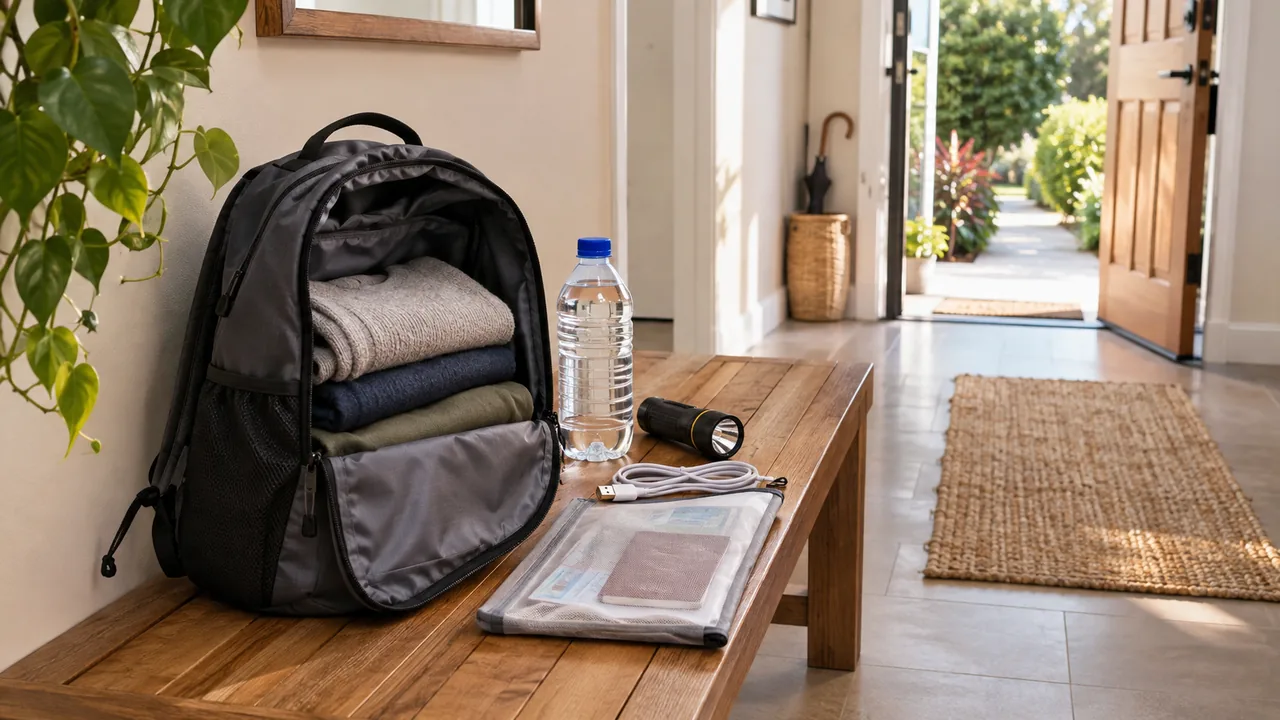
Use a go-bag suited to the people and journey. Include relevant medicine information, necessary personal items, a working light, phone charging arrangements and appropriate food and water. Keep a short reminder for daily-use items that cannot live permanently in the bag.
Do not make the load so heavy that it interferes with helping a child, using a handrail or managing a carrier. A home water supply for several days is not automatically a realistic backpack load. Plan access to further safe supplies through suitable destinations and official arrangements.
Collect items only where safe and without delaying urgent action. The go-bag checklist can help prepare the portable part beforehand. During the incident, the priority remains people and the actual protective instruction.
Move important items early, not through rising water
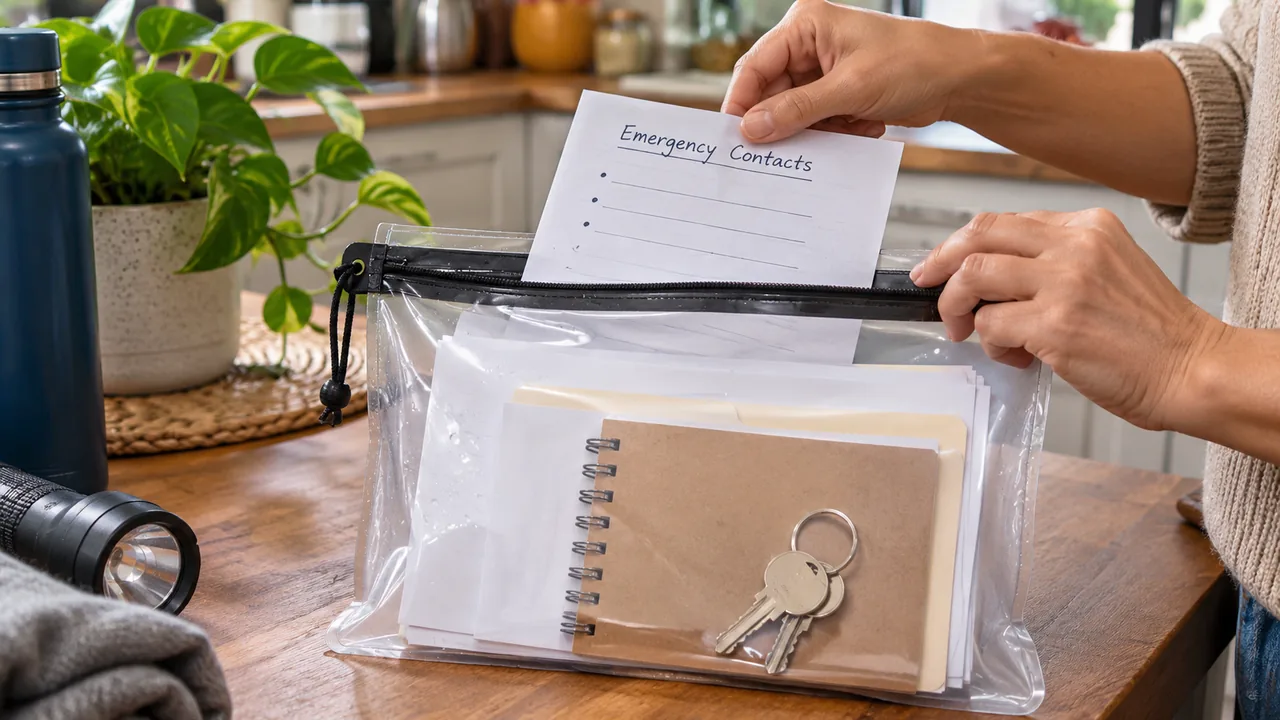
If time and conditions allow, move essential documents, medicines, useful equipment and appropriate valuables to a safer accessible location. Protect information from water and keep it easy to retrieve. Do not move an item somewhere that the person who needs it cannot reach.
Prioritise what supports the next action. A current contact folder or approved equipment accessory may be more important than a heavy piece of furniture. Set a clear limit so that property tasks do not expand until departure becomes harder.
Stop if conditions become unsafe or instructions change. Do not enter water, use a hazardous staircase or return to an affected area to finish a list. Preparation is useful because it reduces those last-minute choices, not because it guarantees every possession can be protected.
Use flood protection products only through their proper arrangements
If you have suitable barriers or other installed measures, understand their instructions before a warning. Keep access to the equipment clear and know what you can manage safely. A product bought but never checked may take longer to use than expected.
Do not assume a barrier makes the building safe indefinitely or replaces evacuation advice. Flood conditions and entry routes vary. Use the protection as part of a prepared plan, with known limits and a clear point for stopping the task.
Avoid improvised work that exposes you to water, electricity or falling hazards. If a measure requires professional installation or assessment, arrange it before an incident. Tonight's response should focus on safe actions that are already understood.
Deal with utilities only when it is safe
GOV.UK advises turning off gas, electricity and water supplies during flooding where it is safe to do so. Learn the appropriate controls and instructions in advance. Do not touch electrical switches while standing in water or approach damaged equipment to complete a checklist.
If you are unsure, keep clear and use appropriate professional or emergency advice. A power interruption does not prove that every electrical hazard has disappeared. Fallen cables, wet equipment and damaged installations remain reasons to maintain distance.
Do not restore supplies after flooding without the relevant safety advice and any required professional checks. A switch moving normally does not establish that the system is suitable for use. The immediate household goal is safety, not returning everything to normal quickly.
Make night-time access easier before bedtime
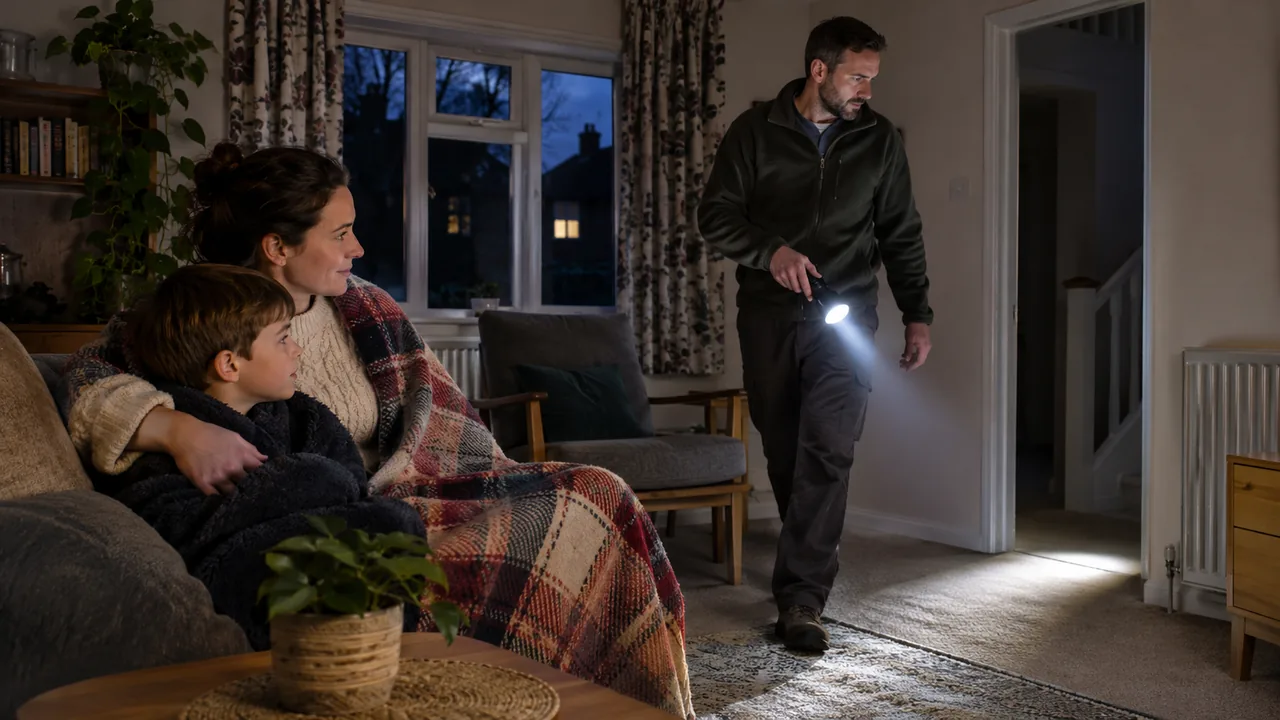
Keep appropriate footwear, a working torch and necessary personal items accessible. Clear the route to the normal exit without blocking doors with bags or water containers. Consider who may wake confused or need assistance using stairs.
Keep relevant warning and contact arrangements available. A switched-off phone cannot receive mobile messages, and a single device may fail or lose charge. Use suitable additional routes and agreed support where possible, while recognising that no alert method guarantees every update.
Do not plan to sleep through a clear instruction to act. Follow the current warning and local advice. If conditions require movement or evacuation, organise that rather than treating a packed bag as sufficient preparation for the night.
Keep children and pets close to the practical plan
Explain the next action calmly to children. They should know which adult to stay with and the simple steps appropriate to their age. Do not make them responsible for monitoring warnings or collecting important documents from another room.
Keep carriers, leads and animal supplies ready. Act early where advice and conditions allow, because a frightened pet can be harder to move after routines become chaotic. Confirm that the destination can accommodate the animal.
Do not enter immediate danger to retrieve an animal or belongings. Follow responder instructions and provide relevant information about animals left behind. The pet evacuation guide helps arrange the practical details before a warning becomes urgent.
Do not use floodwater as a route
Floodwater can hide debris, missing covers, damaged roads and contamination. Depth and current may be difficult to judge, particularly in darkness. A familiar street can become unsafe even when you have crossed it many times in ordinary rain.
Do not follow another driver or pedestrian into water as a test. Their apparent progress does not establish a safe path for you. Follow closures and emergency-service directions, and use only a suitable confirmed alternative.
If you cannot leave safely, use the appropriate emergency route and current local advice. Do not make a hazardous attempt simply because the planned destination is waiting. The journey is part of the safety assessment, not a gap between two addresses that can be assumed usable.
Protect safe food and drinking supplies
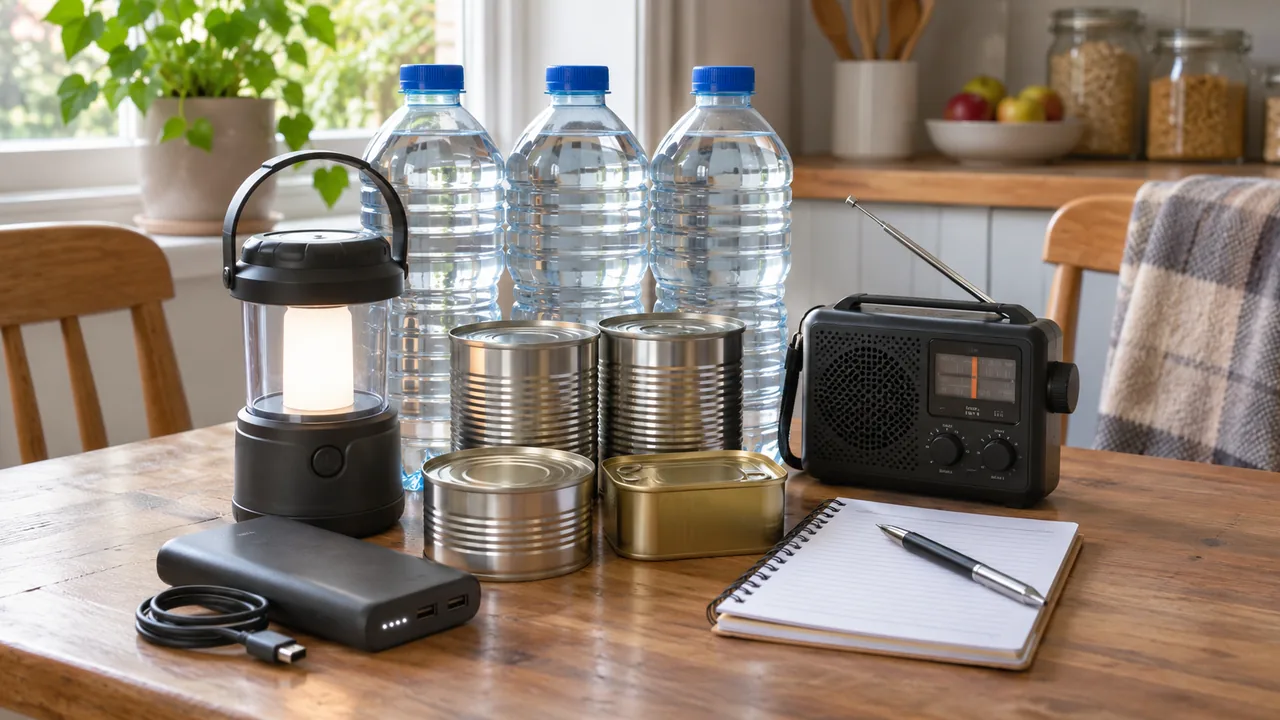
Keep known-safe water and appropriate ready-to-eat food protected from possible flood contamination. Do not assume packaging that looks intact or food that smells normal is safe after contact with floodwater. Follow public-health and food-safety advice for affected items.
A household filter or boiling does not address every contamination hazard. Use the actual water provider's notice and official alternative supplies. Keep water intended for other tasks clearly separate from drinking supplies.
Remember individual needs, including baby feeding, prescribed diets and medicines. If these cannot be maintained safely, seek appropriate support. Trying to preserve the original meal plan is less important than obtaining a safe suitable arrangement.
Example: one adult receives the warning late in the evening
Imagine one adult is home with children when a genuine local warning arrives. The first actions are to read the instruction, check the children and essential needs, and confirm the appropriate destination or protective arrangement. A brief message goes to the agreed contact where possible.
The adult uses a nearby torch and manageable bag rather than making repeated trips for possessions. A pet carrier is already accessible. If departure is instructed, property tasks stop and the family follows the safe advised route.
The plan works because the adult is not expected to do several incompatible jobs at once. Advance organisation reduces carrying, searching and uncertainty. The example should be adapted to actual official advice, access needs and conditions rather than used as a fixed script for every flood.
Example: the usual route is already affected
Imagine the chosen relative is outside the flood area, but the normal road has a closure. The family does not enter water or follow an unverified shortcut because the destination itself is safe. It checks current official route information and the local instructions.
If no safe route is available, the household uses the relevant support or emergency contact according to the situation. It explains the location and practical needs accurately. An address on a plan is not a reason to attempt a hazardous journey.
This is why useful planning includes both destination and access. Reviewing the route before a warning, keeping alternatives and knowing when to seek help can matter more than adding another item to the bag.
Return only through current safety advice
Do not return simply because water appears lower or a neighbour has gone back. Follow the responsible authority's instructions. Buildings, utilities and routes can remain dangerous after the visible peak of the flood.
Use appropriate professional advice for electrical, gas and structural concerns. Keep children and pets away from affected areas until they can be used safely. Contact the landlord or insurer where relevant without allowing paperwork to delay urgent safety action.
Review the household plan after the immediate situation. Update warning arrangements, move vulnerable supplies to better storage and resolve the access problem that caused the most difficulty. Those changes make the next overnight warning easier to act on promptly.
Make an overnight responsibility card
Keep a short card with the household flood plan that says who will receive updates, who helps each person and where the portable essentials are. If one adult may be alone, make the sequence workable for that situation. A list requiring several simultaneous jobs can become difficult precisely when time is limited.
Record the current destination options with their conditions, including route safety and actual confirmation. Do not let a possible address look like a guaranteed place to stay. Add the contact route for help with access or care, and make sure the relevant person has consented to the arrangement.
Keep the daily-use collection reminder short. Medicines, a phone, glasses or an essential aid may belong there, but only to be collected if safe and without delaying urgent action. A long tour of the property defeats the purpose of a prepared bag and can put possessions ahead of people.
Check the physical route in daylight before any warning. Can doors open fully, can someone use the handrail and are bags or containers out of the way? Do not stage movement through water or disable lighting to test the plan. Ordinary safe checks reveal many practical problems without creating a hazard.
When a warning arrives, note the actual instruction and time rather than expecting the card to decide the response automatically. Official advice and immediate conditions may require a different action. The card supports the household roles after that decision; it does not override an evacuation direction or make a damaged route safe.
If another adult takes over during a prolonged incident, provide a brief handover. Explain which warnings are current, what has been confirmed and which tasks are deliberately unfinished because conditions or instructions made them inappropriate. That prevents someone restarting a property-protection job that has already become unsafe.
After the incident, revise the one or two details that made the greatest difference. A clearer helper role, a more accessible carrier or a second suitable destination may be more valuable than a larger collection of equipment. Keep the updated card with the plan and replace old copies so that the next overnight response starts from the same information.
Frequently asked questions
Does a flood warning mean I should wait until water reaches the house?
No. Read and act on the current official advice for the warning level and location. Preparing early can make movement, care and pet arrangements easier. If evacuation is instructed, follow it promptly. Do not wait for visible indoor flooding or let property-protection tasks delay necessary action.
What should I move first?
People and essential needs take priority. If safe and time allows, protect relevant medicines, equipment, documents and manageable valuables that support the next action. Do not enter rising water or delay evacuation to finish moving possessions. A prepared bag and concise reminder can reduce the number of choices needed at night.
Should I turn off the electricity?
Follow official and appropriate safety advice, and use only controls you can operate safely. Do not touch a switch while standing in water or approach damaged equipment. If unsure, keep clear and seek relevant professional or emergency help. Learn the normal safe arrangements before a flood rather than investigating during one.
Can I drive through a shallow flooded section?
Do not drive through floodwater. Depth, flow and the road beneath may be difficult to judge, and water can hide serious damage or debris. Follow closures and current official route advice. Another vehicle crossing does not prove the route is safe for you or that conditions will remain the same.
When can I go back home?
Use the responsible authority's current instructions and any required professional checks. Reduced water or another person's return does not establish safety. Electrical, gas, structural and contamination hazards may remain. Keep the household's alternative arrangements active until the property and essential services can be used appropriately.
Sources and further reading
GOV.UK: actions before and during flooding
GOV.UK: warning levels and actions