

A family emergency plan is most useful when someone other than its usual organiser can explain it. Who should be contacted? Where could you meet? What happens if the normal journey fails? Which personal needs cannot wait? Clear answers to those questions can reduce confusion during many different disruptions.
Start with one manageable household conversation and a concise written summary. You do not need to predict every event or create a folder nobody will open. The plan should connect ordinary routines, suitable supplies and the people who may need to act when circumstances change.
This guide helps you build that summary around your actual household. Follow current official advice during an incident and keep medical, building and transport arrangements with the relevant professionals. A family plan supports those instructions rather than replacing them with a universal response.
Begin with the people who depend on the plan
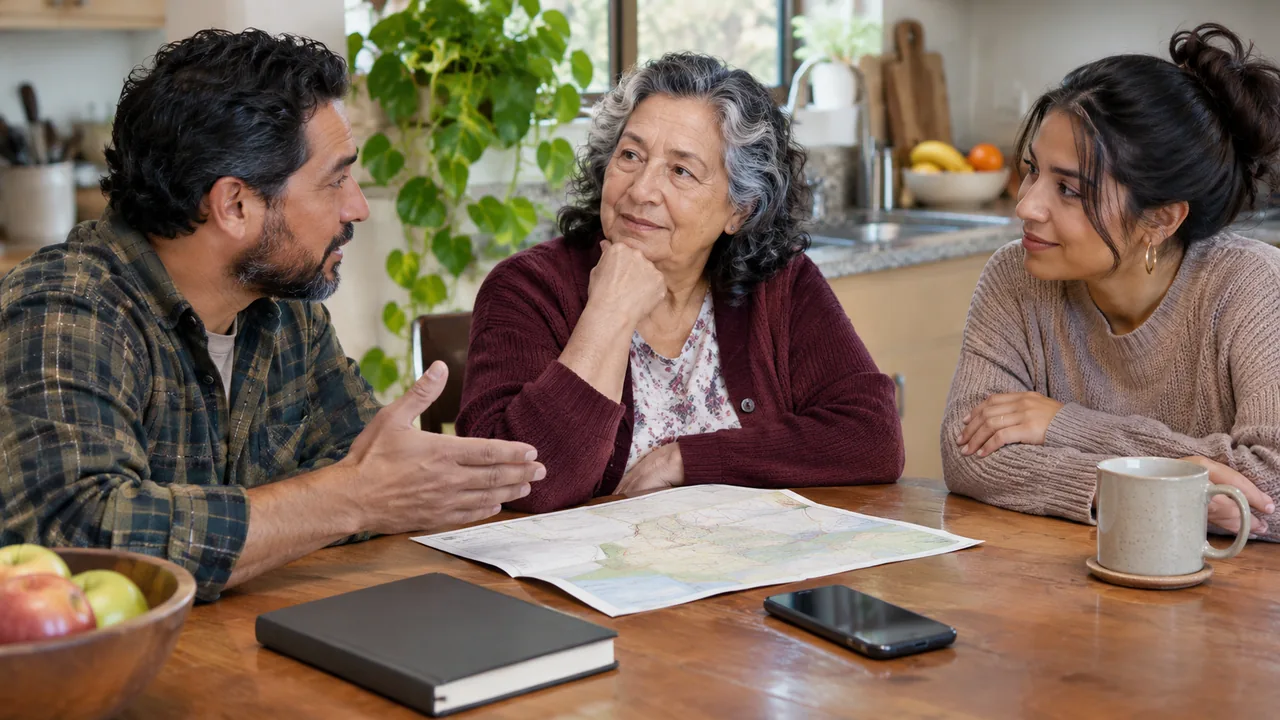
List household members, regular caring responsibilities and pets. Consider where people spend time and who may be at home alone. Include children who move between households or a relative who regularly relies on support, with the relevant people's agreement.
Ask about practical needs rather than making assumptions. A person may need accessible information, a particular food, a familiar mobility aid or help with a powered entrance. Someone who looks independent may still have an important dependency that belongs in the plan.
Keep personal information proportionate and private. The shared summary should contain what responsible people need to act, not every detail of a medical or financial record. Obtain consent before distributing sensitive information to helpers or neighbours.
Identify the disruptions worth planning around
Use official local risk and preparedness information. Ordinary power cuts, water interruptions, severe weather and travel problems can provide a practical starting point. Include specific local hazards such as flooding where relevant, without turning every possible event into a separate elaborate project.
Ask what changes in the first hour. Can people see safely, obtain reliable information, continue essential care and contact the right person? Then consider what changes over a longer interruption, including food, water, temperature and accommodation.
Keep the plan focused on useful functions. Many preparations help across several causes: paper contacts, familiar supplies, a manageable bag and a suitable destination. You do not need to know the technical cause before identifying an essential household need.

Choose a main contact and a practical alternative
Agree who can pass updates if family members are separated. A trusted person outside the immediate area may be useful, with their consent. Record the number and a backup route rather than relying entirely on one group chat.
Decide what an update should contain: location, whether help is needed and the next planned check-in. Keep it brief and factual. Do not promise a return or restoration time that depends on information you do not control.
Write down what happens if a message does not arrive. Network delays can prevent contact, so silence does not automatically establish danger. At the same time, a time-critical care need may require a specific support response. Agree the distinction beforehand.
Set meeting points for different situations
Choose an understandable nearby meeting point for an appropriate building evacuation and an alternative outside the immediate area for a wider incident. Check access and suitability, and make sure everyone understands which situation each option covers.
Do not treat the points as fixed regardless of hazards. A place beside damaged buildings or within a flood area may become unsuitable. Current official instructions and immediate safety take priority over reaching the exact spot written months earlier.
Children need only the age-appropriate parts of the plan. Teach them which trusted adult to stay with and the simple action relevant to their setting. Adults remain responsible for interpreting warnings, transport and changes of destination.
Coordinate school, childcare and work arrangements
Keep current contact and authorised collection details with the relevant providers. Know their emergency procedures and what happens if the usual adult cannot travel. A household preference does not override safeguarding or an official shelter instruction.
Agree a suitable alternative collector or carer where needed, with consent and the required authorisation. Consider practical availability, not just willingness. A person who works across the same disrupted route may not provide a genuinely independent backup.
Discuss how work arrangements affect the plan. If one adult is often away, the home response should remain manageable for the person present. Do not give that adult a list that assumes several helpers and unlimited carrying ability.
Put essential health and accessibility needs on a specific pathway
Ask the relevant care team and equipment supplier about approved backup, warning thresholds, contact and relocation arrangements. Record the practical sequence in an accessible form. A general supply list cannot determine clinical suitability or equipment compatibility.
Consider power, water, refrigeration, network access, mobility and carers. The main device may have a battery while the entrance, lift or supporting routine still depends on services. Plan the full sequence that keeps the person safe and comfortable.
Keep another responsible person informed, with the person's consent. Know where the detailed instructions are and what the concise summary means. If an immediate medical threat arises, use the relevant emergency route rather than waiting for a general provider update.
Decide how you would manage safely at home
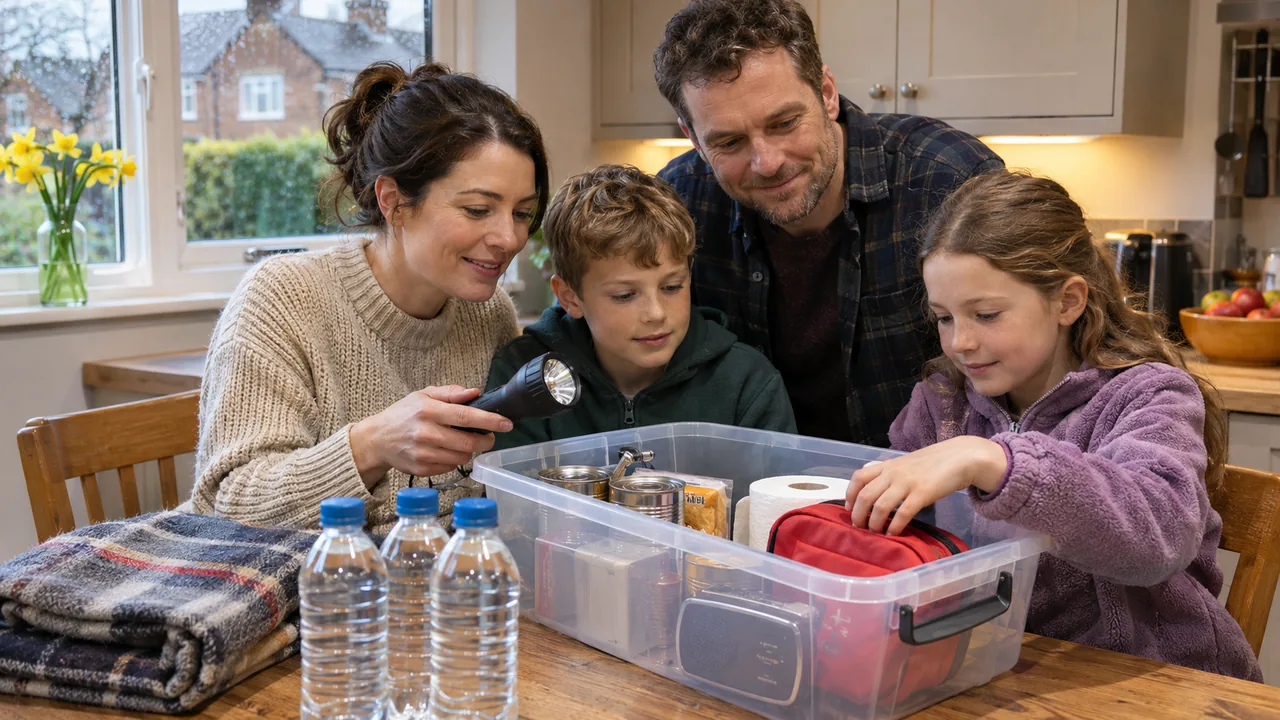
Check suitable drinking water, familiar food, battery lighting, information, hygiene and seasonal comfort. Use existing supplies where appropriate and build gaps gradually. A modest organised arrangement is more useful than a large box of unfamiliar equipment.
Make storage accessible to the people who need it. Check that someone can open, lift and use the supplies without searching difficult locations. Keep exits and routes clear and protect food and water from contamination.
Review whether the home remains suitable as an incident continues. Essential care, temperature or another hazard may change the decision. Supplies provide breathing space; they do not make every building safe or require the household to stay for a fixed period.
Prepare a manageable leaving option
Keep portable essentials appropriate to the journey and people involved. Include useful information, necessary personal items and a short reminder for daily-use medicines, glasses, phone or mobility equipment. Collect them only when safe and without delaying urgent departure.
Test the load in ordinary safe conditions. Can the person use a handrail, manage a door and help a child while carrying it? A home supply of water is much heavier than most people can comfortably carry in one bag.
Confirm destination and transport together. A relative's house may be unaffected but inaccessible through a closed route. An available vehicle may still lack the right access or restraint arrangement. The go-bag guide helps keep the portable part practical.

Make pets part of the plan from the start
Keep suitable carriers, leads, identification and relevant supplies ready. Agree who can handle each animal safely. Several pets or specialist welfare needs may require help beyond the people normally at home.
Confirm that proposed destinations and transport accept the animals and can meet their needs. Do not assume every public reception venue or private invitation includes the same pet arrangements. Keep a suitable alternative and veterinary contacts.
Plan early movement when advice and conditions allow, without creating an unsafe journey. Do not put yourself in immediate danger to retrieve an animal or belongings. Follow responder instructions and provide relevant information where necessary.
Keep useful information available without the internet
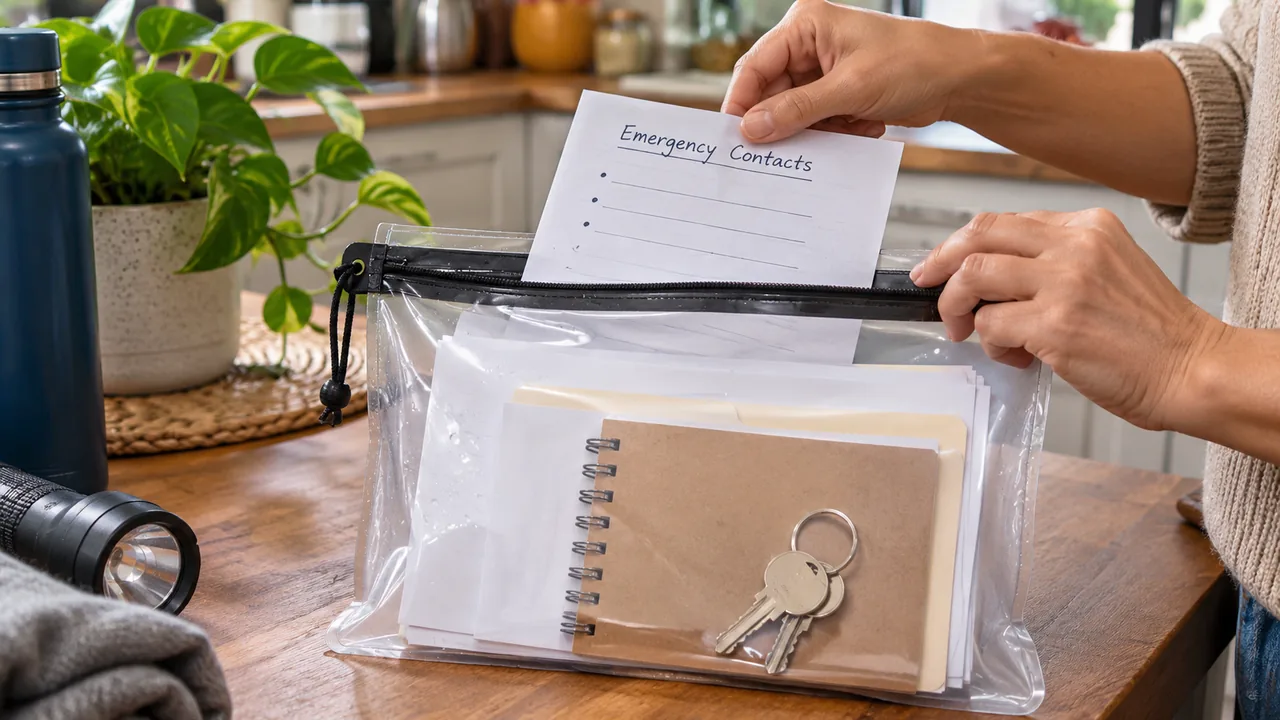
Create a concise contact sheet with relevant providers, trusted contacts, addresses and useful references. Keep a dated paper copy where responsible people can find it. Protect sensitive details and avoid including passwords or full financial access information in a casual carry folder.
Save appropriate documents offline and test that they open without a live login. A cloud listing is not always a downloaded file. Keep the most important information in another usable form if a single device fails.
Learn the relevant official update routes, including suitable broadcast options where useful. A battery radio can add a possible route, but it still depends on reception and broadcasts. Plan several practical options without assuming one technology always works.
Give responsibilities clear limits
Agree who checks supplies, updates contacts and maintains the bag. Keep tasks small enough to finish. A named responsibility is useful only if the person has the ability and information to perform it.
Have an alternative for important tasks. The usual organiser may be away, unwell or affected by the same incident. Make the plan understandable enough for another responsible adult to take the next step without recreating all the research.
Do not give children or untrained helpers responsibilities beyond their ability. A neighbour may assist with a check-in but not a clinical transfer. Clarity about limits makes support more dependable and reduces unsafe improvisation.
Build a one-page summary with useful fields
Start with the household's important contacts and the date of the review. Add the main check-in person, backup route and the information to share. Keep addresses and numbers readable without requiring several app searches.
Record meeting points with the situations they cover and the relevant safety condition. Add suitable destinations, transport arrangements and what must be confirmed before travel. Avoid a bare address labelled 'safe' without explaining its limits.
Include the location of supplies and the approved care-plan contact, not a substitute clinical instruction written from memory. Note where the detailed information is stored. Add the short daily-use collection reminder, with the condition that immediate safety takes priority.
Work through one realistic example
Imagine a power cut begins while one adult is home and the other is travelling. The adult at home checks immediate needs, uses a nearby light and follows the plan for any essential equipment. They keep the children in a suitable space and use familiar food rather than improvising unsafe cooking.
The travelling adult checks verified transport information and uses the agreed contact instead of making an unsafe rush. If the normal collection or care arrangement is affected, the authorised backup is contacted through the established process.
If the home later becomes unsuitable, the family checks the destination and route, gathers manageable essentials where safe and shares the updated location. The plan connects the stages without assuming the same action remains correct throughout the incident.
Try the plan safely before you need it
Choose a short ordinary exercise: find the torch, locate the contact sheet and explain the first steps if internet access is unavailable. Keep medical devices, safety systems and essential services operating normally. The purpose is learning, not creating a real interruption.
Ask another responsible person to use the summary. Can they identify the contact, destination conditions and location of the bag? Notice any unclear wording or hidden dependency. Fix those practical issues while the exercise is fresh.
Keep the tone calm and appropriate for children. A simple discussion can teach useful habits without frightening predictions. The plan should increase confidence in ordinary care and communication, rather than become a source of ongoing worry.
Review after changes and after use
Update the plan when school, work, care, medicine, mobility, pets or living arrangements change. Check hosting agreements and contact details. A clear old instruction can be misleading if the household no longer works that way.
Review physical supplies too. Food gets used, batteries lose charge and cables move to other rooms. Replace what is missing through an ordinary manageable routine. Keep the bag suitable for the season and the people carrying it.
After a disruption, record the concrete gap that caused difficulty and address it. That may be an inaccessible bottle, an unclear contact or a destination with the same outage. The most useful improvement is often specific and small.
Keep community support realistic and respectful
Talk to trusted neighbours about appropriate check-ins or practical help, with consent. Ask what support a person wants rather than assuming. Share only the personal information necessary for the arrangement and keep private care details out of public conversations.
Recognise that wider disruption can affect helpers too. A plan should not depend entirely on one neighbour being present or having spare supplies. Keep professional and emergency routes for needs that cannot be met through ordinary support.
Preparedness can strengthen the way people look after one another. A clear household plan leaves less to improvise and makes it easier to offer useful help within safe limits. Start with the conversation, write the next steps and keep the arrangement current.
Read the summary aloud to someone else
Once the one-page summary exists, ask another responsible person to explain the first steps in an ordinary example. Where is the light? Who is contacted? Which destination is only a possibility until confirmed? Which need has its own professional instruction? Their explanation can reveal unclear wording more quickly than another editing pass by the person who wrote it.
Listen for hidden assumptions. A reference to 'the usual number' may be obvious to you and meaningless to someone else. A spare key may be accessible only while one person is home. A backup collector may share the same route problem. Replace those assumptions with a clear current detail or an appropriate alternative.
Keep the exercise kind and practical. The aim is to improve the arrangement, not test memory or assign blame. If the plan is difficult to explain, simplify its next actions before adding more pages.
Finish by choosing one change and completing it. Then update relevant copies together so that the kitchen sheet, bag and authorised helper are not using different versions. A shared understandable summary is a useful result in itself, even before every optional item has been bought.
Frequently asked questions
How detailed should a family emergency plan be?
Keep the everyday summary concise enough for another responsible person to use. It should identify contacts, meeting options, destinations, access, supplies and the location of specific care instructions. Detailed professional plans may sit alongside it. A large document is not automatically more useful if the first action is difficult to find.
Should we have only one meeting point?
Use suitable options for different situations and record their conditions. A nearby point may help after a building evacuation, while a wider incident may need an alternative outside the area. Current hazards and official instructions take priority. Do not send people towards a familiar location that has become unsafe.
What if the usual organiser is away?
The plan should remain understandable and manageable for the person actually present. Share relevant knowledge, keep contacts accessible and arrange realistic backups for important tasks. Test the summary with another responsible adult. Avoid a departure sequence that requires several helpers when one adult may be managing children or care alone.
Do children need to memorise the whole plan?
No. Teach the age-appropriate parts: trusted adults, a relevant meeting point and the simple next action. Adults remain responsible for warnings, transport, documents and decisions. Keep practice calm and useful rather than dramatic. Coordinate with school and childcare procedures so that children receive a consistent message.
How often should we update it?
Review it regularly, after using it and whenever important circumstances change. Check numbers, addresses, care arrangements, destinations and physical supplies. The useful review is a practical check, not just changing the date. Fix the particular gap that would otherwise make the next decision harder.
Sources and further reading
British Red Cross: household emergency planning