

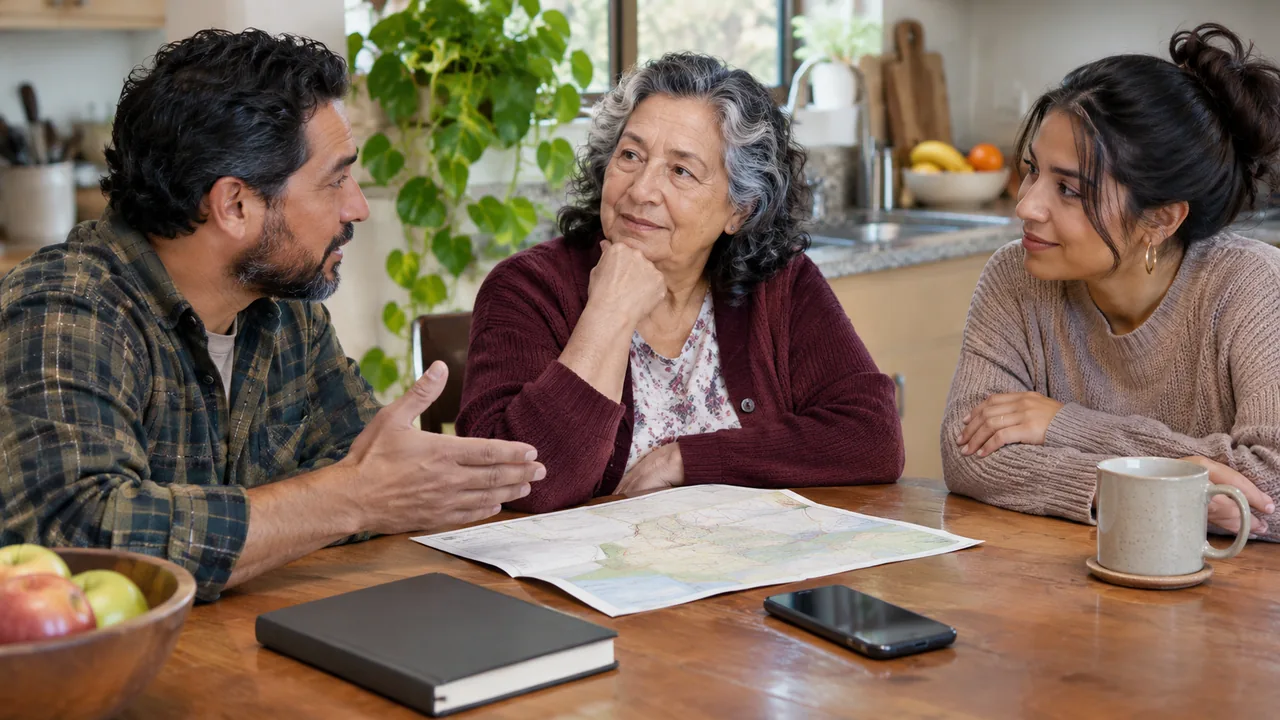
A wildfire evacuation plan is easiest to make before smoke changes the view from your window. You need to know how warnings reach you, which routes the authorities may use and how the household will leave with essential personal items, children, pets and any care needs.
If authorities tell you to evacuate, leave promptly through the instructed arrangements. Do not stay to watch the fire, finish protecting possessions or collect photographs for social media. If immediate danger develops, use the emergency service for your location and follow its instructions.
This guide focuses on practical family preparation. Wildfire behaviour, smoke and routes can change quickly, and a general article cannot assess your street. Use current local advice, distinguish a smoke-health instruction from an evacuation direction and keep your plan flexible enough to change.
Learn the warning arrangements for your area
Find the responsible local fire, emergency-management and public warning sources. Systems differ by country and region, so do not assume an alerting method described for another place is available where you live. Keep useful official routes in the household plan.
Check how you will receive information at night, while away and if internet access is interrupted. A phone, provider app or broadcast route can each have limits. Keep an appropriate alternative and make sure another responsible person knows how to find the current instruction.
Do not treat the absence of one type of warning as proof that there is no danger. Use current local information and respond appropriately to an immediate hazard. Report a discovered wildfire through the relevant emergency route rather than assuming someone else has already called.
Know the routes without relying on one app
Identify ordinary routes out of the area and any known access constraints in advance. Consider bridges, narrow roads, powered gates and places where traffic may be restricted. A route that works during an ordinary commute may not be available during an incident.
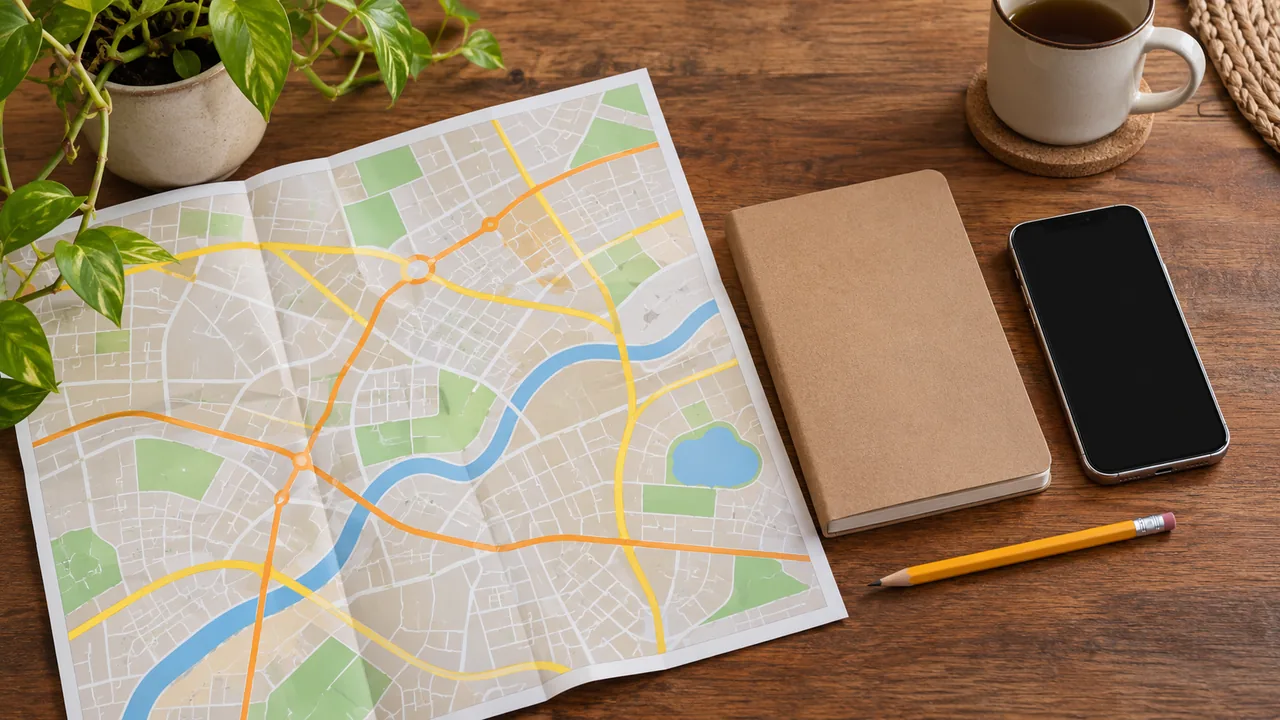
Keep useful map information offline where appropriate, but let current road signs, closures and responder directions take priority. A saved map does not show every new fire, smoke condition or cordon. Do not follow a suggested shortcut into an affected area.
Ask how the plan works if you do not drive or need accessible transport. Confirm relevant support arrangements beforehand and keep a backup contact. A route drawn on a map is only useful if the people involved can actually travel it.
Set the household departure sequence
Agree who helps children, who manages pets and where the portable essentials are kept. Keep the sequence short enough for one adult to use if the other is away. Avoid a plan that requires several people to collect items from different rooms simultaneously.
Include a brief reminder for daily-use essentials such as medicines, phone, glasses and mobility equipment, collected only if safe. A prepared go-bag should reduce the need to search rather than create a long final packing task.
Make leaving the priority once instructed. Property tasks belong only within time and safety permitted by the actual advice. Do not interpret a checklist of things that might help as a reason to delay an urgent evacuation direction.
Confirm destinations and alternatives
Discuss a suitable place to stay with trusted contacts where possible. Check that it is outside the likely affected area and that the journey remains appropriate. Keep an alternative because smoke, closures or the fire itself can affect a wider area than expected.
Confirm access, sleeping arrangements, children, pets and essential care needs. A host's willingness to help is valuable, but practical details determine whether the place works. Use current official information for any operating reception or accommodation arrangements.
Do not travel to a public venue solely because it served as a centre during an earlier incident. Confirm its current role, address and opening. A place to receive information may not offer overnight accommodation or specialist equipment support.
Keep essential care at the front of the plan
Ask the care team and equipment supplier about transport and continuity if you may need to leave. Record approved backup, required accessories, contact routes and the action threshold. A general bag cannot establish that treatment can continue at any destination.
Keep relevant medicine information protected and accessible. Do not change treatment, improvise a battery connection or use someone else's equipment under pressure. If an urgent health need develops, contact the appropriate professional or emergency route.
Think about the full sequence: leaving the building, reaching transport, travelling and arriving. A working socket at the destination does not solve an inaccessible staircase or unsuitable transfer. Planning those details early reduces the chance of a rushed unsafe arrangement.
Make pet movement possible before the warning escalates
Keep suitable carriers, leads, identification and supplies accessible. Practise appropriate carrier familiarity in ordinary life, and plan who can handle each animal safely. Several pets or specialist species may need more help than one adult can provide.
Confirm the destination's animal arrangements and relevant transport rules. Do not assume every official facility or private host can accommodate the same species and number. Keep veterinary contacts and prescribed treatment instructions available.
If conditions give time and local advice supports early preparation, organise animals before the situation becomes chaotic. Do not enter immediate danger to retrieve a pet. Follow responder instructions and provide relevant information about animals left behind.
Pack personal essentials, not an entire household
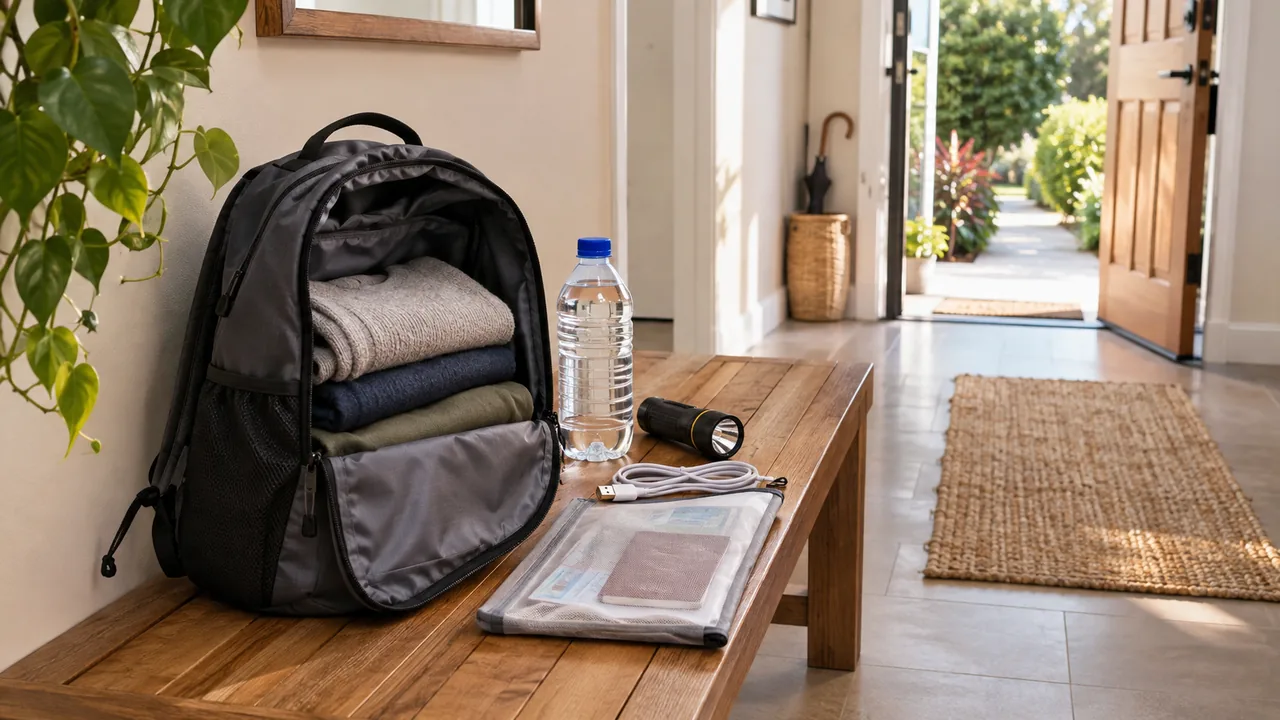
Choose a manageable bag with necessary documents, medication information, appropriate clothing, a light, charging arrangements and suitable food and water. Consider actual carrying ability and the need to help another person. A heavy load can make departure harder.
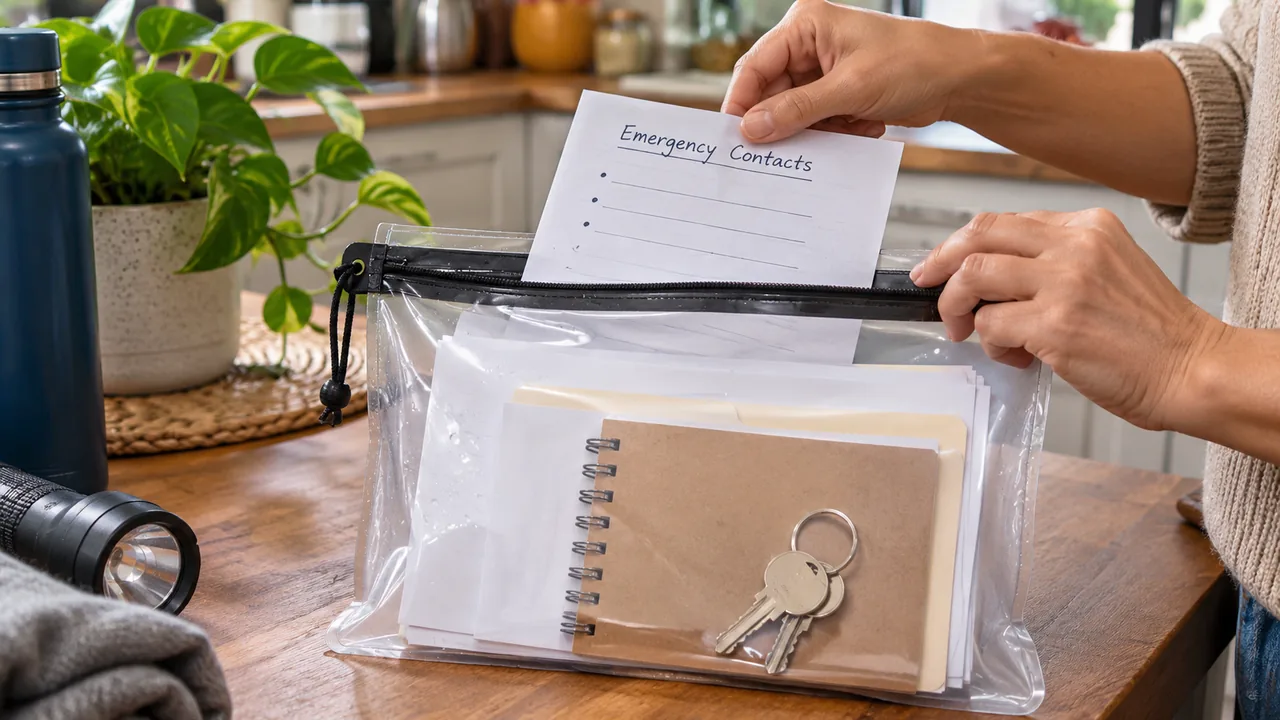
Keep sensitive information secure and protected from water or damage. A short contact sheet may be more useful than a thick folder of unreviewed papers. Do not carry passwords and full financial access details casually in an outer pocket.
Rotate supplies and review seasonal clothing. The bag should be ready through ordinary maintenance, not a last-minute project that starts when an alert arrives. A small familiar comfort item may help children without adding significant weight.
Keep children informed without making them responsible
Explain the next action calmly and in concrete terms. Children should know which adult to stay with, what small appropriate item they may bring and where the family will go according to the current plan. Avoid predictions about everything that might happen.
Do not make children monitor warnings, judge routes or collect important items from unsafe places. Adults remain responsible for those decisions. A familiar comfort item and a clear routine can help without turning the evacuation into a frightening test.
Know school and childcare procedures before an incident. Use their current information and authorised collection arrangements rather than assuming a family plan overrides safeguarding or shelter instructions. Keep an approved alternative collector where appropriate.
Treat smoke and direct fire danger as related but different questions
Smoke can affect areas away from flames and may lead to public-health advice about staying indoors or reducing exposure. An evacuation direction concerns a specific movement decision. Read the actual instruction for your location rather than assuming one response fits every view of smoke.
Follow relevant health advice if someone has a respiratory condition or another vulnerability. Ask the care team about their plan in advance. If serious breathing difficulty or another immediate medical emergency develops, seek emergency help.
Protective equipment has limits. Do not treat a mask as permission to enter an affected area, remain in a fire-threatened property or ignore an evacuation direction. The appropriate action depends on the incident and current instructions, not the reassurance of owning a product.
Use any property-preparation advice within clear limits
Local fire authorities may provide preparation guidance for the building and surrounding area. Arrange routine maintenance and any appropriate professional work beforehand. Do not begin a difficult outdoor task once conditions make it unsafe.
If a current instruction allows specific last steps before leaving, do only what can be completed safely without delay. Keep the household departure needs first. No possession or unfinished job is worth missing the safe movement window directed by responders.
Do not attempt to fight a spreading wildfire with improvised household equipment. Report it through the appropriate route, keep away and follow emergency instructions. Professional response and personal evacuation are different roles.
Keep travel safe and coordinated
Before a necessary departure, use the advised route and keep relevant instructions accessible. Do not stop to photograph the fire or create an obstruction. Conditions can change quickly, and a person driving towards smoke for a better view can interfere with response and place others at risk.
Keep pets appropriately secured and bags stored so they do not obstruct driving. Use suitable child restraints and arrangements for mobility or medical equipment. An urgent situation does not remove the hazards of loose items and unsafe transport.
Tell the agreed contact the destination when safe, using a brief factual message. Avoid distracting the driver or repeatedly calling while the vehicle is moving. If the route changes through official instructions, update the contact when an appropriate safe opportunity exists.
If the planned route becomes unavailable
Follow current responder directions and use the relevant emergency route if you face immediate danger. Do not improvise a path through flames, dense smoke or a closed area because the destination is waiting. A plan should include the possibility of changing the next action.
Give your location and relevant needs clearly when seeking help. Do not assume a social-media message will reach the appropriate service quickly. Use the contact method advised for emergencies in your location.
Keep the household together through the instructions received. If a particular action is directed by responders, follow it rather than applying an unrelated internet survival technique. A general article cannot assess vehicle position, fire conditions or available escape at that moment.
Example: the usual organiser is away
Imagine a local evacuation direction arrives while one adult is home with children and a cat. The carrier, manageable bag and daily-use reminder are already accessible. The adult does not need to search for passwords, identify a new destination or teach the cat to enter a carrier for the first time.
The family follows the instructed route and sends a brief update when safe. The usual organiser receives the destination through the agreed contact rather than trying to coordinate several separate calls. Property tasks do not delay departure.
The example shows why the plan should work for the person actually present. Equipment is useful, but shared knowledge, appropriate carrying loads and confirmed arrangements are what turn it into a practical family response.

Example: smoke is visible but the instruction differs by area
Imagine relatives in two places see smoke from the same incident. One area receives an evacuation instruction, while another is given smoke-health advice and told to monitor updates. The households follow their own current local directions rather than copying each other's action automatically.
They share official links with the relevant location and time, avoiding a blanket message that everyone must leave. If conditions change, they update the plan. A warning's geographical detail matters as much as its alarming subject.
This is not a reason to ignore immediate danger. It is a reason to keep current instructions and actual conditions at the centre of the decision. A clear local plan is more useful than treating all visible smoke as one identical situation.
Return only after the relevant clearance
Follow official information about when and how to return. A reduced flame front or a neighbour's visit does not establish that the property, route or utilities are safe. Hot material, damaged trees, debris and affected systems may remain hazardous.
Keep children and animals away from affected areas until they can be used safely. Obtain appropriate professional checks for building or utility concerns. Follow any continuing water, food or health restrictions rather than assuming arrival home ends the incident.
Afterwards, replenish supplies and review the gap that mattered most. A better carrier location, alternative collector or second destination may improve the plan more than another item in the bag. Keep preparation focused on safe movement and the needs of the actual household.
Reduce the jobs left for final departure
Review the plan with the question, 'What would still need doing after an evacuation direction?' Some items must remain in daily use, but many avoidable searches can be removed now. Keep the suitable carrier accessible, the bag manageable and relevant documents current.
Separate necessary personal collection from optional property tasks. A clear reminder for essential medicines is different from a long list of possessions that would be nice to protect. Make the priority visible so that a helper does not interpret every line as something to finish before leaving.
Check the arrangement when the usual organiser is absent. Another adult should know the destination contact, pet requirements and relevant care pathway. They should not need access to an unavailable phone or a detailed explanation from someone already travelling.
If the review reveals a task that cannot be managed safely by the people present, arrange suitable help or simplify the load. Do not rely on emergency conditions making the task easier. Advance organisation is valuable because it removes decisions and carrying demands before they become urgent, leaving more attention for current instructions and the safety of the journey.
Keep any local fire-service preparation advice with its limits intact. Once immediate departure is directed, unfinished optional tasks remain unfinished.
Frequently asked questions
Should I wait until I can see flames before leaving?
Do not delay a genuine evacuation direction until flames are visible. Follow current official instructions for your area and act appropriately if immediate danger develops. Roads and conditions can change before the fire reaches the view from your window. Prepare the household and pets early enough to use the advised arrangements promptly.
Does smoke always mean we should drive away immediately?
Use the instruction for your location and the immediate conditions. Smoke-health advice and an evacuation direction are different, though they can be related. Do not make a hazardous journey based only on a general screenshot or another area's instruction. If there is an immediate threat or urgent medical need, use the appropriate emergency route.
Should I stay to protect the house?
Do not let property tasks delay instructed evacuation or place you in danger. Routine preparation and appropriate professional work belong before an incident. During a warning, follow local directions and complete only actions that are safe and permitted within the available time. People and essential needs take priority over possessions.
What if I cannot transport all my pets alone?
Plan suitable help and transport before an incident, with consent and realistic handling arrangements. Several animals or specialist needs may require more than a standard bag. Keep carriers and contacts ready, and confirm the destination. During immediate danger, follow responder instructions rather than attempting an unsafe retrieval or journey.
Can I return once the smoke looks lighter?
Follow the responsible authority's current clearance and any continuing restrictions. Visible improvement does not establish the safety of roads, trees, structures or utilities. Keep alternative arrangements active until the return and property can be managed appropriately. Seek relevant professional checks where needed and protect children and animals from affected areas.
Sources and further reading
FEMA: wildfire preparation and response