

Could your household manage for three days if an everyday service stopped working? It is a useful question because most routines quietly depend on several systems working together. The kettle needs electricity. The bathroom needs water. The shopping trip may need a working car, an open road and a payment terminal that can connect to its bank.
The UK's Be Ready checklist turns that question into a manageable household task. You check what you already have, work out the gaps and make a few arrangements before an interruption forces you to improvise. You do not need to become an expert in every possible disaster to make a useful start.
This guide explains how to use the checklist without turning it into an anxious shopping exercise. The aim is a practical three-day plan that fits the people in your home, supports neighbours where possible and helps you make sensible decisions when information is limited.
What the Be Ready campaign is asking households to do
Be Ready encourages households to prepare for three days of disruption. That means considering essential supplies and arrangements for a period when normal services may be difficult to access. It is a planning baseline, rather than an instruction to remain at home for a fixed period whatever happens.
Different incidents need different responses. A power cut may mean staying safely indoors with torches and familiar food. A flood or fire may mean leaving promptly. Your checklist should therefore sit alongside local warnings and an evacuation plan, rather than replacing them.
The most useful way to approach the campaign is to ask what you would miss first. For one household, the answer may be a charged phone. For another, it may be access to a lift, a regular carer or equipment used for treatment. Those differences deserve attention before you buy general supplies.
Begin with a simple household conversation
Choose a quiet moment and talk through an ordinary evening without the usual services. Who might be home? Who might be at school, work or a relative's house? Who normally holds the important contact numbers? What would happen if that person were unavailable?
Give each adult a chance to mention needs that a generic list might overlook. Someone may rely on captions, an accessible bathroom, a particular food texture or a charging lead that is difficult to replace. Record practical requirements without assuming that the oldest, strongest or most technically confident person will always be present.
For children, keep the conversation reassuring. You can say that families keep useful things ready in the same way they keep plasters or spare clothes. Focus on simple actions they can understand: finding an adult, knowing a meeting place and recognising where the torch is stored.

Check what you already own
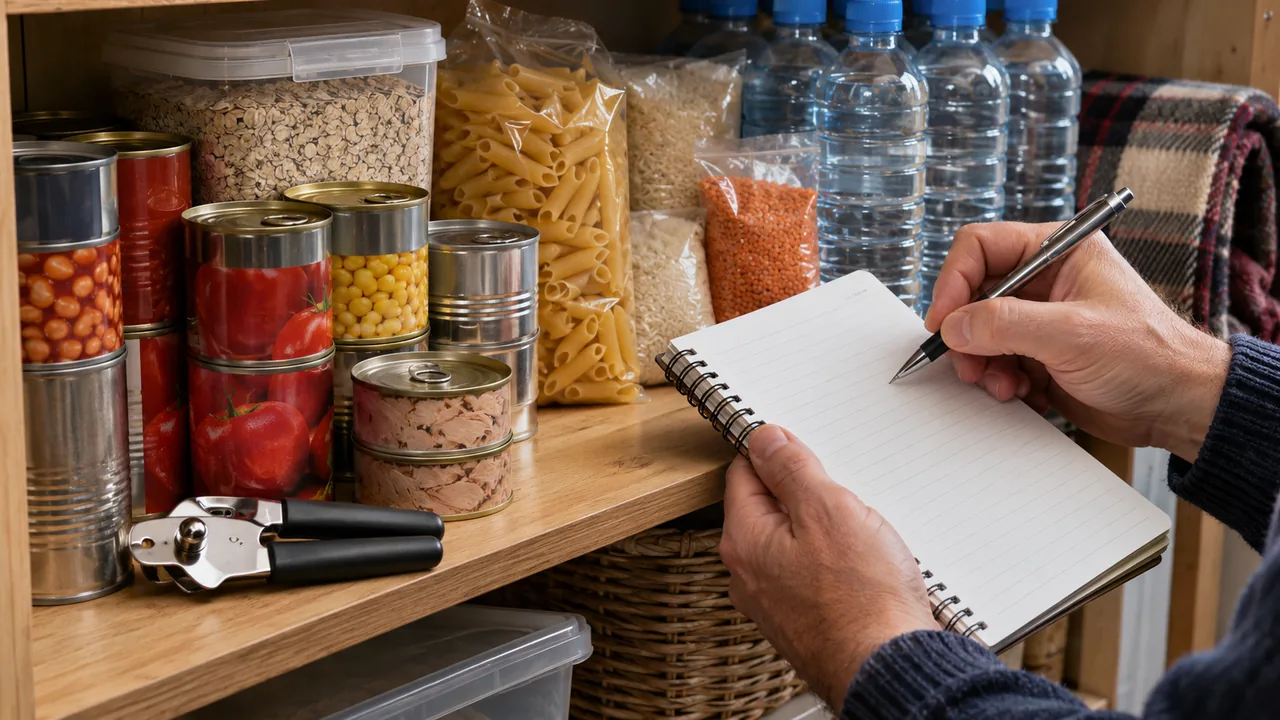
Walk through the kitchen, bathroom and cupboards with a notebook. List familiar long-life food, drinking water, blankets, torches, batteries, radio equipment, first-aid items and chargers. Test the things that need testing. A drawer containing a torch is not the same as a working light with usable batteries.
Look at quantities and suitability rather than simply putting ticks beside item names. One small bottle may be useful, but it does not meet a whole household's drinking needs. Food that requires lengthy cooking may not suit an interruption to electricity. A radio that nobody can tune is a task to practise, rather than a finished part of the plan.
Make three short lists: ready to use, needs checking and genuinely missing. This keeps the work grounded in what your household already has. It also avoids buying a second version of something that only needed a new battery or a different storage place.
Work out the water and food gap
The Be Ready drinking-water baseline is three litres per person per day. Over three days, multiply the number of people by nine litres. Add separate allowances for other essential uses and pets. If a person's treatment or health needs affect fluid requirements, take advice from their care team rather than relying on a generic calculation.
For food, think in meals. Plan what each person would actually eat over the three days, including dietary needs and suitable portions. Check preparation instructions and remember the manual tin opener. Aim for supplies that fit your normal shopping habits so that using and replacing them remains straightforward.
Write down where the supplies will live. Space, lifting ability and flood risk all matter. If the full target is difficult to achieve immediately, identify the next manageable step. A useful plan can develop over several shopping trips. It should not create hardship or encourage panic buying.
Make light, warmth and hygiene easy to find
Check how someone would reach a torch if the lights failed tonight. A clear place beside the bed or near the main living area is more helpful than equipment hidden behind a stack of boxes. Test the controls and keep the relevant batteries or charging arrangements with it.
Think about seasonal conditions. Warm layers and blankets are useful in winter; shade and a way to reach a cooler safe place may matter more in extreme heat. Avoid treating one household checklist as a complete answer for every temperature, building type and personal need.
Keep essential hygiene items in ordinary use and replace them as needed. Consider toilet arrangements if water is unavailable, safe hand cleaning and suitable supplies for children or anyone receiving care. Write down any question you cannot answer without improvising. That is a useful gap to resolve in advance.
Plan for medical and accessibility needs early
Some arrangements take longer than a shopping trip. If a medical device needs power or water, contact the care team and equipment supplier about a disruption plan. Ask what approved backup exists, how long it lasts, what warning signs matter and how to obtain help if the interruption continues.
The Priority Services Register can help eligible people tell utility providers that they may need additional support. Check eligibility and registration with the relevant providers. It does not guarantee that supplies will never fail or that power will be restored before anyone else's, so it belongs alongside a personal backup plan.
Think beyond the equipment itself. A working battery may not solve access through a powered entrance or an unusable lift. A person may also need transport, assistance with transfers, accessible information or somewhere suitable to stay. Record those practical dependencies with the person's involvement and consent.
Give information its own place on the checklist
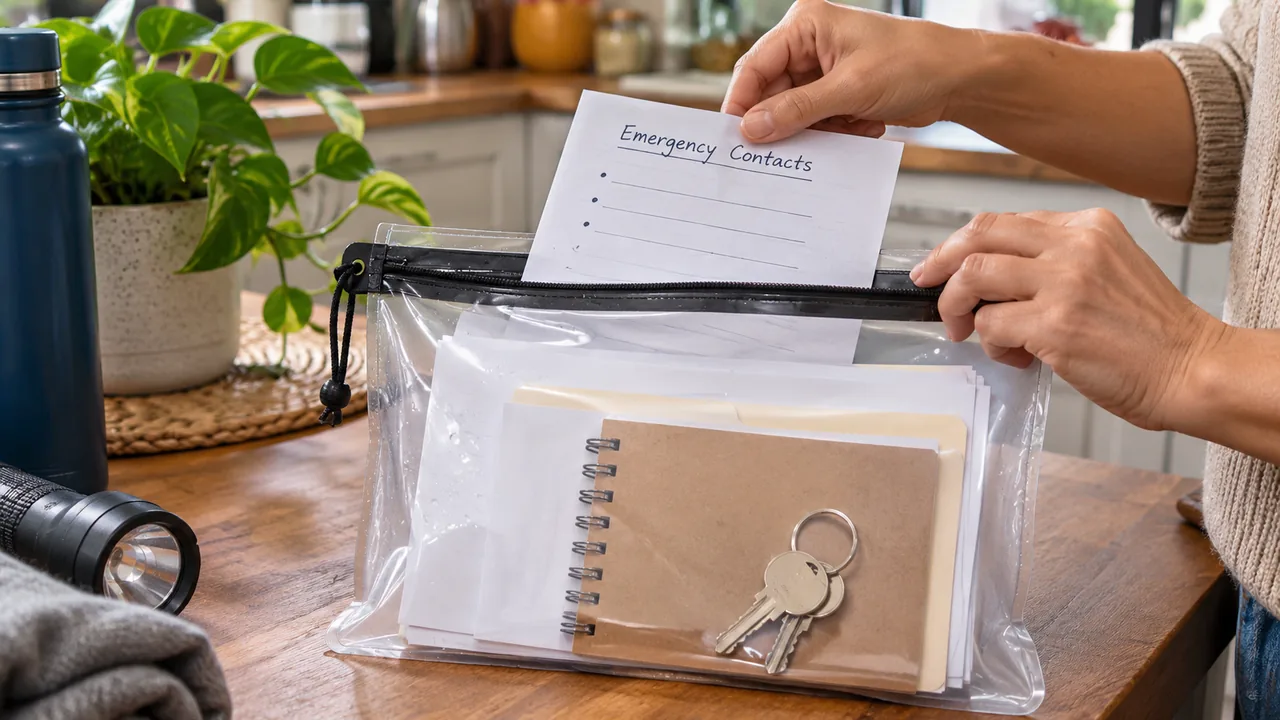
Save useful official websites and write down essential numbers while everything works. Include utilities, relevant local services, school or care contacts and someone outside the immediate area who can help pass messages. Keep a paper copy where responsible household members can find it.
A battery or wind-up radio can provide another information route. Test reception and note suitable stations. Do not assume that a mobile phone, home broadband and a digital landline are independent systems. A single power interruption can affect several of them at once.
Decide how often to look for updates and who will check them. Constantly refreshing several feeds can drain batteries without improving the plan. During an incident, use current local instructions from the organisation responsible for the problem. The Be Ready website provides preparation guidance; it is not a live incident dashboard.
Keep money and documents practical
Consider which purchases your household might need if card payments are unavailable. A small, secure cash reserve in useful denominations may help, but the amount should reflect your circumstances. Avoid assuming that every shop will be open or able to provide change simply because you have cash.
Keep relevant document copies and information together. A short folder might include insurance details, identity copies where useful, prescriptions, contact numbers and instructions for essential equipment. Secure it against casual access and think about what would happen if it were misplaced.
Keep the folder current. An old address, a disconnected phone number or instructions for a device you no longer use can be worse than a missing detail because it looks trustworthy. A dated, concise contact sheet makes the next review easier and reduces the chance of relying on forgotten information.
Decide what you would take if asked to leave
Home supplies and an evacuation bag are related, but different. Your home kit may include heavy water stores and several days of food. A bag for leaving should be manageable and focus on the essentials you could reasonably take while following instructions promptly.
Discuss likely destinations with people who might host you. Check access, transport, children, pets and any equipment needs. Do not assume that a familiar nearby address will be outside the affected area. Keep an alternative and a way to tell someone where you are going.
Write down the essentials that cannot live permanently in a bag, such as medicines in daily use or a mobility aid. Put that short reminder near the bag. If there is immediate danger, leaving safely takes priority over collecting belongings. Read the go-bag guide when developing the portable part of your plan.
Agree how to help each other without making promises you cannot keep
The campaign also encourages community connections. A conversation with a neighbour may identify simple ways to help: checking whether someone has received an update, collecting supplies when it is safe or sharing contact information. Keep arrangements specific and realistic.
Ask before recording or sharing another person's medical or personal details. A neighbour may welcome an agreed check-in but not want their circumstances circulated in a group chat. Respect their independence, preferences and limits, including the right to decline an arrangement.
Build a second option into anything important. A volunteer may be away, a road may be closed or several households may need assistance at once. Community support is valuable, but it cannot replace emergency services or specialist care. Clear expectations make help more dependable and reduce confusion when circumstances change.
Turn the checklist into a small action plan
Choose a few tasks you can finish this week. For example, test the torch, write the contact sheet and set aside familiar no-cook food. Give each task an owner and a place to record completion. Keep the list short enough that it gets used.
For a task that needs outside advice, record whom you will contact and the answer you need. A question such as 'Will this telecare unit work without mains power?' is much easier to resolve than a vague note saying 'sort emergency equipment'. Save any supplier instructions with the household information.
Avoid confusing purchases with progress. Learning to use a radio, confirming an accessible route or arranging a spare key may solve a more important problem than buying another tool. Judge each action by the difficulty it removes from a real household routine.
Try the plan before you depend on it
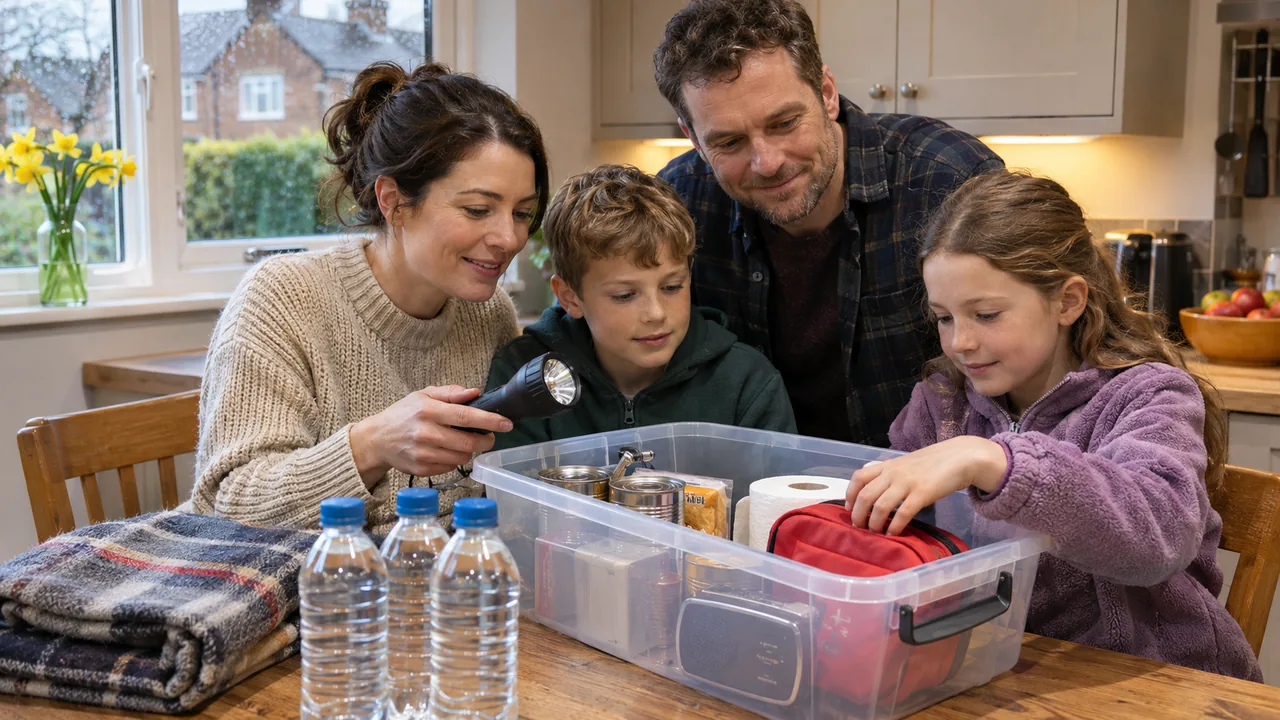
Run a short practice without creating a genuine outage. Ask someone else to locate the information folder, switch on a torch and explain the first few actions. Keep medical and safety equipment operating normally throughout. The purpose is to find gaps, not to test anyone's endurance.
Imagine that the usual organiser is away. Could another adult find the supplies and understand the medical contact sheet? Could a child identify the agreed meeting place? Could a person with limited mobility reach the items that are supposed to support them?
Use the answers to simplify the arrangement. Put equipment where it is easiest to use, replace unclear wording and remove unnecessary steps. A plan that works for more than one person is more reliable than one that depends on somebody remembering every detail under pressure.
Keep the checklist current as life changes
A completed checklist is a snapshot. Household needs change when someone starts a new medicine, a baby arrives, a child changes school, a pet joins the family or a person moves home. Review the plan after those changes as well as at a regular date.
Check the physical supplies too. Food gets eaten, batteries lose charge and cables migrate to other rooms. Add replacements to ordinary shopping rather than letting a missing item become a permanent gap. Write the review date somewhere visible enough to be useful.
The best result is a household that knows what it has and what to do next. That makes it easier to respond calmly, care for one another and leave space for people who need immediate assistance. Start with one achievable action today, then make the next one easier.
Turn a tick into a working arrangement
Suppose you tick 'radio' because one is in a cupboard. Check whether it receives a usable station in the intended room and whether the household can operate it. Now the tick describes a working information option, rather than an object you remember owning.
Use the same approach for water, phone charging and documents. The bottle must be accessible, the cable compatible and the contact sheet current. A short physical check gives the checklist meaning without requiring a larger shopping budget.
If something needs attention, write the actual next action beside it. 'Replace the torch batteries' is easier to finish than 'improve preparedness'. Keep the revised checklist where another responsible person can use it, and review the practical arrangement after supplies are borrowed or household needs change.
Frequently asked questions
Is Be Ready advice only relevant to people living in houses?
No. People living in flats, shared accommodation and temporary housing can adapt the same principles. Storage, access, landlord responsibilities and evacuation arrangements may differ, so make the plan fit the building. For example, consider how a lift outage affects access and how each person receives building safety information. Ask the responsible building manager about arrangements you do not understand.
Does the three-day target mean help will arrive after exactly 72 hours?
No. It is a planning starting point, not a promised restoration or response time. Some interruptions end quickly; others last longer. Keep following current local information and review whether your household needs a longer or more specialised plan. If your property is unsafe or you are told to evacuate, the supply target is not a reason to stay.
What should I do if I cannot afford the full checklist?
Start with what you have and tackle the most important gaps gradually. Test existing equipment, write contacts on paper and include missing essentials in normal shopping when possible. Ask relevant local support organisations about available help if cost affects essential needs. A practical plan should support your household, rather than create debt or encourage purchases you cannot sustain.
Does Priority Services Register membership guarantee continuous power?
No. It can help utility providers understand that you may need extra support, but it does not prevent outages. Discuss essential equipment with the care team and supplier, including approved backup, accessible contact routes and when to seek help. Check that the relevant provider has accurate information and review it when your circumstances change.
Where should I look for advice during an actual incident?
Use the organisation responsible for the incident: emergency services, your council, the relevant utility provider or current government alerts. Keep more than one way to receive updates where possible. Be Ready helps you prepare beforehand; do not assume its general guidance is a live update about conditions on your street or the expected restoration time for a service.