

When the lights go out, the most useful emergency kit is the one your household can actually find and use. It does not need to look impressive. It needs to help you drink safely, eat familiar food, see what you are doing, receive reliable information and manage the needs that cannot wait until tomorrow.
A 72-hour emergency kit gives you a practical starting point for three days of disruption. It is not a prediction that an emergency is coming, and it is not a guarantee that every problem will be over within three days. Think of it as a little breathing space: fewer urgent shopping trips, fewer decisions in the dark and more time to look after the people around you.
Start with what is already in your cupboards. Then build a kit that fits your home, your budget and your family. A collection of ordinary, well-chosen supplies will usually serve you better than an expensive box of unfamiliar gadgets.
Start with your household, rather than a shopping list
Write down who will depend on your supplies. Include regular visitors you care for, children who spend part of the week with you and pets. Then note anything that makes an interruption harder: a medicine that needs refrigeration, a powered medical device, limited mobility, a baby who needs feeding equipment or a hearing aid with a particular battery.
This small exercise changes the shopping list. A household with a dog needs drinking water and food for that dog. A person who cannot carry a large container needs smaller bottles within easy reach. Someone who usually shops every day may need more ready-to-eat food than a household with a well-stocked pantry. Your real routine is the best place to start.
Divide your plan into supplies for staying safely at home and a smaller bag for leaving. They can share some items, but they solve different problems. A useful home water supply is too heavy to treat as an ordinary backpack load.
Water: calculate it before you buy it
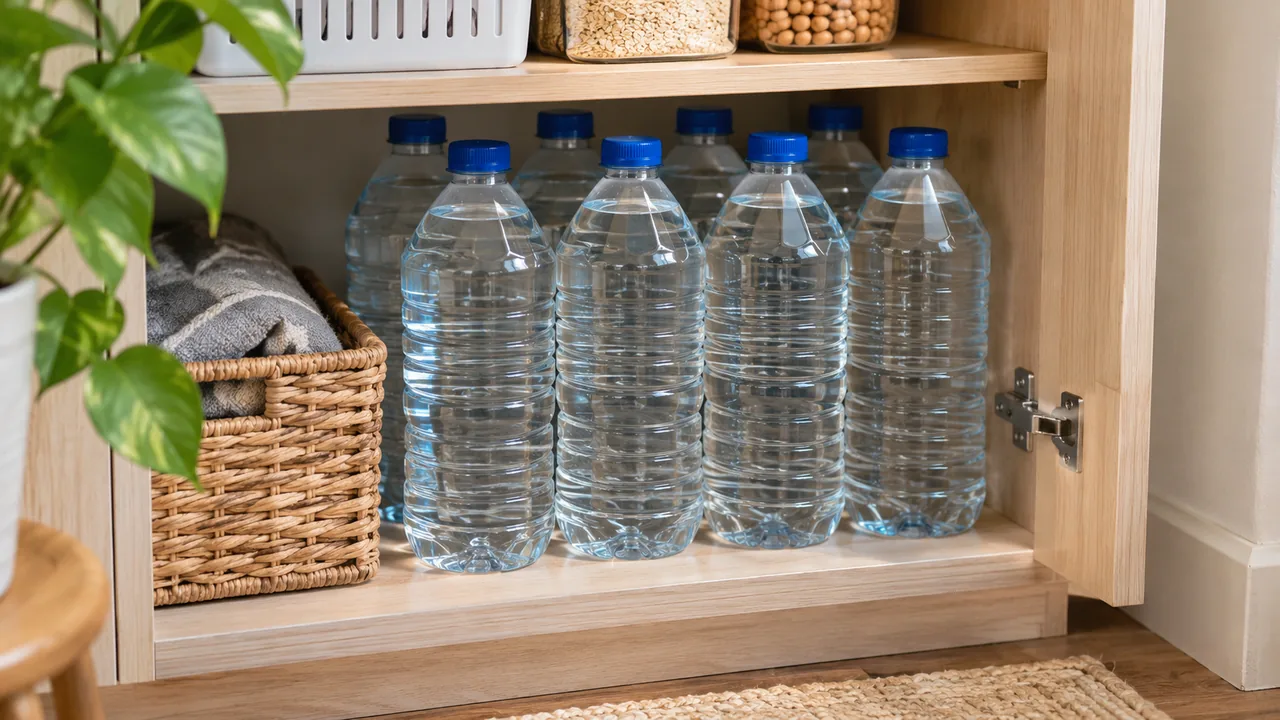
The UK Be Ready checklist recommends three litres of drinking water per person per day. Over three days, that is nine litres each. Four people would therefore need 36 litres for drinking, before allowing for cooking, washing or pets. People with particular health needs should follow advice from their care team.
Use that calculation to understand the storage space involved. You might keep several smaller bottles on a low shelf rather than one container that nobody can lift. Choose food-safe containers and protect them from heat, chemicals and damage. Follow the supplier's storage and date instructions, and keep drinking water separate from water intended only for cleaning or flushing.
Do not assume that a domestic jug filter makes floodwater or chemically contaminated water safe. Treatment depends on the contamination. If a water company issues a notice, follow its exact instructions. The article on emergency water quantities explains how to turn the drinking-water baseline into a household plan.
Food: plan nine easy meals, rather than nine random tins
Make a three-day menu using food your household already eats. For each day, choose a simple breakfast, lunch and evening meal, with snacks where useful. Check that the food can be eaten safely without refrigeration or cooking, or that you have a safe and genuinely workable way to prepare it.
An example might combine shelf-stable breakfast food, fruit in juice, ready-to-eat beans or fish, crackers and suitable spreads. Check labels: not every product sold in a tin or pouch is ready to eat. Include a manual tin opener, utensils and any dietary alternatives people need. A cupboard full of food that requires boiling is less useful when you cannot safely heat water.
Once a jar, carton or tin is opened, its storage requirements may change. Smaller portions can reduce leftovers when the fridge is unavailable. Keep an ordinary shopping rotation so that you use and replace supplies before their dates, rather than discovering a forgotten box years later.
Light, information and a working phone
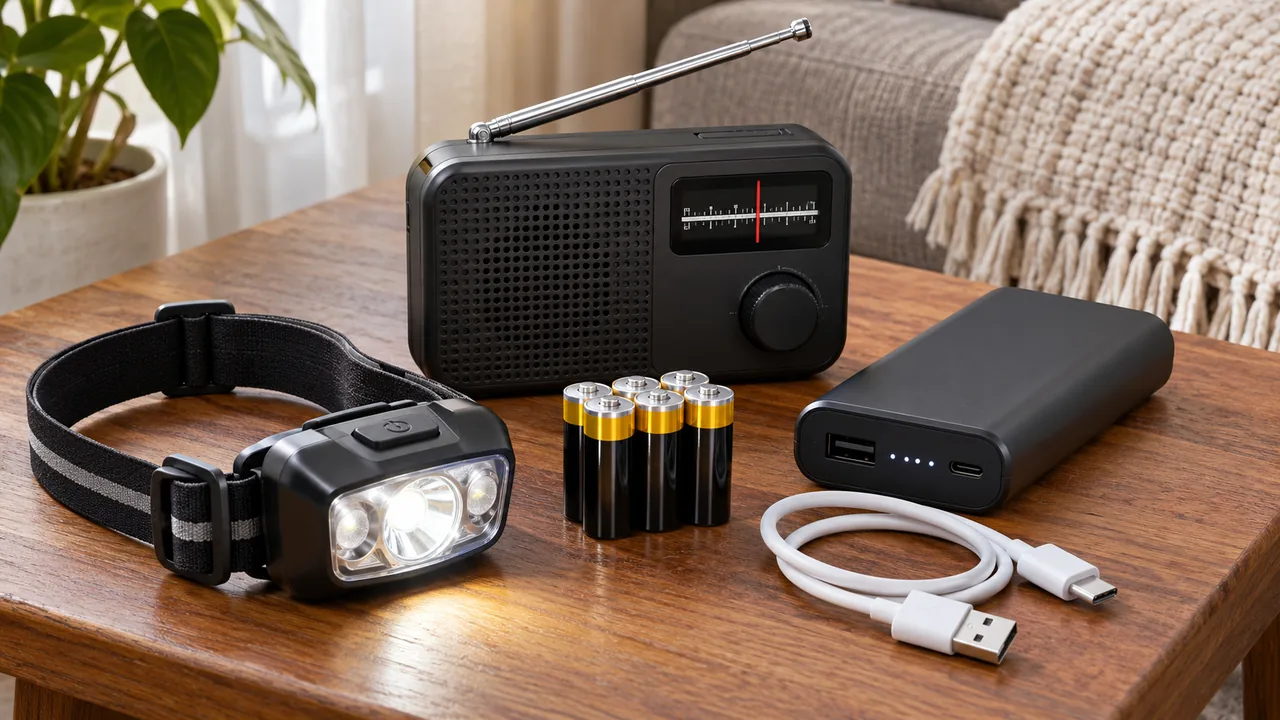
A torch should be easy to reach before you need to cross a dark room. Keep suitable spare batteries nearby, or check the charging routine for a rechargeable model. A head torch can leave both hands free when helping a child or sorting supplies. Check that every adult knows how the controls work.
A battery-powered or wind-up FM radio provides another route to information when home broadband is unavailable. Tune it before an emergency and write down a station you can receive. A radio still depends on a usable broadcast signal; it is an additional option, not a promise of universal reception.
A charged power bank and the correct cable can keep a phone useful for longer. Test the combination with your own phone. Battery capacity printed on a box does not translate directly into a fixed number of charges. Keep paper contact details too, because a charged handset cannot fix a wider network outage.
Medicines and essential equipment need their own plan
Keep an up-to-date list of regular medicines, doses, allergies and relevant contact numbers. Request repeat prescriptions in good time through your usual arrangements. Ask a pharmacist or care team about safe storage, any disruption to refrigeration and what to do if access to a particular medicine becomes difficult.
Do not stop, ration or change treatment to make an emergency supply last longer without professional advice. Equally, do not assume that an ordinary consumer power bank will operate medical equipment safely. A device-specific backup plan should be agreed with the supplier and care team, including how long approved batteries last and when to seek help.
Keep basic first-aid supplies that you know how to use. Training and clear instructions matter as much as the contents of the pouch. Put essential information where another responsible person can find it, while protecting private details from casual access.
Warmth, hygiene and everyday dignity
Blankets, sleeping bags and warm layers can make a cold home more manageable. Keep useful clothing accessible, including dry socks and comfortable footwear. Think about the person who feels the cold first and the room that is easiest for them to use. A home kit should support ordinary comfort, not merely the minimum needed to get through the night.
Add toilet paper, personal hygiene supplies, nappies where needed, waste bags and a practical hand-cleaning plan. Hand sanitiser and wipes are useful, but they do not replace every use of soap and safe water. Keep enough suitable cleaning materials to deal with small spills without consuming your whole drinking-water supply.
Never bring a barbecue, outdoor camping stove or fuel-burning generator indoors to cook or keep warm. Opening a window does not make outdoor equipment safe inside. If your home becomes unsafe because of cold, heat or a medical need, use your agreed alternative accommodation and support arrangements.
Cash, documents and useful paper copies
Keep a modest amount of cash in denominations that could cover ordinary essentials if card terminals or cash machines fail. Base the amount on your household's needs and what you can afford. There is no single correct cash total for every family, and there is no need to withdraw money in a panic.
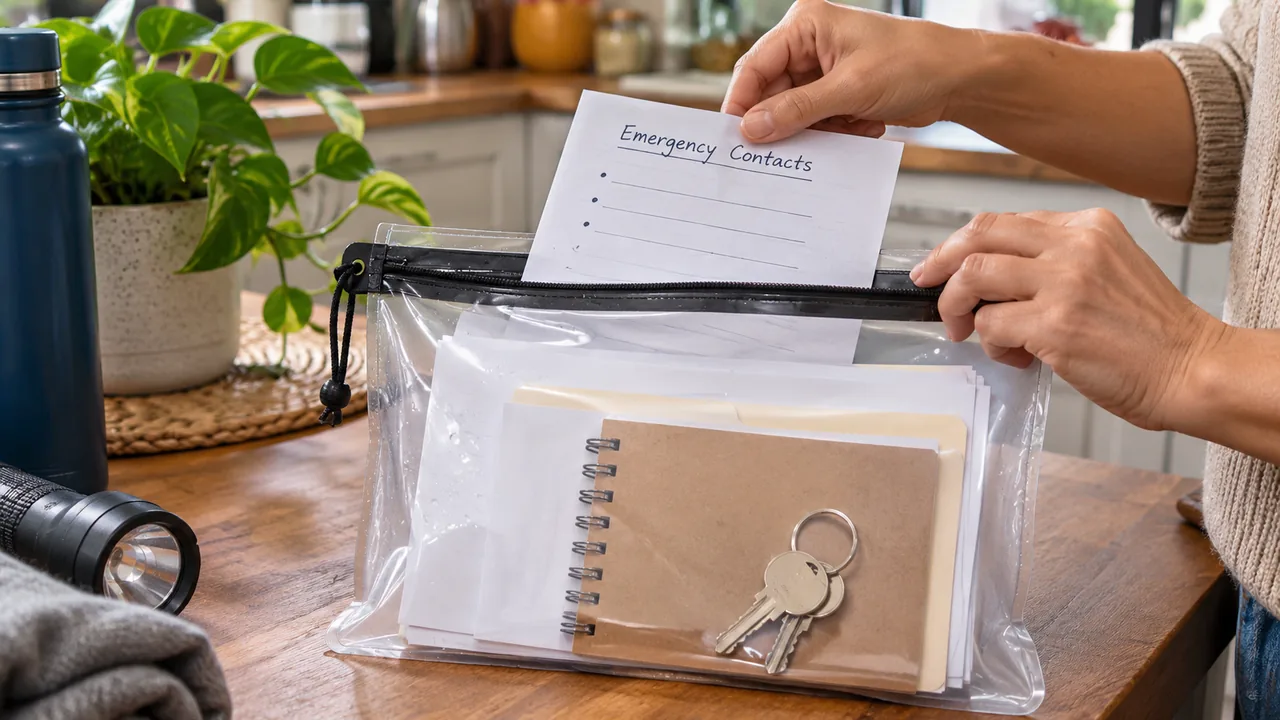
Useful paper copies might include emergency contacts, insurance details, prescription information and the parts of your household plan that you would normally search for online. Store them securely in a waterproof folder. Keep spare keys where appropriate, but consider the security implications if the folder or bag were lost.
You do not need to carry every original document everywhere. Decide which copies genuinely help someone identify you, contact support or arrange temporary accommodation. For sensitive records, balance accessibility with privacy. A simple, current page is more useful than a thick file nobody has checked.
Adapt the kit for babies, children and pets
Children may need familiar food, nappies, suitable clothing and something comforting to do. A small toy or book can make an unfamiliar evening easier. Explain the kit in a calm, age-appropriate way and show older children where the torch lives. An emergency box should not become a source of frightening stories.
For babies, plan feeding with your health professional's advice in mind. Ready-to-feed formula may be useful where your usual safe preparation arrangements cannot be maintained. Account for the product's storage instructions, equipment and the baby's normal needs. Avoid improvising feeds or diluting formula to stretch supplies.
Pets need their usual food, safe water, medicines where prescribed, leads or carriers and a way to manage waste. Keep identification and veterinary contact details current. A carrier is far more useful if your cat already accepts it than if it first appears during a hurried evacuation.
Store the kit where it will remain usable
Choose a location that is easy to reach, reasonably dry and away from household chemicals. Think about local hazards. A low cupboard may be convenient, but it is a poor place for your only essential supplies if that part of the home floods. A high shelf is equally unhelpful if the person who needs it cannot reach it safely.
You do not have to force everything into one box. Water can live on an appropriate shelf, blankets in a familiar cupboard and a torch beside the bed. Keep a short location list so that another household member can gather what is needed. The aim is organisation, rather than a particular appearance.
Make it easy to distinguish emergency supplies from ordinary stock without making them untouchable. A rotation note can say which food should be used next and what needs replacing. If someone borrows a battery or charging cable, the replacement should be part of the routine.
Try a short, safe practice evening
Choose an ordinary evening and pretend that the main lights and broadband are unavailable for half an hour. Keep essential equipment running and do not disconnect medical devices. Find the torches, locate the radio, serve a no-cook snack and check whether you can reach the contact sheet without using your phone.
Notice the small problems. Perhaps the torch is upstairs, the power bank uses the wrong cable or the person who usually handles everything is out. Those discoveries are valuable because they are cheap to fix now. Make the changes while the exercise is fresh in your mind.
Ask everyone what would make the arrangement easier. A larger torch button, a paper instruction card or supplies split between two locations might matter more than another purchase. A kit becomes dependable through familiarity and maintenance, not through the number of items inside it.
Build it gradually and keep the shopping realistic
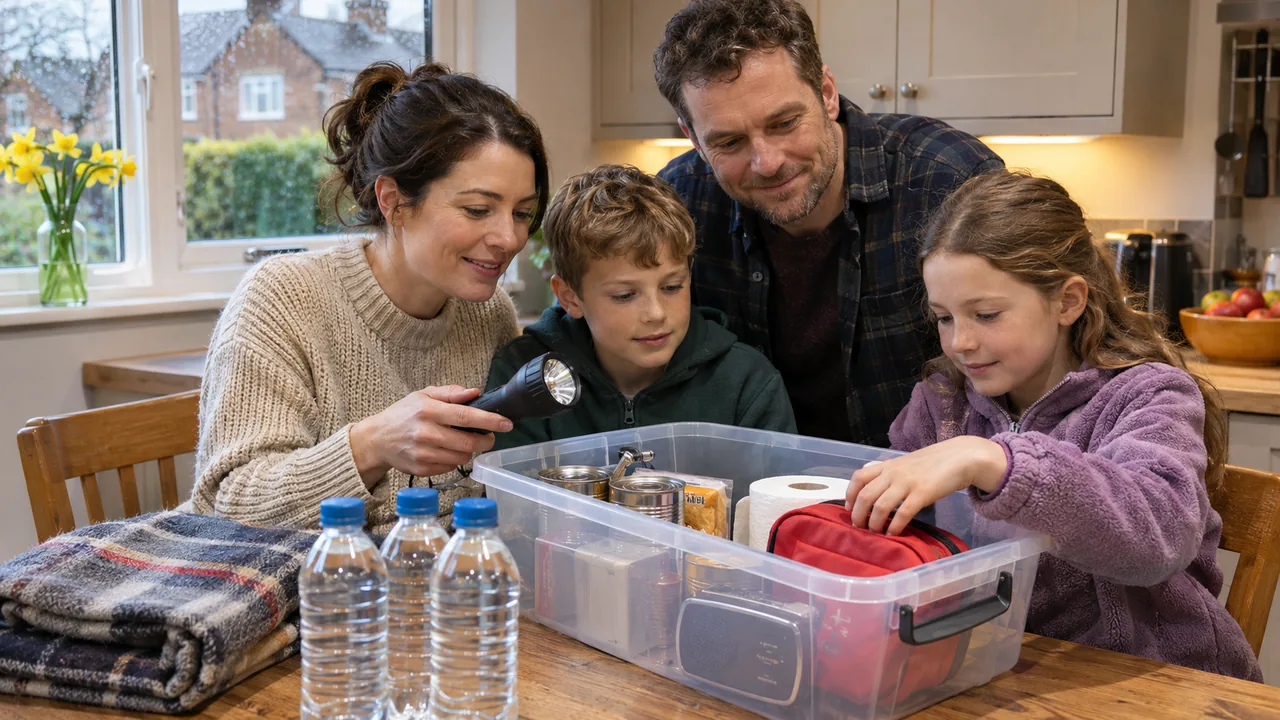
Begin with the gaps that could cause the most difficulty: drinking water, essential treatment arrangements, a working light and familiar food. Then add communication, warmth, hygiene and useful documents. If money is tight, spread purchases over normal shopping trips and make use of safe items you already own.
Do not borrow for an elaborate kit or buy specialist equipment before understanding what it solves. Some households will benefit from additional backup power or a more extensive water plan. Others will make better progress by writing contacts on paper and keeping a charger in the same place every night.
Sharing information can help too. A trusted neighbour may be willing to check on someone, share a reliable update or help collect supplies. Agree arrangements beforehand without assuming that anyone else can guarantee assistance. Preparedness works best when it strengthens ordinary care for one another.
Your quick home-kit check
Check that you can answer these questions in plain language. Who is included in the plan? Where is the safe drinking water? What can everyone eat without cooking? Where are the torch, radio, batteries and charging cable? What is the plan for medicines and powered equipment? How will you stay warm, maintain hygiene and contact support?
Then ask one final question: what happens if you need to leave? Keep a manageable go-bag checklist alongside the home plan. A safe place to stay, an accessible route and the right contact number can be just as valuable as the supplies themselves.
Put a review date on the calendar. Check dates, battery condition, contact numbers and changes in your household. Review sooner after using supplies or when a new medicine, baby, pet or caring responsibility changes what you need. A useful kit grows with your life.
A practical check for a busy household
Imagine the household has a box of supplies, but the person who assembled it is out when the power fails. Another adult finds the torch quickly, yet cannot identify the matching batteries or the phone cable. The box is not empty; the arrangement is incomplete. Put the relevant accessories together and make the location note understandable to somebody who did not do the shopping.
Repeat the check with food and water. Can someone open a suitable meal, find clean utensils and pour the drinking water without lifting an unsuitable load? Can they locate the medicine contact without using the usual organiser's phone? These questions turn ownership into practical access.
Choose one improvement from the exercise and complete it immediately. Moving a cable, labelling a suitable container or replacing a missing opener can be a more useful next step than adding another product. Then record anything requiring outside advice and arrange that separately.
Frequently asked questions
Is a 72-hour kit enough for every emergency?
No. It is a manageable starting point for three days of disruption. Some situations require longer supplies, specialist support or leaving the property. Use local risk information and your household's health and accessibility needs to decide whether to extend your plan. Follow current instructions if an incident occurs rather than treating the kit as a reason to remain somewhere unsafe.
Does everything need to fit inside a bag?
No. Home supplies can be stored in several sensible places, provided everyone knows where they are. A portable evacuation bag should be manageable for the person carrying it. Keep the two purposes clear: enough water for three days at home can weigh much more than a person can comfortably carry while leaving quickly.
Can I start without buying a ready-made emergency kit?
Yes. Check your existing food, torches, blankets, phone chargers and household supplies first. Write down the missing essentials and build them up gradually. Ready-made kits may offer convenience, but you still need to check the contents, dates, suitability and personal items. No standard box can fully account for your prescriptions, dietary needs or family contacts.
How often should I check the kit?
Choose a regular review, and check again after using anything or when household needs change. Inspect food and water dates, battery condition, cables, contact details and medicine arrangements. A quick physical check is better than assuming the box is complete because it was stocked once. Make someone responsible for recording what needs replacing.
Should I keep all my drinking water in one large container?
Only if it is food-safe, suitable for storage and manageable for the people using it. Several smaller containers can be easier to lift and distribute. Protect drinking water from contamination and follow storage instructions. Keep enough accessible for a person who cannot reach or carry the main supply, and plan separately for additional cooking and hygiene needs.