

When an emergency develops nearby, leaving is not always safer than staying, and staying is not always safer than leaving. The decision depends on the hazard, your location, the building, available routes and current instructions. A useful household plan prepares for both options before you have to choose under pressure.
Start with the instruction that applies to your area. Emergency services may ask people to evacuate, remain indoors or avoid a particular route. A general internet guide cannot assess conditions on your street. If you face immediate danger, seek emergency help and follow the appropriate urgent action for that situation.
Your preparation has two jobs: make the home workable if it remains a safe place, and make leaving manageable if that becomes necessary. You do not need two elaborate systems. You need clear information, suitable supplies, realistic access and a way to change the plan as conditions change.
Understand the two options in practical terms
Evacuation means moving away from a location that is unsafe or expected to become unsafe, using the arrangements and routes advised for the incident. It includes more than getting out of the front door. Transport, destination, access and contact arrangements all matter.
Sheltering in place means staying in, or moving into, a suitable building or part of a building to reduce exposure to the hazard. The appropriate room and ventilation arrangements depend on the incident. A place that protects from one danger may be unsuitable for another.
Do not turn either option into an identity or a fixed household rule. A person who has carefully prepared supplies at home may still need to leave. A person with a packed go-bag may need to remain inside while an outdoor hazard is assessed. Preparation should make you more adaptable.
Use the hazard to frame the decision
A developing flood can make roads and lower floors unsafe. A building fire requires the appropriate fire response and building procedures. An incident involving an airborne release may lead to instructions to go indoors and close particular openings. These situations cannot be reduced to one universal action.
Use official information that identifies the affected area and recommended response. Check the time and whether the instruction has been updated. If the message is unclear, seek clarification through an appropriate route while keeping immediate safety in mind.
Avoid applying advice from a different emergency just because it sounds decisive. A basement may offer useful protection in some circumstances and be dangerous in a flood. Opening windows may help with one problem and increase exposure in another. The type of hazard changes the useful action.
Know how your building works
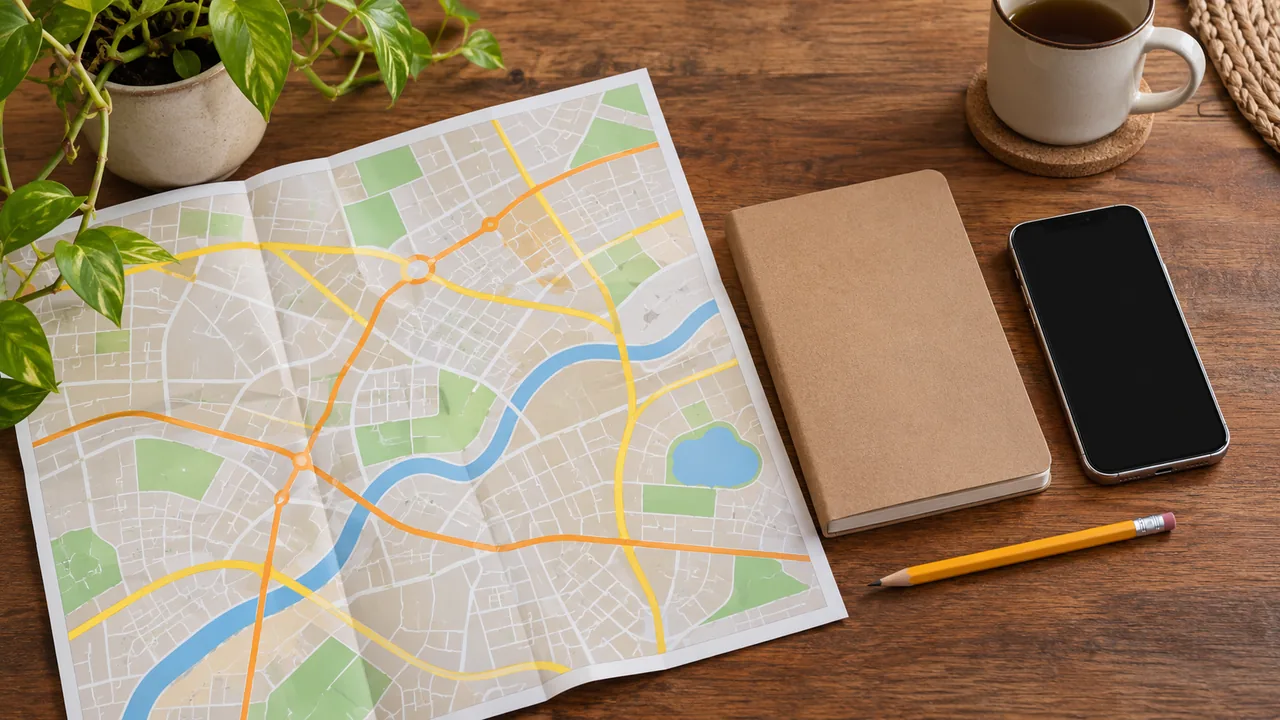
Learn the ordinary exits, accessible routes and any building-specific emergency procedures. If you live in a managed or shared building, ask the responsible manager about arrangements you do not understand. Do not assume that advice for a detached house applies unchanged to a block of flats.
Consider what happens if a lift, powered door or lighting fails. A person may be comfortable inside a flat but unable to leave independently when services are interrupted. Discuss an appropriate plan with the person and relevant building or care professionals before an incident.
Keep escape routes clear and avoid placing emergency stores where they block movement. A bag beside a door should not prevent the door opening. A stack of water containers should not become an obstacle on a landing. Preparedness must fit the building's normal safety requirements.
Make staying home a workable option when it is safe
Keep manageable supplies of safe water, familiar food, battery lighting, useful information and personal essentials. Think about warmth, cooling, hygiene and treatment needs. The aim is to reduce urgent errands during a disruption, rather than prove that the household can live without assistance indefinitely.
Choose possible rooms with the hazard in mind. Consider access to a bathroom, communication, seating and any essential equipment. Do not seal vents or alter equipment without relevant instructions. Safe ventilation and fire arrangements remain important even when you want to retain warmth or avoid an outdoor hazard.
Set a review point. If essential care cannot continue or indoor conditions become unsuitable, your plan should identify the next action. A three-day kit does not make an unsafe home safe or guarantee that staying remains the correct option throughout an incident.
Prepare to leave without carrying the whole home kit
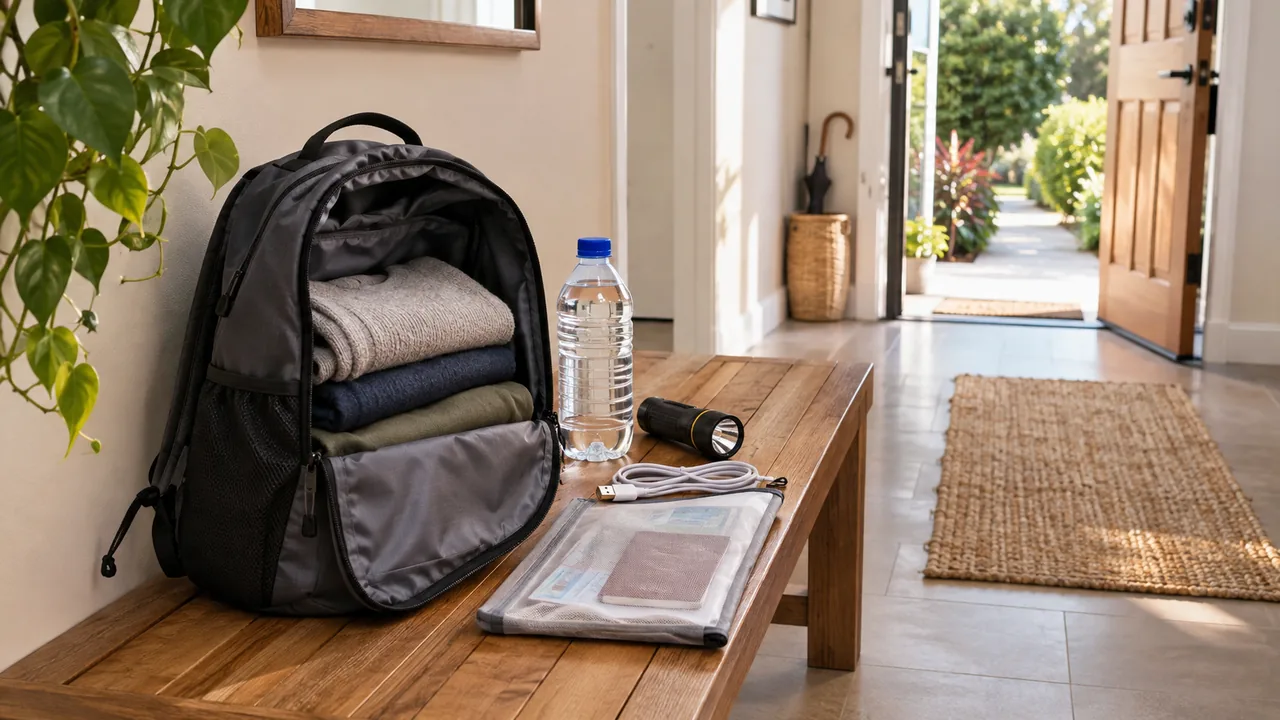
Keep a manageable go-bag with the personal items that would be difficult to replace quickly. Add a short reminder for essential items used daily, such as medicines, phone, glasses or a mobility aid. Collect them only when safe and without delaying urgent evacuation.
Think through who can carry what while also assisting others. A person helping two children may not be able to manage a heavy backpack and pet carrier at the same time. Water and bulky bedding can make a list look complete while making the actual journey impractical.
Test the first few steps in normal conditions. Can you open the door, use a handrail and reach the agreed transport with the load? The go-bag guide helps turn a general list into something the household can realistically use.
Choose destinations with more than an address in mind
Discuss possible accommodation with the people who may host you. Check whether the location is outside likely affected areas and whether it can meet access, care, child and pet needs. Keep an alternative because a nearby relative may be affected by the same disruption.
Do not assume a public building will open as a reception or rest centre simply because it has space. Use current information from the responsible authority. Confirm operating arrangements, location and access rather than travelling to a venue mentioned in an old social-media post.
Think about what happens after arrival. Can someone recharge approved equipment, access a suitable bathroom, store medicines correctly and communicate with family? A destination that solves only the first hour may still require a second plan if the incident continues.
Plan transport for the people involved
Identify realistic transport options, including a backup if the usual driver is away or the car is unavailable. Consider accessible transport, child restraints, pets and essential equipment. Do not assume that a taxi, bus or volunteer will be available immediately during a wider incident.
Keep route information available offline, but let current official road instructions take priority. A saved route cannot tell you that a bridge has just closed or an evacuation area has changed. Do not use a satnav diversion that leads towards a known hazard merely because the software suggests it.
If you need assistance to evacuate, discuss arrangements with relevant services before an emergency. Record how to request help and any limits. If immediate danger develops, use the appropriate emergency route rather than waiting silently for a general support registration to trigger a guaranteed response.
Include health and accessibility from the beginning
List the essential dependencies: electricity, water, refrigeration, carers, mobility equipment and accessible communication. Ask the relevant professionals how to maintain them if you stay and how to move safely if you leave. A generic evacuation list cannot answer device-specific or clinical questions.
Agree a point for seeking further help before supplies or approved batteries are nearly exhausted. A restoration estimate is not a treatment plan. If the person needs a suitable facility, arrange the contact route and information needed rather than assuming any shelter can provide specialist support.
Keep the person's preferences and consent central. Planning with someone is more useful than planning around an assumption about what they can manage. Make information available in a form they can use, and identify who else may need access to a concise care summary.
Keep children and schools in the plan
Explain the household arrangements calmly and at a suitable level. Children can learn a meeting point, the name of a trusted adult and what to do if separated without being given frightening predictions. Practise a small useful action rather than staging a dramatic emergency.
Know the school or childcare provider's procedures and authorised collection arrangements. Do not assume that your own preferred action overrides a shelter instruction or safeguarding process. Keep contact details updated and arrange another authorised collector if the usual person may be unable to travel.
Pack a familiar comfort item and suitable essentials for a possible stay elsewhere. For babies, plan feeding and safer sleep through appropriate guidance. These details can make a destination usable without increasing the carrying load unnecessarily.
Keep pets ready without letting the last minute decide
Have carriers, leads, identification and basic supplies accessible. Check which destinations can accommodate the animals and what arrangements apply at any official reception location. Different facilities and incidents can have different provisions.
Practise carrier use and keep veterinary details available. A frightened pet that has never encountered its carrier can delay departure. Planning in advance reduces that difficulty, but it does not justify entering immediate danger to retrieve an animal or equipment.
If you cannot take a pet safely, follow responder instructions and provide relevant information. Do not release domestic animals to fend for themselves. Arrange suitable support beforehand where possible, particularly if several animals or specialist needs make transport difficult.
Agree how to communicate a change of plan
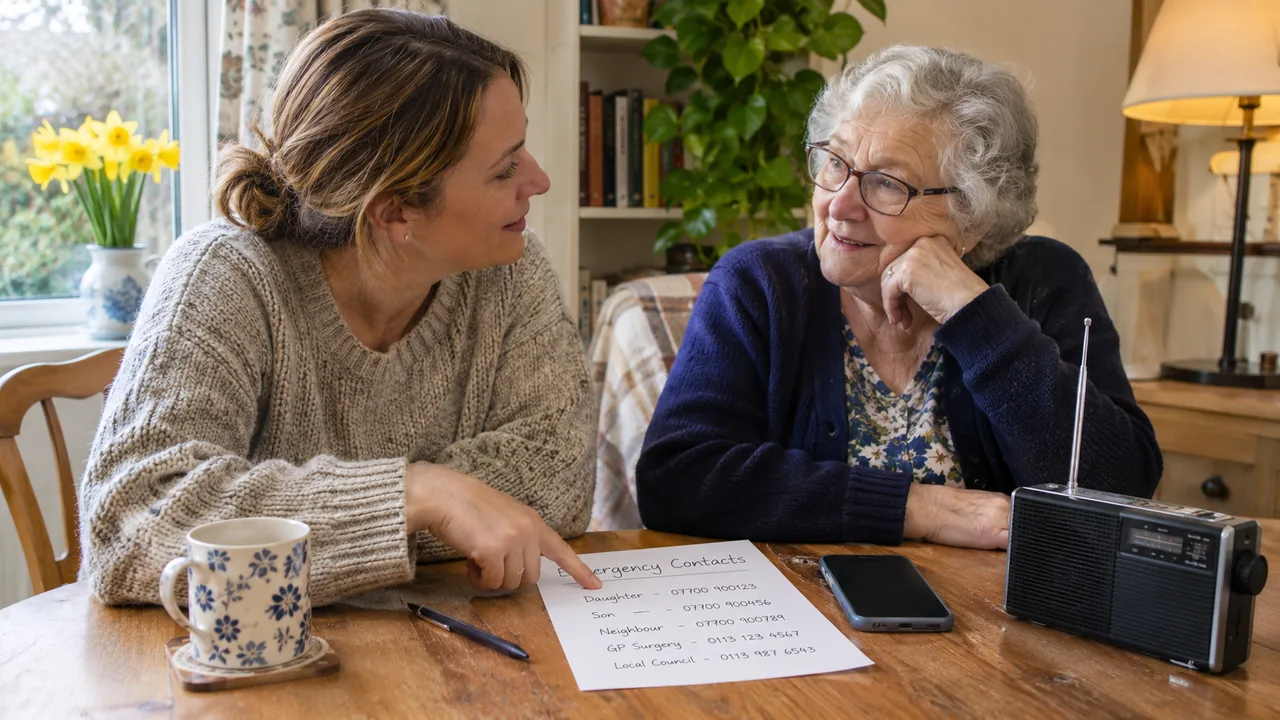
Choose a trusted contact who can pass updates if household members are separated. Record where you plan to go and when you expect to check in. Keep messages brief and factual, while remembering that network delays may prevent immediate replies.
Use paper information as well as phone contacts. A lost or discharged device should not remove the destination address, essential number or care contact from the plan. Protect sensitive information, especially if a bag may be carried through public places.
If the destination changes, tell the agreed contact when it is safe. Avoid broadcasting a private empty-home address or detailed movements publicly. You can keep family informed without exposing personal information to every person in a local group.
Practise decisions through ordinary examples
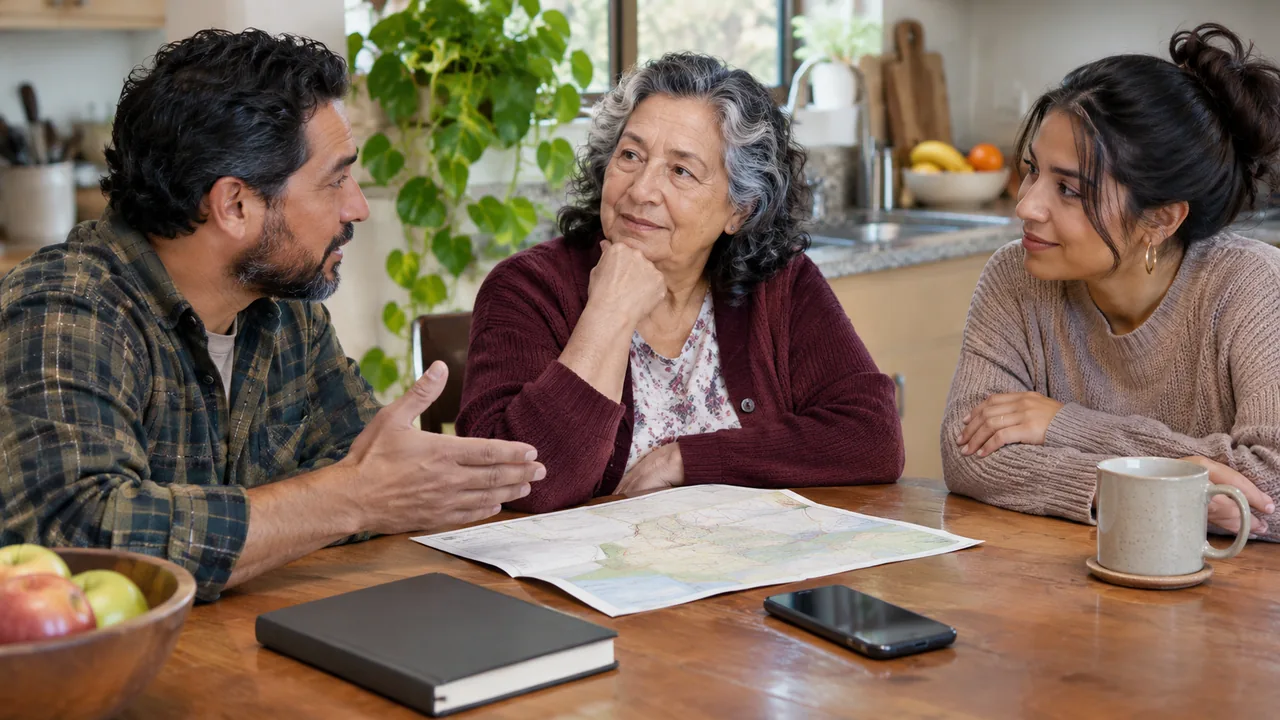
Imagine a local power cut with no damage to the property. Can the household remain comfortable and continue essential care? What information would make you reassess? Now imagine the same interruption during extreme heat or cold. The electrical fault may be similar, but the household's needs can change the answer.
Next imagine an official instruction to leave because of a nearby hazard. Who gathers the portable essentials, how does everyone move and where do you go if the first destination is unavailable? Consider what happens when the usual organiser is at work.
Finally imagine an instruction to remain indoors during an outdoor incident. Can you find reliable updates and use a suitable room without creating another hazard? These short conversations expose missing arrangements more usefully than deciding in advance that staying or leaving is always the stronger response.
Reassess as the incident develops
Keep checking current instructions at reasonable intervals. A shelter direction may later change to a managed evacuation, or an evacuation area may be adjusted. Preserve the time and source when sharing an update so that the household is not acting on an old message.
Review the practical conditions too. A safe building may become unsuitable if treatment cannot continue, water is unavailable or temperature becomes dangerous. Equally, a proposed journey may become unsafe as roads close. Adapt to verified conditions rather than defending the first plan because it took effort to prepare.
Afterwards, record the improvements that would help most. Update contacts, simplify the bag, clarify a building procedure or arrange a second destination. A useful emergency plan remains open to revision because real households and local risks change over time.
Write conditions beside each option
A plan can become misleading when it records only two words: stay or leave. Add the information that makes either option appropriate. For staying, note the kind of incident the arrangement covers, the essential needs that must remain workable and the official source you will check. For leaving, record what must be confirmed about the route, transport and destination.
Keep these as decision prompts rather than invented instructions for every emergency. A genuine local direction or an immediate hazard may change the action. The prompts help the household recognise a missing condition, such as a destination that has not been contacted or a clinical need that cannot continue at home.
Imagine the usual organiser is away and another adult reads the summary. Can they tell why a nearby address was chosen? Do they know it may share a power cut, or that the route is unsuitable during flooding? A little context prevents a correct address being used for the wrong purpose.
Use the same approach for help. Write who has agreed to assist, which task they can manage and the alternative if they are unavailable. A general promise of support may be kind but still leave the practical action unclear.
Review these conditions during a short household conversation. You can practise explaining the options without turning off services or simulating a dangerous event. If a question needs a building professional, care team or transport provider, record the specific question and resolve it through the appropriate route. Clear limits make the plan easier to use, because people can see both what is prepared and what must still be confirmed during the incident.
Frequently asked questions
Is sheltering at home always safer than evacuating?
No. The safer action depends on the incident, building, location and current instructions. A suitable building may protect you from one hazard while becoming dangerous in another. Prepare for both staying and leaving, and follow the official advice that applies to your area. Do not let stored supplies become a reason to remain in an unsafe property.
Should I leave if I see an alarming social-media warning?
Check the source, location and time, while responding appropriately to any immediate danger you can observe. Use emergency-service and responsible-authority instructions rather than a forwarded screenshot alone. If a genuine urgent instruction applies, follow it promptly. Verification should improve the decision, not become a reason to ignore a clear emergency or delay necessary action.
What if I cannot evacuate without assistance?
Discuss that need with the person involved and relevant building, care or local services before an emergency. Agree suitable transport, communication and how to request help. Keep the details accessible and review them when circumstances change. In immediate danger, use the appropriate emergency route rather than assuming a general support registration guarantees an automatic response.
Can a go-bag replace supplies for staying at home?
It serves a different purpose. A portable bag focuses on essentials you can carry, while home supplies may include much more water and food. Some items can be shared between the plans, but a bag should not become too heavy to use. Keep clear arrangements for both options and know which daily-use items need a safe last-minute reminder.
When can we return after evacuation?
Follow the responsible authority's current instructions. Do not return simply because a neighbour has gone back or the visible hazard appears reduced. Buildings, utilities and access routes can remain unsafe after the immediate event. Check any required professional inspections or service advice before resuming ordinary use, and update family contacts when your location changes.
Sources and further reading
GOV.UK: actions before and during flooding