

The power is off and dinner is in the fridge. Should you eat it now, leave the door closed or start throwing food away? The answer depends on the food, the temperature and how long it has been outside suitable storage conditions. Neither a normal smell nor a returning light inside the fridge can tell you the whole story.
Your first useful action is simple: keep fridge and freezer doors closed and note when the outage began. That preserves cold and gives you a starting point for later decisions. Use cupboard food where appropriate so you are not repeatedly opening chilled storage to see what is happening.
This guide explains the UK Food Standards Agency's power-cut guidance and the practical questions around it. Different countries may publish different thresholds, so follow the guidance and product instructions that apply where you live. Do not mix several sets of rules into whichever answer saves the most food.
The first decision is usually to leave the doors shut
A fridge or freezer keeps cold better when warm room air cannot enter. Each unnecessary opening works against that. Avoid checking every few minutes, standing with the door open while planning dinner or asking several household members to inspect the same shelf.
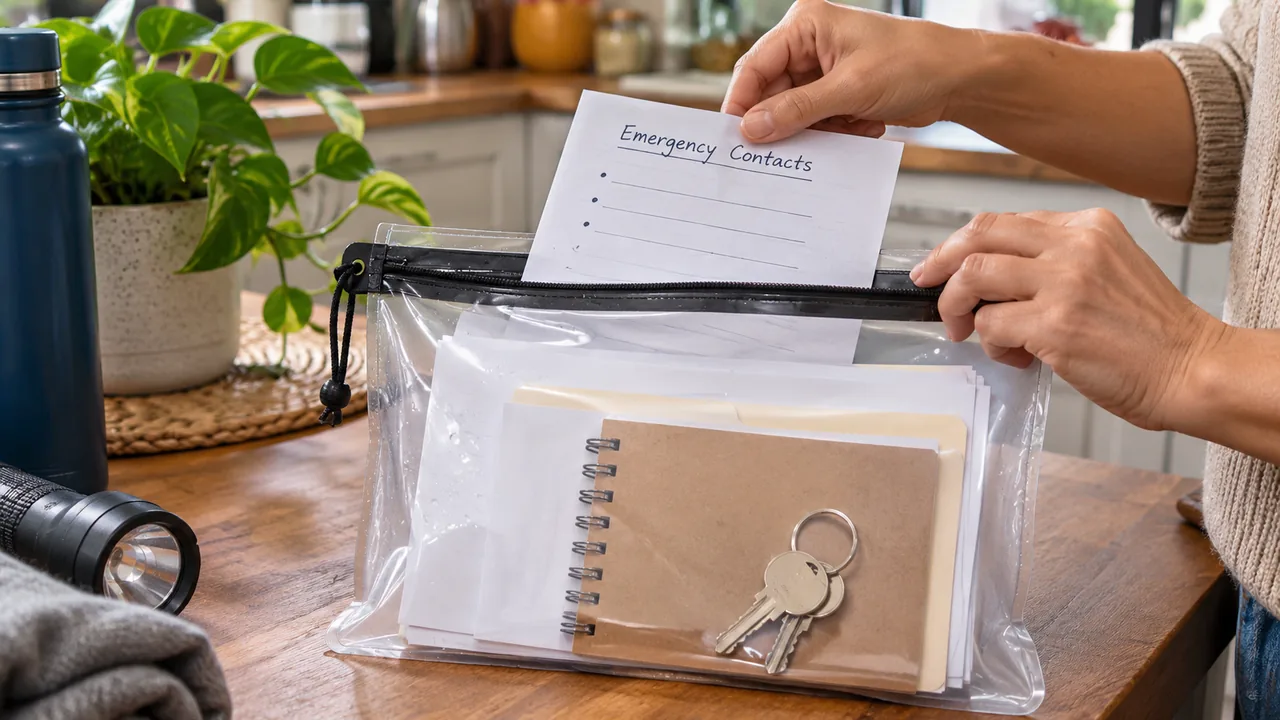
Write the outage start time on paper. If you were away and do not know when it began, record that uncertainty rather than inventing a convenient time. Check reliable local outage information if it helps establish the history, while remembering that the network's incident time may not describe your appliance's exact condition.
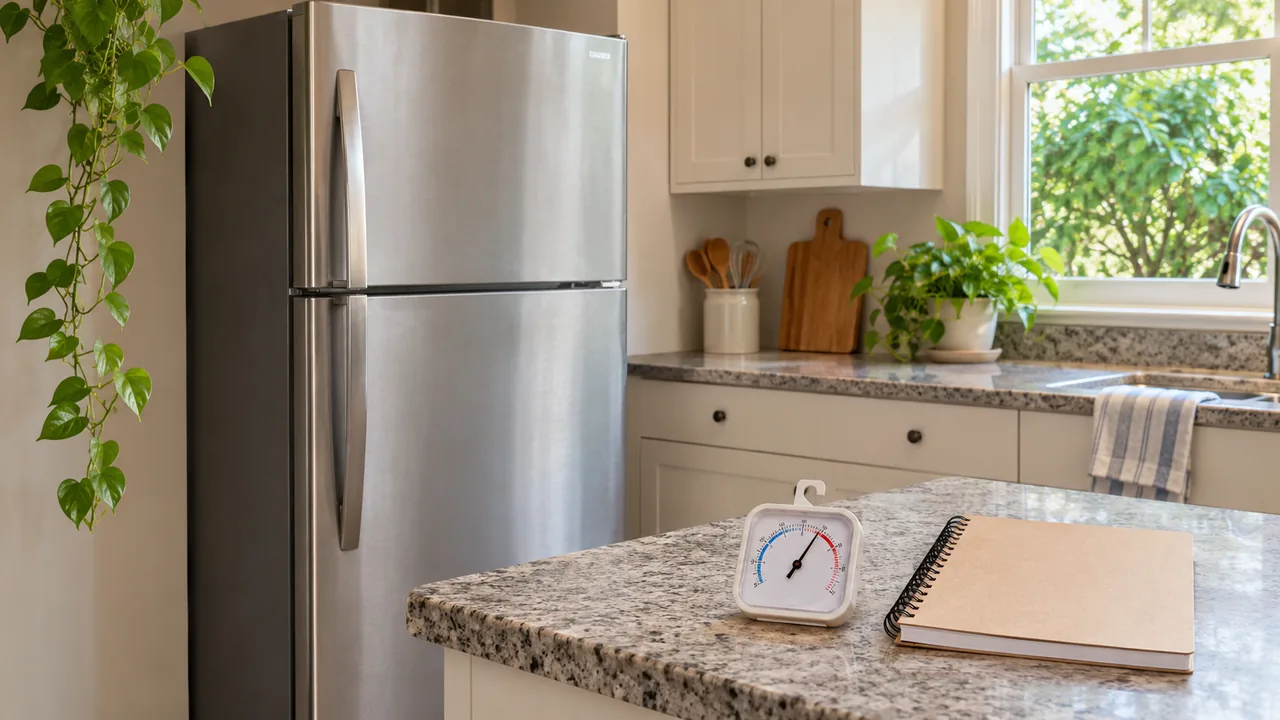
If you have a suitable thermometer, use it thoughtfully. Temperature information can help, but the way it is measured and the food's history matter. A cold reading after power returns does not prove that food remained safe throughout the interruption.
Know the estimates, and know their limits
The Food Standards Agency says a closed fridge should stay cold for up to around four hours. It gives estimates of up to 48 hours for a full freezer and 24 hours for a half-full freezer. These are estimates, affected by the appliance, room temperature and how often doors are opened.
They are not expiry timers attached to every product. A poorly performing fridge in a hot room may warm differently from a well-maintained appliance that stays closed. A freezer's contents and starting condition matter too. Use the estimates as context for checking safety, rather than proof that every item is fine until the final minute.
Do not confuse an electrical restoration estimate with a food-safety assessment. If power is expected back soon, that may help you organise the evening, but it does not change a food's temperature history or the instructions on its packaging.
Separate normal fridge settings from outage decisions
The FSA normally recommends keeping a fridge at 5°C or below. Its power-cut advice describes temporary storage below 8°C and says food that normally needs refrigeration should be used within four hours once it reaches 8°C or above. Read the current detailed guidance and the product's instructions when making decisions.
That does not mean you should normally set the fridge to 8°C, or that you can reset a warming period by cooling the food again. The relevant questions are what temperature the food reached and how long the unsuitable conditions lasted.
If you cannot establish a safe storage history, do not rely on a guess, a smell test or a brief re-chill. This is particularly important when serving people more vulnerable to foodborne illness. Your no-cook cupboard supplies provide an alternative while you make a careful decision.
Make a short record rather than repeatedly inspecting everything
Keep one note containing the outage time, any known appliance readings and the time electricity returns. Add relevant facts such as a door left open or food transferred to another suitable cold store. The record need not be elaborate; it just needs to preserve information that is easy to forget.
Ask one responsible adult to coordinate food decisions where practical. That prevents someone opening the fridge for a quick look while another person is trying to keep it cold. It also reduces the chance of a questionable item being put back without anyone else knowing.
Do not mark food 'safe' merely because it has been moved. A cool bag, another fridge or an outdoor box is useful only if it actually maintains suitable conditions. Record the transfer and use appropriate temperature information rather than treating a new location as a fresh start.
Consider the food's instructions, not just its shelf
Meat, fish, prepared dishes, dairy products and many ready-to-eat foods have specific chilled storage requirements. Follow them. A product with a use-by date relies on the stated storage conditions as well as the calendar; a future date does not compensate for unsuitable temperature.
Some whole foods and unopened shelf-stable products may not depend on the fridge in the same way. Check their labels and ordinary storage guidance rather than assuming every item in the appliance must be discarded together. Equally, do not assume a sauce or spread is shelf-stable after opening because it was sold on an ordinary shop shelf.
Keep raw and ready-to-eat food separated. If thawing or leaking items have contaminated another food or surface, temperature is not the only issue. Clean appropriately and avoid letting a hurried rescue effort create cross-contamination across the kitchen.
Use-by and best-before dates answer different questions
A use-by date concerns safety; a best-before date primarily concerns quality. Both still need the correct storage conditions and intact packaging. Do not use a best-before label as a reason to ignore contamination, damage or an unsuitable storage history.
For food with a use-by date, the date is not an invitation to decide by smell afterwards. Harmful bacteria are not reliably detected that way. The FSA's date guidance explains the distinction and the role of cooking, freezing and appropriate storage before the date passes.
During a power cut, work through temperature and time first for food requiring refrigeration. Then consider its normal date and other instructions. These questions support each other. Choosing whichever single detail seems most reassuring can hide the reason a product is no longer suitable to eat.
If power has been off only briefly
Suppose electricity fails during the afternoon and returns relatively soon, with doors kept closed. That is a different situation from discovering an open fridge after being away overnight. Note the facts, check relevant information and avoid creating unnecessary waste through panic.
The FSA says an outage of less than four hours is unlikely to affect chilled or frozen food safety in the usual circumstances described by its advice. Treat that as guidance with conditions, not a guarantee for a fridge that was already warm, damaged or left open.
Once the appliance is working, return to its normal recommended settings and check that it is cooling correctly. If something appears faulty, seek appropriate appliance or electrical advice. Do not continue relying on equipment that is no longer maintaining suitable storage.
If the outage is prolonged or the timing is uncertain
Longer interruptions need a more careful assessment. Keep using safe cupboard food and avoid opening chilled storage simply because you are hungry or anxious. Check the FSA's current instructions and consider any reliable temperature history you have.
If the outage began while you were asleep or away, be honest about the uncertainty. A clock on the oven or an update from a neighbour may provide clues, but neither proves the temperature of every food item. Do not construct a reassuring timeline from incomplete information and treat it as a measurement.
Where safety cannot be established, discard the affected food. It is frustrating to lose groceries, especially when money is tight, but the original cost does not change the safety decision. Record losses for your own purposes or insurance where relevant, without keeping unsafe food available for someone to eat.
What to do about freezer food
Keep the freezer closed and avoid transferring everything immediately. Its ability to retain cold depends on the conditions, including how full it is. A safe plan begins with preserving the cold already there while you obtain reliable information.
Do not automatically refreeze food because the power has returned. Check its condition, storage history, packaging and current guidance on thawing and refreezing. Partially frozen, fully thawed and temperature-abused foods are not the same situation, and different products may have different instructions.
If food is suitable to cook under the applicable guidance, you still need a safe cooking and storage method. Cooking a large quantity is not helpful if you cannot then cool and store it properly. Avoid turning one uncertain freezer into many containers of uncertain leftovers.
A cool box is useful only when it stays suitably cold
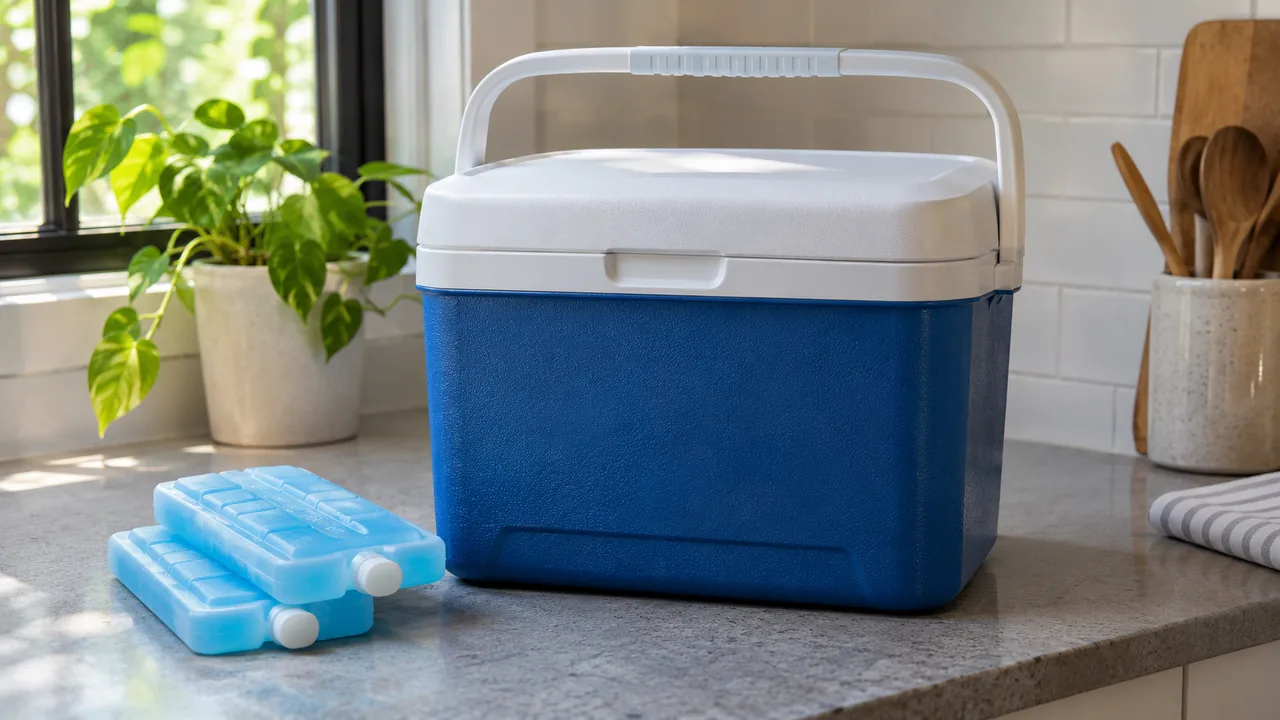
An insulated cool box with suitable cold packs can help in some circumstances, but insulation does not generate cold. Check the box's performance, how it is packed and the time it is used. Repeated opening and a hot room can reduce its usefulness.
Keep raw foods contained and separate from ready-to-eat items. Do not place a leaking meat package beside food that will be eaten without cooking. Use clean containers and avoid overfilling the box in a way that prevents proper closure.
If you plan to rely on a cool box, practise under safe normal conditions before an emergency. Learn how you will check temperatures and which limited items deserve priority. It should be part of a measured storage arrangement, rather than a label you apply to any bag containing a cold pack.
Be cautious about moving food outdoors
Outdoor conditions change through the day and may not match a weather app's figure. Sunlight, animals, insects, dirt and access by other people can create additional problems. A cool-feeling balcony or doorstep is not automatically suitable food storage.
The FSA describes outdoor storage in suitably cold conditions with clean, protected, sealed containers and protection from contamination. Follow the full guidance rather than taking only the idea that winter air is cold. Check what conditions actually exist where the food would be stored.
Do not leave food where it blocks an exit or attracts animals close to the home. If safe conditions cannot be maintained, use a different option. An emergency does not remove the need to protect food from both unsuitable temperature and contamination.
Keep medicines separate from food advice
A refrigerated medicine may have different stability information from food. Do not apply fridge-food thresholds to insulin, another medicine or a clinical product. Contact the pharmacist, care team or manufacturer through the appropriate route, with the product details and known storage history.
Do not place medicine directly against ice or freeze it in an attempt to keep it safe unless the specific instructions allow that. Too much cooling can also be a problem. Keep clinical advice with the medicine plan so that another responsible person can follow it.
If treatment cannot continue safely, seek appropriate professional support. The household food decision can wait while an urgent health need is addressed. See the powered medical equipment plan for the wider questions to arrange before an outage.
Restart, clean and restock thoughtfully
When electricity returns, make sure the appliance is functioning and reaches suitable conditions before treating it as reliable storage again. Deal with leaks and spills appropriately, particularly where raw food has been involved. Avoid placing newly purchased chilled food into an appliance that is still warm.
Keep the food-safety decision separate from replacing groceries. Make a modest list of what you need, based on normal meals and what remains safe. A rushed restocking trip can create waste if the supply fails again or the appliance has a fault.
Review what would help next time: a suitable thermometer, a paper record of the outage, smaller portions and a few familiar no-cook meals. Those changes can make decisions easier without requiring expensive backup equipment for every household.
Compare two different outage histories
Imagine one household sees the power fail, records the time and keeps the fridge closed. Another returns after being away and finds the appliance warm, without a reliable start time. The same clock time that evening does not give both households the same evidence about their food.
The first can use its known history, appropriate temperature information and current guidance. The second should not borrow that timeline simply because a neighbour mentions an interruption nearby. A network incident report can provide context without proving how a particular appliance performed throughout the day.
Now imagine power briefly returns and the display looks normal. That does not erase an earlier unsuitable period or establish that every item stayed within its conditions. Preserve the information you actually have and avoid treating a reassuring current reading as a complete record.
When asking for advice, describe the food, relevant label instructions, known times, temperatures and uncertainties clearly. Do not keep opening the appliance while you investigate. Use a suitable cupboard meal to remove the immediate pressure to make a hopeful decision about questionable chilled food.
A clear record also helps another responsible person understand the decision without repeating the same checks or relying on a guess.
Frequently asked questions
Can I smell food to decide whether it is safe?
No. A normal smell does not reliably show that food is free from harmful bacteria. Use storage instructions, time, temperature and current food-safety guidance. Never taste a questionable food as a test. If you cannot establish that a food requiring refrigeration has been stored safely, do not serve it simply because it looks normal.
Does four hours mean all fridge food becomes unsafe at the same moment?
No. The closed-fridge estimate is not a universal timer for every appliance and product. Actual temperature, door opening, room conditions and the food's instructions matter. The separate FSA guidance about food reaching 8°C or above must also be understood correctly. Keep reliable information and avoid treating a general estimate as proof of a particular item's safety.
Can reheating rescue food that became too warm?
Do not assume that it can. Cooking and reheating do not reliably undo every problem caused by unsuitable storage or contamination. Follow current food-safety advice for the particular food and history. A product that cannot be established as safe should not become dinner merely because you have found a way to heat it.
Should I throw away every item in the fridge together?
Assess the relevant storage requirements rather than treating the appliance as one type of food. Some products are shelf-stable until opened; others require continuous chilling. Packaging, contamination, time and temperature all matter. Use official guidance and labels, and keep questionable items away from food others may eat while you decide what is suitable.
Can I claim for spoiled food?
That depends on your insurance, supplier arrangements and the circumstances. Check the actual policy and relevant provider information rather than assuming reimbursement is available. Keep appropriate records if useful, but do not let a claim process delay discarding unsafe food or leave it accessible to children and pets. Food safety and compensation are separate questions.
Sources and further reading
Food Standards Agency: power-cut food-safety guidance