

A portable power station and a fuel generator can both supply electricity, but they solve different practical problems. A power station stores energy in a battery. A generator burns fuel to produce electricity while it runs. The right choice begins with what you need to power, for how long and where the equipment can be used safely.
For a household that mainly wants phone charging and a few small devices, a suitable battery may be enough. Larger or longer demands need more detailed planning. A fuel generator also requires a genuinely safe outdoor location, fuel management and careful electrical arrangements. Some homes will not have a suitable place to use one.
This guide gives you a comparison method rather than a brand recommendation. Prices, specifications and local requirements change. Confirm the actual equipment's instructions and obtain qualified advice for connections to household wiring or support for essential medical devices.
Start with a list of loads, not a product advert
Write down each device you want to support and why it matters. Separate essential functions from conveniences. A communication device, approved medical equipment backup and a decorative light should not be treated as interchangeable demands just because they all use a plug.
Record the device's power requirement from reliable product information. Note whether it has a starting surge, runs continuously or cycles on and off. A refrigerator's motor and a phone charger behave differently, so adding the labels together without understanding them can produce a misleading estimate.
Ask what happens if the backup stops sooner than expected. A household may tolerate losing entertainment, but a treatment plan needs a different level of reliability and professional approval. That distinction should shape the choice before you compare capacities or marketing claims.
Understand watts and watt-hours
Watts describe power: how quickly a device uses or supplies energy. Watt-hours describe an amount of energy. A battery's energy capacity and its maximum output are therefore different limits. A large energy figure does not prove the unit can start or run a particular high-power appliance.
As a simplified calculation, a constant 40-watt load would use 400 watt-hours over ten hours. A battery labelled 500 watt-hours would not necessarily deliver all 500 through every output because conversion and operating losses reduce usable energy. Actual performance also depends on conditions and the equipment.
For illustration only, if 400 watt-hours were usable and the load stayed at 40 watts, the arithmetic would suggest ten hours. That is not a prediction for any real product. Use the manufacturer's specifications, approved compatibility information and safe testing for the actual arrangement.

What a portable power station offers
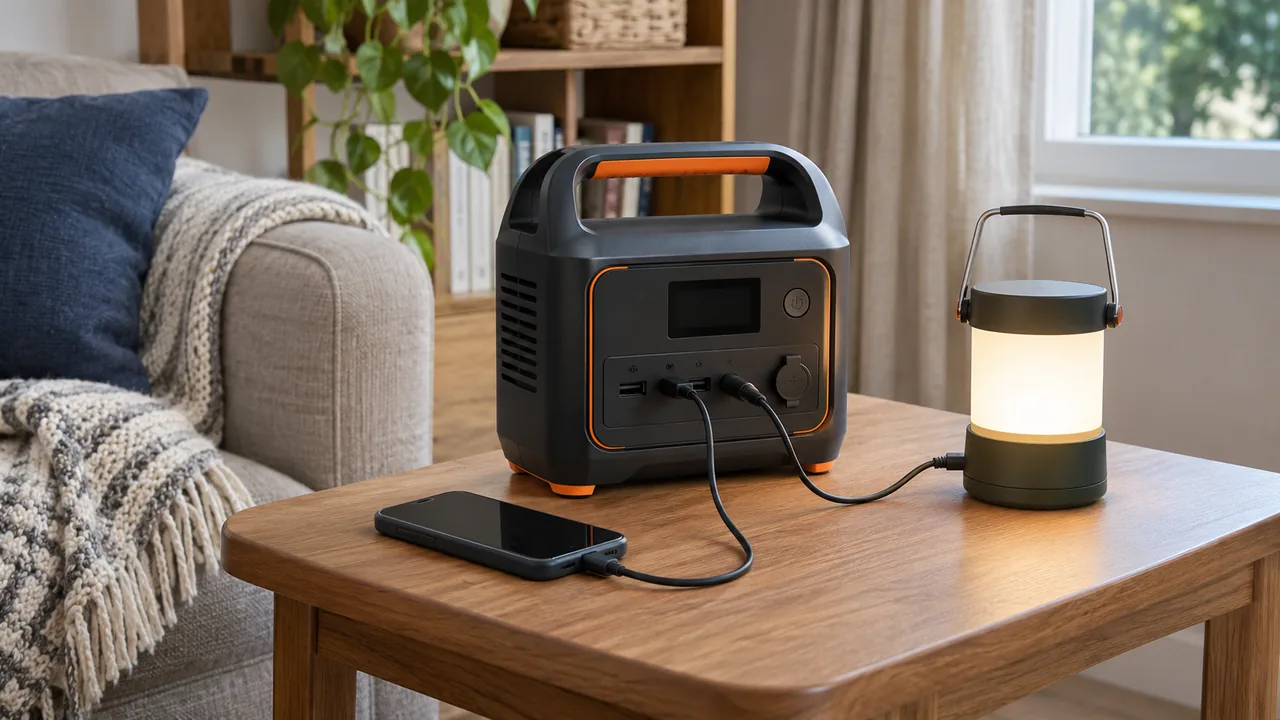
A portable power station stores energy that you charge beforehand, commonly through mains electricity and sometimes through compatible solar or vehicle arrangements. Outputs vary by model and may include USB, direct current and alternating current sockets. Check the exact supported connections rather than assuming every device can be plugged in safely.
A battery unit does not produce combustion exhaust while operating. That is a significant difference from a fuel generator, but it still needs correct placement, ventilation, charging and protection from damage or water. Follow its instructions and stop using a damaged or abnormal battery.
Its main limit is stored energy. Once that energy is used, you need an available, safe way to recharge it. A battery that supports a few small devices for a useful period may be unable to run heating or cooking equipment for long. Capacity should be matched to the job.
What a fuel generator offers
A fuel generator can produce electricity while it runs and has suitable fuel, subject to its ratings, maintenance and operating conditions. It may support demands that exceed a small battery's practical capability. That benefit comes with substantial requirements around exhaust, electrical safety, weather, noise and fuel storage.
Carbon monoxide is a central danger. It cannot be reliably detected by smell and can be deadly. The CDC advises keeping portable generators outdoors, at least 20 feet, approximately six metres, from doors, windows and vents. Follow the manufacturer and local requirements as well, including exhaust direction and surrounding buildings.
Never run one in a house, garage, shed, enclosed balcony or similar space. An open door or window does not make an enclosed or partly enclosed location safe. If you cannot provide a suitable outdoor arrangement, do not try to make the equipment fit your property through improvisation.
Flats and small properties need a different decision
A generator may be unsuitable for a flat, shared building or property without enough safe outdoor separation. Exhaust can affect neighbours as well as the person using the equipment. A balcony, corridor or communal entrance is not a convenient substitute for a properly suitable location.
Check tenancy, building and local requirements before buying equipment. Consider noise, fuel, access, storage and emergency routes. You should not discover after a purchase that you cannot use the unit legally or safely where you live.
A battery may be a more practical option for limited loads, but it still needs a safe storage and charging location. For some households, the better plan is modest portable charging plus an agreed place to go if essential services cannot continue. Equipment ownership is not the only form of resilience.
Check continuous output and starting demands
Look at the continuous output rating and any stated surge capability. A device with a motor may briefly require more power when starting than during normal operation. Other equipment may need a particular quality of supply or connection. The relevant manufacturer or installer can help assess compatibility.
Do not assume that a power station's software boost mode is suitable for every appliance. Marketing terms can describe different behaviours. Understand what voltage, power and operating limits apply to the equipment you intend to run, and do not exceed them.
Avoid using plug adapters, improvised cables or wiring arrangements simply because the connectors appear to fit. Electrical compatibility involves more than physical shape. If the connection is not clearly supported by the equipment instructions, seek qualified advice before relying on it.
Estimate runtime for the real pattern of use
List how long each load needs to operate. A light used for two evening hours has a different energy demand from a device running all night. A fridge cycles, and its energy use changes with conditions, opening and product design. Use suitable information rather than treating every appliance as a constant load.
Allow for uncertainty instead of planning to use the final percentage of battery at exactly the moment power returns. Age, temperature and operating settings can change performance. Essential medical runtime should come from the approved supplier's arrangements, not a generic household calculation.
For a non-essential setup, a safe practice under normal conditions can show whether the arrangement meets your intended task. Keep notes on the load, start state and result. Do not deliberately interrupt treatment or essential safety systems to test a consumer battery.
Think through recharging before calling a battery a long-term solution
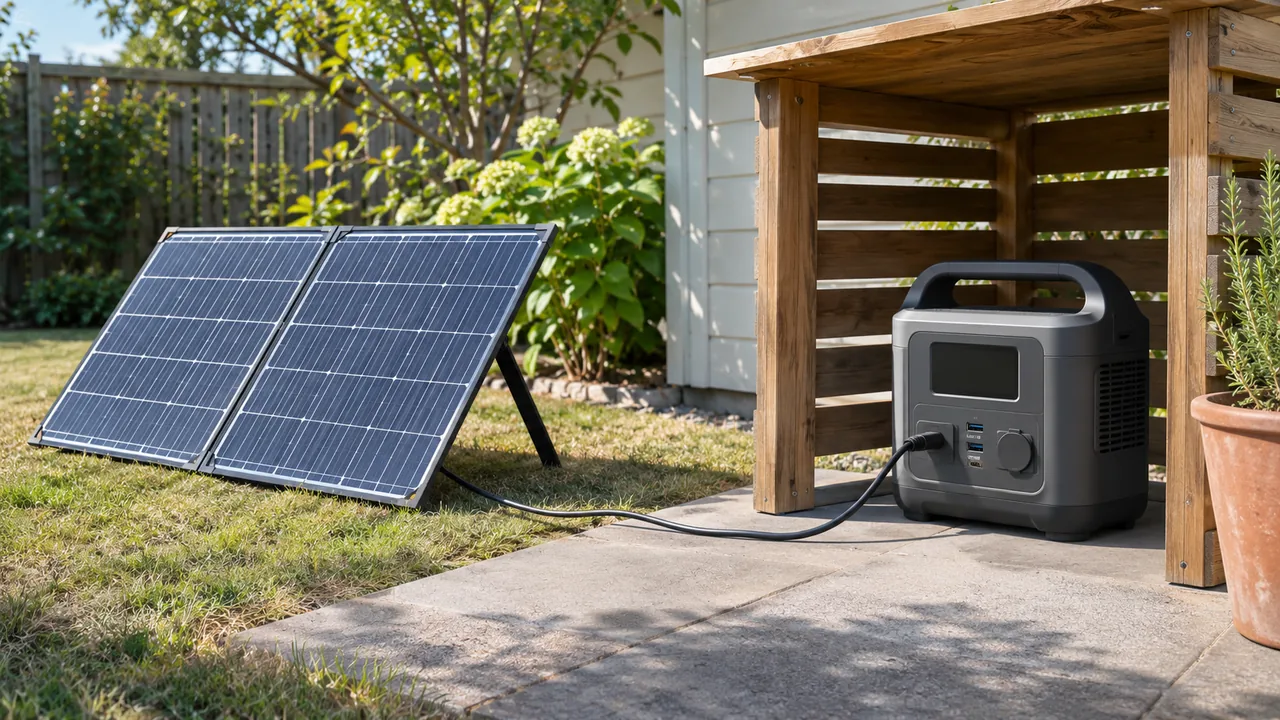
A power station is only as independent as its available recharging options. If it normally charges from the mains, a prolonged outage may leave it empty. A compatible solar panel can help, but weather, shade, day length and system limits affect the result.
Check the supported input, connectors and operating instructions. A product being described as a 'solar generator' often means a battery with solar charging capability, rather than a fuel-burning engine. Understand the equipment category instead of relying on the name.
Home rooftop solar is a separate system. Many installations shut down during a grid outage unless they include properly designed backup capability. Ask the installer what your actual system can do. Do not assume that visible panels mean the house remains powered when the network fails.
Fuel, maintenance and weather belong in the generator calculation
A generator needs appropriate fuel, servicing and a safe operating routine. Consider whether you can store fuel in accordance with local rules and product instructions. Do not store or handle it casually inside living spaces, and do not assume fuel remains usable indefinitely without checking requirements.
Turn the generator off and let it cool before refuelling, following its instructions. Spilt fuel near hot components can ignite. Keep children, pets and bystanders away from equipment and associated cables. Plan who will operate it, rather than assuming any adult can take over without preparation.
Weather creates further constraints. Electrical equipment and water can be a dangerous combination. Follow the manufacturer's requirements for wet conditions without solving the problem by moving the unit into a dangerous enclosed space. If you cannot meet the conditions safely, use another arrangement.
Never backfeed household wiring
Do not connect a generator to a wall socket to feed power into the house. This practice can create serious risks to people in the property, neighbours and utility workers. It is not a shortcut to a properly designed backup installation.
Connections to household circuits require appropriate equipment and qualified installation under the rules that apply locally. The installer needs to understand the supply, switching, protective measures and intended loads. A cable found online does not replace that work.
The same principle applies to improvised attempts to connect a battery unit into fixed wiring. Use only supported arrangements. If your goal is a whole-home or selected-circuit backup system, treat it as a professional electrical project rather than a portable-appliance purchase.
Medical equipment needs explicit approval
Ask the care team and equipment supplier about power quality, approved batteries, required accessories, expected runtime and warning thresholds. Some devices have requirements that ordinary appliance comparisons do not capture. An encouraging wattage calculation is not enough to establish clinical suitability.
Record what happens if the backup does not work, the outage continues or the person needs to move. Include accessible communication and transport arrangements. Keep instructions where another responsible person can follow them without searching several online accounts.
Do not replace the agreed plan with a borrowed generator or consumer battery during an outage. Contact the relevant professionals if circumstances change. The medical equipment outage guide provides questions to raise before support is urgently needed.

Compare the full practical cost
For a battery, consider capacity, compatible charging equipment, required cables, useful lifespan and how you will maintain readiness. For a generator, add safe siting, fuel storage, servicing, appropriate cables, alarms and any qualified installation. The purchase price alone does not describe the working arrangement.
Avoid borrowing money for a large system before understanding the essential problem. A modest power bank may solve phone charging, while a more complex system could still fail to meet a medical or property requirement. Spend in relation to a defined need and verified capability.
Ask the seller clear questions and keep the answers. What load and conditions support the stated runtime? Which accessories are required? What maintenance is expected? If the information is vague, pause the purchase and obtain better evidence. Pressure to buy quickly is not a technical specification.
A simple way to choose your next step
If you need only small-device charging, begin by checking a suitable power bank or battery arrangement. If you need larger loads, calculate them properly and investigate compatible equipment. If you cannot meet a fuel generator's siting requirements, remove it from consideration rather than trying to negotiate away the hazard.
If essential care depends on power, begin with the care team and equipment supplier. If fixed household circuits need backup, begin with a qualified installer. Those starting points make the comparison more useful because they identify the requirements that marketing pages often leave unclear.
Your best option may combine modest supplies, a manageable battery and an alternative place to stay. The useful result is a plan that works safely for the household, with known limits and a clear next action when those limits are reached.
Two households can need different answers
Imagine a person in a small flat wants to charge a phone and use a low-power light during an ordinary outage. They have no suitable outdoor location for a fuel generator. A proportionate assessment starts with compatible small-device charging and the building's rules, not an attempt to make an engine work on a balcony.
Now imagine a household considering backup for larger loads in a property with suitable space. It still needs to establish output, runtime, safe siting, weather limits, fuel arrangements and any qualified electrical work. More available space does not remove those requirements.
If either household uses essential medical equipment, the care team's and supplier's approved requirements take priority over the ordinary appliance comparison. The same advertised battery capacity can therefore lead to different decisions for different homes.
Write the requirement before comparing products: the device, supported connection, intended operating period, location and action if the backup is unavailable. Keep the distinction between a useful convenience and an essential support need. This makes questions to sellers and installers more precise and helps avoid spending on equipment that solves the wrong problem.
Finally, include maintenance and the person who will operate the arrangement. A technically capable system that nobody present can use safely is an incomplete plan, regardless of its size or price.
A clear record also helps another responsible person understand the decision without repeating the same checks or relying on a guess.
Frequently asked questions
Can a power station run my whole home?
Do not assume that it can. Portable units have limits on output, energy and supported connections. Whole-home or selected-circuit backup needs a properly assessed installation and suitable equipment. Start with the loads you genuinely need, then obtain qualified advice. Never connect a portable source to household wiring through an improvised socket arrangement.
Is a battery power station safe to use indoors?
Use it only in accordance with the manufacturer's instructions, including placement, ventilation, charging and environmental limits. It does not create combustion exhaust during normal use, but that does not make every location or connection safe. Keep it away from heat, water and damage, and do not use a swollen, damaged or abnormal battery.
Can I put a generator in a garage with the door open?
No. Portable fuel generators must not operate in garages or other enclosed or partly enclosed spaces. Opening doors or windows does not prevent a deadly carbon monoxide buildup. Use a properly suitable outdoor location with the required separation and exhaust arrangements. If your property cannot provide one, choose a different backup approach.
How many hours will a 500-watt-hour battery last?
It depends on the real load, usable energy, outputs, losses, temperature and battery condition. The basic calculation divides usable watt-hours by average watts, but that is only an estimate and must respect output limits. Use the actual manufacturer's information and safe testing. For medical equipment, use the supplier's approved backup and runtime guidance.
Will solar charging keep a power station full throughout an outage?
There is no general guarantee. Output depends on weather, shading, day length, panel capacity, placement and the charging system's compatibility and limits. Compare realistic charging with the energy you intend to use. Keep an alternative plan if the battery cannot be replenished, especially when a device is essential to health or communication.
Sources and further reading
CDC: generator and carbon monoxide safety