

Yes, a solar storm can disrupt electricity networks under particular conditions. That does not mean every solar flare will switch off your home, or that an aurora photograph is evidence of an approaching nationwide blackout. The useful response is to understand the technology affected, use official space-weather information and keep an ordinary household outage plan ready.
Space weather begins with activity at the Sun and its interaction with the environment around Earth. Different events can affect different systems, including high-frequency radio, satellite services, navigation and power transmission. Those effects are related, but they are not all the same mechanism or the same household consequence.
For most households, practical preparation looks familiar: working lights, suitable water and food, important information offline and a specific plan for essential care. You do not need a dramatic prediction or an expensive collection of 'solar protection' products to make those useful improvements.
What people mean by a solar storm
The phrase is often used loosely for several forms of space weather. A solar flare is a release of electromagnetic radiation. A coronal mass ejection involves a large expulsion of solar material and magnetic field. Disturbances arriving at Earth can interact with its magnetic environment and produce a geomagnetic storm.
NOAA distinguishes effects such as radio blackouts, solar radiation storms and geomagnetic storms because the technologies and conditions involved differ. A headline using only the words 'solar storm' may hide the information that actually determines the practical impact.
When reading an update, look for the phenomenon, timing, expected effects and responsible source. You do not need to learn specialist forecasting to ask those questions. They help separate a useful warning from a general dramatic description of the Sun being active.
How a geomagnetic storm can affect a power grid
Changing magnetic conditions can induce currents in long conducting systems. NOAA explains that geomagnetically induced currents can affect transformers and grid operation, potentially contributing to equipment problems, voltage instability or interruptions under some conditions.
The outcome depends on more than the existence of a solar event. Network design, conditions, location, demand and protective measures matter. That is why a space-weather forecast cannot be translated directly into a promise that a particular street will lose power.
Think of the household effect as a possible service interruption to prepare for, rather than a technical problem to repair yourself. Network operators and relevant specialists assess and manage the infrastructure. Your role is to keep essential household functions workable and follow verified local advice.
Why radio and navigation can also be affected
NOAA describes high-frequency radio effects associated with solar flares and changes to satellite-navigation signals during geomagnetic disturbances. Those are not the same as every radio receiver, mobile phone and internet connection failing together.
An effect on a particular technical service does not establish that all consumer devices are damaged. Check which system the warning actually describes. A discussion aimed at aviation, radio operators or satellite navigation may not require the same action as a local electricity outage notice.
For household planning, keep more than one information option and avoid relying on a single navigation tool. A battery radio, paper contact sheet and offline route information can be useful across many types of interruption, not just space weather.
An aurora is not a local outage forecast
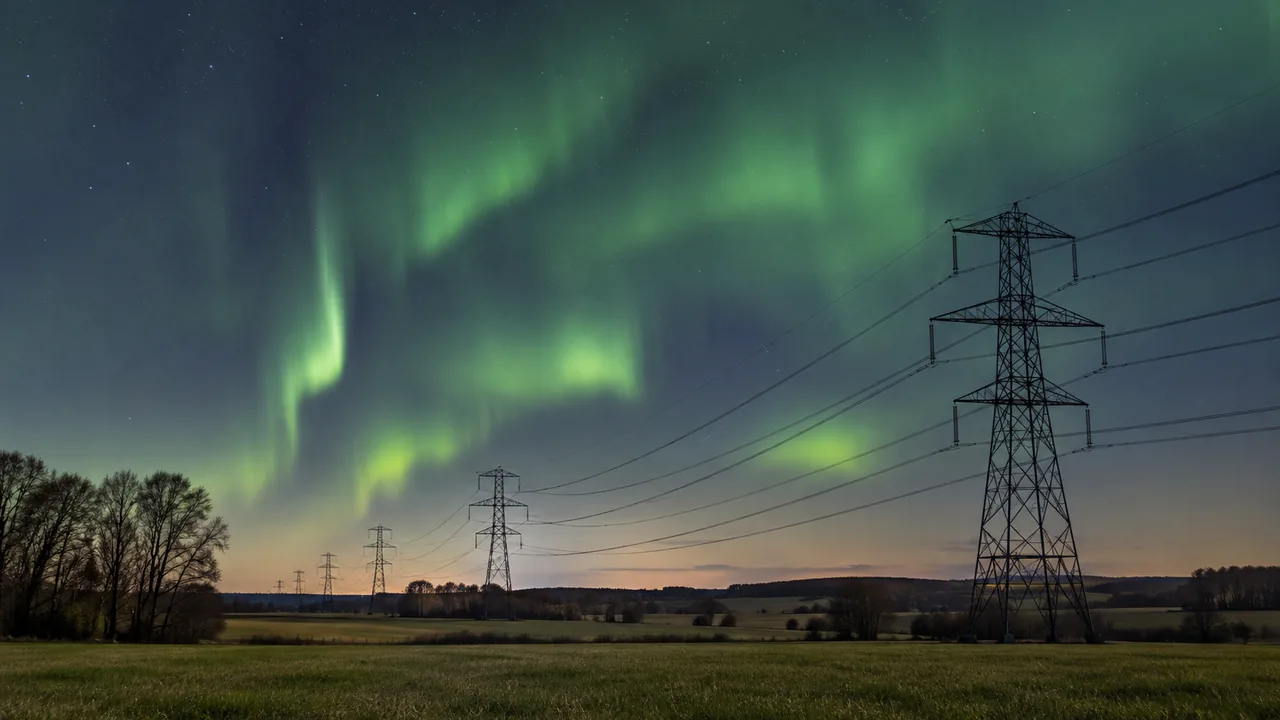
Geomagnetic activity can produce auroras, but seeing or photographing them does not tell you the condition of the electricity supply to your home. A striking image can spread quickly without the context needed to assess infrastructure effects.
Do not use a social-media picture as a reason to make an urgent purchase or broadcast a blackout prediction. Check the official space-weather assessment and your local operator's information if services are affected. Preserve the difference between a possibility and an observed disruption.
If you choose to view an aurora, keep ordinary travel and personal safety in mind. Avoid unsafe locations, closed areas or unnecessary travel during hazardous weather. An interesting sky event does not remove the usual risks on the ground.
Use official forecasts with their uncertainty intact
Space-weather forecasts describe expected conditions with limits and uncertainty. Check the issuing organisation, time, geographic relevance and what impact is actually being discussed. A forecast being updated is part of the process, not proof that any particular online interpretation was correct.
Use established sources such as NOAA's Space Weather Prediction Center and the relevant national weather service. For a real local electricity interruption, also use the network operator. The scientific forecast and local service update answer different questions.
Avoid turning a storm category into a personal restoration estimate. A scale can describe the space-weather event without predicting the length of an outage at a particular address. If no local interruption is confirmed, say that rather than filling the gap with a dramatic duration.
Prepare the household for the consequence you can manage
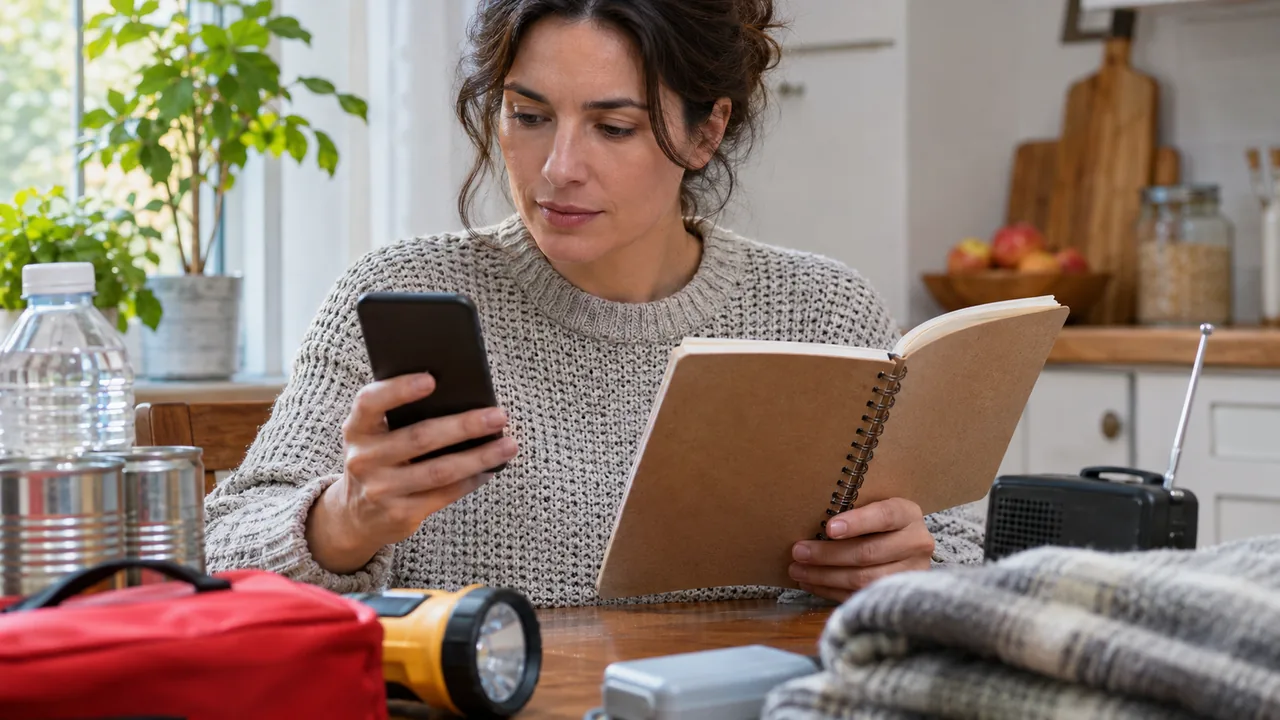
Check whether you could safely handle an electricity or communications interruption tonight. Locate the torch, charge suitable devices, identify familiar no-cook meals and confirm where safe water is stored. These are useful actions even if the forecast changes or no disruption occurs.
Keep the supplies proportionate to your needs and budget. There is no need to panic buy because a general report mentions solar activity. A clear 72-hour household plan provides a starting point for several kinds of service disruption.
Think about personal requirements rather than only general stock. A medicine needing particular storage, powered equipment or an access issue can shape the response more than another battery light. Keep those needs in the approved care and support arrangements.
Keep medical backup separate from a forecast
If essential care depends on electricity, ask the care team and supplier about the approved backup plan before an outage. Know its limits and the threshold for seeking help or moving. Do not let an unconfirmed forecast or optimistic restoration message replace that plan.
Do not improvise a power source or change treatment because a headline suggests disruption. Compatibility and clinical suitability depend on the actual equipment and person. A general article about solar storms cannot determine them.
Keep relevant contacts accessible offline and make sure another responsible person understands the action sequence. The medical equipment outage guide offers questions to arrange with the appropriate professionals in advance.
Know what a power bank can and cannot solve
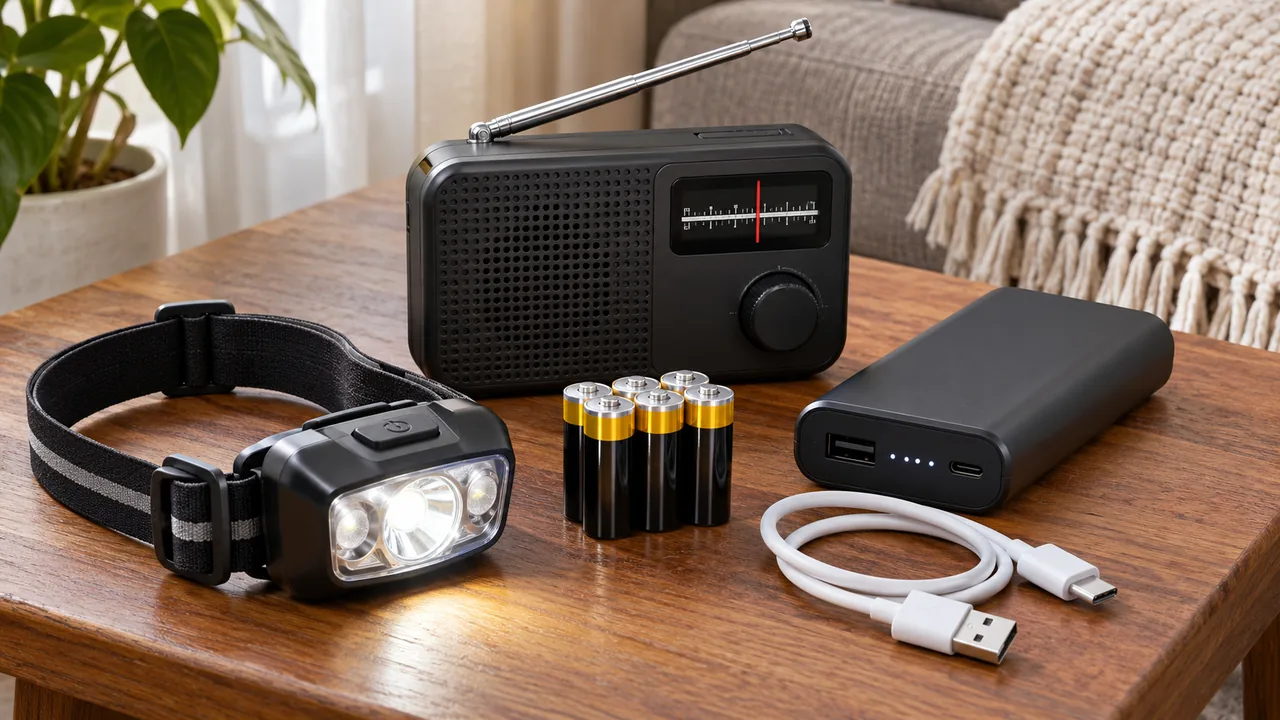
A suitable charged power bank can keep compatible small devices usable for longer. It does not restore a mobile network, repair a grid fault or provide unlimited energy. Keep the correct cable and test the ordinary charging arrangement before relying on it.
Use batteries according to their instructions and protect them from heat, water and damage. A device marketed around solar emergencies still needs clear ratings, safe charging and a realistic purpose. The name on the listing does not establish technical suitability.
If you are considering larger backup power, assess actual loads and the property first. Fuel generators need safe outdoor siting and electrical arrangements. Household preparedness should not create a carbon monoxide or fire hazard in response to an uncertain forecast.
Avoid confusing solar storms with every use of the word EMP
Online discussions often combine natural space weather, nuclear electromagnetic effects and general electrical surges as though one checklist covers all of them. These are different phenomena. A product claim based on that confusion deserves careful scrutiny.
For a purchase, ask which specific hazard and equipment the product addresses, what evidence supports it and how it is used safely. Do not accept a guaranteed protection claim simply because it includes scientific-sounding terms or alarming historical references.
Most households can make useful progress through ordinary outage preparation without buying specialised shielding equipment. If you have a genuine technical requirement, obtain appropriate qualified advice. Do not wrap, modify or disconnect essential equipment in a way that compromises its normal safety or operation.
Do not assume all rooftop solar works during a grid outage
Many rooftop installations shut down during a network interruption unless they have suitable backup capability designed into the system. Panels being visible on the roof does not tell you whether the home can operate independently of the grid.
Ask the installer about your actual arrangement, supported loads, switching and safe operation. Do not attempt an improvised connection to household wiring. A proper backup system is an electrical installation question, separate from reading a space-weather forecast.
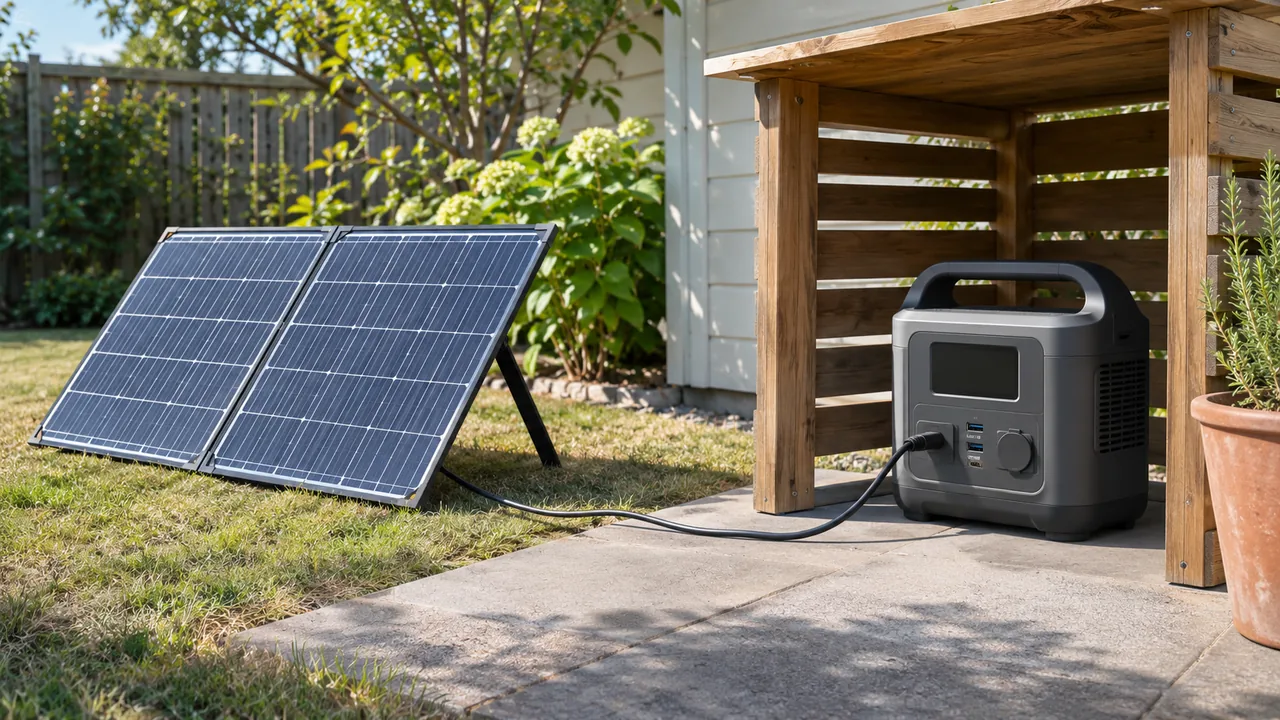
Portable solar charging also has practical limits. Weather, shading, day length, panel size and equipment compatibility affect useful output. Treat it as a system to assess, rather than a promise that a battery will remain full throughout any interruption.
Plan information and navigation alternatives
Keep essential addresses and contacts on paper, with useful offline maps where appropriate. A stored map can support orientation, but current road and emergency instructions still take priority. Do not assume navigation uncertainty gives permission to use restricted or unsafe routes.
A battery radio can add an information route, subject to reception and broadcasts. Learn its controls and suitable stations beforehand. Keep expectations realistic: one device is an option within the plan, not a guarantee that every update will always be available.
Agree a family check-in and meeting plan that does not require a live group chat at every stage. School, work and care arrangements should fit their actual procedures. These preparations remain useful whether the disruption comes from space weather, a storm on the ground or an ordinary equipment fault.
Example: an alert mentions possible infrastructure effects
Imagine an official forecast describes conditions that could affect some technologies. The household checks the source and timing, confirms ordinary supplies and charges devices through their normal safe arrangements. It does not claim a local blackout is certain or rush to buy unfamiliar equipment.
If a local interruption later occurs, the household uses the network operator's update and its normal power-cut sequence. If no interruption occurs, the preparation is still useful because lights, contacts and supplies are now easier to find.
This example shows why proportionate action is worthwhile without a dramatic prediction. You can improve practical readiness while keeping the uncertainty of the forecast intact. Those two things support each other rather than requiring a choice between complacency and panic.
If electricity actually fails
Check people and immediate hazards first, then use a working light and reliable local information. Keep fridge and freezer doors closed, manage phone power and follow the approved plan for essential equipment. Do not spend the first minutes trying to prove the astronomical cause.
Avoid unsafe indoor fuel-burning equipment and improvised wiring. If the property or essential care becomes unsuitable, use the appropriate support or relocation plan. Follow current official instructions if the wider incident requires a different response.
Our first-ten-minutes power-cut guide sets out that household sequence. The practical priorities remain people, safety and essential needs, regardless of the technical explanation eventually confirmed by the operator.
Review facts rather than viral predictions
After an event, distinguish the official assessment from claims that circulated beforehand. An outage elsewhere does not prove every prediction about your area, and a quiet local outcome does not mean the underlying science is imaginary. Keep the explanation tied to evidence and scale.
Update the household plan based on practical gaps you actually noticed. A missing charging cable, inaccessible water store or unclear care contact may deserve attention before another specialist gadget. Those improvements have value across many situations.
Solar storms are real physical events with real technological effects, but their household consequences vary. Understanding that distinction supports useful preparation: ordinary essentials, verified information and a clear response if a service is actually interrupted.
Read the forecast before interpreting the headline
When a report mentions possible effects, locate the underlying official assessment and identify which technology is being discussed. A warning relevant to specialist radio communication is not automatically a forecast that household electricity will fail. Keep the phenomenon and practical impact separate in your own notes.
Check the time and whether the assessment has been updated. Space-weather information is reviewed as observations improve. Do not combine an old predicted arrival with a new image and present the result as one current confirmed event. If you share the information, include the original source and preserve its uncertainty.
Ask whether any local service consequence is actually reported. Your electricity operator's incident update can answer a different question from the scientific forecast. One describes the condition of an infrastructure service in a particular place; the other describes the space-weather environment and possible effects. They should inform the household response without being treated as interchangeable.
Then choose a proportionate action. Checking the torch, charging an ordinary phone and locating paper contacts can be useful without assuming a blackout is certain. An unverified prediction of a long interruption does not justify unsafe fuel storage, improvised wiring or a purchase you do not understand.
If no practical household action changes, it is reasonable to stop repeatedly refreshing the same information and return at a sensible interval. Attention and battery power are useful resources too. Preparedness means being able to act on relevant information, not monitoring every dramatic description throughout the day.
This reading habit remains useful after the event. Compare confirmed observations and service reports with what was predicted, without treating every outcome as proof of an extreme online claim. Clear distinctions make both the science and the household plan easier to understand.
Frequently asked questions
Can a solar storm cause a power cut?
Yes, geomagnetic disturbances can affect electricity transmission under some conditions. The impact depends on the event and the network, so it is not a guarantee that a particular home will lose power. Use official space-weather information and local operator updates. Prepare for practical service interruption without converting a general forecast into a certain local prediction.
Will a solar flare destroy every mobile phone?
Do not accept that universal claim. Space-weather effects differ across technologies and phenomena. An official warning about high-frequency radio, satellites or grid operation does not mean every consumer phone is physically destroyed. Check the specific impact being described and keep ordinary communication alternatives rather than relying on dramatic generalisations.
Does seeing an aurora mean a blackout is coming?
No. An aurora photograph is not a forecast for the electricity supply at your address. Geomagnetic activity can produce auroras, but local infrastructure consequences require proper assessment. Use established scientific sources and the relevant network operator, and avoid sharing a picture as proof of a certain outage or a particular duration.
Should I buy a Faraday bag or specialist protection kit?
Start with your actual need and ordinary outage preparation. Ask what specific hazard a product addresses and what evidence supports its claims. Do not modify or isolate essential equipment in an unsafe way. If you have a genuine specialist technical requirement, obtain qualified advice rather than relying on a product label or a viral prediction.
What is the most useful household preparation?
Keep working lights, suitable water and food, useful information offline and a specific plan for essential medical or accessibility needs. Charge compatible devices through safe normal arrangements and know where to obtain verified updates. These steps help with many causes of disruption, so they remain useful even if a forecast changes or no local outage occurs.
Sources and further reading
NOAA: electricity transmission and space weather